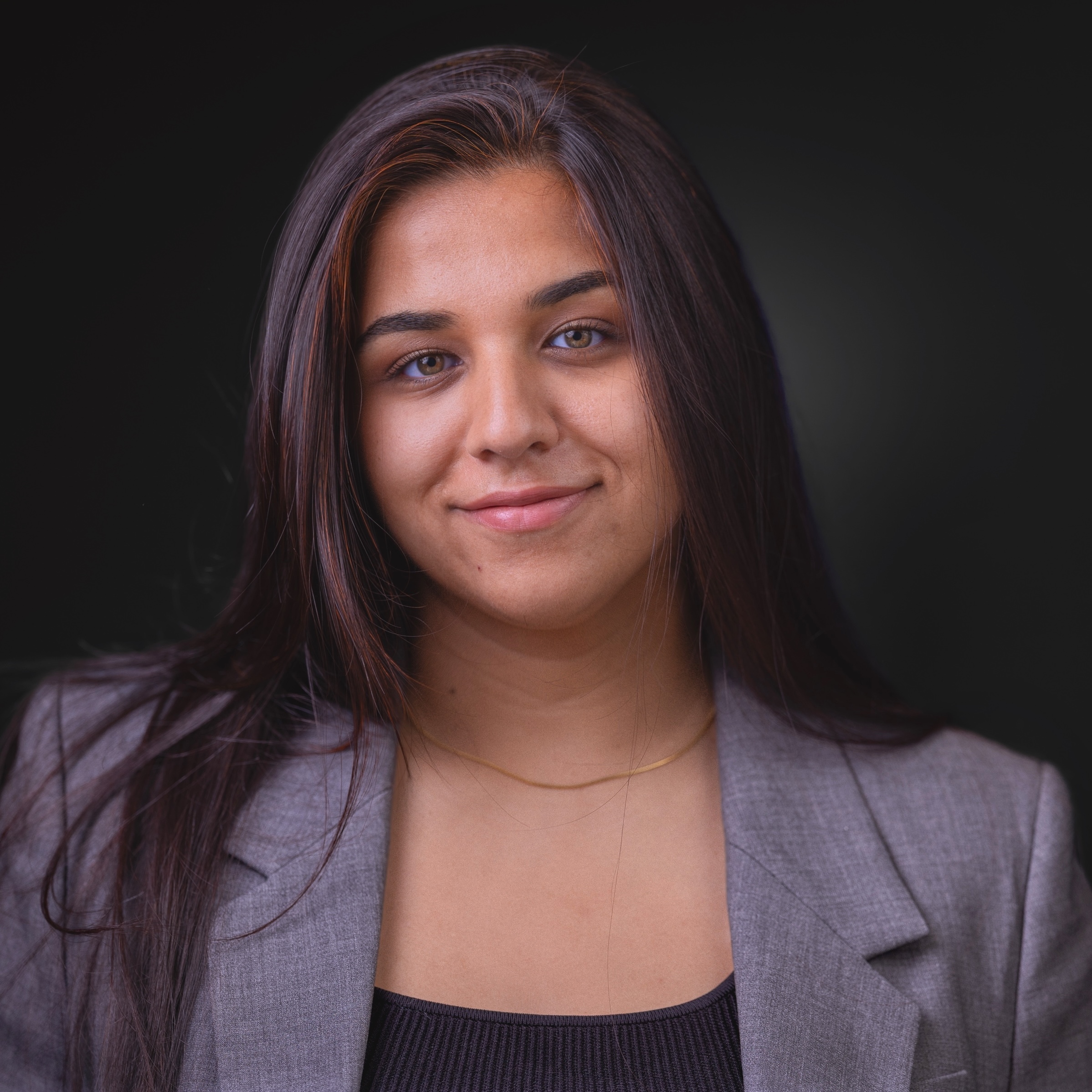
A product manager walked into the back office and never left
Most people who launch a crypto trading feature for millions of users go chase the next shiny launch. Shanthi Shanmugam went the other direction - toward the support queue, the part of the product nobody screenshots for a pitch deck. That is where she found her company.
Today she is co-founder and CEO of Casap, a New York fintech that builds AI agents to run a payment dispute from the first angry message to the chargeback filing to the credit that lands back in an account. Banks, credit unions, and fintechs plug it in. The pitch is unglamorous and exact: the worst day of a customer's relationship with their bank is usually a dispute, and almost everyone handles it badly.
In August 2025, Casap closed a $25 million Series A led by Emergence Capital, with Lightspeed, Primary, and SoFi along for the ride. That pushed total funding to $33.5 million and, by the company's count, became the largest venture round yet aimed at the issuer side of payment disputes. It is a lot of money for a problem most founders find boring.
The back-office experience is actually the consumer's experience.
— Shanthi ShanmugamThat sentence is the whole thesis. A customer does not see your underwriting model or your ledger. They see how fast you fix the charge they did not recognize. Shanmugam spent years watching that gap, and Casap is her answer to it.
San Jose, Berkeley, and a rotational program that started a friendship
She grew up in San Jose and went to UC Berkeley for electrical engineering and computer science - the kind of degree that opens every door and forces you to pick one. In 2016 she landed in Facebook's rotational product manager program, the famously selective on-ramp for young PMs. There she met Saisi Peter. They stayed friends for years before they ever talked about building anything together.
In 2017 she joined Robinhood, early enough to leave fingerprints on the product. She helped launch the company's first crypto trading feature and worked on stock watchlists. Then she did something less common: she moved toward customer care, taking on senior and group product manager roles in the part of the company that picks up the pieces when something breaks.
And in early 2021, plenty broke. The GameStop trading frenzy turned Robinhood into a national story, and not a flattering one. Trust cratered. Shanmugam watched, up close, how a back office that cannot resolve issues fast turns a hard moment into a permanent one.
Trust is the most important currency of fintech.
— Shanthi ShanmugamHow she got here
Joins Facebook's rotational product manager program. Meets Saisi Peter, the future co-founder.
Moves to Robinhood as a product manager, early in the company's run.
Launches Robinhood's first crypto trading feature, builds stock watchlists, then shifts into customer-care products as senior and group PM.
Reconnects with Saisi Peter. The conversation turns from catching up to company-building.
Incorporates Casap - building quietly before making the leap.
Leaves her job to run Casap full-time as co-founder and CEO.
Raises $8.5M to take on payment disputes and first-party fraud.
Closes a $25M Series A led by Emergence Capital. Total funding hits $33.5M.
What Casap actually does
Strip away the category jargon and Casap does one stubborn job well: it runs the full life of a dispute inside a single system. Intake. Evidence analysis. Outcome prediction. Issuing credits. Filing chargebacks. Answering merchants. Talking to the customer the whole way through. The AI agents handle the workflow; the regulatory expertise - Reg E, Reg Z, Nacha - is baked in rather than bolted on.
The hook for financial institutions is that disputes have always been a cost center staffed by people who burn out. Casap's clients report cutting fraud losses by roughly half and slashing the cost per dispute, while handling more volume without hiring more analysts. Two early clients, Chartway and MidSouth Community, posted fraud-loss reductions north of 50%.
There is a sharper second act hiding inside the company: first-party fraud. That is the customer who genuinely bought the thing and then disputes the charge anyway - a problem some estimate at $100 billion. It is awkward, it is growing, and it is exactly the kind of pattern AI is good at catching. Casap's stated ambition is to expand its first-party fraud model into the intelligence layer for how institutions manage all post-transaction risk.
What clients report after switching
Three lines that explain the whole company
Things that make her hard to file away
She built the company before quitting. Casap was incorporated in December 2022; she did not leave her job until February 2023. Conviction, then the leap.
Her co-founder was a friend first. She and Saisi Peter met inside Facebook's RPM program and stayed close for years before the company existed.
She chose the boring corner on purpose. Disputes and chargebacks are where most founders avert their eyes. She saw a $100B problem.
Her X handle reads @shanthi_peace - a quiet bit of personality on an otherwise all-business resume.
The bigger bet
The Series A is not the finish line; it is fuel for a wider claim. Casap wants to move from resolving disputes to predicting risk - more signal coverage, more configurable workflows, and a first-party fraud model that sits underneath everything a bank does after a transaction clears. If disputes were the wedge, post-transaction risk intelligence is the wall behind it.
It is a fitting destination for someone who got here by walking toward the part of the product everyone else walks away from. The customer never sees the model. They see whether the charge got fixed. Shanmugam built a company on that single, stubborn truth.