carbon-removal
(22)
Isometric Wants Every Carbon Credit to Show Its Work
Carbon markets have spent years asking buyers to trust a tonne they cannot see. Isometric’s answer is part science lab, part software company and part public ledger - with the awkward incentive conflicts designed out.

The Dirt Is Cheap. Proving It Is Not: Yard Stick's Bet on Better Soil Carbon Data
Soil can store carbon, but the proof has been slow, costly and easy to distrust. Yard Stick is building the measurement layer that tells carbon-project developers and food companies whether the dirt is actually doing what the spreadsheet promised.
Sustaera Scrapped Years of Work to Build a Cheaper Carbon-Capture Machine
Direct air capture has a brutal math problem: too much machinery chasing too little CO2. The North Carolina startup’s answer was to kill its first product, shrink the team and redesign the machine around electricity, ceramics and a cost target the market might actually buy.

Mast Reforestation Learned Planting Trees Wasn’t the Hard Part - Financing the Forest Was
Mast began with a fleet of seed-firing drones. Then it discovered the expensive truth: after a megafire, the real bottlenecks are native seed, nursery space, dead wood and patient capital - so it bought the supply chain and buried the business model underground.
280 Earth
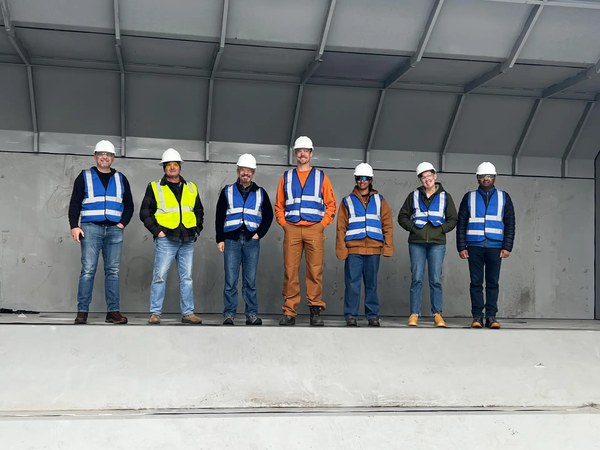
280 Earth is a climate-tech company that removes carbon dioxide permanently from the ambient air using a modular Direct Air Capture (DAC) system spun out of Alphabet's X, The Moonshot Factory. Its continuous-flow process uses a proprietary sorbent, off-the-shelf industrial equipment and low-grade waste heat or clean electricity to pull CO2 - and fresh water - out of the atmosphere at low energy cost. Its first plant in The Dalles, Oregon began operating in May 2024 and is designed to scale from hundreds to more than 20,000 tons of CO2 removed per year. The company's name references 280 parts per million, the pre-industrial atmospheric CO2 concentration it aims to help restore.
Loam Bio
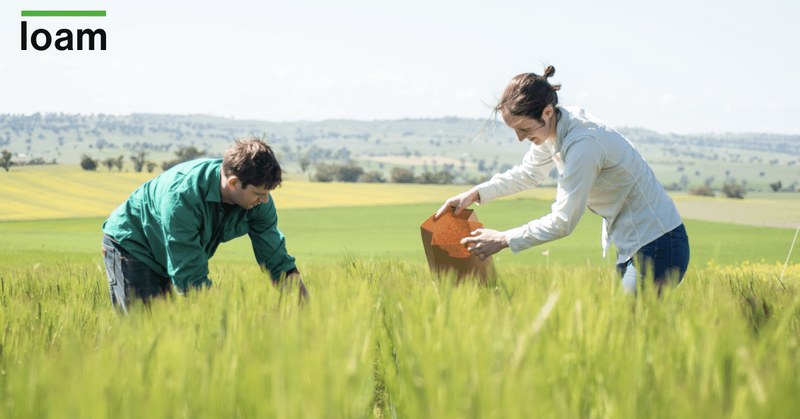
Loam Bio is an Australian agricultural biotechnology company using naturally occurring microbial fungi to help crops store more stable, long-lasting carbon in soil. Founded in 2019 by a group of farmers and climate scientists, it coats seeds with its CarbonBuilder inoculum so plants pull atmospheric CO2 into recalcitrant, mineral-bound soil carbon, and pairs the biology with its SecondCrop program that helps growers measure, verify and sell soil carbon credits. Backed by more than US$119M from investors including Lowercarbon Capital, Wollemi Capital and Marc Benioff's Time Ventures, Loam is scaling from its Orange, NSW base into the United States.
AirMyne
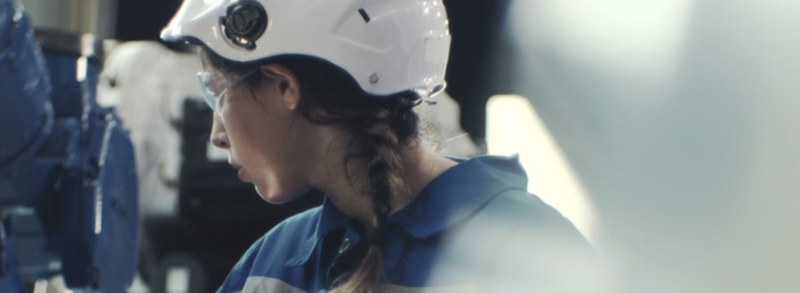
AirMyne is a Berkeley, California climate-tech company building liquid-based direct air capture (DAC) systems that pull carbon dioxide out of the atmosphere at industrial scale. Founded in 2022 by chemical-industry veterans Sudip Mukhopadhyay and Mark Cyffka, the company designs a low-temperature, energy-flexible capture process - regenerating its solvent at roughly 100-130 C so it can run on waste heat, geothermal energy, or electricity rather than the high-temperature furnaces most DAC rivals require. Backed by Y Combinator and, more recently, a strategic investment from Japanese energy giant ENEOS, AirMyne is moving from kilogram-per-day prototypes toward a commercial pilot and demonstration plant.

Calcarea
Calcarea is a Caltech- and USC-born climate-tech company decarbonizing the shipping industry with onboard reactors that capture CO2 from ship exhaust and convert it into stable ocean bicarbonate. By speeding up the natural reaction between seawater and limestone - a process that normally takes over 10,000 years - down to about a minute, Calcarea aims to permanently and safely store roughly half of a cargo ship's emissions as slightly saltier seawater, at costs competitive with today's best carbon capture options.
Carba
Carba is a Minneapolis-area climate-tech company that turns low-value waste biomass - dead trees, yard waste, and other biogenic scraps - into a stable, charcoal-like material called biocarbon (biochar). Using a patent-pending autothermal pyrolysis reactor and an anoxic (oxygen-starved) burial method, Carba locks carbon away for a certified 1,000+ years, most notably inside existing landfills where the material can also filter pollutants. The company sells the resulting permanent carbon-removal credits - including a five-year, 44,000-tonne deal with Microsoft - and aims to remove a billion tons of CO2 by 2035.

Terraton
Terraton is a San Francisco climate-tech company that turns agricultural waste into biochar - a stable, carbon-rich material that locks away CO2 for centuries. It packages financing, hardware, and software into a 'biochar business in a box' so agribusinesses in emerging markets can launch carbon-removal facilities, while corporate buyers get verified, high-durability carbon credits delivered at scale. Backed by an $11.5M seed round co-led by Lowercarbon Capital and Gigascale Capital, Terraton already runs facilities in Ghana and Kenya.
Applied Carbon
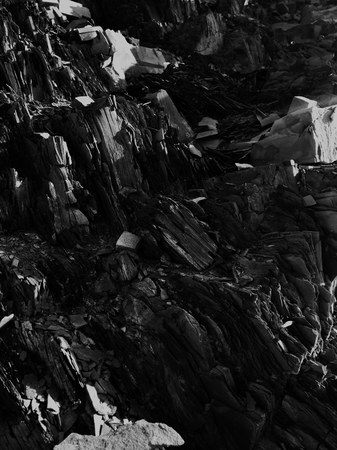
Applied Carbon (formerly Climate Robotics) builds tractor-pulled machines that turn crop residue into biochar in a single pass across the field. The Houston-based startup converts post-harvest plant waste into a stable form of carbon that improves soil health and locks CO2 underground for centuries, selling carbon removal credits to buyers including Microsoft.

Capture6
Capture6 is a climate-tech company that turns the salty waste brine left over from desalination and water treatment into two things the world needs: fresh water and permanently removed atmospheric CO2. Its integrated platform converts brine into a CO2-absorbing solvent in a single step, eliminating costly brine disposal while producing freshwater, green chemicals, and durable carbon removal. Founded in 2021 and based in the San Francisco Bay Area with operations in New Zealand, the public benefit corporation works with water utilities, industry, and governments across California, Western Australia, New Zealand, and South Korea.
Mote
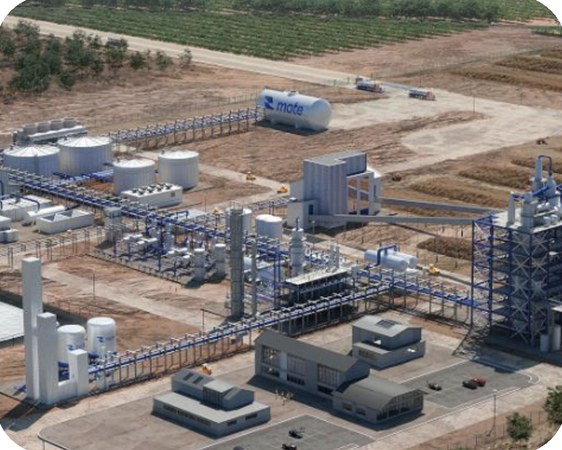
Mote is a Los Angeles-based climate-tech company that turns woody waste biomass into clean biohydrogen while permanently sequestering the carbon. Using a biomass carbon removal and storage (BiCRS) process spun out of Lawrence Livermore National Laboratory, Mote pairs energy production with carbon removal: each utility-scale plant is designed to produce roughly 60 tons of carbon-negative hydrogen per day while removing on the order of 450,000 tons of CO2 a year. The company is developing its first commercial facility near Bakersfield in California's Kern County and a second project in Northern California with the Sacramento Municipal Utility District.

Remora
Remora is a Detroit-area climate-tech company that bolts carbon capture onto the things already burning fuel - semi-trucks and freight locomotives - instead of building giant plants to pull CO2 back out of the sky. Its zero-backpressure device threads exhaust through proprietary adsorbents, captures up to 90% of the CO2, reduces soot and NOx to Tier 4 levels, then liquefies the gas to be sold into a supply-constrained industrial CO2 market. Operators share the revenue, so cutting emissions becomes a line item that pays rather than one that costs.
Terradot
Terradot is a San Francisco and Stanford-born climate company turning Enhanced Rock Weathering (ERW) - one of nature's slowest permanent carbon-removal processes - into a measurable, global-scale climate solution. By spreading finely crushed basalt across tropical farmland, Terradot accelerates the natural reaction in which silicate rock binds atmospheric CO2 and locks it away for thousands of years, while improving soil health for farmers. The company pairs field deployment with rigorous biogeochemical measurement, and has signed landmark carbon-removal agreements with Google, Microsoft and Frontier totaling nearly 300,000 tonnes of CO2.

Varaha
Varaha is an India-based climate-tech company that builds high-integrity carbon removal projects in the Global South. Working with roughly 170,000 smallholder farmers across about 1.7 million acres, it generates verified carbon credits through four pathways - regenerative agriculture, agroforestry, biochar, and enhanced rock weathering - and quantifies the results with a measurement, reporting and verification (MRV) platform powered by remote sensing, machine learning and field science. Its credits are bought by buyers like Google, Microsoft, Lufthansa and Swiss Re.

Vaulted Deep
Vaulted Deep is a Houston-based climate tech company that turns sludgy organic waste - biosolids, manure, food and agricultural waste, paper sludge - into permanent carbon removal by injecting it thousands of feet underground using patented slurry sequestration technology. Spun out of injection-well specialist Advantek in 2023, the company offers durable, low-cost, gigaton-scalable carbon dioxide removal while diverting hard-to-handle waste from landfills, oceans and fields. Its credits have been bought by Microsoft, Frontier Climate and others, and it won $8M in the Musk-backed XPRIZE Carbon Removal competition.
CREW Carbon
CREW Carbon is a Yale-spinout water and climate technology company based in Hamden, Connecticut. It retrofits municipal and industrial wastewater treatment plants with a closed-system enhanced-weathering process: dosing alkaline minerals into wastewater to convert dissolved CO2 into stable bicarbonate. The approach lowers operating costs and improves treatment performance for utilities while permanently and measurably removing atmospheric carbon, which it sells to corporate buyers as durable carbon removal credits.
Andes
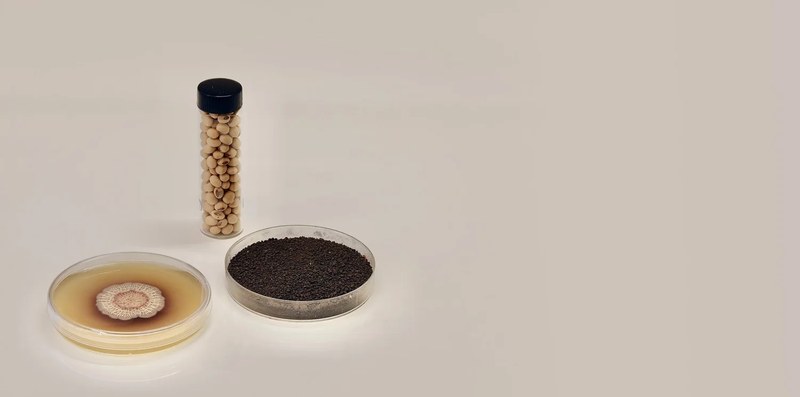
Andes is a climate-tech and agricultural biotechnology company using beneficial soil microbes - applied as a seed coating on corn, soybean, canola and wheat - to convert atmospheric CO2 into stable soil inorganic carbon. Founded in 2016 by Gonzalo Fuenzalida and Tania Timmermann and headquartered in Alameda, California, Andes pairs microbial biology with field-scale measurement to deliver permanent, low-cost carbon removal across millions of acres of working farmland.

Heirloom Carbon
Heirloom Carbon Technologies is a San Francisco-based direct air capture company that uses limestone's natural CO2-absorbing properties to pull carbon dioxide permanently out of the atmosphere. Their process accelerates a geological phenomenon that normally takes thousands of years into a 3-day cycle: calcium oxide powder absorbs CO2 from ambient air, becomes limestone, gets heated in a renewable-energy-powered electric kiln to release the captured CO2, and repeats. The captured CO2 is then stored permanently underground or embedded in concrete. Founded in 2020, Heirloom opened America's first commercial DAC facility in Tracy, California in November 2023 and has raised over $354 million to expand capacity toward their goal of removing 1 billion tons of CO2 by 2035.

Charm Industrial
Charm Industrial is a San Francisco-based climate company that converts agricultural residues into bio-oil through fast pyrolysis and injects it deep underground for permanent carbon removal. Founded in 2018 by Peter Reinhardt, Kevin Meissner, Shaun Meehan and Kelly Hering, Charm is one of the fastest-growing carbon dioxide removal companies and counts Frontier, Stripe, Microsoft, JPMorgan Chase, Meta and Shopify as customers.
Spiritus
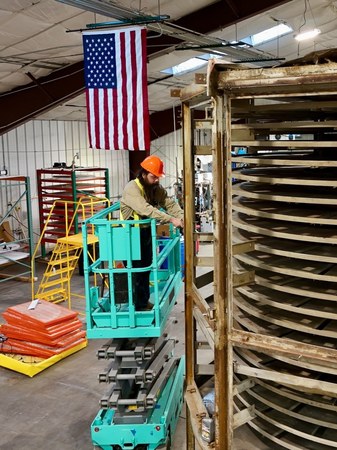
Spiritus is a climate-tech company building passive Direct Air Capture (DAC) systems - stacked trays of sorbent pellets arranged in modular 'Carbon Orchards' - that aim to pull CO2 out of the atmosphere for under $100 per ton, roughly a tenfold cost reduction over conventional DAC.