The first version of Mast Reforestation could be explained before an elevator door closed: big drones drop seeds onto burned land. The pictures did most of the selling. Eight-foot aircraft flew in formation over blackened slopes, firing nutrient-packed seed vessels where a planting crew would struggle to walk. It was visual, legible and wonderfully 2016. The company was called DroneSeed because ambiguity was not part of the pitch.
Then the forest argued back. A cheap way to distribute seed does not help much if the correct native seed is unavailable. Nor does a clever aircraft solve scorched soil, fallen timber, nursery shortages, permitting, monitoring or the awkward fact that a landowner may spend millions now for trees that mature in 60 to 80 years. Grant Canary and his team had built a fast last-mile delivery system for a supply chain that barely existed.
So DroneSeed became Mast Reforestation, and the business grew in both directions. It acquired Silvaseed, a Washington seed company whose roots reach back more than 150 years, then Cal Forest Nurseries, California’s largest private reforestation nursery. Today Mast scouts cones, processes and banks seed, grows seedlings, prepares burned land, manages planting, monitors recovery and structures the carbon finance that pays for it. The drones remain a tool. They are no longer the plot.
“If you’re a land owner and it’s going to take 60 to 80 years for those trees to grow, any money manager is going to be like, put your money literally in anything else.”Grant Canary, founder and CEO
01 / The reversalThe premise failed. Then a project did too
Mast did not discover that drones were useless. At Henry Creek in Oregon, it deployed more than 1.2 million seeds across nearly 300 acres after the 2020 Beachie Creek Fire. But the same project also required more than 825,000 nursery-grown seedlings, planted conventionally across the broader 891 acres. That ratio tells the strategic story. Aerial seeding can cover difficult ground, but seedlings offer better odds in many severely burned landscapes, and neither method matters without genetically appropriate material.
The scarce object is not “a seed.” It is the right seed - collected near the site, at the right elevation, from a species suited to the future climate, during a narrow cone window that nature does not schedule for a procurement department. A megafire may destroy the living trees that would have supplied the next generation. Once that biological inventory is gone, software cannot summon it back.
At Sheep Creek in Montana, the biological risk became a financial failure. In January 2025 Mast told project-finance partner Carbon Streaming that seedling mortality had been significantly higher than expected and surviving seedlings were growing more slowly. The existing plan and budget were no longer viable, and Mast no longer expected to deliver 286,229 forecast mitigation units. The companies later ended their legal relationships. It is the uncomfortable counterweight to the company’s cleaner success stories: planting is not the same as removal, and a credit forecast cannot make a young tree cooperate.
The stack Mast ended up building
That is Mast’s difference in a fragmented market. A landowner would otherwise coordinate foresters, nurseries, seed collectors, planters, carbon developers and long-term monitors. Mast sells the handoff between those specialists. It serves private owners and ranchers, timber managers, public agencies, tribes and nonprofits on one side; on the other are companies buying carbon credits to address residual emissions. The company reports that its nursery operations average 36 million seedlings a year and that it has restored thousands of acres in California, Montana and Oregon.
02 / The cash-flow machineWhat they buried - and what it cost
Post-fire restoration is a bad fit for ordinary finance. Canary has estimated that a few thousand acres can cost a couple million dollars to restore. The largest immediate expense is often clearing the standing and fallen dead wood so crews can safely replant. The cheap convention is to pile and burn it, returning its carbon to the air and adding smoke. On many sites the timber is too damaged or too remote to sell.
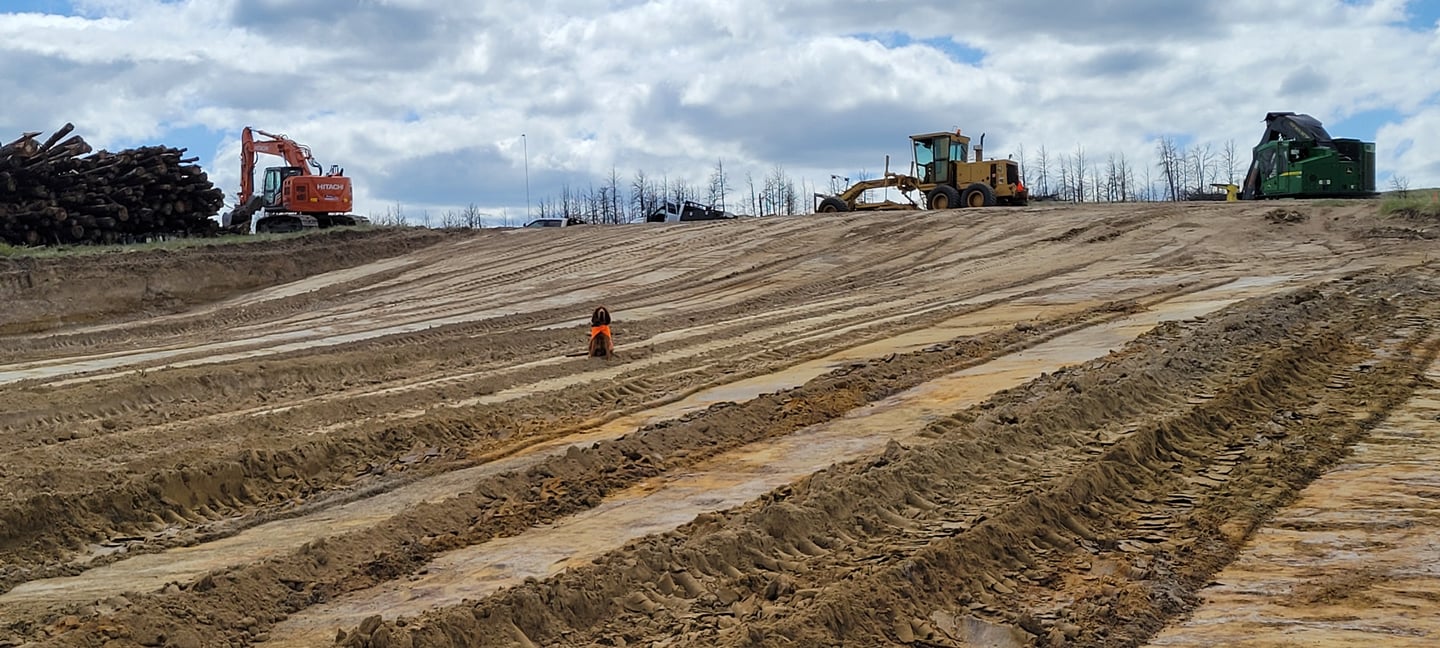
Mast’s answer is MT1, built on land hit by Montana’s 2021 Poverty Flats Fire. The company excavated an engineered chamber in clay-rich soil, placed more than 10 million pounds of unmerchantable burned wood inside, limited the movement of oxygen and water, capped the site and installed sensors for gases, temperature, humidity, pressure and other conditions. A long-term foundation and legal protections are intended to keep the carbon stored and the site maintained for at least a century.
The dollar figure for constructing MT1 has not been published. What is public is the capital around it: Mast raised a $25 million Series B in February 2025 to expand biomass burial and restoration, after a $36 million Series A in 2021. A separate Carbon Streaming agreement announced up to $15 million in project finance in 2023, though that relationship later ended following trouble in the reforestation streams. MT1 also put more than $1 million into its rural Montana region through local work and spending.
The commercial result arrived quickly by carbon-market standards. Puro.earth issued 4,277 credits in January 2026 after third-party review. Royal Bank of Canada, CNaught, Muir AI and other buyers took more than 80 percent. Bain & Company and BMO later joined, and the entire issuance sold out in less than six weeks. Revenue began funding more than 6,000 native conifer seedlings grown from locally collected seed. Mast had converted a cleanup liability into a carbon product, then used the product to pay for the landscape around it.
The useful invention is not a wooden tomb. It is a clock: carbon revenue arrives in months, while a forest grows over decades.
03 / Products hiding in one projectWho buys what?
Mast is several businesses wearing muddy boots. Its nurseries sell seed services and seedlings to forestry customers. Its restoration group earns fees for assessment, preparation, planting and project management. Its carbon team develops credits and arranges sales or offtake. Corporate buyers purchase verified tonnes; landowners receive restored acreage and, in the MT1 structure, compensation without personally carrying carbon-market risk. Partners provide registry, ratings, finance, conservation easements and century-scale stewardship.
Henry Creek shows the older reforestation-credit version of the model. Mast worked with forest manager EFM and carbon developer Anew Climate to restore 891 acres, while Shopify and the Arbor Day Foundation bought credits early enough to reduce the financing burden. A perpetual conservation easement protects the land. In 2026 the project received certification for 575,861 credits after independent review of seedling health and growth. It is slower and more exposed to growing risk than storing existing carbon in wood, but it demonstrates the same principle: sell a credible future environmental result early enough to make the work possible.
Competitors tend to occupy one layer. Drone companies such as Dendra Systems and Flash Forest tackle deployment. Nurseries grow inventory. Forestry consultants design projects. Carbon developers handle registries and sales. Durable removal suppliers offer biochar, rock weathering or direct air capture. Mast’s bet is that integration beats specialization where every missed handoff costs a planting season.
04 / The part worth stealingFollow the bottleneck, not the demo
The copyable lesson is brutally simple: audit the whole customer journey after your product “works.” DroneSeed could put seeds on acreage quickly, but the customer still lacked seed, site access, finance and confidence that the new forest would survive. Mast followed each constraint upstream until it owned physical infrastructure, then downstream until it could sell the environmental outcome.
A second lesson is to stack value without pretending every benefit is the same product. MT1 buyers receive measured durable carbon removal. The surrounding reforestation, local jobs, habitat and reduced pile burning are co-benefits, not extra tonnes quietly counted twice. That separation makes the offer easier to inspect. A bank can buy a verified removal; a ranch family can regain a working landscape; wildlife gets habitat without appearing on an invoice.
The third lesson is that old assets can become startup moats when a new market increases their scarcity. Silvaseed’s cone-processing knowledge and seed bank were not built for venture capital. Cal Forest’s greenhouse capacity is not a software margin. Yet wildfire, public replanting programs and carbon finance make those operations strategic. Mast paired a new source of demand with institutions that already knew how to keep a seed alive.
05 / Read the fine printWhen this does not work
Biomass burial is not a universal prescription for burned forests. Wood with a viable durable use may be better turned into building material. A site without low-permeability soil, safe hydrology, access for equipment and enforceable long-term protection is a poor vault. Bad design could permit decomposition and release carbon dioxide or methane. Monitoring has to survive corporate timelines, land sales and Montana winters.
Model likes
- Unmerchantable, fire-killed wood
- Clay-rich, low-permeability ground
- Severe burns with weak natural recovery
- Local seed and nursery capacity
- Committed long-term carbon buyers
Model breaks
- Valuable timber with a better use
- Wet, porous or unstable sites
- Healthy natural regeneration
- No credible century-scale steward
- Credit prices below total project cost
There is also market risk. Carbon registries can change methodologies, buyers can narrow their standards, and a sold-out first issuance does not guarantee demand at Mast’s stated ambition of 150,000 tonnes a year by 2030. Scale will test whether nine-month delivery was repeatable or merely a fine first project. Suitable biomass may be abundant, but abundance is not the same as an economic site.
Still, Mast’s progression is unusually candid in physical form. The company began by flying over the problem. Now it collects cones by hand, runs nurseries, moves logs with excavators and accepts responsibility for sensors that must keep reporting long after today’s hardware is obsolete. Its achievement is not making reforestation look futuristic. It is making the boring parts visible enough to finance.