business-process-automation
(24)
Decisions makes the rules. You can change them.
Business rules have a habit of hiding in code, spreadsheets and somebody’s inbox. Decisions puts them on a visual canvas - and, after merging with ProcessMaker, wants to govern the AI agents joining the queue.

Aurea wants your software bill to buy more software
Aurea built an enterprise software library by acquisition, then gave customers a way to reuse their spending across it. Its turn toward AI puts a new question behind the old subscription: how much useful work can one bill buy?
Beecker wants the work, not just the bot
The automation company is moving from one-off projects to managed digital workers. Its wager: the real value of AI lies in keeping ordinary business processes running.

Glorium and the expensive art of joining things up
A radiology queue, a fertility test and a bakery have more in common than they ought to. Glorium Technologies makes its living fixing the handoffs - and now sells AI agents to do some of that work.

Intellistack wants to retire your copy-and-paste department
The company formerly known as Formstack has spent two decades following the paperwork. Its next wager: connect the data behind the forms, and the work can finally move.

Fulcrum GT follows the money through the law firm
A legal bill has a long journey from a lawyer’s desk to a client’s payment. Fulcrum GT builds the software - and supplies the operational help - to keep that journey from becoming an administrative expedition.

Rolustech makes the software you bought earn its keep
A CRM is easy to buy and surprisingly hard to make useful. Rolustech has built a business in the awkward space between the software demonstration and the working day.
Soroco and the Case of the Wrong Robot
A consumer-goods company picked its next automation project. Soroco’s Scout found that it had the lowest return potential. The missing evidence was hiding between the applications.
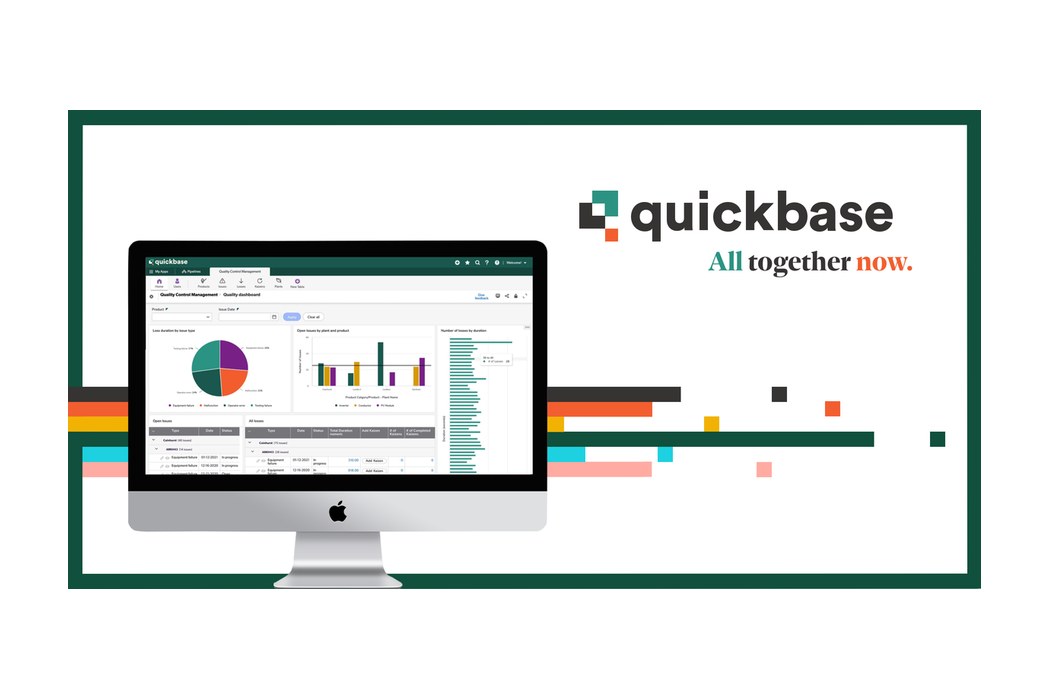
Quickbase Built a $200 Million Business Fixing the Work Your Big Software Forgot
Quickbase lives in the awkward gap between a spreadsheet that cannot scale and an enterprise system that will not bend. Its wager: the people closest to the work should be able to build the missing software - without giving IT a governance migraine.
Eccentex Built the Operating System for Work That Refuses to Behave
Most automation software loves a straight line. Eccentex makes its living where the line breaks - in ambulance dispatch, insurance claims, disputes and customer cases that demand both rules and human judgment.
Invisible Lost $10,000 on Every Client. Then It Built the AI Assembly Line Enterprises Actually Buy
A failed executive-assistant service taught Invisible Technologies the lesson now haunting corporate AI: the model is rarely the whole problem. Its answer is a five-part platform that cleans the data, maps the work, recruits the experts, tests the model and puts agents into production.
Aera Wants to Turn the Enterprise Dashboard Into an Autopilot
Most enterprise software tells you what already happened. Aera is betting that the valuable layer is what comes next: a governed machine that recommends, executes, and learns from thousands of operational decisions.
BSP Turned Zoho Consulting Into a Product Factory - Here’s the Part You Can Steal
The Quebec consultancy spent years untangling spreadsheets and disconnected apps. Now it is packaging those hard-won workflows into vertical software - a practical playbook for service firms that want products without pretending every client is identical.

Bits In Glass Makes Expensive Enterprise Software Actually Work - And the Boring Bits Are the Point
The Edmonton consultancy built a business around the least glamorous part of digital transformation: making software, data and people cooperate. Its case studies show why that connective work can turn 48-hour queues into 10-minute workflows - and why the same playbook can still fail.
The Software Behind the Factory Floor Is Learning the Factory
Aptean built a large enterprise-software business by going where generic suites get awkward: recipes, lots, shop floors, fleets and regulated workflows. Now it is connecting that collection with AI - without pretending every factory works the same way.
SilverXis Sells the Missing Middle of Digital Transformation
The Irving company bundles software builders, flexible tech talent, and demand generation under one roof - a practical offer for businesses whose transformation plans keep getting stuck between strategy and execution.
The Company That Teaches Your Software to Talk to Itself
Two former NetSuite engineers spent a decade turning the least glamorous job in software - getting one app to speak to another - into a business ranked the #1 iPaaS and worth an estimated half a billion dollars.
Quadient
A century-old maker of postage meters quietly turned itself into a software company. Here is how Quadient bet its future on the mail nobody thinks about - the bills, statements and packages that decide whether a customer stays.
Trace
Trace is a workflow orchestration platform that gives AI agents shared context about how a company actually works, then routes each task to whichever worker fits best - human or AI. Founded in 2025 by Tim Cherkasov and Artur Romanov and backed by Y Combinator's Summer 2025 batch, Trace connects to tools like Slack, Jira, and Notion, builds a knowledge graph of the organization, and turns plain-English process descriptions into visual workflows with AI-automated steps and human approval gates. It raised $3M in seed funding and was the most upvoted startup in the YC S25 cohort.

Convey
Convey is a San Francisco AI workforce platform that lets non-technical operators build, train, and manage "digital teammates" - AI workers that take over repetitive operational tasks like invoice processing, financial reconciliation, and campaign reporting without any engineering. Founded in 2025 by former DoorDash early engineer Rohan Chopra with Stanford friends Will Harvey and Diego Canales, Convey raised a $38M Series A led by Andreessen Horowitz in June 2026 and says it has completed more than one million hours of real work for enterprises including NBCUniversal, Unity, Samsara, and Faire.
Kognitos
Kognitos is a Mountain View-based enterprise AI company that lets business users automate back-office operations by writing instructions in plain English. Its patented neurosymbolic platform, Koncierge, pairs the language understanding of large language models with a deterministic symbolic execution engine, aiming to run automations that are auditable and free of hallucinations. Founded in 2020 by former Nutanix CTO Binny Gill, the company pitches itself as a modern alternative to legacy RPA tools like UiPath and has raised roughly $85M across seed, Series A, and a $25M Series B.
Informed K12
Informed K12 is a workflow automation and digital forms platform built specifically for the operational complexity of K-12 school districts. It replaces paper and PDF forms with online workflows that route automatically through the real approval chains districts already use - across finance, HR, student services, and IT - capturing e-signatures and a time-stamped audit trail without replacing the ERP, HRIS, or SIS a district already runs. Founded in 2012 by two Stanford Graduate School of Education classmates, the company (formerly Chalk Schools) serves hundreds of districts and employs roughly 70-75 people.

MiChamba
MiChamba is a Mexico-founded startup that turns WhatsApp into an operational management platform for frontline and deskless teams across Latin America and the US Hispanic market. Instead of forcing workers onto a new app, it layers AI agents - led by an assistant named MarIA - on top of the messaging tool people already use, converting informal chats into trackable tasks, reports, and productivity data. It raised a $2.25M pre-seed round in 2025 and counts Hilton, Pemex, and Repsol among 50+ customers in construction, hospitality, logistics, and industrial sectors.
Hyland
Hyland is a Westlake, Ohio software company that helps large organizations capture, manage, and act on their unstructured content - the contracts, claims, patient charts, and forms that pile up in every enterprise. Built around its flagship OnBase platform and bolstered by acquisitions like Alfresco and Nuxeo, Hyland has spent three decades turning document chaos into automated workflows. Today it is repositioning around the Content Innovation Cloud, layering AI agents and intelligent document processing on top of the content services its 4,000-ish employees have sold to healthcare systems, banks, insurers, and governments worldwide.