Consider the life of a legal bill. Before it becomes a request for money, it is a client, a conflict check, a matter number, a budget, a series of time entries and a collection of rules about what the client will pay for. By the time an invoice is rejected, the mistake may have travelled through several departments. The lawyer has done the work. The firm now has a second job: persuading its own administrative machinery to agree.
- The job: connect the business operations behind legal work.
- The foundation: SAP-based cloud software, with legal-specific processes.
- The buyers: law firms and legal departments, including firms operating internationally.
- The useful lesson: follow a matter’s commercial history before buying another tool.
Fulcrum GT has built a business around that second job. Its software covers the route from accepting a client to collecting payment. Its services extend to implementation, support and, if a firm wants it, running back-office processes. The proposition has a pleasing lack of courtroom drama. Someone has to make the numbers work.
01 / The bill begins before the clock starts
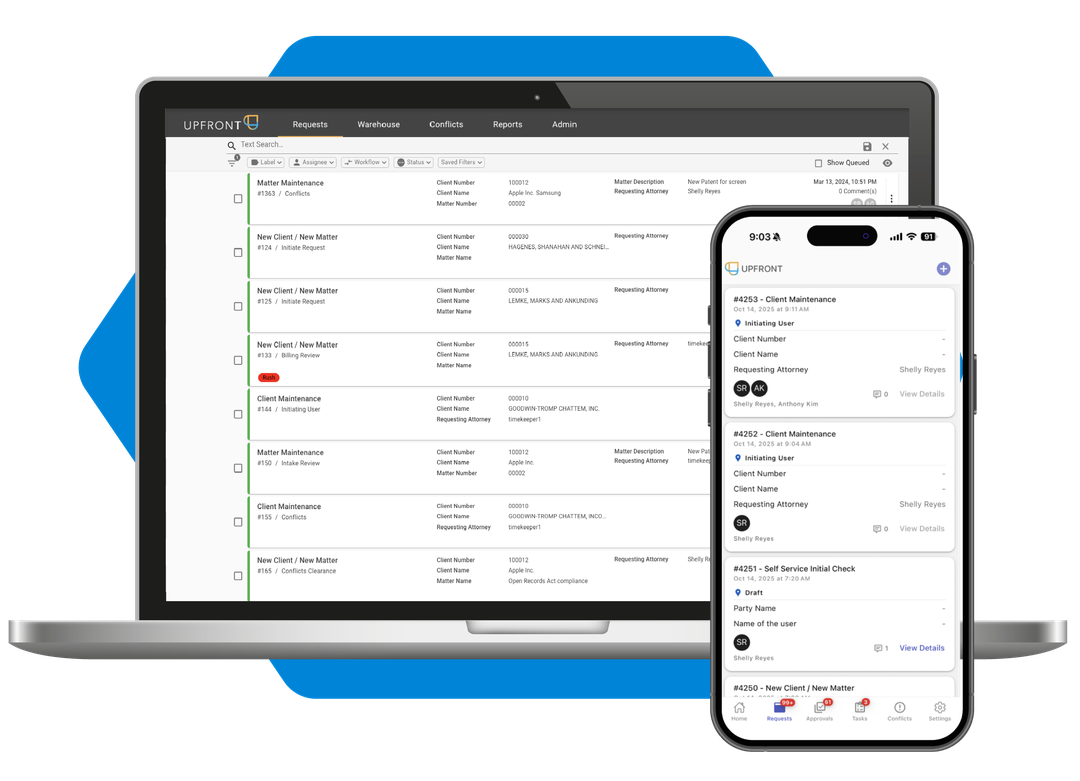
Look at the order of Fulcrum’s products and a theory of the law firm emerges. Upfront handles new business intake and conflicts. Epoch records and validates time. Curo helps scope, price and manage matters. Snap handles billing and finance. Salvo prepares, checks and tracks electronic invoices. Revenue management deals with collection. Analytics gives people a view of the business these activities create.
These are connected problems. A client’s requirements matter when a lawyer records time, when finance prepares a bill and when someone decides whether the invoice is acceptable. Treating each step as a separate island leaves people carrying information across the water. Fulcrum’s case for integration is that the commercial context should travel with the work.
- 01AcceptUpfront
Intake + conflicts - 02RecordEpoch + Curo
Time + matters - 03BillSnap + Salvo
Finance + e-billing - 04CollectRevenue tools
Payment + insight
Upfront makes the principle concrete. Its configurable forms and approval workflows capture information at the beginning. Conflict searches, risk checks and clearance tracking support the decision to take the work. Ethical screens add controls for sensitive information; lateral-hire workflows bring an incoming lawyer’s client and matter lists into the review. The goal is a traceable decision, rather than an approval hiding in somebody’s inbox.
02 / An enterprise engine, wearing a legal suit
Fulcrum Snap sits on SAP S/4HANA. That choice places the company in enterprise business software: the systems used to manage a firm’s finances and operations. The distinctive work is adapting that foundation to professional services, where the raw material is people’s expertise and the commercial unit is often a matter.
The company’s account of its beginnings describes SAP implementations and project turnarounds in 2002, followed by a commitment to professional services in 2007. Its public materials identify the Baker McKenzie project as foundational to its entry into that market. Martin Telfer, who led that work on the law-firm side, joined Fulcrum in 2016. A customer’s experience became part of the vendor’s expertise.
The pattern continued with other large firms. Fulcrum reported that DLA Piper went live with its software and SAP in 2023. Eversheds Sutherland also appears in public customer references. These names explain the attraction of an enterprise foundation: firms with international operations need their business systems to accommodate complexity without making every office a separate accounting universe.
Fulcrum’s industry association listing describes firms ranging from roughly 100 attorneys to more than 4,000. In that market, it commonly encounters Aderant, Elite/3E and Intapp. The comparison depends on the job being purchased. Finance, conflicts, time entry and e-billing have different requirements; a vendor name alone is a rather lazy shopping list.
03 / The timesheet is a financial document in disguise
Epoch offers timers synchronized across devices, flexible time-entry methods and rules that assist with client billing requirements. Its TimeCast feature captures activity in applications, websites and calendar appointments, which users can turn into entries. The point is to make the record of work easier to produce and more useful downstream.
A particularly telling customer comment comes from Bradford & Barthel’s CFO, Kim Wasilewski. On the Epoch page, she singles out rules, flexibility and templates. These are modest-sounding features. They are also the features that determine whether the right description reaches the right bill.
“The billing rules, some of the flexibility that it offered, the templates, that really became attractive to us.”
Kim Wasilewski / CFO, Bradford & Barthel
Salvo picks up further along the route. It converts invoices into LEDES formats, validates them against outside counsel guidelines and billing rules, submits e-bills and tracks their status across vendor sites. Billing teams can see rejections; collections staff can check an invoice’s position before contacting the client.
In an illustrative case, a perfectly real hour of work may arrive with an unacceptable code or description. Checking the entry earlier can spare a later correction. Fulcrum’s product logic pushes information toward the point where a person can act on it. That is a practical explanation of integration, and a better buying question than the number of screens in a demonstration.
04 / Selling software, staying for the operations
Fulcrum develops its products, deploys them and supports them. Managed Care supplements technical and business expertise; Virtual Operations Deployment offers operational services for repeatable processes. Its business therefore combines cloud software with work that helps customers adopt and run it. The ongoing relationship matters as much as the installation.
For a buyer, the cost question should follow that structure. A useful comparison counts the software, data migration, implementation, training, integrations and any continuing operational services. It also counts staff time spent checking statuses, re-entering data and correcting bills in the present arrangement. A purchase price considered alone says little about whether the business process becomes cheaper to run.

The company describes a culture of client support and graduate development. Its careers page lists care, trust, integrity and innovation among its values. Fulcrum Smiles, its community program, names organizations including Habitat for Humanity and Doctors Without Borders. These are the company’s stated commitments. The operationally relevant detail is its combination of law-firm experience and software expertise.
There are signs that the model found demand. In April 2024, Fulcrum announced a No. 59 position on Inc.’s Midwest regional list and reported 197% revenue growth from 2020 to 2022. It also placed No. 7 in Fast Company’s Business Services innovation category. Growth is evidence of commercial traction; it does not tell a prospective customer what their own implementation will achieve.
Reported by Fulcrum in its April 2024 announcement. A company growth measure, not a customer savings estimate.
05 / The client joins the same conversation
RAPIDx, released in August 2023, extends the idea beyond the firm. It connects corporate legal departments and service providers across sourcing, selection, matter management, invoices and payments. Buyers can run requests for information or proposals, work with panel firms, establish budgets and manage providers within the network.
This changes the unit of attention. Snap organizes the firm’s business; RAPIDx organizes the commercial relationship around legal work. Fulcrum argues for a direct connection with fewer intermediaries. Its documented capabilities include role-based access, API-driven architecture and payment workflows.
The attraction depends on participation. A source-to-pay network is useful when the buyer and provider can agree on the process, share appropriate information and connect their systems. A firm cannot create that agreement merely by purchasing software. The commercial rules still need people to settle them.
06 / AI gets a job in the back office
Fulcrum expanded its Google Cloud partnership in November 2024, linking its legal-industry products with cloud infrastructure, analytics and AI capabilities. In 2026 it promoted Snap AIQ, an applied intelligence offering for the business of law.
One specific use case is turning outside counsel guidelines into structured data that can be reviewed, governed and used across the suite. Other described uses include time management and billing. Guidelines are an apt starting point: they contain the commercial instructions that people otherwise have to remember at several stages of the same matter.
The product’s usefulness depends on the quality of those instructions, the reliability of the data and the review process around the output. Treating extracted rules as governed business assets is a sensible ambition. Whether they produce better collections or fewer corrections remains a question to test in the customer’s own workflow.
07 / Follow one matter before buying anything
The lesson a reader can copy is small enough to try without a procurement committee. Pick one completed matter and trace its commercial history. Where were the client’s rules recorded? Who approved the budget? How often was the same information entered? What happened when an invoice was rejected? Each answer reveals a handoff that deserves attention.
A broad platform has the clearest case where those handoffs cross departments, systems and offices. A firm seeking only a basic timer has a different problem. Even within Fulcrum’s offering, Epoch is described as practice-management-system agnostic, and integration connectors support existing tools. The decision can start with the troublesome process.
What makes Fulcrum GT interesting is the insistence that legal work has a commercial history worth preserving from beginning to end. The client’s payment is a late event in that history. To understand why it takes so long, start much earlier.
Company website ↗ · Knowledge base ↗ · Snap AIQ ↗
Watch: Ahmed Shaaban’s ILTACON interview ↗
Watch: Curo product demo ↗