advanced-manufacturing
(32)
The 105 Knocks on Greenville's Door
A county-created nonprofit turns confidential inquiries into factories, tax agreements and paychecks. Its real product is not land or money, but a shorter distance between a corporate maybe and a public yes.
Altitude Accelerator asks the awkward question: who will buy it?
The Brampton nonprofit helps technology founders turn promising inventions into businesses customers will pay for. Its next move brings more investors into the room.
At Newlab, the Pitch Has to Survive the Street
A Brooklyn shipyard became a home for hardware startups. Now Newlab is taking their inventions into ports, city streets and factories - where a working demo meets a much tougher audience.

Basel’s business card comes with a lab
Basel Area Business & Innovation puts relocation advice, biotech venture building and innovation campuses under one roof. Its bet: the right introduction can be as useful as the first cheque.

PhysicsX Wants Engineers to Stop Waiting for Physics
Born from Formula One's impatience, PhysicsX turns expensive simulations into near-instant engineering answers. Its real product is not a magic oracle but a carefully governed loop of data, models, validation and engineers who know when to call the old solver back in.
BioMADE Is Building the Factories Biotech Startups Can’t Afford
A good microbe can make plastic, rubber or protein in a flask. Proving it can do the same inside a 25,000-liter tank is where companies run out of equipment, money and time - so BioMADE is building the missing middle.

Mohawk College Turned the Community College Into an R&D Partner - Here’s the Playbook
The Hamilton college found a sharper edge than adding more courses: let students solve live industry problems, let employers borrow the labs, and make applied research part of the education rather than a campus side project.
PlantSwitch Bet $28 Million That Nobody Should Have to Eat With a Sad Paper Fork
The founders began by selling greener restaurant supplies, nearly quit when restaurants closed, and then moved upstream into resin and factories. A $17 million round and a World Cup-sized order have now tested whether compostable packaging can finally behave like the plastic it replaces.
Cresilon Killed Its Big Launch - Then Built a Bleeding-Control Business the Hard Way
A 17-year-old's algae experiment became a syringe of hemostatic gel. The useful business lesson came later, when blackened batches forced Cresilon to cancel a launch and become its own manufacturer.

Lumilens Bet $50 Million That AI's Next Bottleneck Is the Wire
The two-year-old photonics company has a product inside a hyperscaler's live data centers and a plan to replace short copper links with light. Its harder bet is not merely designing faster optics - it is manufacturing them like semiconductors.

Riot Ventures Built a $1 Billion Firm by Betting on the Physical World
While venture capital chased frictionless software, Riot went looking for friction - factories, fleets, power systems and defense hardware. Its concentrated, multistage strategy now stretches from the first institutional check to pre-IPO rounds.
The Tiny Fund Betting the Next Great Software Market Has Factory Floors
REFASHIOND Ventures writes small early checks into the systems that make, move, and remake physical goods. Its edge is not check size - it is a map of industry built before supply chains became dinner-table conversation.
Sarasota Has a Startup Factory - and It Is Building the Companies First
Suncoast Venture Studio is trying to make Sarasota more than a pleasant place to retire or relocate. Its wager is practical: build the startups first, recruit operators around validated ideas, and let a regional technology economy form company by company.
The Venture Studio Betting That the Best Startups Will Be Hybrids
Walsh Karra Holdings is assembling a portfolio where AI meets farms, finance meets infrastructure, and capital comes with operators attached. Its wager is that the next durable companies will be built between sectors, not inside a single lane.
The Fund That Put a Border Around Its Ambition
Most investors diversify by geography. The O.H.I.O. Fund does the opposite - using an Ohio-only mandate, a multi-asset portfolio and a local network to turn home-state knowledge into an investing edge.

The Recruiter and the Rocket Scientist Funding America's Hard Tech
A recruiter who once staffed early Snap and Tinder teamed up with a rocket engineer to fund the companies most VCs can't read a spec sheet for - and got the Space Force to sign first.
The Holding Company That Never Plans to Sell
OwnersEdge buys healthy companies, folds their employees into one diversified ownership plan, and keeps the exit door shut. Its wager is that patient capital, shared services and a stake for the people doing the work can turn succession planning into a durable growth model.

The VC Firm Where the Founders Salute First
Justin Nahama and three partners are betting that the discipline that runs toward gunfire also builds companies. Their first fund is oversubscribed, their portfolio has raised over $350 million, and a $50 million second fund is now open.
The Venture Firm Betting the Next Tech Boom Will Be Built From Atoms
8090 Industries is wagering that the next generation of valuable technology companies will sell electrons, molecules, machines and infrastructure - and that old industrial networks can help new founders build them faster.
The Tire Company That Wants to Sell Fewer Tires
Bridgestone Americas built a continent-sized business around the part of a car most people notice only when it fails. Now it is turning that overlooked circle of rubber into a service network, a data stream and a test of whether mobility can become less wasteful.
Gleason Corporation
The 160-year-old Rochester manufacturer is turning the humble gear into a connected data loop - linking design software, cutting machines and metrology so factories can correct quality while production is still running.
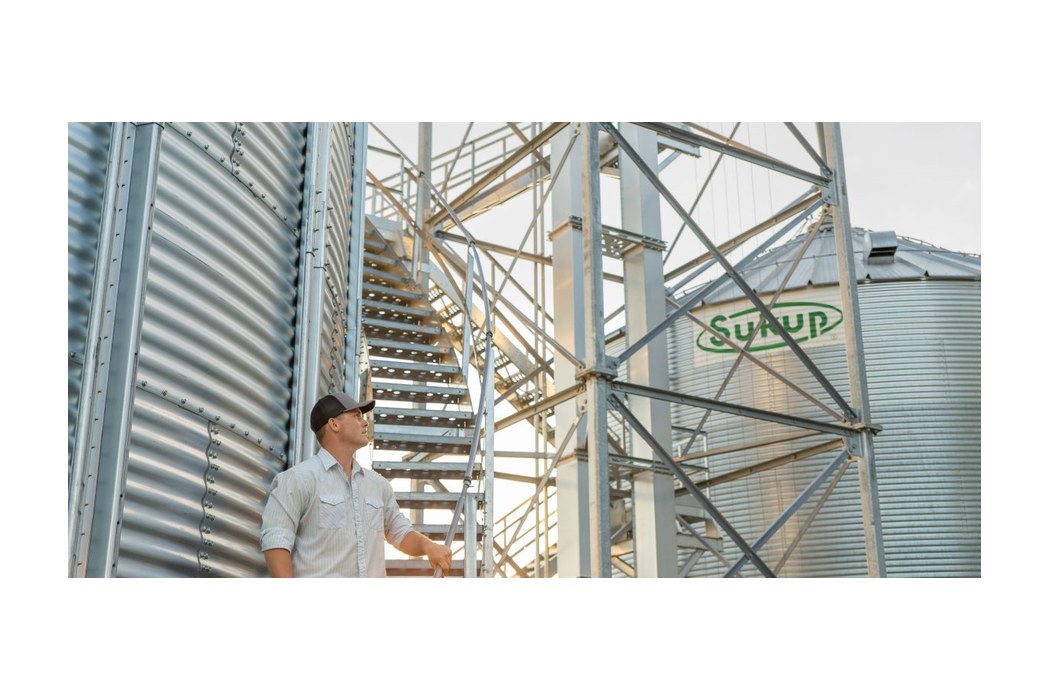
Sukup Manufacturing Co.
A farmer’s improvised answer to spoiled corn became a 60-year Iowa manufacturing business. Sukup now sells the machinery around the grain bin - and is betting that tighter controls and automation will define what comes next.
Magnera Corporation
The materials inside diapers, surgical gowns, coffee capsules and weatherproof walls rarely get a headline. Magnera, born from a 2024 industrial merger and backed by 160 years of inherited know-how, makes a $3.2 billion business out of that invisibility.
Zekelman Industries
Most steel companies stop at the loading dock. Zekelman follows the material into warehouses, job sites and even finished apartments - a 149-year industrial lineage betting that control of the chain can make American construction faster and more predictable.

Coherent Corp.
AI may live in software, but it moves through light. Coherent makes much of the physical kit - from laser chips and specialty materials to complete optical links - that lets data centers, factories and scientific instruments work at speed.

Arduro
Arduro is a Pennsylvania-based recovered materials company that uses a patented, low-temperature chemical devulcanization process to reclaim high-quality carbon black, rubber and silica from end-of-life tires and industrial rubber waste. Its process breaks the sulfur cross-links in vulcanized rubber without cutting the carbon-carbon polymer backbone, letting manufacturers replace virgin raw materials with recovered ones at comparable performance and lower carbon footprint. Its first commercial product, ELDARIX r1000 recovered carbon black, is PAH-compliant and 6PPD-free.
Halo Industries, Inc.
Halo Industries is a Santa Clara deep-tech company that uses lasers instead of diamond wire saws to slice silicon carbide crystal boules into wafers, the foundational substrate for high-voltage power electronics. Spun out of Stanford in 2014, its proprietary light-based process aims to eliminate kerf loss, cut defects, and slash water and energy use, giving more usable wafers from every expensive crystal. Backed by an $80M Series B, Halo is scaling SiC production for electric vehicles, grid infrastructure, renewables, and aerospace, and extending the same approach to silicon, sapphire, and diamond.

ACT-ion Battery Technologies
ACT-ion Battery Technologies is a Dallas-based advanced materials startup building a cleaner, faster way to make cathode active materials (CAM) - the single most expensive ingredient in a lithium-ion battery. Spun out of Hunt Energy Enterprises in 2019 and led by CEO/CTO Jin-Myoung Lim, ACT-ion uses a continuous, chemistry-agnostic manufacturing process to produce surface-engineered single crystal cathode powders in a fraction of the time and cost of incumbents, with less energy, water and waste. The company is scaling its process at a pilot plant in Carrollton, Texas, with the goal of anchoring a domestic battery-materials supply chain.
Divergent
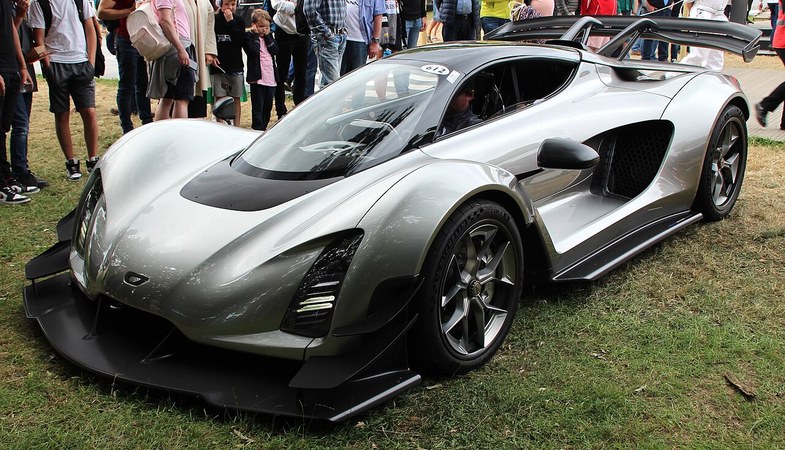
Divergent Technologies is a Torrance, California digital-manufacturing company behind DAPS, the Divergent Adaptive Production System - an end-to-end platform that pairs AI-driven generative design, metal 3D printing, and software-defined robotic assembly to produce complex automotive, aerospace, and defense structures without part-specific tooling. The same system that builds the record-setting Czinger 21C hypercar now turns out missile airframes and drone aerostructures for U.S. defense primes.
Impossible Objects, Inc.
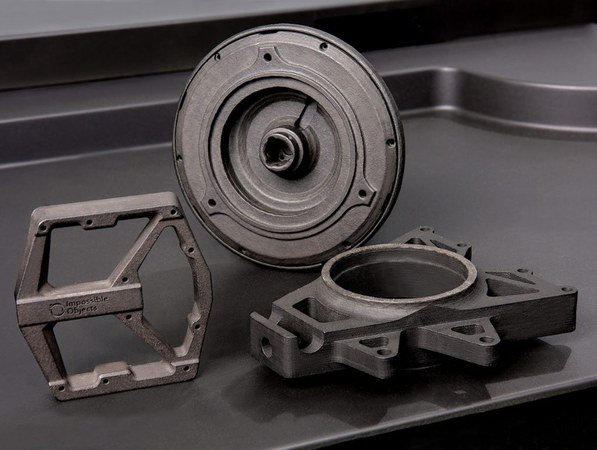
Impossible Objects is a Northbrook, Illinois manufacturer of industrial 3D printers built around its proprietary CBAM (Composite-Based Additive Manufacturing) process. Instead of melting plastic filament, CBAM stacks long-fiber sheets of carbon fiber or fiberglass, inkjet-prints each layer with a fluid, bonds them with high-performance polymer powders like PEEK and nylon, then compresses and heats the stack into a solid composite part. The result is parts the company says are stronger, more dimensionally accurate, and printed up to 15x faster than competing methods - aimed at aerospace, defense, automotive, and electronics customers that need composite parts at production volume.