Stable Kernel makes software for moments when the neat diagram has already failed. A restaurant's delivery fleet is growing faster than its dispatch system. A concertgoer is standing in a concession line while the best song of the night begins. A water-heater manufacturer has connected products, old systems and contractors all asking for the same data in different ways. These are not app ideas. They are organizational tangles with an interface attached.
That distinction explains the Atlanta company's business. Founded in 2013 as a mobile-development shop, Stable Kernel now combines market research, product design, full-stack engineering, cloud modernization, data work and AI. It serves large enterprises, often Fortune 1000 companies, whose core business may be food, finance, retail or manufacturing rather than software. The deliverable can be an app, a platform, an IoT system or a data pipeline. The thing being purchased is a product team that can follow a problem through several departments without losing the plot.
CEO and co-founder Jason Russell described the model plainly in a 2022 interview: teams can join an existing client group, or Stable Kernel can become the product team. The firm is neither a recruiter sending interchangeable résumés nor a giant consultancy arriving with 50 people and a transformation vocabulary. Its sweet spot is a smaller, permanent crew of analysts, researchers, designers, architects, engineers and testers. They land on one problem, prove they can ship, then often move sideways into the next one.
01 / The businessThe product is the whole loop
Consultancies love a menu. Stable Kernel's has four large sections: enterprise digital transformation; product design and development; market research and strategy; and data and AI. The list underneath runs from focus groups and concept testing to microservices, mobile apps, cloud platforms, IoT integration, predictive analytics and agentic systems. It looks broad because enterprise problems refuse to respect service-line boundaries.
The combination matters. Research stops a client from commissioning the wrong feature with perfect technical execution. Design makes the workflow legible. Engineering connects it to the systems already running the business. Data work tells the client whether anything improved. A buyer could assemble four vendors to do those jobs, then pay a fifth person to translate among them. Stable Kernel's wager is that one accountable team reduces the handoffs.
The business model is custom professional services, not packaged SaaS. Public pricing is unavailable, and that is unsurprising: a customer-interview sprint, a mobile redesign and a multi-year IoT platform do not fit on one rate card. The supplied company record estimates annual revenue around $13.7 million and lists a $2.58 million debt financing in December 2024. Those figures are useful as scale markers, not audited accounts. Great Place To Work counted 106 U.S. employees in October 2025; the supplied record says 130.
“We are a partner.”Jason Russell, describing the goal clients should feel, not the label vendors should claim
02 / What they didThe drive-through became a systems diagram
The clearest case involves an unnamed quick-service restaurant with 2,600 locations. Demand at dual drive-throughs was straining the experience. Customers wanted delivery and digital ordering. The company had its own delivery vehicles, an existing app on a codebase poorly suited to modern customer experience, and several ways an order could enter the restaurant. Each new channel created another chance for the operational machinery to disagree.
Stable Kernel did two connected jobs. It built an internal delivery system that batched orders, automated driver dispatch and anticipated peak periods for staffing. It also overhauled digital ordering, migrating toward a friendlier codebase and coordinating in-person, drive-through and delivery workflows. Recommendations nudged customers to add or upsize items. The published result was a 400 percent increase in online orders during the first week. Across 250 pilot locations, the delivery system was generating $4 million per week; the case study attributes $229 million in catering value to the broader work.
What did it cost? The case study does not say, and there is no credible way to reverse-engineer the fee from the outcome. What failed first is clearer: the old mobile foundation and the disconnected handling of orders and delivery could not absorb customer demand cleanly. What changed the client's mind was not one executive epiphany. The behavior was already visible - crowded lanes, more delivery demand, cart abandonment and a fleet waiting to be coordinated. Stable Kernel translated those signals into a product sequence.
That sequence is copyable. Begin with the visible choke point. Instrument it. Modernize only the path that must change. Automate the operational handoff, not merely the customer screen. Pilot in enough locations to encounter real variability. Then expand when the unit economics and customer behavior agree. It is less thrilling than announcing an innovation lab, and much easier to evaluate.
03 / The portfolioSoftware you can bump into
The rest of the portfolio has a pleasingly physical quality. For Rheem, Stable Kernel says a five-plus-year partnership produced web and mobile applications on a fault-tolerant IoT platform. The tools gave employees, customers, contractors and distributors access to connected-product data. Stable Kernel's case-study index reports an 18 percent sales increase, 6 percent savings for homeowners and a 90 percent reduction in hosting cost; a detailed page separately lists operational and engagement gains. The durable achievement is the platform underneath many releases, not a single glossy launch.
At Atlanta's Fox Theatre, the brief began with a tiny indignity: patrons missing part of a show while waiting for a drink. User interviews confirmed the obvious but useful truth that concertgoers dislike concession lines. Because the audience skewed toward active iOS users, the team built an app for pre-ordering and designated pickup, plus venue history and a virtual tour. The backend had to connect payments, point-of-sale, ticketing and changing venue data. The theatre reported positive audience feedback and a 10 percent revenue increase.
This is where Stable Kernel differs from an agency that stops at the screen and a systems integrator that starts with the infrastructure. Its better stories move in both directions. Researchers can observe the queue; engineers can trace it into a point-of-sale integration; data specialists can measure what happens after launch. The competitors are therefore varied: Accenture and Cognizant at the large end, Globant, CI&T and Thoughtworks in digital engineering, specialists such as WillowTree, boutique software firms, and the client's own internal team.
04 / AI without the confettiThe first failure is usually underneath
Stable Kernel formally launched a Data & AI practice in January 2025. Its announcement emphasized autonomous agents, predictive systems and enterprise transformation. The more revealing work arrived later in its technical writing, where the company describes why conversational-AI pilots stall. The diagnosis is gloriously unromantic: brittle integrations, slow backend calls, absent failure handling and missing observability.
In other words, the model may understand that a customer wants to change an order while the point-of-sale system rejects the update. It may know the answer but take three seconds to assemble it, which sounds like dead air on a phone. It may work on scripted happy paths and fold when a customer interrupts. Or it may fail without session-level tracing, leaving everyone with anecdotes instead of a cause. A clever interface cannot outrun bad plumbing.
If the POS times out, a smarter model will not save the order.
The company's recovery framework recommends diagnosis before another pilot: map the primary failure, name missing evidence, decide whether the current architecture is rescuable, then rebuild the relevant layer. It puts numbers on the work. Integration redesign may take four to eight weeks; latency work three to six; failure handling four to eight; observability two to four before the primary recovery begins. Combined failures can mean eight to twelve weeks. Those are Stable Kernel's planning ranges, not universal promises, but they are more useful than “iterate quickly.”
05 / What to stealSell the seam, then prove it
Stable Kernel's most transferable idea is commercial. The company found a valuable position between staff augmentation and global consulting. It can arrive with fewer layers than a giant firm while covering more of the product loop than a narrow development shop. It sells the seam between customer behavior and enterprise architecture - the place where responsibility is fuzzy, legacy constraints are real and an internal team may lack one or two critical disciplines.
The operator's copy sheet
- Turn the abstract mandate into one observable annoyance.
- Put research, design and engineering on the same feedback loop.
- Attach the front-end promise to the operational system that must fulfill it.
- Choose one business metric before choosing the fashionable technology.
- Use a successful wedge to earn adjacent work, not to force a giant first engagement.
The model will not work everywhere. A company shopping for a standardized commodity tool should buy one, not commission custom software. A small business without a clear economic bottleneck may struggle to justify a multidisciplinary team. An enterprise that cannot name a product owner, provide access to its systems or agree on outcome metrics can turn even good engineering into expensive theatre. And if a foundational API, data source or operational owner does not exist, an AI pilot may need a new scope rather than a rescue sprint.
There is also a tension in being broad. “We do research, design, engineering, data and AI” can sound like every digital consultancy's website. Stable Kernel's defense is evidence at the level of heaters, soap dispensers, delivery vans and theatre drinks. The more specific the case, the sharper the category becomes. Its Inc. 5000 record - six appearances listed between 2017 and 2025, including No. 1,415 in 2025 with 307 percent three-year growth - suggests the position has commercial traction.
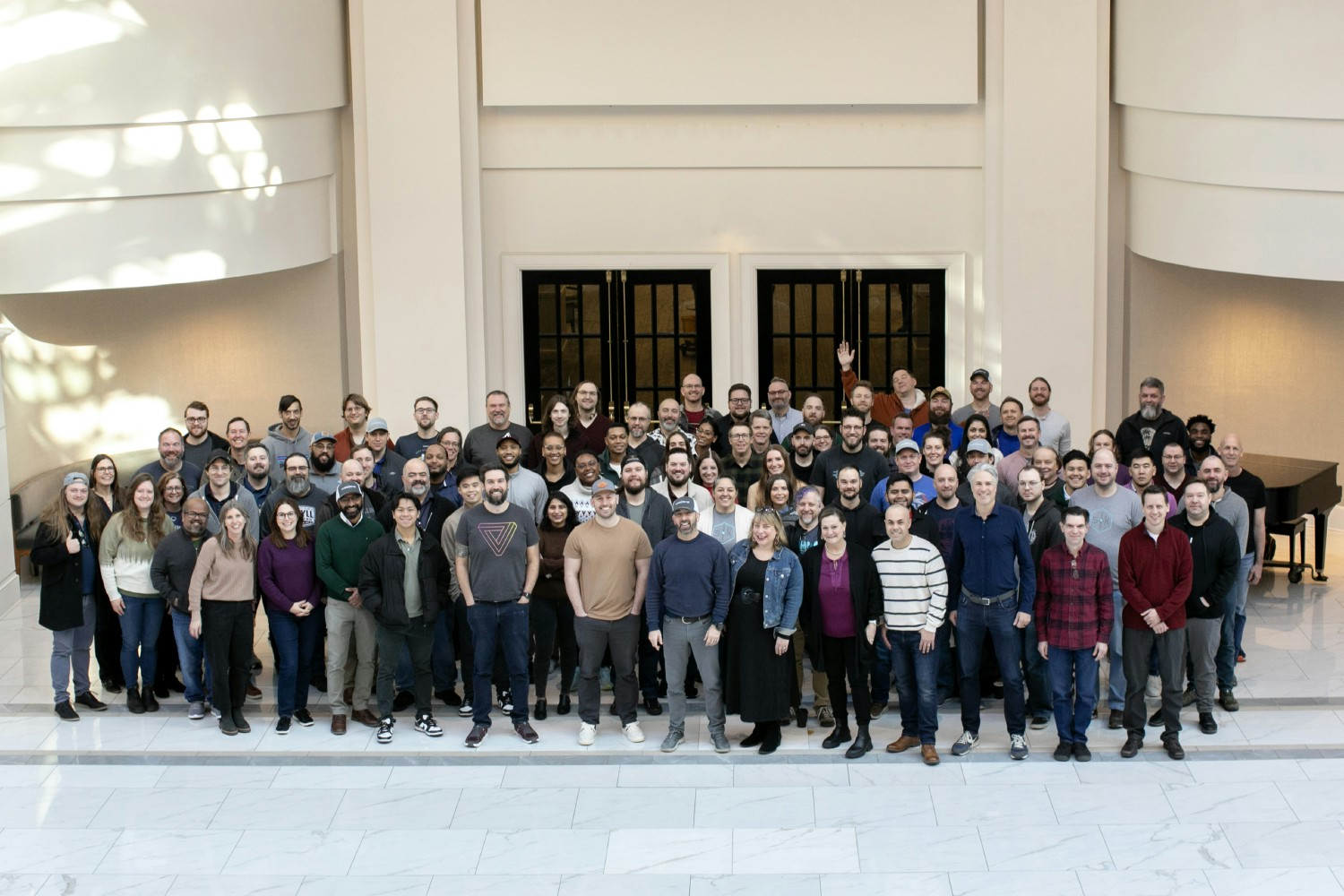
The company's culture story serves the delivery story, too. Stable Kernel talks about transparent goals, flexible work, strengths-based teams and an onboarding program called Kernel Camp. Great Place To Work reported that all surveyed employees called it a great workplace in October 2025. In services, retention is not office decoration. Clients buy continuity, context and people who remember why an architectural decision was made two years earlier.
Stable Kernel remains mostly invisible to the consumers using what it builds. That is normal for enterprise plumbing. The restaurant, theatre or manufacturer keeps the brand relationship; the consultancy keeps the scar tissue. Its edge is knowing that the real product is rarely the app alone. It is the app, the old system, the staff workflow, the measurement plan and the uncomfortable conversation about who owns what when something breaks.