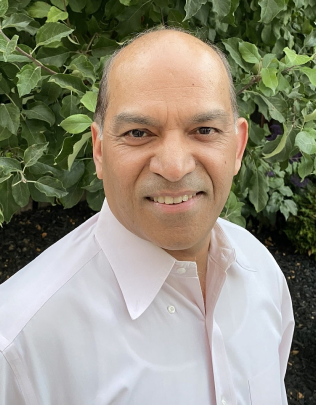
The Software-Defined Vehicle, Before That Was a Thing
In 2008, while the global financial system was collapsing, Shrinath Acharya was betting on something nobody was buying yet: that every car on the planet would eventually need to be updated like a smartphone. He co-founded Excelfore Corporation in Fremont, California - not with a splash, but with a specific thesis. Vehicles had too many control units, too much software, and zero good infrastructure to keep it maintained after the car left the factory floor.
That bet has now turned into a platform running inside millions of vehicles, deployed by more than 20 automotive manufacturers across four continents. Audi uses it. Tata Motors uses it. VinFast uses it. Maruti Suzuki, GAC, and Hero MotoCorp use it. Frost & Sullivan gave Excelfore its 2024 Global Enabling Technology Leadership Award and called the OTA solution "revolutionary." AWS and Microsoft both partnered with Excelfore in 2024-2025 to embed it deeper into their cloud stacks.
The platform is called eSync. It does more than push software updates to your car's infotainment screen. It handles the full vehicle - safety-critical ADAS systems, powertrain controllers, telematics units, every ECU in the stack. It can pull diagnostic data upstream, run edge AI for anomaly detection, and enable "Feature on Demand" - the ability to unlock a capability after purchase, the same way you upgrade a SaaS subscription.
Acharya did not arrive at this as an automotive lifer. His background is mechanical engineering (B.Tech from NIT Warangal), systems engineering (MS from UT Austin), and business (MBA from Wharton). He ran MARGI Systems as CEO from 1994 to 2003, building consumer electronics products that won PC Magazine's Editor's Choice Award and a Popular Science Award. He then ran Harman International's Multimedia Division as CEO - first at Harman International, then at Harman Becker - through 2008. By the time he started Excelfore, he had already spent 15 years turning hardware into software-defined products.
His cross-domain background matters to how he builds. A mechanical engineer understands why a firmware update to a transmission controller is not the same risk profile as updating a streaming app. A Wharton MBA understands how to sell that distinction to a procurement committee at a Tier-1 automotive OEM. And someone who ran a consumer electronics company in the 1990s knows what happens when a product's software lifecycle outlives its original hardware assumptions.
"Amidst the Doom and Gloom, I am optimistic."
- Shrinath Acharya, LinkedIn, April 2020Recalls Are Expensive. OTA Is Cheaper.
Every automotive recall is, at its core, a logistics problem. A vehicle leaves the factory with software baked into dozens of control units. That software has bugs. Sometimes those bugs are dangerous. The traditional fix is to mail every owner a letter, ask them to bring the car to a dealer, and have a technician physically reprogram the hardware. At scale, across millions of vehicles, that process costs billions of dollars per year across the industry.
Excelfore's eSync platform is designed to make that letter unnecessary. If the OEM can push a validated software update to every affected vehicle overnight - securely, reliably, without touching a physical connection - the recall becomes a silent background process. The car wakes up fixed. The owner is never inconvenienced. The manufacturer's warranty exposure shrinks.
The harder part is not the network connectivity. The harder part is that modern vehicles have 50 to 150 Electronic Control Units (ECUs), made by different suppliers, running different operating systems, on in-vehicle networks like CAN, Ethernet TSN, and LIN. A reliable OTA system has to speak all of those languages, handle partial failures gracefully, maintain cryptographic integrity at every step, and roll back cleanly if something goes wrong - all while the car might be in motion on a highway.
Excelfore holds multiple patents in exactly this domain. Acharya has been working on in-vehicle networking standards through the eSync Alliance, a consortium he helped found to standardize the protocols that govern secure OTA and data exchange between vehicle components and the cloud. When the industry says "eSync," they often mean the standard - not just the product.
The Excelfore Product Stack
Building With the Giants
By 2024, Excelfore had secured something that validates a B2B infrastructure play more than any press release: multiple simultaneous partnerships with the largest cloud platforms on earth.
AWS gave Excelfore its Automotive Competency designation and integrated eSync into its Connected Mobility Solution. Hero MotoCorp's deployment runs Excelfore's eSync integrated directly with AWS IoT Cloud Infrastructure across 10+ Indian cities - two-wheelers, not just passenger cars, showing the platform's range. A separate AWS blog highlighted Excelfore's edge AI for anomaly detection using AWS services.
Microsoft partnered with Excelfore in January 2025 specifically on generative AI for automotive OTA - using Azure's AI layer to make the update and diagnostics process smarter, not just faster. That positioning - generative AI inside the vehicle update lifecycle - is where Acharya is pushing the platform next.
Green Hills Software, a real-time operating system vendor whose software runs inside safety-critical automotive systems, partnered with Excelfore for production-ready eSync OTA integration. IIJ Global collaborated on security protocols for connected vehicles. These are not marketing partnerships - they are integration relationships at the level of the vehicle stack that takes years to certify.
From Consumer Electronics to the Connected Car
There is a through-line in Acharya's career that only becomes visible in retrospect. At MARGI Systems in the 1990s, he was building hardware-software products for consumers - devices that needed to work out-of-box, update gracefully, and deliver a premium experience on constrained hardware. At Harman, he ran a multimedia division that built infotainment systems for cars. The vehicle was already the product. The software was already the differentiator.
When he left Harman in 2008 to start Excelfore, he wasn't pivoting. He was zooming in. The specific problem of how a vehicle's software gets maintained across its entire lifecycle - not just the infotainment screen, but the whole car - was exactly the intersection of everything he had built before.
Excelfore's early years were not fast. Automotive sales cycles are measured in years, not quarters. OEM qualification processes require certifications that take longer than most startup runways. Acharya raised $14.6M across four rounds over six years - modest for Silicon Valley, efficient for deep automotive infrastructure. The company now employs 99 people across offices in Fremont, Shanghai, Frankfurt, Tokyo, and Bangalore - the geographic footprint of the clients it serves.