Every vehicle tells you who it is for. A Prius whispers about grocery runs and compost bins. A Range Rover shouts about ski weekends you will never actually take. The Bollinger B2, unveiled in September 2019, did something rarer. It screamed utility so loudly that beauty never had a chance to interrupt.
This was an all-electric pickup truck built by a former organic farmer from upstate New York who looked at the smooth, aerodynamic future of electric vehicles and said, "No, thank you." Robert Bollinger wanted a truck that could haul a 16-foot two-by-four through its own cabin. He wanted hydraulic brakes because they feel right. He wanted a body so boxy it made the original Land Rover Defender look like a sports car. And for a brief, shining moment, enough people agreed with him that over 1,000 buyers put down $1,000 deposits on a $125,000 truck that did not yet exist.
The B2 is a story about the gap between a great idea and a sustainable business. It is also a story about what happens when you build exactly what you want and discover the world is not ready to pay for your principles.

Figure 1. The B2's production-intent design, unveiled December 2020. Note the complete absence of curves. This is not minimalism. This is a refusal.
The Origin Story
Robert Bollinger was not a car person. He was a farm person. In 2014, running an organic farm in the Catskills, he needed a vehicle that could handle mud, snow, and the occasional escaped goat. The trucks on the market felt wrong - too plush, too compromised. So he started a company to solve it himself.
Bollinger Motors began in Hobart, New York, population 400. The mission was simple: build the most capable off-road electric vehicle on the planet. Not the fastest. Not the longest-range. The most capable. That word matters. Capability is not a spec sheet. It is a philosophy. And the philosophy of the B2 could be summarized in three words: function over form.
"The B2 could fit a 16-foot two-by-four board completely inside the vehicle thanks to its pass-through tunnel - something no other pickup could do." - Engineering note, Bollinger Motors, 2019
The pass-through tunnel was the B2's signature party trick. Because the battery sat beneath the cabin floor, the entire length of the vehicle became a hollow channel. You could slide a ladder through the front and out the back. You could carry pipes that would stick out the tailgate of a Ford F-150. It was the kind of feature that made contractors nod and designers weep. A perfect metaphor for the whole project: brilliant, impractical, and completely unbothered by what anyone else thought.
The Numbers
What Made It Different
In a market racing toward smooth, wind-cheating shapes, the B2 was a brick. Literally. Its drag coefficient was somewhere between "shipping container" and "small apartment building." But Bollinger never cared about aerodynamics because aerodynamics are for people who drive on highways. The B2 was built for people who drive through rivers.
Design Philosophy
"We rejected drive-by-wire because hydraulic steering gives you feedback. We rejected curves because curves are a lie. A truck should look like what it does."
The mechanical honesty of the B2 was almost shocking. Dual AC permanent magnet motors, one per axle, with locking differentials. A two-speed transfer case with high and low gearing - a feature so rare in electric vehicles that most EV engineers have never designed one. Double wishbone independent suspension at all four wheels. Hydraulic steering and brakes chosen specifically for their tactile feedback. An all-aluminum body that would not rust no matter how many salt flats you crossed.
Even the removable roof and doors felt like a manifesto. In an era where cars are becoming sealed pods of software, the B2 offered open-air driving with panels you could unbolt in your garage. It was a love letter to the original Ford Bronco and the Defender 90, written in volts and aluminum.
And then there was the classification. Bollinger classified the B2 as a Class 3 medium-duty truck, with a gross vehicle weight rating between 10,001 and 14,000 pounds. This was not accidental. Class 3 vehicles face fewer regulatory hurdles than passenger vehicles. The B2 was essentially a commercial truck wearing hiking boots. It was clever. It was also a hint that Bollinger understood something early: selling this thing to consumers was going to be harder than building it.

Figure 2. The rear of the B2. No swooping lines. Just a tailgate and a mission.
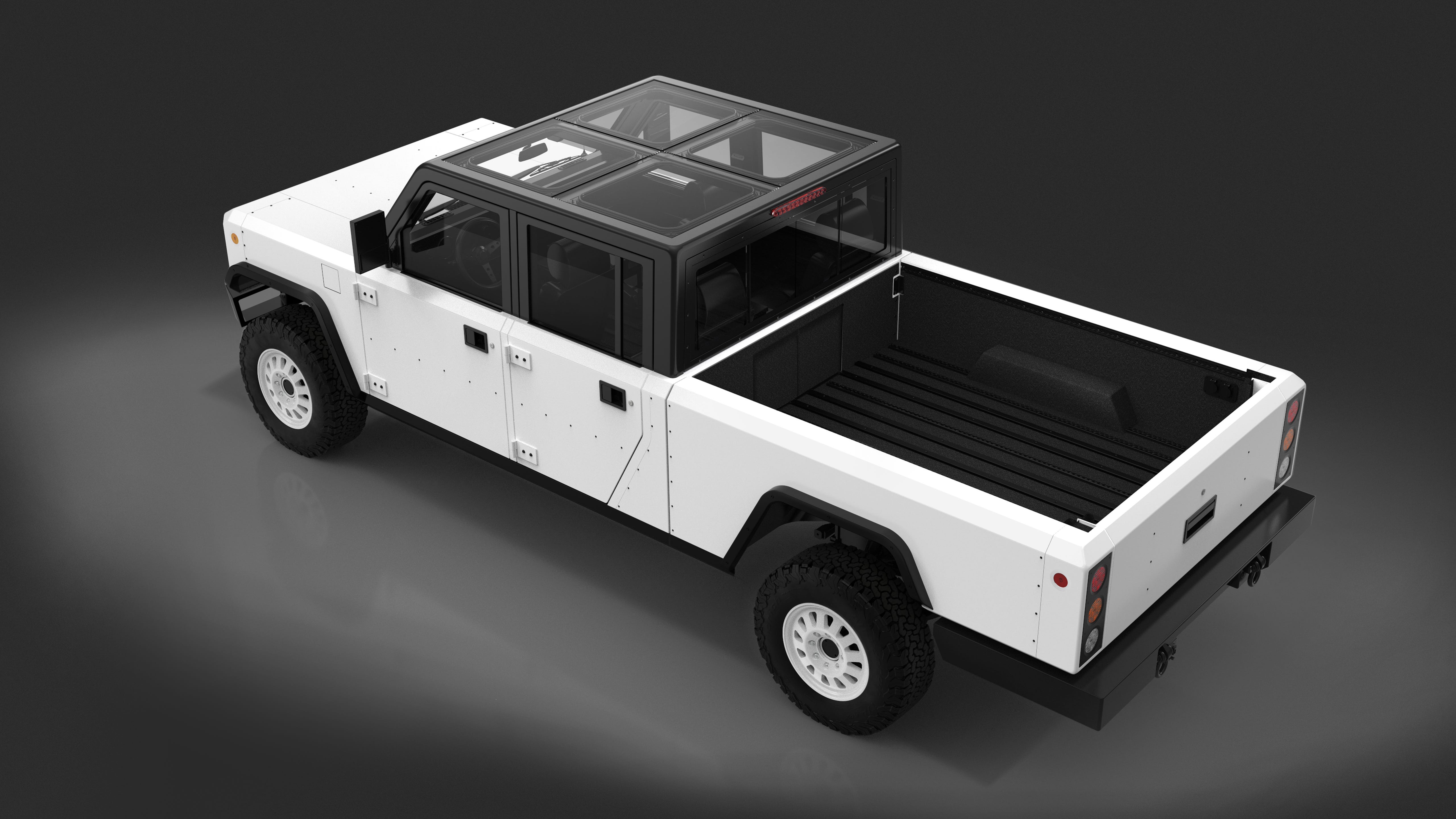
Figure 3. Side profile. The silhouette says one word: work.
The Timeline of a Dream
Understanding the B2 requires understanding the arc of Bollinger Motors itself. This was not a company that failed because of one bad decision. It was a company that made a series of logical choices in an illogical market.
Robert Bollinger founded the company in Hobart, New York, while running an organic farm. The original plan was simple: build an electric off-roader because nobody else was doing it honestly.
The B1 SUV and B2 pickup debuted at a media event in Michigan. The automotive press collectively blinked. Was this a joke? No. It was just that serious about being ugly.
Bollinger moved to Oak Park, Michigan, and announced the Deliver-E commercial van program. The first sign of a pivot away from consumers.
Updated "production-intent" designs were unveiled. The B2 gained door handles and lost none of its hostility toward curves.
The announcement that changed everything. Bollinger indefinitely postponed the B1 and B2 consumer models, pivoting to commercial delivery vans and medium-duty platforms. Over 1,000 preorders were refunded.
Mullen Automotive acquired a 60% controlling interest for $148.2 million. Hope flickered. Maybe the B2 would return under new ownership.
Bollinger Motors was put into receivership following a financial dispute between founder Robert Bollinger and Mullen Automotive. The dream was now in hospice.
Bollinger Motors ceased operations entirely. All employees laid off. The B2, the B1, and the Deliver-E van never reached a single customer driveway.
Notes From the Field
- Robert Bollinger was an organic farmer before he was an automotive CEO. He built the truck he needed for his own farm.
- The B2's hydraulic steering and brakes were chosen specifically for tactile feedback, rejecting the industry-wide drive-by-wire trend.
- Over 1,000 buyers put down $1,000 deposits at $125,000 each, proving there was a market for luxury utilitarian EVs.
- The angular design was deliberately compared to vintage Ford Broncos and Land Rover Defenders by the automotive press.
- The pass-through cargo tunnel was enabled by placing the entire electrical system beneath the cabin floor.
- Classifying the B2 as a Class 3 medium-duty truck reduced regulatory burden compared to passenger vehicles.
The Competition
When Bollinger unveiled the B2 in 2019, the electric pickup market was theoretical. By 2022, it was a battlefield. Here is how the B2 stacked up against the rivals that actually made it to production.
Tesla Cybertruck
The obvious comparison. Both were angular. Both polarized. But the Cybertruck had Tesla's supercharger network and a cult of personality. The B2 had aluminum panels and a sense of humor. The Cybertruck shipped. The B2 did not.
Rivian R1T
The R1T went the opposite direction: beautiful, refined, adventure-branded. It also cost less and had a real service network. The B2 was for people who found the R1T too soft. There were not enough of those people.
Ford F-150 Lightning
Ford took the safest possible approach: electrify the best-selling vehicle in America. The Lightning was familiar, capable, and backed by a century of dealer networks. The B2 was exotic, extreme, and backed by a startup.
GMC Hummer EV
Both were over-the-top, over-priced, and over-engineered. But GMC had General Motors behind it. The Hummer EV could lose money for years and survive. Bollinger could not.
Chevrolet Silverado EV
The work-truck alternative to the Lightning. Practical, fleet-friendly, and boring in exactly the ways that sell. The B2 was too weird for fleets and too expensive for consumers.
Lordstown Endurance
The saddest comparison. Another startup EV truck that never found its footing. The Endurance and the B2 are now footnotes in the same chapter: "What Not to Do."
Why It Failed
It is tempting to say the B2 failed because it was too expensive, too weird, or too early. All of those are true. None of them is the full story.
The real problem was simpler. Bollinger Motors tried to do everything in-house on a startup budget. They designed their own chassis, body, and drivetrain philosophy. They rejected partnerships that would have compromised their vision. They were right about the product and wrong about the economics. That is a classic trap.
At $125,000, the B2 was priced into a segment where buyers expect concierge service and the confidence that the company will exist for warranty work. Bollinger could offer neither. A $125,000 truck from a startup is not a purchase. It is a bet. And most truck buyers do not place bets that large on companies they have never heard of.
The pivot to commercial vehicles in 2022 was financially rational but devastating. It acknowledged what insiders already knew: the consumer B2 could not be built profitably at scale. The commercial market offered larger contracts and fleet sales. But commercial buyers want reliability and proof of concept. Bollinger was running out of runway to provide either.
Mullen Automotive's acquisition should have been a lifeline. It became an autopsy. Mullen itself was a struggling EV company buying another struggling EV company. By 2025, the receivership and final shutdown felt less like a tragedy and more like the inevitable last page of a very short book.
The Bottom Line
The B2 proved that there is a market for honest, utilitarian electric trucks. It also proved that building one requires either infinite patience or infinite money. Bollinger had neither.
Who Was It For?
The B2 was for the person who looks at a Rivian and sees unnecessary luxury. The person who owns a ranch, not a ski condo. The person who needs to haul fence posts through a creek bed and does not want to explain to a service technician why their truck has a pass-through tunnel.
It was for early EV adopters who were tired of being preached to about efficiency and wanted to be preached to about capability instead. It was for off-road enthusiasts who believed that torque is a virtue and curves are a conspiracy. It was, in short, for a niche so specific that even the niche could not quite afford it.
That is not an insult. Every great product starts with a niche. The question is whether the niche is large enough to fund a factory. For the B2, the answer was no.
The Legacy
Will anyone remember the Bollinger B2 in ten years? Probably not the average driver. But automotive historians, EV engineers, and industrial designers will. Because the B2 asked a question that the industry is still afraid to answer: what if an electric vehicle was built to do work first and look good second?
The pass-through cargo tunnel was patented thinking that may resurface in commercial vehicles. The E-Chassis platform, adapted for delivery vans, was genuinely innovative modular architecture. The insistence on hydraulic systems in a digital age was a reminder that not every mechanical tradition deserves to die.
Robert Bollinger started a company because he needed a truck. He built something strange and beautiful and doomed. The B2 is a monument to the idea that you can be right about everything and still fail. That is not a happy ending. But it is an honest one. And if there is one thing the B2 believed in, it was honesty.
"The B2 was not a product. It was a provocation. And provocations rarely survive their own success." - YesPress Editorial