The object that best explains Newlux Group is not one of its cooking robots. It is a suitcase. In 1962, a Spanish tailor named Manuel left home for France carrying one, found work, met Sagra and absorbed the discipline of high-end clothing. The company says his work drew the notice of Christian Dior. In 1973 the couple returned to Alicante; a year later they started Newlux, making leather garments with French couture know-how and a family-business belief that product quality and people came first.
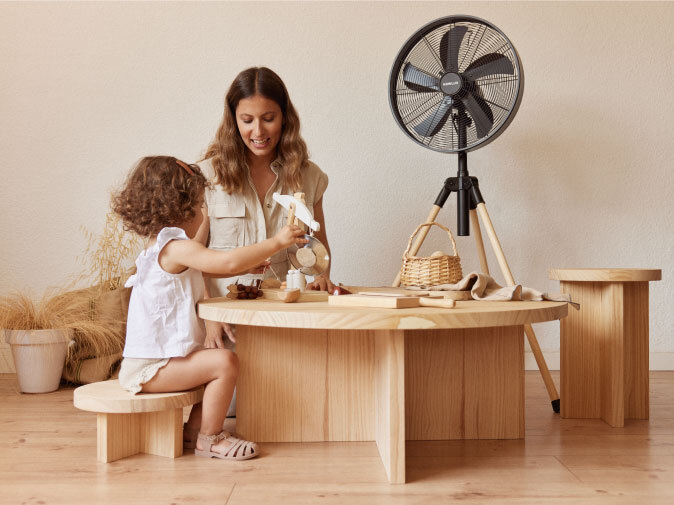
Today, the name appears on pressure cookers, fans, vacuums, portable clothes dryers, racks and modular storage. Sister lines cover luggage and sleep. That sounds like a company that wandered. It is better understood as one that kept asking the same commercial question in different aisles: can an ordinary household object be useful, visually considered and affordable at once?
Newlux is based in Sant Vicent del Raspeig, outside Alicante, and lists itself as a self-owned consumer-electronics business with 11 to 50 employees. The supplied company record estimates 22. It is not trying to outspend Philips, Cecotec, IKEA, Samsonite and Emma simultaneously. Its game is narrower: assemble a portfolio around daily friction, sell it wherever customers already shop, and make the buying decision simple.
The first thing that failed was the first thing it made
At the end of the 20th century, Newlux had already edged beyond clothing into tableware, cutlery and cookware. Then fast-fashion groups changed the economics of apparel. The leather business entered a crisis in the early 2000s just as leadership was passing to another generation. Newlux's telling is unusually specific about one choice: the Molines family tried to keep its workers while searching for a way through.
The response was not a pristine consultant's pivot. In 2004 the group moved from textiles into home technology and created Spanish manufacturing capacity for mattresses and sleep products. It worked with business customers, including the newspaper La Razón, and built a thicket of B2B labels - Newcook, Newchef, Newpower, Cocifácil, Robotmix, Samba and Kuida-t among them. When Manuel died in 2006, Sagra and their five children took over a company whose category had changed but whose operating habits had not disappeared.
“Products designed to be enjoyed.”Newlux Group's compact operating idea
That is the pivotal detail. Newlux did not decide that tailoring had been a mistake. It decided that tailoring was a capability - attention to finish, materials and the user's body - rather than a permanent product category. A mattress, a suitcase handle and a fan with wood-toned legs can all inherit that instinct. The link is not technical. It is the attempt to make practical objects feel less accidental in a home.
The reinvention chain / capability stays, merchandise moves
A company organized around chores, not gadgetry
Browse the current Newlux shop and the catalog feels like a diagram of domestic nuisance. A 5-liter multifunction cooking robot is listed at €59.90. A 6-liter pressure model is €108. A folding drying rack can cost €24.90; a portable heater, €119. Vacuums, ceiling fans, garment racks, shoe storage and mop systems fill the gaps. These are public list prices at the time of review, not a fixed promise, but they locate the brand: above the anonymous object with a mysterious seller name, below the premium appliance that becomes a status purchase.
The portfolio is broader than appliances. Numada handles travel products. Nalui covers mattresses, pillows and bedding, carrying forward the group's sleep-manufacturing chapter. The wider corporate LinkedIn page also names Don Descanso and Kuida-t. For business buyers, Newlux pitches all three main ranges to hotels, interior designers, home and appliance stores, luggage shops and mattress specialists.
The business model is correspondingly hybrid. Newlux sells from its own ecommerce store, through marketplaces and retailers, and through a professional program. That program includes tailored rates, specialist support and an intriguing inventory-risk offer: for some negotiated periods, unsold goods may be refunded or swapped for faster-moving items. Influencers and bloggers can earn commissions of up to 10 percent on attributable sales. Installment provider SeQura helps finance qualifying purchases.
This mix solves different problems for different customers. A household gets one place to compare ordinary home products, 24-hour delivery on many Newlux and Numada orders in mainland Spain, and direct technical support. A small retailer gets range without having to invent products. A hotel or designer gets a catalog and a human contact. Newlux gets several ways to discover demand instead of betting everything on shelf space or paid traffic to its own site.
What changed the company's mind
The first change was defensive: fast fashion made the legacy model untenable. The second was opportunistic. In 2015, large marketplaces offered traffic, payments, search behavior and customer feedback without requiring Newlux to build the entire distribution machine first. The group says some hero products became Amazon top sellers for weeks. More important, it concluded that its place was closer to the end customer.
In 2021, it paused to reorganize the collection of labels accumulated during the B2B years. Newlux, Numada and Nalui became a clearer shorthand for home, travel and sleep. That is brand architecture doing useful work. A customer need not understand the corporate genealogy of Newchef or Robotmix to buy a cooking appliance. The master promise - designed, usable products at accessible prices - carries more of the burden.
The distinction from competitors is therefore not a patented technology. It is the combination of category range, visual consistency, middling prices, direct service and channel flexibility. Cecotec and Taurus bring deeper appliance recognition. IKEA owns a vast home system. Generic marketplace vendors can always be cheaper. Newlux tries to be the legible middle: fewer reasons to worry than a no-name listing, fewer reasons to postpone than a premium price.
The parts worth stealing
Ask what the company knows how to do, independent of its current SKU. Newlux carried product judgment across categories.
Use a marketplace as a demand laboratory before assuming your own storefront deserves traffic.
Home, travel and sleep are easier to grasp than a family tree of product labels.
Support, fast delivery and selective stock swaps make an unfamiliar brand easier to try.
Founders can copy the sequence without copying the catalog. Start with one persistent nuisance. Launch through a channel that already concentrates the intended buyer. Watch returns, support tickets, repeat purchases and reviews - not merely gross sales. Let successful items pull adjacent categories into view. Only then decide whether a new brand clarifies the job or adds another password, logo and ad account.
Newlux's current review footprint shows why the operational layer matters. Revi displayed more than 1,300 reviews and a 4.7 out of 5 aggregate when reviewed. Alongside positive marks for delivery and service were complaints about defects or response time. That is normal commerce, but strategically important. A broad affordable portfolio produces many customer moments, and each one can turn a clean brand idea into a support queue.
When this playbook stops working
- The products are indistinguishable. Marketplace distribution amplifies price comparison when design and usability do not create a reason to choose.
- Operations lag behind the catalog. More categories multiply forecasting, spare-parts, warranty and quality-control complexity.
- The company cannot hear the customer. Direct sales help only if reviews and tickets influence product decisions.
- The umbrella becomes vague. Portfolio breadth works while every item still earns the same promise of useful, accessible design.
There is no public number for the cost of Newlux's corporate reinvention, and the story is more useful without pretending there is. The visible price was years of category learning, factory and catalog changes, a generational handoff, obsolete brand equity and the uncelebrated work of servicing many kinds of physical product. The customer-facing cost remains intentionally ordinary: tens of euros for organization and cleaning tools, roughly €100 for several larger appliances.
The company now sits in an interesting market seam. Consumers want attractive homes but are wary of decorative markups. They want technology but resent setup rituals. They want marketplace convenience but would prefer a seller that remains reachable after checkout. Newlux's answer is not to make the home smarter in the abstract. It is to make one wet floor, hot room, crowded closet or rushed dinner less annoying.
Manuel's suitcase is still the right object after all. It carried a skill from one country to another, then the company carried that skill from one category to the next. The thing inside changed. The habit of making it useful enough to keep did not.
Keep exploring
See the group, its live products and the public channels where Newlux demonstrates and discusses the range.