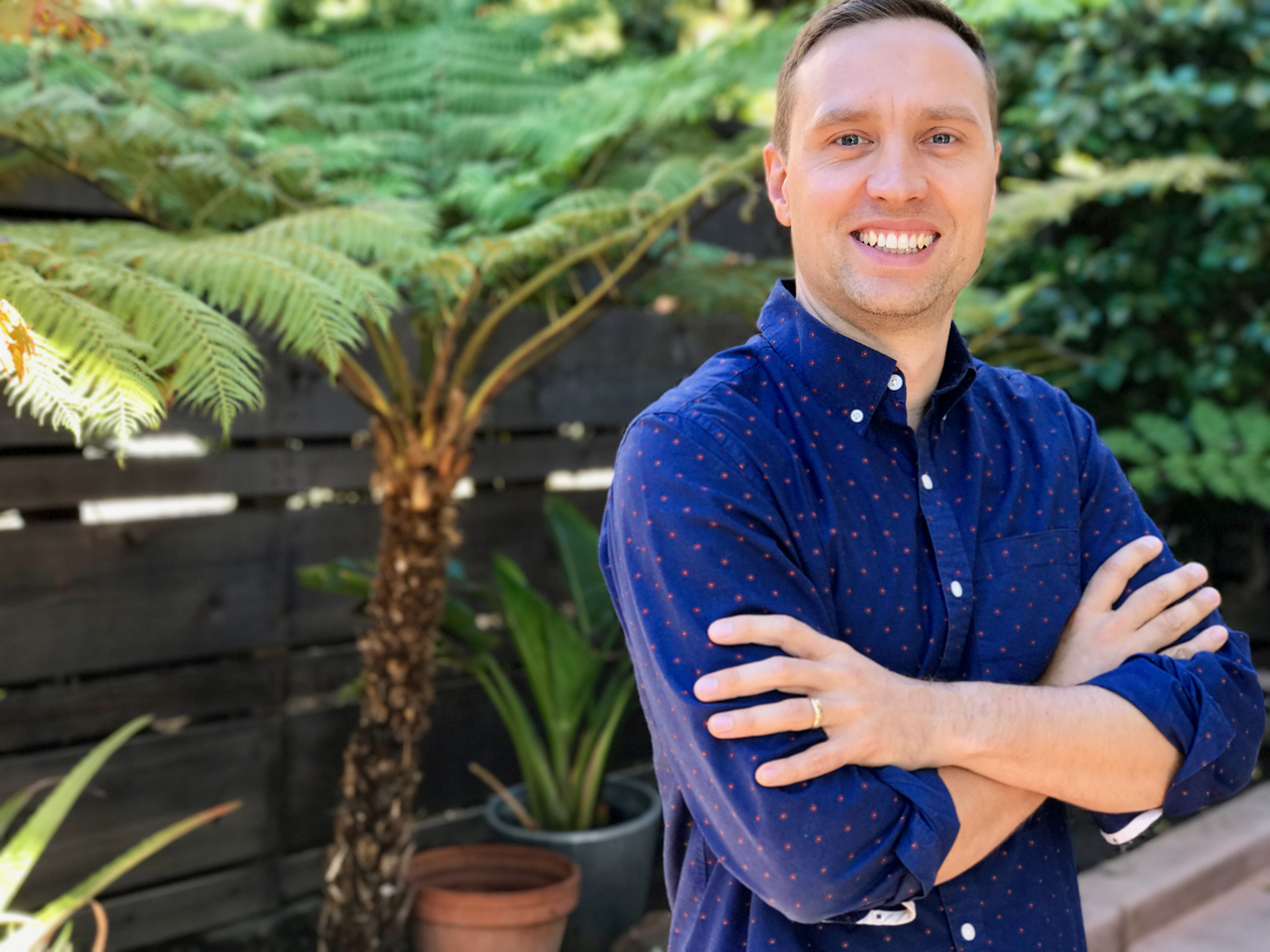
The Product Manager's Product Manager
Hubert Palan runs Productboard the way he built it: by listening before deciding. Born in Prague, shaped by a Czech Technical University computer science degree and an MBA from UC Berkeley's Haas School of Business, he arrived in San Francisco as a practitioner of the very discipline his company now serves - product management. That specificity is not incidental. Every design decision Productboard has made, every AI feature it has shipped, every pivot it has navigated, traces back to a founder who actually did this work and found it lacking.
The company he leads serves more than 5,400 organizations - Salesforce, Zoom, Microsoft, Toyota, UiPath among them - with a platform that connects raw customer feedback to the roadmap decisions that determine what gets built. Its 2024 revenue hit $71.8M. Its valuation peaked at $1.725 billion. Its latest act is a full pivot toward AI-first workflows with Productboard Spark, an agent designed not just to generate output, but to maintain the strategic context that makes product decisions coherent over time.
In 2025, Palan made the bet explicit: a 30%+ workforce reduction and a declared intention to rebuild around AI. Controversial, costly in the short term, and entirely consistent with how he thinks about product strategy - not as a list of features, but as a series of focused bets made with discipline.
"Get in the problem space, not the solution space. Immerse yourself and your team in the problem that needs to be solved."Hubert Palan, Founder & CEO, Productboard
Row 34, Seat C - The Brainstorm That Became a Unicorn
In June 2011, Palan was flying coach from Prague to New York. The flight was long, the legroom was not. He had been working as VP of Product at GoodData, helping scale the company from 6 to nearly 300 employees, and somewhere over the Atlantic he started writing down the frustrations he'd been accumulating for years. The central one: there was no good tool for doing the actual work of product management. There were project trackers. There were spreadsheets. There was nothing that helped a product team understand what customers really needed and then translate that into a coherent, prioritized plan.
He wrote: "I believe there is a better way of building great products and companies." Not exactly a pitch deck, but it was a start.
Two years passed. By January 2013, he had a name - Productboard - and a restlessness that wouldn't settle. Then came a cold Facebook message from a software engineer named Daniel Hejl, who'd seen Palan's social posts and wanted to build something together. They had originally met at a Startup Weekend in Prague. Hejl became co-founder and CTO. The problem with acting on any of this: Palan was on an H1B visa and couldn't publicly discuss his startup work while still employed.
He did it anyway, quietly. Between April 2013 and April 2014, while still at GoodData, he ran more than 1,000 customer interviews with product managers across industries - from startup heads to Twitter's Chief Customer Officer. He tested 13 distinct prototypes. He tracked his own emotional response to the feedback, logging it three times per day in a spreadsheet he called the Founder Mood Meter. The premise: if his mood was consistently improving, the market was responding.
In November 2013 he left GoodData. By 2014, Productboard was a company.
Palan plotted his emotional response to feedback 3x daily as a proxy for customer resonance
13 Prototypes. One That Worked.
What Productboard Actually Does
The Platform
Productboard sits at the junction between customer voices and product decisions. Teams use it to collect and synthesize feedback from multiple sources - support tickets, sales calls, user interviews - and connect that signal to the features and roadmap items that address it.
The core insight: most product teams aren't short on feedback. They're short on structure that makes feedback actionable. Productboard provides that structure.
Its customers include Salesforce, Zoom, Microsoft, Toyota, UiPath, Avast, Envoy, and thousands of others across enterprise and mid-market segments.
- Productboard Insights - AI-powered synthesis of customer feedback across sources
- Productboard Spark - AI agent that maintains strategic product context
- Productboard Pulse - Real-time trend monitoring from feedback sources
- Roadmapping - Prioritization and planning with stakeholder visibility
- Portal - Customer-facing feature request and voting board
On AI, Strategy, and Saying No
Palan's take on AI is more precise than most founders willing to make sweeping claims. His version: "AI accelerates execution, not strategy." The distinction matters to him. He's seen too many product teams use AI to move faster on the wrong things. Productboard Spark, the AI agent launched in 2025 amid significant restructuring, was designed specifically around this idea - not a document generator, but something that holds context over time so that when a product manager makes a decision, it's informed by accumulated signal rather than whatever they can remember from last Tuesday's meeting.
His companion warning: "Don't confuse AI-first with AI-only." In an era where the phrase "we're going AI-first" has become almost meaningless through overuse, Palan uses it to mean something specific - rebuilding workflows and team structure around AI capabilities, not just adding a chatbot to an existing product.
On prioritization and focus, he applies the same rigor he advocates for in product management. "Saying no is actually in your interest," he told an interviewer. "It's about being disciplined and focusing on what will have the biggest impact." He spent 2025 practicing this at company scale - exiting more than 30% of employees to concentrate resources on the AI bet.
His product philosophy is rooted in customer immersion, not customer opinions. The difference: immersion means understanding the customer's problem from the inside, not just collecting feature requests. "Get in the problem space, not the solution space," he says, a line that reads like a slogan until you see how few product teams actually operate this way.
"Excellent products will resonate with people, not just functionally but emotionally."
On product design"Activities that used to take weeks now take hours. But only if you know what you're building and why."
On AI and strategy"The goal isn't to make sure something is built to spec. It's to make sure that what we build is going to delight the customer."
On product quality"If as a leader you want to help others to grow, you do that by giving them negative feedback."
On leadershipPrague Roots, Vietnamese Park Rangers, and a Life Philosophy in Three Words
Before Productboard existed, before GoodData, before even the UC Berkeley MBA, Palan did something that appears nowhere in the standard founder biography: he trained 20 national park managers in Vietnam on ecotourism marketing. It's the kind of early career detour that says something. A systems thinker in a context with no obvious playbook, making sense of a foreign problem with only a combination of curiosity and framework.
At Berkeley's Haas School of Business, he studied under Steve Blank - the person who formalized the lean startup methodology and put "customer development" into the vocabulary of every venture-backed founder. Palan took the lessons seriously. He conducted 1,000 interviews, tracked his own mood as a PMF signal, and tested 13 versions of his product before arriving at the right one. That's not hustle-culture theater. That's systematic.
His life philosophy, stated plainly: "Love and activity." Every person treated with respect and dignity. Life spent productively, with the biggest impact possible. The compression is deliberate - he's not interested in complicated frameworks for how to be a person.
He has studied the communication styles of Martin Luther King Jr. and Elon Musk, not for imitation but for understanding what resonates in different registers. Every two weeks, he has coffee with a different founder - talking about life, not just business. He went vegetarian at some point - the specific reason he shares only in those conversations.
June 2011: Brainstormed on a Prague-to-New York flight. Wrote the line that started everything.
January 2013: Named it Productboard. Still on H1B, still at GoodData, still can't say anything publicly.
February 2013: Cold Facebook message from Daniel Hejl. Future CTO and co-founder found.
April 2013 - April 2014: 1,000+ customer interviews. 13 prototypes. Mood logged 3x daily.
November 2013: Left GoodData.
2014: Productboard officially founded.
2022: $1.725B unicorn valuation. $125M Series D.
2025: 30%+ team restructuring. Going AI-first with Productboard Spark.
The Bet on AI-First
In early 2025, Palan announced something most founders announce only after being forced to: that the company was cutting more than 30% of its workforce, not as a cost measure, but as a strategic reorientation. Productboard would rebuild around Productboard Spark - the AI agent at the center of its new vision. The official framing: "We're going AI-only."
Spark isn't a wrapper around a language model. The design intent is to keep context over time - to know what a product team decided last month, why they made that call, which customer segments drove it, and what has changed since. Palan's argument: product management is a profession defined by accumulated context. AI that can hold that context amplifies the best PMs rather than replacing them.
Alongside Spark, Productboard's Insights product was decoupled and released as a standalone offering - targeting organizations managing high volumes of customer feedback who don't yet need a full roadmapping workflow. By 2025, more than 5,400 companies were on the platform, including Microsoft as a notable new enterprise customer.
The revenue trajectory - from $22.2M in 2022 to $71.8M in 2024 - frames the bet. Palan is not restructuring a struggling company. He's restructuring one that's growing, on the theory that the AI transition changes the rules before the numbers demand it.