At the end of a long Tuesday, Jordan Bass and Nick Taranto wanted the little ceremony of beer: the refrigerator door, the cold aluminum, the hiss, the first bitter sip. They did not want Wednesday morning to send the invoice. Both were busy fathers with demanding work, and the market offered them an awkward choice. Sparkling water was refreshing but emotionally flat. Non-alcoholic beer imitated beer, sometimes down to trace alcohol and calories. A regular IPA did its job almost too well.
Their answer was HOPWTR, launched from Los Angeles in 2020. It is sparkling water flavored with the botanical most responsible for beer's aromatic personality, then dressed in the visual grammar of a grown-up drink. The current formula uses Citra, Amarillo, Mosaic and Azacca hops, plus L-theanine, reishi extract and vitamin C. The core promise is easier to scan than the ingredient panel: zero alcohol, calories, sugar and carbs.
This is the useful trick. HOPWTR did not try to invent a new human habit. It slipped into an existing one. The can says, in effect, you can still have beer o'clock; just change what beer o'clock does to you.
A beverage built from subtraction
HOPWTR occupies a deliberately confusing patch of shelf. It is not brewed or fermented beer. It is not merely flavored seltzer. It is also sold as a functional beverage, though its refreshment and ritual do more of the practical work than any abstract wellness vocabulary. The hops deliver citrus, pine and a mild bitter finish. L-theanine is positioned around a relaxed, alert state; reishi around the body's response to everyday stress; vitamin C around everyday wellness.
That three-part construction lets the same can answer several jobs. A sober drinker gets a truly alcohol-free social option. A weekday beer drinker gets the flavor signal without the impairment. A seltzer drinker gets more complexity. A wellness shopper gets a recognizable stack of functional ingredients. The customer is not necessarily abstaining forever. Often, the customer simply wants tonight to be lighter.
“We wanted a healthy alternative to beer. We couldn't find it, so we went and made it.”HOPWTR's company story
Launch before the label feels finished
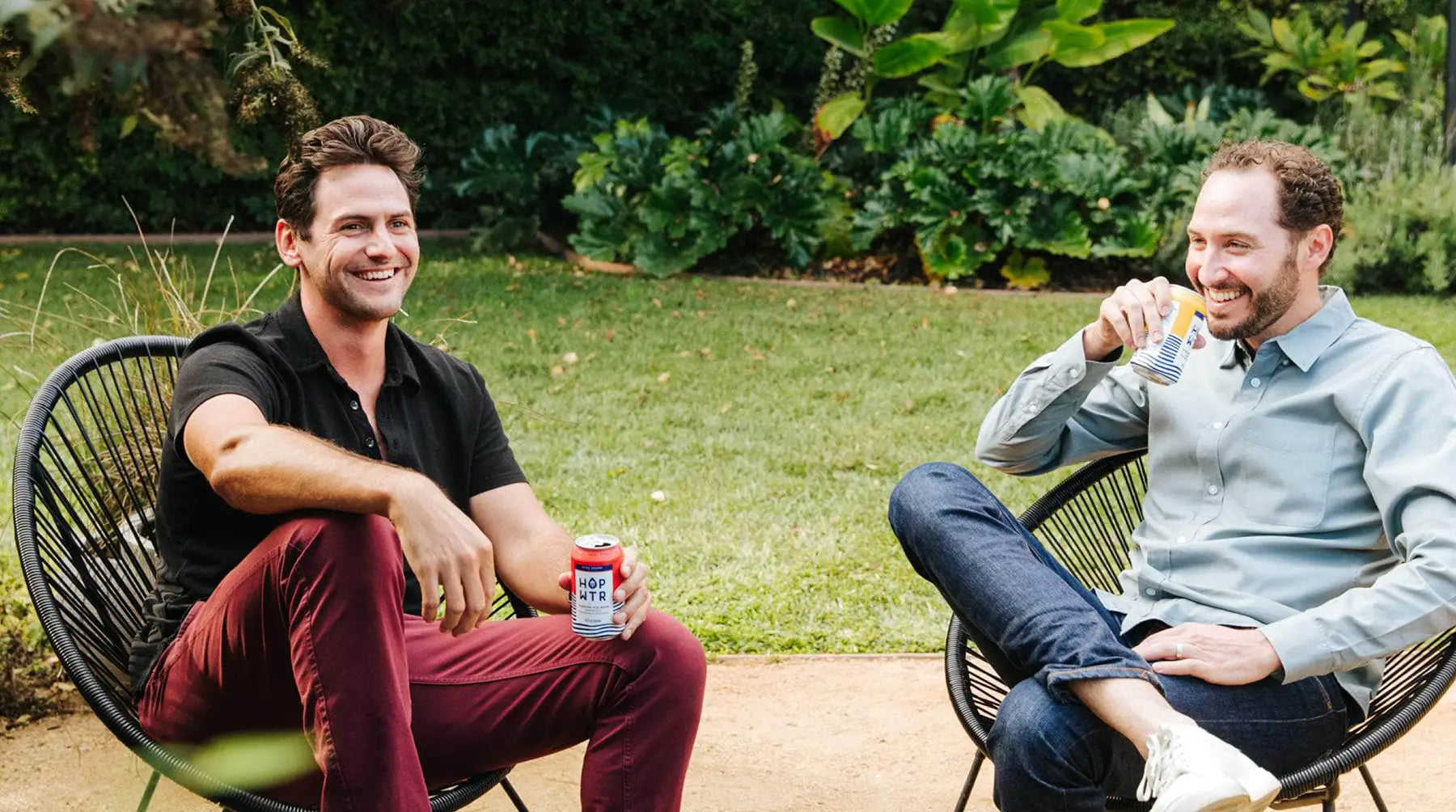
Bass has been candid about the first thing that failed: his instinct to perfect everything. Flavor, identity, packaging - he obsessed over details before the market had earned the right to care. The company launched direct-to-consumer anyway. According to an early review based on a company interview, the first five production runs sold out. HOPWTR reached retail within months, and Bass later hand-delivered early cases from the back of his car.
Real buyers changed his mind. Once cans were in hands, behavior replaced debate. The team could see what customers reordered, what retailers understood, and which parts of the package needed work. Bass now summarizes the lesson as “Move fast, learn, adapt. Perfect can come later.” His 2026 acquisition announcement even showed off those first case stacks and joked that, thankfully, the packaging had come a long way.
The distinction matters. Product quality had to be right. The wrapper could evolve. Founders regularly reverse that order, polishing the brand story while leaving the underlying repeat-purchase question unanswered. HOPWTR used ecommerce as a live research lab, then used physical retail to turn an eccentric product into a visible category.
The aisle grew around it
Approximate U.S. hop-water retail dollar sales, NielsenIQ figures reported in 2026
The price only makes sense in the right comparison
On HOPWTR's website, many 12-packs list at $29.99, or roughly $2.50 per can before discounts. A subscription cuts 15 percent and ships every 30, 45, 60 or 90 days. Bundles lower the decision friction: mixed flavors for trial, larger packs for households that already know the routine. At Target, a 12-can variety pack has recently listed at $19.99. Prices move by channel and promotion.
Compared with commodity sparkling water, this is a substantial premium. Compared with a craft beer at a bar, it is mild. That frame is the business model. HOPWTR sells direct for margin, data and recurring orders; wholesale through major retailers, grocers and specialty stores for reach and legitimacy. Its closest competitors include Lagunitas Hoppy Refresher, Sierra Nevada Hop Splash, Athletic Brewing DayPack and Hoplark. Its real competitive set is wider: every non-alcoholic beer, canned mocktail, kombucha and flavored seltzer competing for the same refrigerator slot.
| Choice | What it preserves | What it trades away |
|---|---|---|
| HOPWTR | Hops, can ritual, bitterness, bubbles | Malt body and alcohol |
| NA beer | Beer flavor and familiar styles | Often calories, carbs and sometimes trace alcohol |
| Seltzer | Bubbles, hydration, low price | Beer cues and functional positioning |
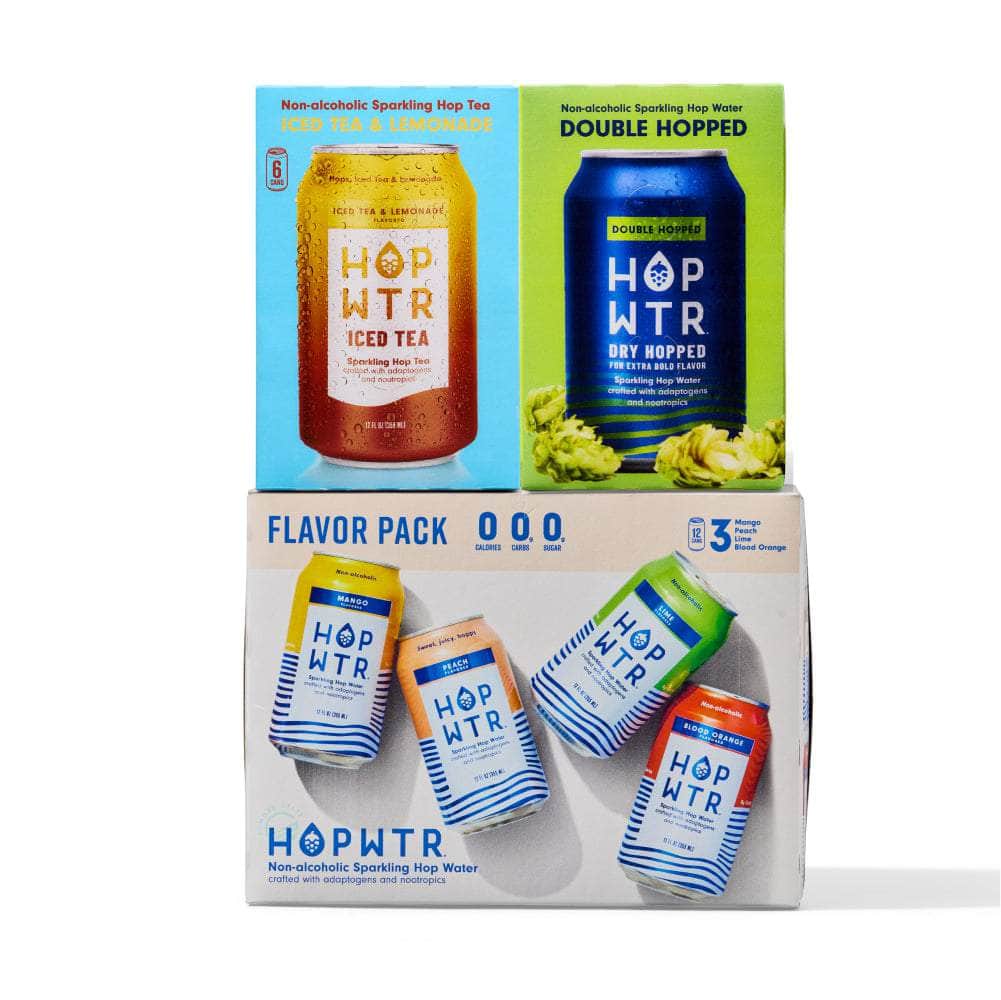
The lineup works like a set of doors. Classic explains the category. Mango, Lime, Peach, Blood Orange and Ruby Red Grapefruit invite fruit-seltzer drinkers. Double Hopped uses cold dry hopping and extra Mosaic for IPA people who find the original too polite. Iced Tea & Lemonade, Raspberry Iced Tea and Peach Iced Tea widen the afternoon occasion. A Centennial Citrus collaboration with Stone Brewing makes the bridge to craft beer explicit. Pickle Lemonade, meanwhile, demonstrates that wellness brands are also allowed to have jokes.
The investor spent five years looking inside the can
Constellation Brands took a minority stake through its venture arm in July 2021. The amount was not announced. More important than the check was the relationship: the owner of Modelo and Corona could watch HOPWTR's consumers, advise its direction and learn where functional non-alcoholic drinks fit beside beer.
By 2026, that experiment had become strategy. U.S. non-alcoholic beer dollar sales had risen 22 percent during 2025, according to Constellation. On March 27, it agreed to buy the remaining HOPWTR interest; the deal closed in April for an undisclosed price. Bass and the team joined Constellation, and near-term manufacturing, sales and distribution continued as before. HOPWTR now reports inside the beer segment, alongside a moderation portfolio that includes Corona Non-Alcoholic and Modelo Chelada Limón y Sal Non-Alcoholic.
This was not a startup flinging itself at an acquirer after a hot quarter. It was a five-year courtship. Constellation supplied industry knowledge and a view toward distribution. HOPWTR supplied a credible answer to a problem big beer could see but had not solved in quite the same way: some consumers want the adult occasion without a beer replica.
The arrangement also reveals where HOPWTR's expertise lives. It is not a brewery attempting an alcohol-removal trick. Its skill is translating craft-beer signals into consumer-packaged-goods decisions: which hop names reassure an IPA drinker, which fruit flavor recruits a seltzer buyer, which claim earns three seconds of attention at the shelf, and which pack size makes a first order feel safe. The Southern California tone - bright colors, active days, an insistence on being present tomorrow - gives those decisions a common personality. That culture may sound airy, but the operating behavior is concrete: test in ecommerce, listen to repeat buyers, adjust the package, and make the retailer's explanation easier. Constellation did not need another tiny brewery. It bought a team that had learned how to make moderation look like an affirmative consumer choice.
“From those first cases that I hand-delivered from the back of my car to a brand sold across the country, the journey has been anything but linear.”Jordan Bass, 2026
What to steal - and when it breaks
The HOPWTR field guide
- Start with a recurring annoyance. “I want this ritual, but not this consequence” is sharper than “the market is large.”
- Keep the cue customers love. Hops, the can and the cold crack carry emotional memory without alcohol.
- Use DTC to learn, not hide. Online sales exposed repeat behavior; retail made the new habit normal.
- Build doors into the product. Classic teaches, fruit recruits, Double Hopped deepens and variety packs lower trial risk.
- Let a strategic investor learn beside you. Constellation's minority stake created years of mutual diligence before the acquisition.
The model has limits. It works poorly for people who want malt, body and a close beer imitation. Hop-averse drinkers will not be converted by vitamin C. Shoppers who compare the price only with plain seltzer may see a can of expensive water. Functional ingredients cannot rescue weak flavor, and wellness language must remain disciplined; HOPWTR's own FAQ advises consulting a medical professional before giving the drink to children because evidence on its functional ingredients is limited.
Distribution is another condition, not a footnote. A beverage must survive freight, retailer margins, promotions and the fight for cold-box space. The original DTC success mattered because it gave HOPWTR evidence before it asked a store to explain a new category. National listings at Walmart and Target then made the product easier to discover and cheaper to try.
HOPWTR's achievement is less mystical than its adaptogen vocabulary suggests. Bass and Taranto noticed that consumers were not only attached to alcohol; they were attached to a pause in the day. They kept the pause, swapped the liquid and learned in public. Six years later, a company built on saying no to beer became useful enough for one of beer's largest owners to say yes.