Sidney Quitorio's founder story begins with an unreasonable price and a familiar modern reflex: he saw something compelling on Instagram and wondered whether he could make it himself. The object was a cannagar, a cigar-shaped roll made with cannabis. Buying one could cost hundreds of dollars, and making one by hand turned out to be fussy work. Quitorio tried anyway. Then he tried again. The failures did what failures occasionally do for an engineer - they stopped being verdicts and started becoming specifications.
He needed pressure to shape the material consistently. He needed a center channel. He needed a process a person could repeat without inheriting somebody else's years of practice. So he designed a mold as a personal project. That device became Purple Rose Supply, a consumer-products company built around letting people make their own cannagars rather than purchase a finished luxury item.
The move makes sense once you know Quitorio's earlier life. He studied computer software engineering at San José State University, where his public record lists a cum laude graduation, a 3.65 GPA, membership in Tau Beta Pi and several Dean's Scholar honors. His résumé moved through quality assurance, a development apprenticeship at Zappos, a web internship, four years of software engineering at LendUp and a senior engineering role at Zillow. Code taught him to turn a vague complaint into a sequence. Cannabis gave him a complaint he cared enough to pursue after work.
The bug moved off-screen
Software offers tidy comforts. Inputs can be logged. Tests can be rerun. A physical product is less polite. Materials arrive imperfect. Inventory occupies space and cash. Packaging has tolerances. Customers discover uses that were not in the requirements document. Quitorio did not leave the engineering habit behind when he moved into consumer goods. He carried it into a medium that could crack in his hands.
He has described his typical workday as evenly divided. One half belongs to a laptop: email, research and the administrative weather of running a company. The other half is spent playing with tools and doing product development. It is a revealing split. He was not trying to become a lifestyle mascot who outsourced the object. He liked the object.
“Once you have an idea that's viable, it's all about moving one foot ahead of the other until it's launched.”Sidney Quitorio
Purple Rose's mold solved one difficult step. Then customers pointed at the next one. A cannagar needs an outer wrap, and buyers kept asking whether the company could provide hemp leaves. The question was operationally awkward and strategically neat. A durable tool had created demand for a consumable. Better still, the consumable completed the same job.
The request beside the product
Native Leaf Co. grew from that adjacent request. Its premise was almost embarrassingly direct: wrap herb in a hemp leaf. Yet the direct version was harder to commercialize than the slogan suggested. Fan leaves vary in shape and thickness. They hold moisture, lose moisture, curl and tear. A leaf that reads as honest material to a buyer can behave like sabotage in a production system.
Quitorio and his team developed a slow-curing process for the company's Reserve wraps, removing the green color over 30 days and producing a brown leaf designed to contribute less taste of its own. The line emerged in three formats. LUCY stacks two leaves to make rolling easier. ABEL offers a wider format. ARDI keeps a single leaf with no stacking. Product management arrived, as it always does, to organize nature into names and use cases.
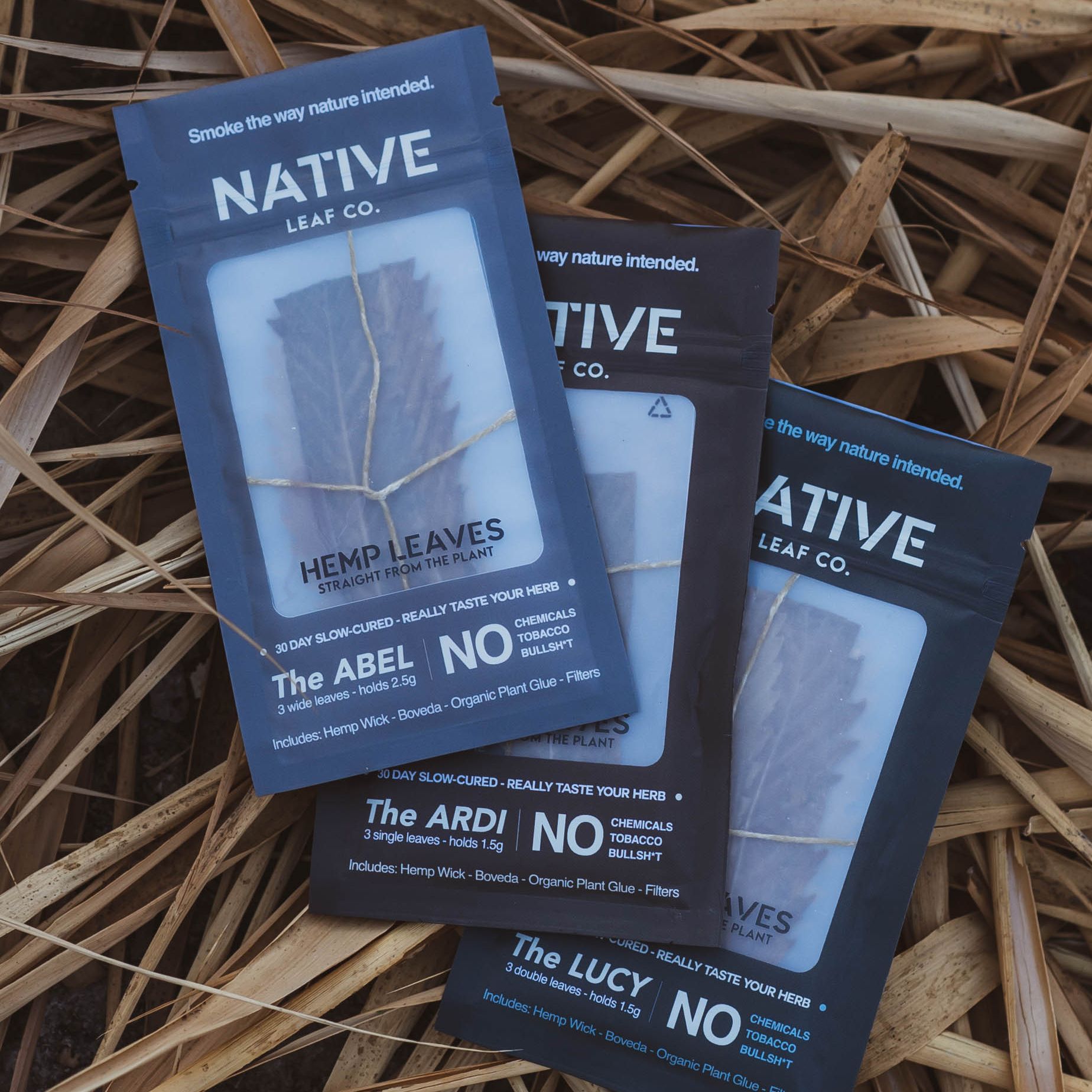
The kit around the leaf may be the more instructive design. It includes moisture control, filters, plant-based glue, hemp wick and a miniature leaf for patching a tear. Each accessory answers a predictable failure point. Humidity preserves flexibility. Glue closes the seam. The patch admits, with uncommon honesty, that natural material sometimes misbehaves.
This is a useful piece of product thinking: do not pretend the constraint vanished. Build support around it. A visible vein proves the leaf is still a leaf. The moisture pack and patch make that proof survivable in a pouch. Quitorio's companies sit on either side of the same lesson. Purple Rose standardized the act of shaping a cannagar. Native Leaf standardized the stubborn material wrapped around it.
The holiday with nothing to sell
Founders are often encouraged to discuss failure, then rewarded for producing a failure that sounds suspiciously like delayed success. Quitorio's example has boxes in it. During his first year in business, he estimated inventory by eye. One quarter he badly underestimated demand and ran out of cannagar kits for most of the holidays.
There is no glamorous edit for an empty shelf in the season when people are ready to buy. The fix was a proper inventory system. Later, Quitorio described gaining enough detail from inventory software to reduce total stock, move closer to a just-in-time model and protect cash flow. He said that visibility helped the direct-to-consumer business grow by more than 100 percent in a year. The arc is pleasingly mechanical: guess, fail, instrument, improve.
The numbers on that progression matter less than the habit behind it. Quitorio advises returning to first principles because details can obscure the reason for doing the work. Inventory is one of those details until it absorbs the cash required for everything else. His public advice on entrepreneurship keeps circling resource allocation: decide what deserves attention now, and accept that even appealing ideas may need to be put down.
Embarrassment becomes useful when it becomes instrumentation. A remembered stockout is painful; a measured reorder point is a company asset.
A motivated dreamer's subtraction problem
Quitorio calls one of ownership's hardest tasks deciding what not to do. The phrase carries extra weight from someone who describes himself as a motivated dreamer. Ideas are not his scarce resource. Attention is. His version of focus is less romantic than the usual founder poster: business is resource allocation, people make or break the foundation, and culture determines whether the work improves anyone inside it.
Asked about his biggest accomplishment as an owner, he did not name a product launch. He named a work culture that inspires people to become better versions of themselves. He has said a strong environment respects people, challenges them and gives them freedom to grow. Recommendations from his earlier engineering career describe an upbeat colleague eager to learn, quick to pick up new technologies and open to feedback. The through-line is learning without ceremony.
“My biggest accomplishment as a business owner would be building a work culture that inspires people to be the best versions of themselves.”Sidney Quitorio
His personal tools fit that preference. He reads. He listens to audiobooks when time is tight. He takes scratch notes in Evernote, then consolidates them to make sure he understands the material at a deeper level. His favorite advice begins with first principles and ends in execution. The charm is in the lack of mystery. Keep learning. Remember why. Take the next step. Measure the boxes.
There is also a shrewd distribution lesson in his story. Cannabis businesses face limits on conventional advertising, so Purple Rose leaned on influencer partnerships and content. The original spark arrived through Instagram; the company later used people on the same kind of network to demonstrate an unfamiliar product. For something that must be seen to be understood, explanation became part of distribution.
What the engineer kept
Quitorio's career can look like a clean break from technology, but the better reading is continuity. He moved from software to molds, then from molds to leaves, following friction at each turn. The interfaces became physical. The users remained impatient. Edge cases became tears, moisture swings and holiday stockouts.
The two-company structure now tells the origin story in miniature. Purple Rose Supply sells a tool for making the central form. Native Leaf Co. sells the material that finishes it. One purchase can lead to the other because the second business emerged from the question left unanswered by the first.
There is a quiet elegance to that sequence. Quitorio did not start by declaring himself a leaf expert. He became one because a tool he had already built exposed the next constraint. The path went from a social-media image to a home experiment, from the experiment to a mold, and from the mold to the material customers could not reliably source. Each step narrowed the problem while widening the business. It also kept the founder close to evidence. A difficult hand process, a repeated customer request and a fragile input are more useful than a brainstorm because each one can be observed, tested and improved.
That is the piece worth borrowing. A founder does not always need a fresh horizon. Sometimes the next worthwhile problem is standing beside the current product, asking to be included in the box. Quitorio listened when customers asked for a leaf. Then he found out how much engineering a leaf could require.