Mike Mayer took pictures of an air conditioner to bars and asked strangers what they thought. It is an unusual way to make conversation, though perhaps a more useful one than asking what somebody does for a living. Friends had been encouraging about his idea. Friends of friends proved more candid. People who owed him absolutely nothing could be more useful still.
He was trying to find out whether a familiar household irritation could support a business. An encouraging nod would cost the person giving it nothing. Building the machine would cost rather more. Mayer needed to know which responses were politeness and which suggested that someone might actually buy an air conditioner from a company they had never heard of.
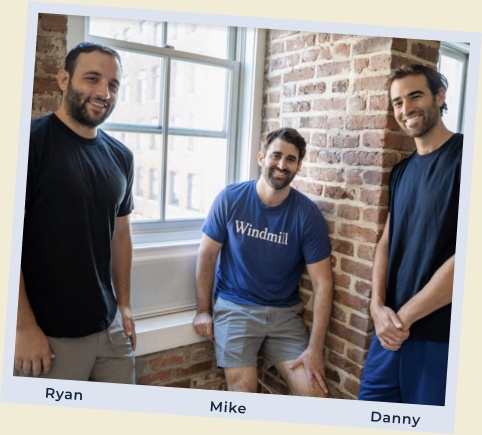
That company became Windmill. Mayer founded it with his older brother, Danny, and their friend Ryan Figlia. Its first product reached customers in 2020. By October 2024, the business had sold more than 100,000 air conditioners. Behind that tidy progression sits a less tidy education: in listening, in manufacturing, and in knowing when to stop defending something you have spent a long time making.
The friend everyone wanted to borrow
In 2018, Mayer was helping Danny move apartments in New York. The window air conditioner became a problem. The brothers called Figlia, whose family business, Figlia & Sons, had spent decades manufacturing, installing and servicing air conditioners in the city. He could send technicians. Most people had to figure things out themselves.
The useful insight was the gap between those two experiences. The brothers had access to someone who understood the equipment and could arrange help. An ordinary customer had to choose a machine, transport it, install it and deal with the old one. A purchase that promised comfort arrived with a small administrative career attached.
Mayer and Figlia went to meet manufacturing partners within months. The founding team combined different kinds of experience: Mike’s background in startups and marketing, Danny’s involvement as his brother and business partner, and Figlia’s knowledge of the trade. The long history in air conditioning belonged to Figlia’s family. Mayer’s contribution began with looking at that established world as a customer.
Before the window, a different opening
Mayer grew up in Orlando, Florida. He attended the University of Pennsylvania’s Wharton School from 2008 to 2012, graduating summa cum laude. His subsequent work included Lucid and Betterment, and he belonged to Venture for America’s inaugural 2012 class. New Orleans became an early training ground for his working life.
There was an educational venture alongside the commercial work. In August 2012, he co-founded Startup Effect, an enrichment program that introduced middle-school students to entrepreneurship through practical activities. Its premise was that confidence and skills could grow through doing. Years before he was asking adults to assess an appliance, he was helping children try out the work of making something.
His own earliest attempt at commerce had considerably less suitable classroom credentials. In middle school, he copied popular DVDs and sold them to friends. He says the enterprise lasted two weeks, ending when he recognized that it was unethical. The story has the useful modesty of an origin anecdote that comes with its own correction.
The interest in business endured. The version that eventually became Windmill required him to learn a slower form of creation: coordinating people who knew things he did not, then waiting for a physical object to prove whether the thinking had worked.
A beautiful machine meets an ordinary customer
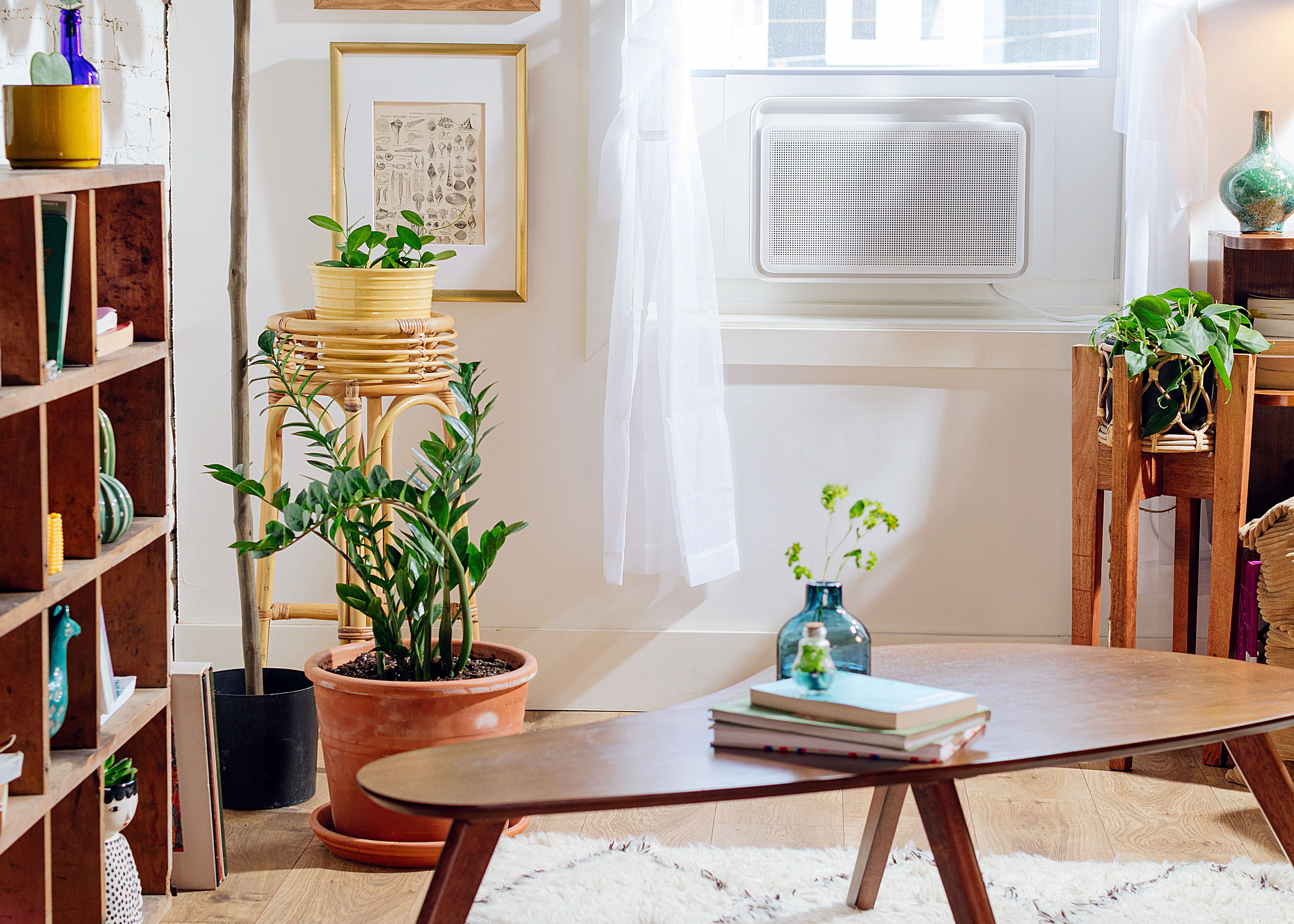
Windmill worked with San Francisco industrial design studio Branch Creative and engineering firm Spanner. The search for the right design partner took two months. Curved edges, a quieter visual presence and an upward direction of airflow all helped define the product. The ambition was to make an appliance that could sit comfortably among the things people had deliberately chosen for their homes.
Appearance was only part of the assignment. A window air conditioner has to negotiate an awkward relationship between a heavy object, an opening in a wall and a person reading instructions. The machine can look entirely resolved in a rendering while leaving its owner thoroughly puzzled.
Near launch, the team gave customers a prototype and manual and watched them attempt installation. The customers struggled. Figlia told Mayer they could not sell the product. The launch was delayed while the team reworked the installation experience. It was a costly moment to discover that the people who built something understood it rather better than the people expected to use it.
That episode gives Mayer’s appetite for feedback some weight. A founder can announce that he listens to customers while accepting only the pleasant remarks. Here, listening changed the schedule. The product had to go back for more work. A complaint had acquired the authority to interrupt a launch.
The queue nobody planned
The launch year brought another constraint. Supply-chain problems made it difficult to get units from the factory to the United States, forcing the team to abandon a more elaborate introduction. Windmill had only a limited number of machines to sell and collected names from people willing to wait.
The queue became a story in its own right. People were interested in an air conditioner they could not yet obtain. Coverage of the waitlist brought attention; the eventual arrival of products brought another opportunity to talk about them. Mayer has described the result as a fortunate consequence of a messy launch, rather than a neatly engineered scarcity campaign.
That distinction matters. A waitlist tells you that people have expressed interest. It does not transport a machine across an ocean. Windmill still had to satisfy customers whose enthusiasm had arrived ahead of the inventory. Attention could help the company get started, while making delivery more consequential.
Mayer’s account of working through those disruptions emphasizes kindness toward partners. Frustration was plentiful. He believed maintaining relationships helped people keep working through problems together. It is a practical sort of courtesy: the factory, packaging supplier and shipping arrangements remain part of the business long after an angry conversation ends.
- 2018An apartment move sets the founders thinking.
- 2020Windmill brings its first window AC to market.
- 2024A fan, a purifier and a $5 million financing round widen the business.
Windmill air conditioners sold by October 2024
Keeping a conversation open
Mayer also pursued retail early. He spoke to Home Depot before Windmill had a finished product, using the conversation to learn how buyers assessed inventory and selected merchandise. By 2024, the company’s ACs were available through retailers including Home Depot, Best Buy and Lowe’s. An appliance could be discovered somewhere other than an unfamiliar website.
There is a particular advantage to keeping that website, too. Selling directly lets the company hear from buyers and ask questions afterward. Mayer has described using those conversations and surveys to learn from customers and tell them about subsequent products. Distribution through stores broadens access; direct relationships preserve a way to keep listening.
The distinction helps explain why his interest in customer experience reaches beyond the machine’s front panel. A transaction creates a relationship with someone who will install the product, live with it and eventually have a question. A company that wants to sell that person something else has good reason to answer.
The design that looked like a mailbox
Windmill introduced its air circulator and fan in March 2024. In October came an air purifier and a $5 million Series A financing round. The category expansion gave practical form to an ambition Mayer had expressed years earlier: building a broader air care business.
The purifier provided another test of his tolerance for unwelcome opinions. Early design work explored a unit that could double as furniture, but covering the top compromised airflow. Another proposed design prompted comparisons to a postal mailbox and a tombstone. Once the team had heard those descriptions, Mayer said, they could not stop seeing them.
Back they went. A designer eventually sent a sketch accompanied by the word “Japandi,” pointing toward Japanese and Scandinavian influences. The eventual design used slatted cladding. The sequence is an appealingly human account of product development: earnest work, an unfortunate resemblance, and the necessity of starting again without declaring the audience aesthetically unqualified.
“We want to own air comfort in your space.”
Mike Mayer, 2024
A founder with room to change his mind
Mayer’s public self-description leaves space for travel, scuba diving, golf and eating. In a 2025 speaker biography, he divided his time between New York and Miami. He recommends Laura Hillenbrand’s Unbroken and returns to Theodore Roosevelt’s arena speech for motivation. He also acknowledges the difficulty of allowing a business setback to remain a business setback, rather than turning it into a verdict on himself.
That admission fits the rest of the story. He has learned to loosen up in pitches, arrive knowing the numbers and say when he does not know an answer. His picture of entrepreneurship includes patient revision. The person presenting the business has to be able to withstand the experience of having the presentation questioned.
Windmill’s opportunities now extend beyond the original window. Yet the most revealing episodes remain small: a customer wrestling with instructions, a stranger responding to a picture, a design acquiring an unfortunate nickname. Each offers Mayer a chance to decide whether to protect the work already done or improve the thing somebody will actually bring home.
There is something pleasing about a career built around taking everyday irritation seriously. Most of us complain about appliances and leave the matter there. Mayer kept asking what, exactly, people disliked. His business began in the space between having a complaint and being willing to hear somebody else’s.