PJ Brice went to a Jeff Bridges concert in Santa Barbara in 2013 and came away with something more inconvenient than a tune stuck in his head. Bridges opened by asking what the audience had done that afternoon. Brice turned to his wife and mouthed an answer about changing diapers. The performer’s own answer involved volunteering at a food bank. A pleasant evening out had acquired a question that would follow Brice back into his working life.
He already knew how to make things people bought. He had been president of Allegro, a manufacturer of cosmetic and travel bags acquired by Conair in 2007. He had also been watching entrepreneurs build businesses with a social purpose. The concert brought those interests together. In 2014 he left Conair and co-founded Cheeky, a company whose chosen instrument of change was the paper plate.
There are grander objects around which to arrange a professional reinvention. A paper plate has no particular wish to be admired. It waits beneath a sandwich, does its duty and disappears. Brice saw room to give this unassuming household purchase better design and another consequence: a donation supporting a meal for someone else.
A place setting with an extra place
Cheeky reached Target shelves in November 2014. Its opening range covered the ordinary requirements of feeding a crowd: plates, bowls, napkins, cups and cutlery. The designs invited shoppers to mix patterns rather than resign themselves to a disposable table that looked disposable in every sense. The launch price was $3.99 per product.
The giving mechanism was deliberately easy to understand. For each item purchased, Cheeky donated the monetary equivalent of a meal through Feeding America. The customer could buy what the gathering required; the donation was built into the transaction. A party supply acquired a second job without demanding a second trip through the checkout.
That simplicity depended on a partnership. Cheeky sold tableware. Feeding America’s network supplied the route through which money supported food. Keeping those contributions distinct makes the achievement more concrete. The company was arranging a repeatable way to fund help, purchase after purchase, within an existing retail relationship.
By December, Cheeky reported that its first month of business had supported 250,000 meals. It was an early result, measured in the terms the company had chosen at launch. Sales mattered because they sustained the business. Purchases also accumulated into a separate public tally of support.
A charitable ambition can become rather abstract in a business presentation. Here it lived beside the cups. The appeal of the arrangement lay in its proximity to an ordinary decision. A shopper preparing to host people could help other people eat. The connection required very little explanation, which is a considerable virtue for anything competing for attention in a shop.
A spoon balanced on a serious idea
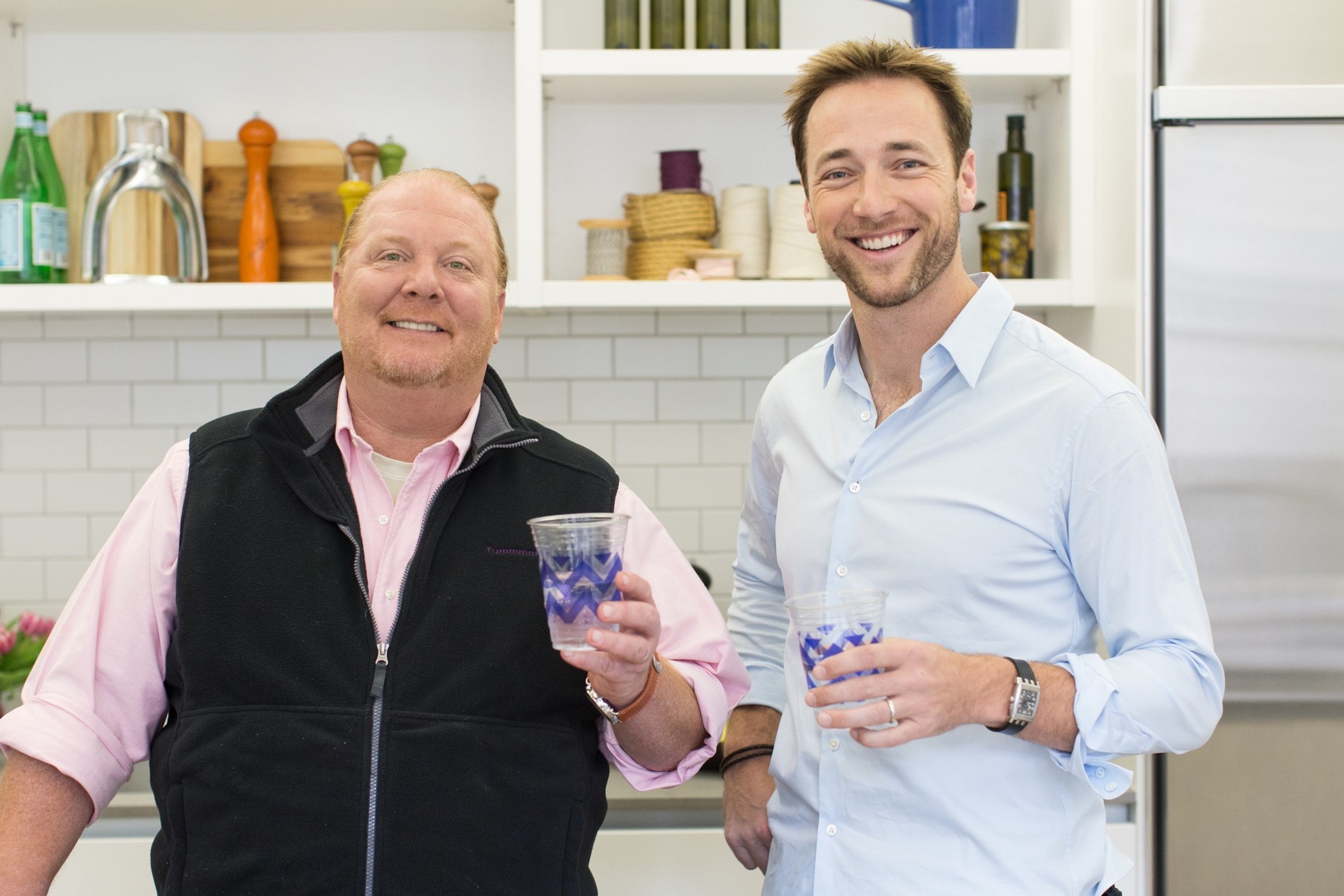
The early Cheeky years also show Brice’s willingness to make a public campaign a little ridiculous. In September 2015 the company supported Spoontember, a campaign that asked participants to balance a spoon on their nose, take a photograph and challenge someone else. For a company already selling cutlery, this was unusually convenient casting.
Cheeky shipped approximately 100,000 orange spoons to food banks. More than 180 member food banks had signed up to receive the cutlery. The idea offered a prop people could use together, from volunteers to local public figures. An object supplied by the business became a way to start a conversation.
“We made the spoons!”
PJ Brice, on Cheeky’s role in Spoontember, 2015
Brice admitted that the team’s own group selfie proved less straightforward than the concept. At any moment, perhaps half the people had managed to keep the spoon in position. Even a company with a supply of cutlery could not negotiate with gravity.
The humor helped explain the tone of the brand. Cheeky could address a serious public problem while letting participants enjoy themselves. Brice wanted awareness as well as contributions. The campaign gave people something to do, something to photograph and someone else to invite. It made participation visible.
The company’s partnerships expanded with its product range. Cheeky Kids, co-founded with Ayesha Curry in October 2016, brought the approach to children’s mealtimes. Curry’s involvement included product and content development. The collaboration gave the brand a partner whose public work already concerned food and family.
In 2017, Cheeky Go extended into reusable products for outdoor meals. The assortment included bottles, lunch bags and food containers, taking the business beyond its original one-time-use tableware. The pattern was recognizable: find another occasion for a meal, design for it, carry the giving arrangement into the purchase.
By March 2018, Cheeky reported 16 million meals generated through partnerships with Feeding America and No Kid Hungry. That figure belonged to several years of purchases and collaboration. Brice’s involvement also reached nonprofit leadership: he appeared on the Los Angeles Regional Food Bank’s 2016 board roster and on No Kid Hungry’s leadership listings.
The work behind the famous names
Beach House Group opened a broader chapter in Brice’s career. With Shaun Neff, he helped build a business around creating and commercializing consumer brands. The categories widened, and the partners became familiar to audiences well beyond a retail buying office: Shay Mitchell with BÉIS, Tracee Ellis Ross with PATTERN, Millie Bobby Brown with florence by mills.
A famous founder makes a brand legible quickly. The operating questions arrive just as quickly. A product has to exist beyond its photograph. Someone must coordinate its development, manage the finances and build the relationships through which a customer can obtain it. Beach House Group made this supporting work part of its proposition.
When Beach House Ventures launched in 2023, Brice described a structure in which experienced people dedicated to an individual brand could draw on a shared service platform. That platform covered operations, finance, sales, creative work and legal support, among other functions. The arrangement combined a brand’s own team with resources used across the wider group.
Dedicated people. Shared business support.
For a founder, that changes the practical meaning of a partner. Money can pay for work. An established organization can also supply people who know how to do it. The venture initiative offered emerging beauty and lifestyle businesses access to the group’s experience and retail relationships alongside financial backing.
The division of responsibility matters in telling Brice’s story. These brands have their own founders and executives. They also operate within, or emerged from, a network of business support. Brice’s role belongs to that network. The connection between an early paper plate and a later beauty brand is partly the professional habit of making an idea commercially possible.
NOYZ, launched in 2024, added fragrance to the group’s work. The company’s current leadership page names Malena Higuera as its CEO. It also names Adeela Johnson at BÉIS and Christian Pendarvis as co-CEO at PATTERN. In May 2026, Fadi Sayegh was announced as Beach House Group’s president and primary operating leader. The names give the shared platform a human scale: distinct people responsible for distinct businesses.
When the bag leaves the beach house
The travel category eventually supplied a clear milestone. In August 2026, Samsonite agreed to acquire 85 percent of BÉIS for $178.5 million, at a total enterprise value of approximately $210 million. Beach House Group was selling its entire 70 percent holding. Mitchell would retain 15 percent and continue guiding the brand’s creative and product vision.
Those percentages describe a change in ownership, with a continuing role for the founder. They also show why an incubator’s work can have an endpoint beyond another launch. A brand can move into a different organization while keeping people who helped make it recognizable.
On October 1, Samsonite announced the acquisition was complete. BÉIS would continue as a standalone brand, with its management team remaining in place. The completed transaction brought the incubated travel business into a group whose portfolio includes Samsonite, TUMI and American Tourister.
Brice publicly congratulated Mitchell, Johnson and the BÉIS team when the agreement was announced. He also acknowledged the advisers involved. His response put several kinds of contribution into the same frame: creative direction, running the company and carrying a transaction through its negotiations.
The occasion is useful because it resists the tidy fiction that one person builds a brand alone. Brice’s career is full of collaborations whose participants bring different things. Cheeky needed a retailer and nonprofit partners. BÉIS needed a founder, an operating team, an incubator and, at this stage, a new owner. A business story becomes more interesting when the supporting cast receives its lines.
The person among the products
Outside the company descriptions, Brice’s own interests provide a smaller, more personal collection of objects and experiences. In 2016 he spoke about skiing in Niseko, the furniture of Haymann Editions and a 1995 Land Rover Defender 90. He enjoyed driving the Defender around with his children. For a person working in consumer products, his account of design was pleasantly specific.
The interests were also quite ordinary in their underlying pleasures: a trip, a beautiful piece of furniture, an old car that makes an outing enjoyable. His answer about family was the shortest. He called it his most important inspiration. The list ended there, without a business lesson attached.
That is a fitting place to leave a career spent asking everyday objects to do more. Brice’s products enter kitchens, luggage racks and bathroom shelves. Their stories involve serious commercial work, but their destination is daily life. A cup must hold a drink. A bag must carry someone’s belongings. The customer eventually puts the object to use.
And the paper plate remains a good place to begin. Brice attached an idea to something people already understood, then arranged the partnerships that let the idea operate. From a concert in Santa Barbara to a travel brand’s sale, the scale changed considerably. The objects kept the story close enough to touch.