An eyeliner can sit quietly for a very long time. In Karissa Bodnar’s case, it sat for roughly a year and a half, representing $25,000 of her own money. Every glance at the inventory was a reminder that manufacturing something and persuading people to want it are separate occupations. Today, Thrive Causemetics is associated with teal mascara tubes and charitable giving. The less photogenic beginning explains rather more about how the company works.
The story in three strokes
- The product: vegan, cruelty-free makeup and skincare, built around everyday beauty problems.
- The wager: sell online when retailers decline, and let customers see what the formula does.
- The second purpose: purchases support nonprofit giving, with 700-plus partners reported for 2025.
01A small wager with a long wait
Bodnar recalled the eyeliner investment on How I Built This in September 2026. Early sales could be negligible; a $150 day felt encouraging. She financed inventory with savings and employment elsewhere. Retailers including Sephora and Nordstrom had passed. There was no buyer waiting to confer legitimacy on the little company. A website had to do the work of a beauty counter.
Then, in November 2016, an iPhone ad about Infinity Waterproof Eyeliner found an audience. Bodnar describes daily sales climbing to $100,000 within a week. Suddenly the difficulty changed: relatives and friends helped pack orders, and duplicated shipping labels sometimes meant customers received products twice. Customer service became the first department she built. Demand had arrived before the machinery to handle it.
The sequence matters. The early disappointment concerned access and sales, followed by fulfillment errors when sales accelerated. Calling all of that perseverance makes it sound pleasantly vague. The useful detail is that each stage required a different repair.
02The problem was in the mirror

Before there was inventory, there was Kristy. Bodnar’s friend died of cancer at 24. Bodnar had worked as a makeup artist and in product development at L’Oréal; her friend’s experience changed what she wanted that expertise to accomplish. Losing eyelashes posed a practical problem that an industry selling endless versions of glamour had overlooked.
Ordinary false lashes were awkward for people with no natural lashes. Bodnar spent years developing an adhesive and lash approach for that situation while keeping a full-time job. Thrive launched in 2015. The original insight was unusually specific: help someone perform a familiar ritual when the familiar equipment, their own lashes, had disappeared.
That origin lends the company meaning, but it also supplies a design method. Start with an irritating detail of someone’s day. Understand it closely enough to change the product. Beauty customers already have plenty of stories to choose from; they still need something that behaves properly at seven in the morning.
03A tube that can explain itself
Liquid Lash Extensions, launched in May 2017, makes the method visible. Its tubing formula wraps individual lashes rather than merely coating them with pigment. It removes with warm water. The appeal is legible: longer-looking lashes, fewer worries about smudging, and removal without an elaborate evening negotiation. At research time, the US website listed it at $26.
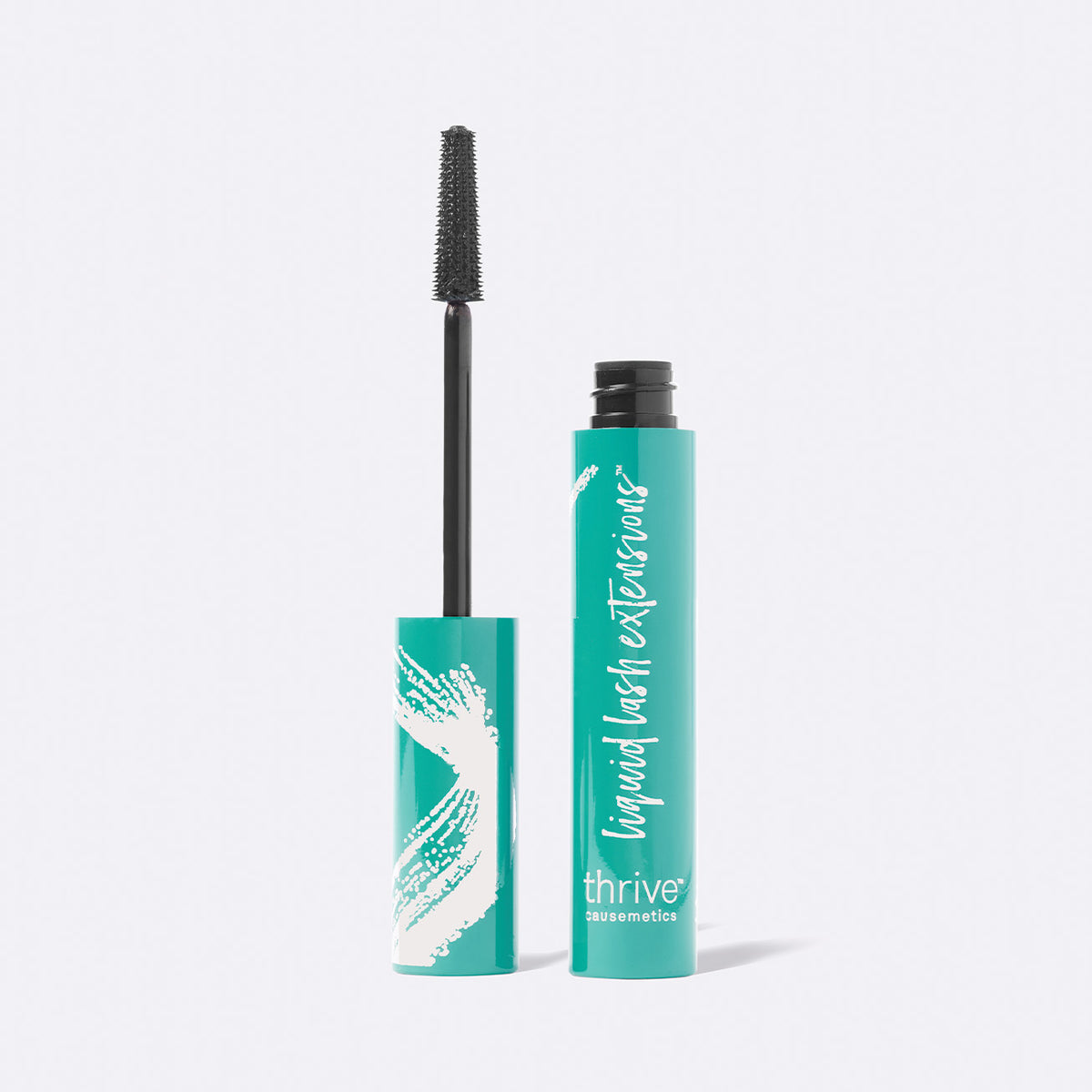
Thrive occupies the space between inexpensive everyday makeup and prestige beauty, selling performance with vegan and cruelty-free commitments. Tarte, Clinique and Blinc offer alternative tubing mascaras. The distinction has to be assessed at the lashes: finish, application, price and removal. A charitable checkout does not make competing formulas disappear.
“It has to be the product.”
Karissa Bodnar · How I Built This, 2026
The company also sells face and lip makeup, tools and sets. Bigger Than Beauty Skincare, announced as a sibling brand in April 2023, extends the proposition to cleansing, hydration and treatments. In August 2026, coverage of Lasting Mark highlighted a felt-tip stain usable as lip liner or all-over color. The product range follows familiar routines, giving shoppers reasons to return beyond mascara.
04The arithmetic of a second purpose
Thrive is a commercial beauty business whose purchases support donations through nonprofit partners. Customers and recipients are different audiences. Shoppers buy cosmetics; organizations distribute products and provide services to people facing cancer, domestic abuse, homelessness and other difficulties. The nonprofit network supplies local knowledge that a cosmetics warehouse cannot.
How the purchase travels
- 01You buyMakeup or skincare
- 02Thrive givesFunds and products
- 03Partners deliverCommunity support
In May 2026, the company reported more than $185 million in cumulative funds and products donated, alongside 722 Giving Partners. Those words deserve their full weight. Product value is included; the total is not a cash-only donation figure, nor does it disclose the company’s manufacturing cost. For 2025, the same announcement reported over 675,000 products donated, valued above $21 million.
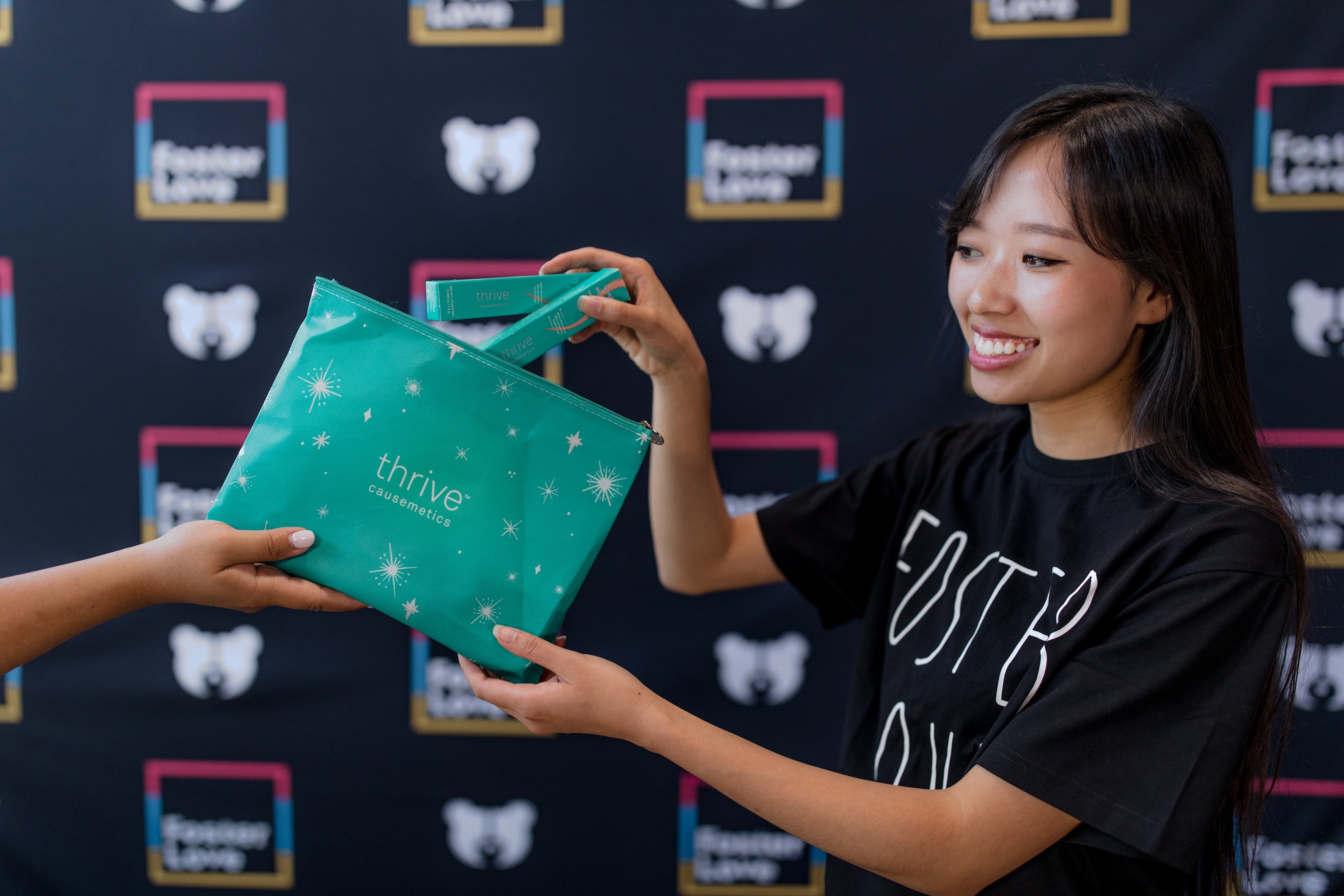
Mary’s Place, the Seattle organization helping families experiencing homelessness, has partnered with Thrive since 2017. Employees also join product pack-outs and nonprofit visits. Giving becomes work that requires relationships, sorting and delivery. That is a more useful picture than imagining generosity happens automatically when someone clicks a button.
05The next product has to earn its place
There are pieces here another founder can copy: develop around a concrete need, demonstrate the result plainly, and budget for answering customers when the demonstration succeeds. Bodnar says existing product sales fund subsequent launches. That rule forces enthusiasm for the next idea to wait for evidence from the last one.
It also requires conditions that are easy to omit from the success story. A founder needs time, income or savings to survive slow inventory. Online selling needs distribution and dependable fulfillment. A giving promise needs enough margin to support it. An iPhone video cannot guarantee an audience, and a narrow range makes less sense when customers require a complete system immediately.
Thrive’s instructive achievement is the connection between a small daily inconvenience and a repeatable purchase. The company can attach a second purpose to that purchase because the first purpose remains intact. Someone still has to like what they see in the mirror.