Consider the name B-TIGHT. Before a shopper has read an ingredient list, the bottle has already identified a body part, suggested a desired change and made a small joke. It is a remarkably economical introduction. MAËLYS built a company around that kind of specificity: the body deserves more than a large bottle of lotion, and a customer should not need a chemistry degree to find the right shelf.
- The proposition: targeted body care for visible concerns, from cellulite to stretch marks.
- The business: direct sales first, then Ulta and other shopping channels.
- The useful lesson: a memorable product still needs a clear promise, credible evidence and a convenient place to buy it.
A mask with a business attached
The company’s early story contains the sort of wager that looks sensible only after it works. In an Operators interview, co-founder and marketing chief Yariv Citron describes an earlier business closing, followed by a beauty venture financed with personal loans. An early campaign centred on Khloé Kardashian. The product at its heart was a booty lift-and-firm mask. Celebrity supplied the audience; a conspicuously specific product supplied something to talk about.
That history is useful because it separates two problems founders often confuse. Getting noticed is one. Giving people a reason to buy again is another. A famous endorsement can solve the first temporarily. The second lives in a bathroom, where the customer encounters the texture, fragrance, instructions and results without a celebrity present to improve the mood.
Citron and fellow founders Daniel De Castro, Tomer Arzoan and Yaniv Dagan entered a market with plenty of beauty products. Their distinction was the unit of attention. Instead of treating the body as one moisturizing assignment, MAËLYS divided it into concerns and areas. Belly. Arms. Booty. The proposition was closer to the way people described their own skin than to the way a conventional lotion aisle organized it.
The company identifies pregnancy, weight fluctuation and aging as situations its products address. Its audience includes women seeking changes in the appearance of firmness, texture or stretch marks. That is a particular buying motivation. A pleasant moisturizer may suffice for someone wanting softer skin; someone searching for a named concern expects the label to answer a more demanding question.
The customer who never saw the ad
By May 2021, MAËLYS announced a minority investment from Norwest. It reported a $100 million revenue run rate and 400 percent year-over-year growth. The investment is widely reported at roughly $30 million, although the announcement withheld financial terms. A run rate describes an annualized pace. It should not quietly become a claim that the company booked $100 million over the preceding year.
Annualized pace, not audited annual sales
The money was intended to support international expansion, product development and the organization behind them. There is a mundane discipline hidden beneath the bright packaging: a growing catalogue needs to be developed, supplied and delivered. More advertising is of limited comfort when a customer cannot get the jar she ordered.
Retail introduced a different concern. Ginzburg later told BeautyMatter that he had initially worried about losing direct access to consumer data. Selling through your own website lets you observe the buying journey. A retailer inserts another business between brand and customer. For a company built around data and targeted marketing, that felt like surrendering something valuable.
In August 2022, seven products rolled out nationally at Ulta Beauty. The customer choosing a cream in a store had become too important to leave outside the business. Ginzburg’s later assessment was that retail increased awareness, credibility and access to new shoppers. The lesson travels well beyond cosmetics: excellent knowledge of existing customers can conceal the people your preferred channel never reaches.
An AppLovin case study supplies a concrete later cost: MAËLYS scaled Axon advertising to $200,000 a day within a week in 2025. The platform says the campaign exceeded its return-on-ad-spend goal by 10 percent, using hundreds of creative variations. These are vendor-reported results, not a budget every young beauty company can copy.
The cream has to survive the bathroom
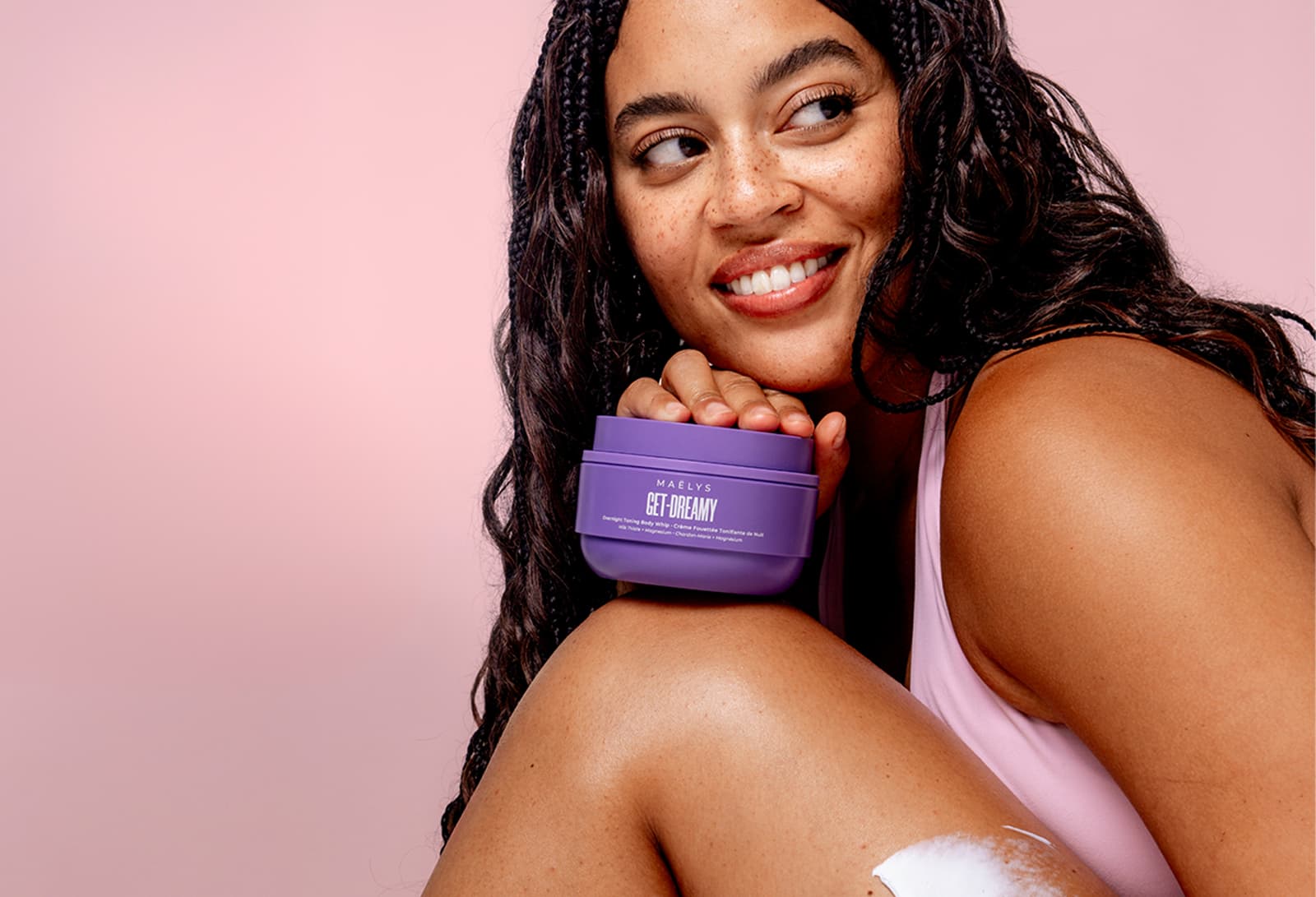
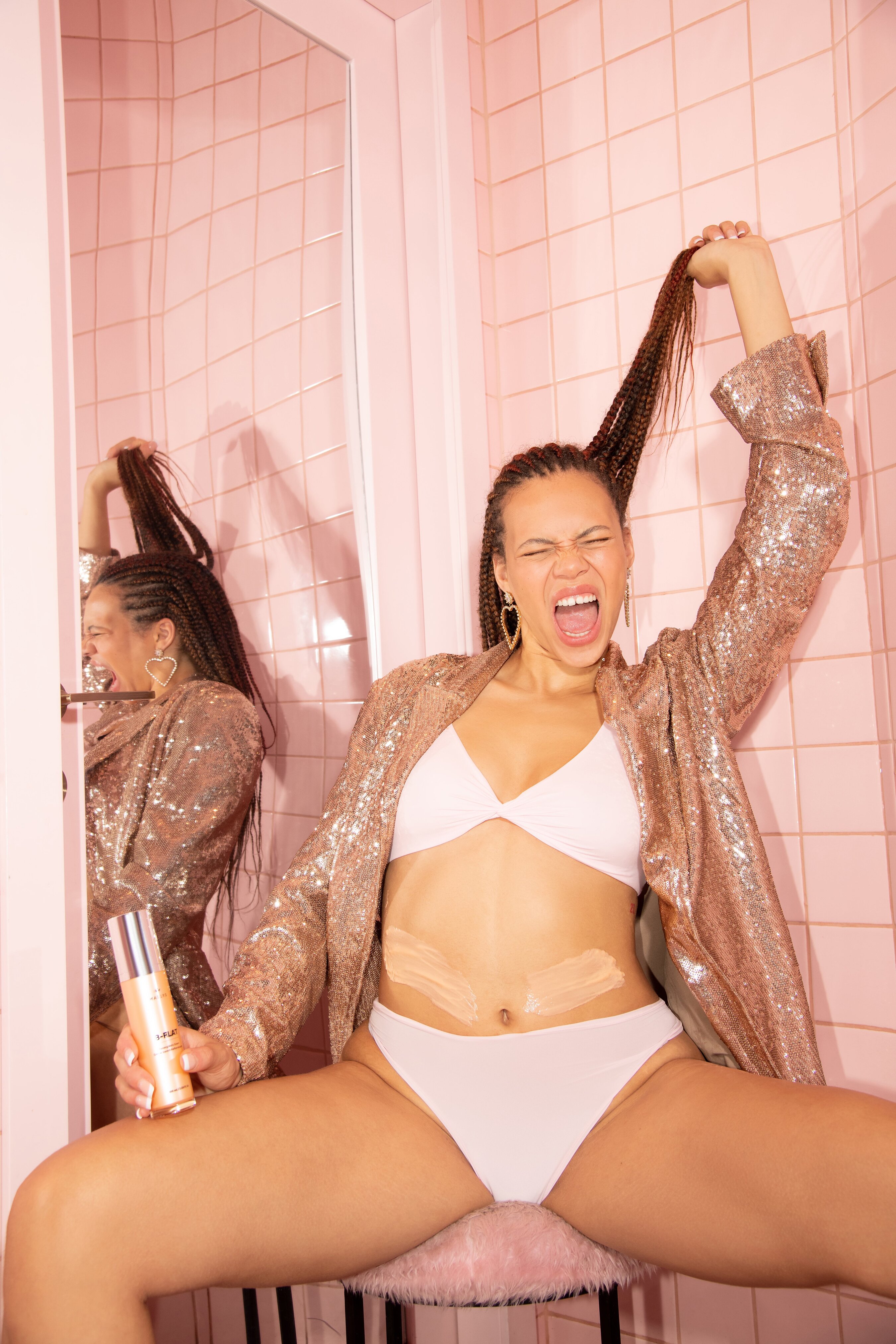
MAËLYS now offers masks, creams, oils and serums. B-TIGHT targets the look of cellulite and firmness around the booty and thighs. B-FLAT addresses belly skin. B-FLEX concentrates on arms. GET-DREAMY supplies an overnight body routine. The names perform practical work even when they flirt with absurdity. A catalogue becomes easier to enter when the customer recognizes her question on the bottle.
It competes for attention with concern-focused body care from Nécessaire and StriVectin, as well as Sol de Janeiro’s visibly firming creams. MAËLYS’s emphasis is a catalogue of named body areas and concerns. That is a positioning choice, not proof of superior performance.
The prices place this in prestige body care. On the US website when researched, a one-time 100 mL B-TIGHT purchase was $52. The same page offered discounted recurring deliveries and a 60-day money-back guarantee. Replenishment is part of the economics: the product is used repeatedly, and the company offers to make the next purchase automatic. Buyers should choose the purchase option that matches their intended routine.
Evidence needs equally careful reading. B-TIGHT’s published clinical disclosure describes a 56-day trial with 29 participants. GET-UP body milk lists 33 participants over the same period. These are product-specific studies concerning visible skin changes. They do not tell every buyer how her skin will respond, and the number of enthusiastic reviews is a different kind of information from a clinical measurement.
The company says independent labs recruit participants and that evaluation can include imaging, expert grading and self-perception questionnaires. Measurements compare participants with their own starting points. That explains the testing approach; it does not establish that every product was tested against another cream. The sensible reading of the promise remains cosmetic: smoother-looking or firmer-looking skin. The brand itself says its products are not for weight loss.
A shelf is a very impatient website
In 2024, Ulta moved MAËLYS into its body-care area. A 2026 report says the change helped shoppers discover it. The company’s subsequent refresh grouped 18 core body products into five colour-coded families. This was a response to a different shopping environment: a shelf cannot deliver the explanatory sequence of a website.
“Consumers shop very differently in-store versus online.”Rom Ginzburg · February 2026
Other businesses can copy the discipline without copying the booty mask: define a precise problem, make the choice legible and follow the customer into the channel she uses. It depends on a product that earns repeat use and economics that survive distribution. A celebrity campaign alone cannot provide either. MAËLYS’s interesting achievement is that a cheeky first conversation grew into a series of fairly serious shopping decisions.