On a certain kind of founder’s calendar, the distance between grand strategy and buying toilet paper is approximately seven minutes. Laurel Angelica Myers knows this because she lived it. Asked in 2020 what being Prima’s co-founder and chief operating officer actually involved, she offered a list with comic range: product samples, packaging, certification work, press education, office IT, hand soap, toilet paper. “It’s soup to nuts and everything in between,” she said. There may be tidier descriptions of entrepreneurship. Few are as honest.
The list also explains Myers better than a glossy founder portrait does. She is a builder who appears most at home where the lofty and the literal collide. A mission becomes a sourcing policy. A promise becomes a test result. A beautiful jar has to survive the shelf, the shipping box, the customer’s bathroom, and somebody’s spreadsheet. The belief can be large. The work remains granular.
That instinct gave Prima its shape. When the company arrived in 2019, CBD had the manners of a gold rush. The ingredient was suddenly in balms, drinks, oils, supplements, and any other object capable of holding three fashionable letters. Excitement ran ahead of standards. Packaging could make almost any claim sound serene. Consumers were left to distinguish substance from mood lighting.
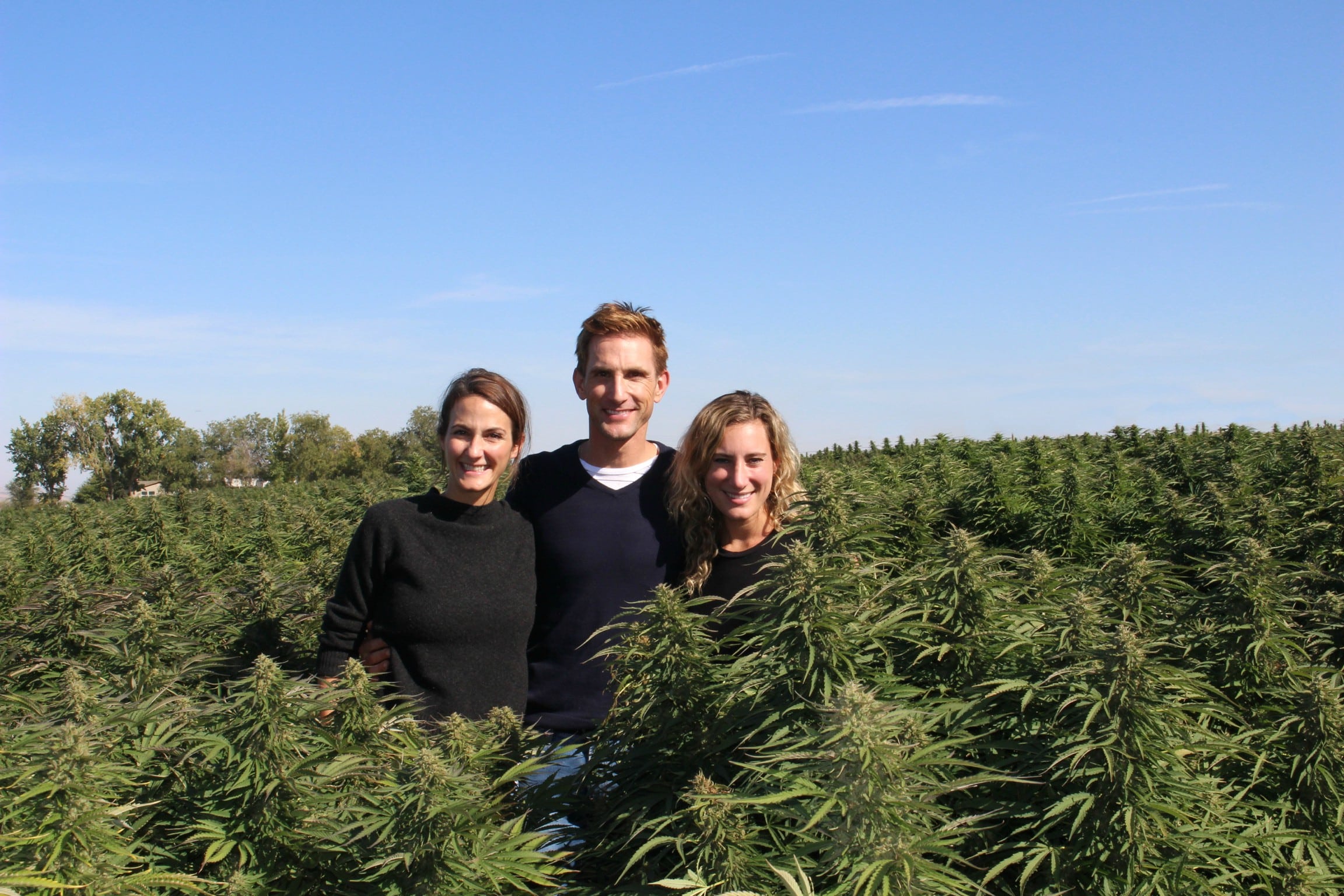
Myers and her co-founders, Christopher Gavigan and Jessica Assaf, responded with an unfashionably adult proposition: explain first, sell second. Prima debuted as an educational platform in March, then introduced its first three products in June. The brand was not shy about aesthetics, but it treated information as part of the design. Trust would not be a color palette. It would need paperwork.
An operator learns to edit
Myers did not arrive at that idea by wandering out of a laboratory or an influencer feed. Her route ran through words, products, and institutions. She studied religion at Princeton, graduating in 2007. Early in her career she worked at O’Malley International Associates, then moved into content, production, and partnerships at TakePart, the digital arm of Participant Media. TakePart’s proposition was that stories could move people toward action. Myers learned to work where editorial purpose met a measurable audience.
Former colleagues remembered the machinery behind that work. Elizabeth Osder described Myers as a self-starter and intuitive problem solver who could think ahead while retaining discipline and rigor. Nathan McGowan praised her accountability, attention to detail, and habit of over-delivering. These are not swashbuckling adjectives. They are the ones you want near a launch date.
In 2012, Myers joined The Honest Company. Over the next five years she helped lead brand strategy and product development as the young company expanded. She later oversaw purpose and sustainability strategy. The progression matters: product, brand, purpose. For Myers, they were not neighboring departments. Each was a different view of the same promise.
By the time Prima was taking shape, Myers had watched hundreds of consumer products travel from an idea to an object in someone’s hand. She knew the seduction of a polished story and the revenge of an unresolved detail. Assaf brought years of advocacy and category knowledge. Gavigan brought his own Honest Company experience and a long-standing environmental focus. Together, they attempted to make a complicated category legible.
The product behind the products
Prima’s most interesting early decision was sequencing. It published before it stocked shelves. In a market full of confident labels and uncertain customers, education could do what another advertisement could not: give the buyer a vocabulary. The approach connected Myers’s media past with her product future. TakePart had taught her that context can be an engine. Honest had taught her that the engine must connect to an operating system.
Outside validation became part of that system. Prima incorporated as a public benefit corporation and earned Certified B Corporation status in 2020. It pursued product verification from the Environmental Working Group. It made third-party testing visible. These choices did not eliminate the ordinary tensions of a consumer company, but they forced broad ideals into specific questions about ingredients, suppliers, packaging, workers, and disclosure.
Myers was unusually plain about why that mattered. Words such as “clean” were not backed by a single binding consumer definition, she noted, so brands could deploy them loosely. A company asking for trust needed more than its own adjectives. Independent standards created friction, which was precisely the point.
The strategy traveled into retail. Prima worked with Sephora as the retailer established requirements for the CBD products it would carry, including the kind of extract allowed, repeated testing, and access to certificates that matched labels to contents. Myers also confronted a more prosaic design problem: packaging built for a direct-to-consumer unboxing did not necessarily read clearly on a shelf. The company reworked the visual system and adjusted materials. A box had to make sense at arm’s length, under fluorescent light, beside competitors. Retail is where poetry meets planogram.
By 2021, Prima offered 15 products and sold through retailers including Sephora, Nordstrom, Thrive Market, Erewhon, and Pharmaca. A $9.2 million seed-plus round followed the company’s roughly $3.3 million seed financing. The new money was intended for more products, more doors, more education, and more research. The careful brand had acquired velocity.
Disclosed capital, approximate
Purpose, with a broom closet
The appealing feature of Myers’s philosophy is that it refuses to separate care from competence. “A business is a collection of humans coming together to all work towards a common vision and goal,” she said. The sentence sounds gentle until you notice its demands. People need clarity, tools, time, candor, and an organization capable of keeping its word. Kindness without accountability becomes fog. Accountability without kindness becomes a machine nobody wants to operate.
Her description of Prima’s culture paired empowerment and positivity with vulnerability and continual improvement. Her description of product development paired clarity and beauty with performance and consumer listening. These pairings reveal an operator’s habit: resist the false choice. A company could make an attractive object and document what was inside it. It could pursue growth and submit itself to external standards. It could speak in the language of purpose and remember to order hand soap.
When a category is noisy, explanation can be a product. When claims are loose, verification can be a feature. When the mission is large, operations are where it becomes believable.
There is play in the picture too. Myers tested R&D samples for texture, smell, and performance with her family. Asked for a song that represented Prima’s community, she chose Whitney Houston’s “I’m Every Woman.” The selection is exuberant, inclusive, and almost suspiciously on brand. Even the serious operator keeps a soundtrack.
When the straight line bends
Founder profiles often stop at the shelf, the funding round, or the certification plaque. Markets decline to observe this courtesy. By late 2022, CBD had lost much of its gold-rush glow. Prima announced a combination with Prospect Farms, a Maine producer with cultivation and manufacturing operations. The intended company, Uplifter Brands, was to be led by Myers and Prospect Farms executive Brad Tipper as co-chief executives.
The plan did not complete as announced. Prima paused operations in 2023 and reassessed its growth strategy. The brand was taken on by turnaround specialist The Hedgehog Company. In February 2025, Austin-based Sky Marketing Corporation acquired Prima for an undisclosed amount, with plans to rebuild its direct business and later widen retail distribution.
This is not the clean arc that startup mythology prefers. It is more useful. Prima’s standards and retail wins were real. So were the category’s legal and operational constraints, the failed combination, and the pause. Careful execution can improve the odds; it cannot repeal timing. Good operators know the difference between controlling the work and controlling the world.
Myers’s public role after the sale is quieter. Prima’s current site identifies her as a co-founder rather than describing a day-to-day executive position. Yet the systems she argued for remain legible in the brand’s vocabulary and product discipline. A founder’s influence is sometimes easiest to see after the org chart changes: in the standards that survive, the language that stays precise, and the decisions new owners inherit.
The useful residue
What can another founder steal from Laurel Myers? Begin with the customer’s confusion, not your preferred slogan. Teach before asking for a transaction. Treat outside scrutiny as infrastructure rather than punishment. Build the shelf experience and the supply chain as parts of one design. Let the values reach the broom closet.
Most of all, remember the collection of humans. Prima’s most enduring idea may not be a formula or a jar. It may be Myers’s insistence that the business is the people gathered around a common aim, doing work that ranges from stirring and strategic to comically mundane. Brands love to talk about essence. Operations are where essence is forced to keep office hours.
That is the charm of “soup to nuts.” The phrase makes no promise of glamour, only completeness. It leaves room for the launch and the reset, the high-minded standard and the emergency roll of toilet paper. Laurel Myers built in that whole untidy span. The market changed. Ownership changed. The lesson held: trust is assembled one specific decision at a time.