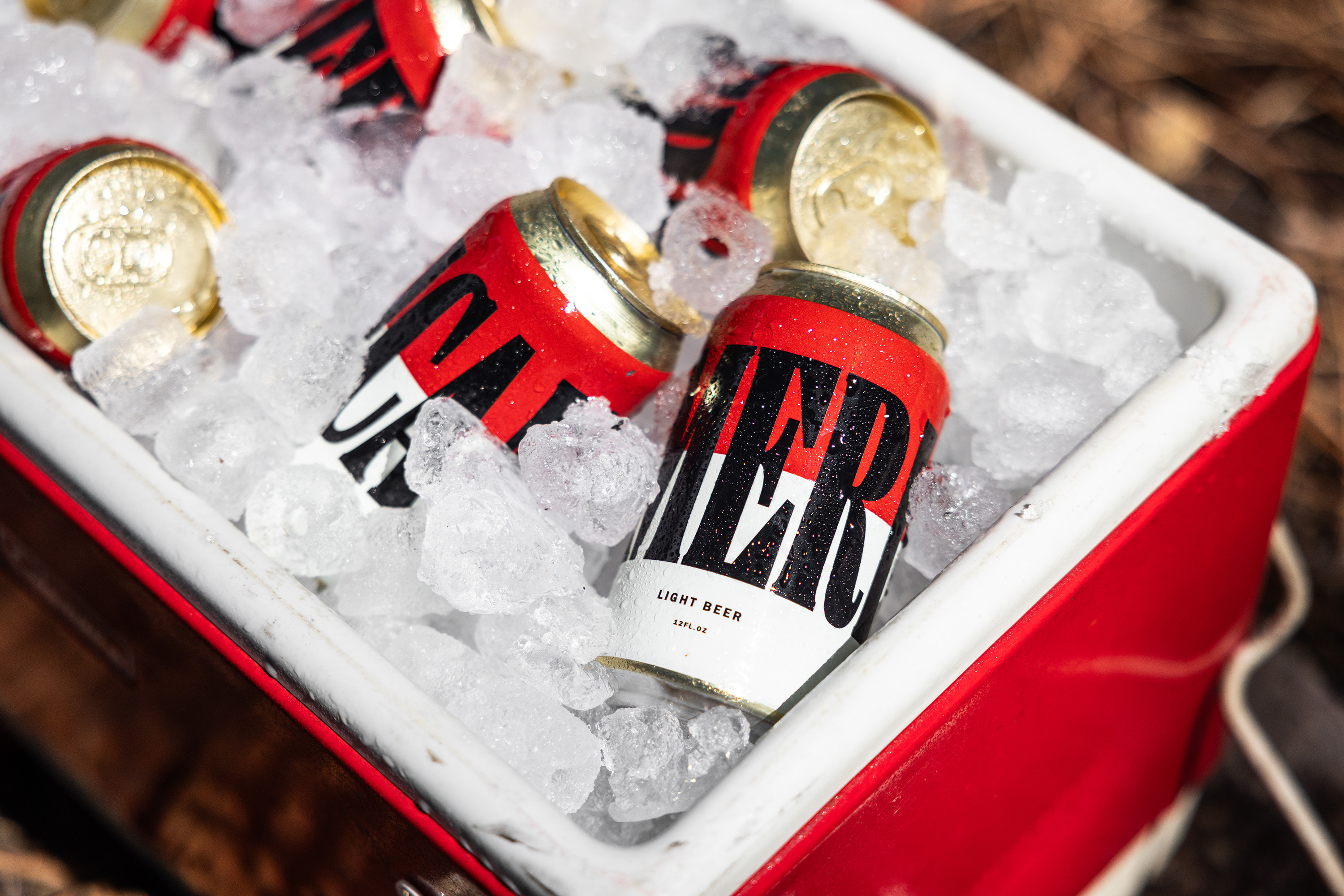
A beer can has very little room to explain itself. Stack enough of them together, though, and the shelf becomes part of the message. For MERICAN, Flagship designed red-and-white packaging that forms stripes when displayed in rows. The identity borrows the familiarity of American beer culture while the line “Made for All” makes its invitation explicit. There is a practical business question hiding inside that tidy piece of graphic design: who might look at this name and assume the beer is not for them?
That question is a useful way into Flagship. The independent studio works across brand strategy, identity and campaigns, with a portfolio stretching from beauty counters to music platforms. Its subject is often the gap between what a company intends and what a customer understands. A logo can help close that gap. So can a sentence, a package, a website or a different account of whom the business serves.
The business behind the beautiful thing
Founder Fady Hanna’s objection to the branding business predates the current portfolio. In a 2017 interview, he described a market full of attractive creative campaigns but short on attention to business results. He wanted a deeper understanding of how the client operated. It is an argument many agencies make; the interesting part is how consistently it appears in his company’s earlier history.
In 2015, Hanna described a client whose marketing commitment had climbed from $300 to $2.3 million over successive years. Those are historical figures reported in Australian business coverage, not a price list for commissioning Flagship today. His explanation was that demonstrated returns gave the client a reason to commit more. The commercial proposition depended on earning confidence in increments.
Expansion also followed relationships. Flagship opened a London office in January 2016 with one person, Frazer Dobson. By April, contemporary reporting described eight UK agency partnerships and an office that had reached profitability sooner than expected. That is a more instructive growth story than simply planting a flag overseas: an established network could bring the studio into conversations it would otherwise have had to start cold.
Hanna later acknowledged an early mistake: imitating other agencies, when clients wanted a return on their investment. The lesson for an agency owner is uncomfortable but useful. A portfolio proves that you can make things. The brief, the measurement plan and the repeat commission explain why anyone should keep paying you to make them.
Rhode was a team sport
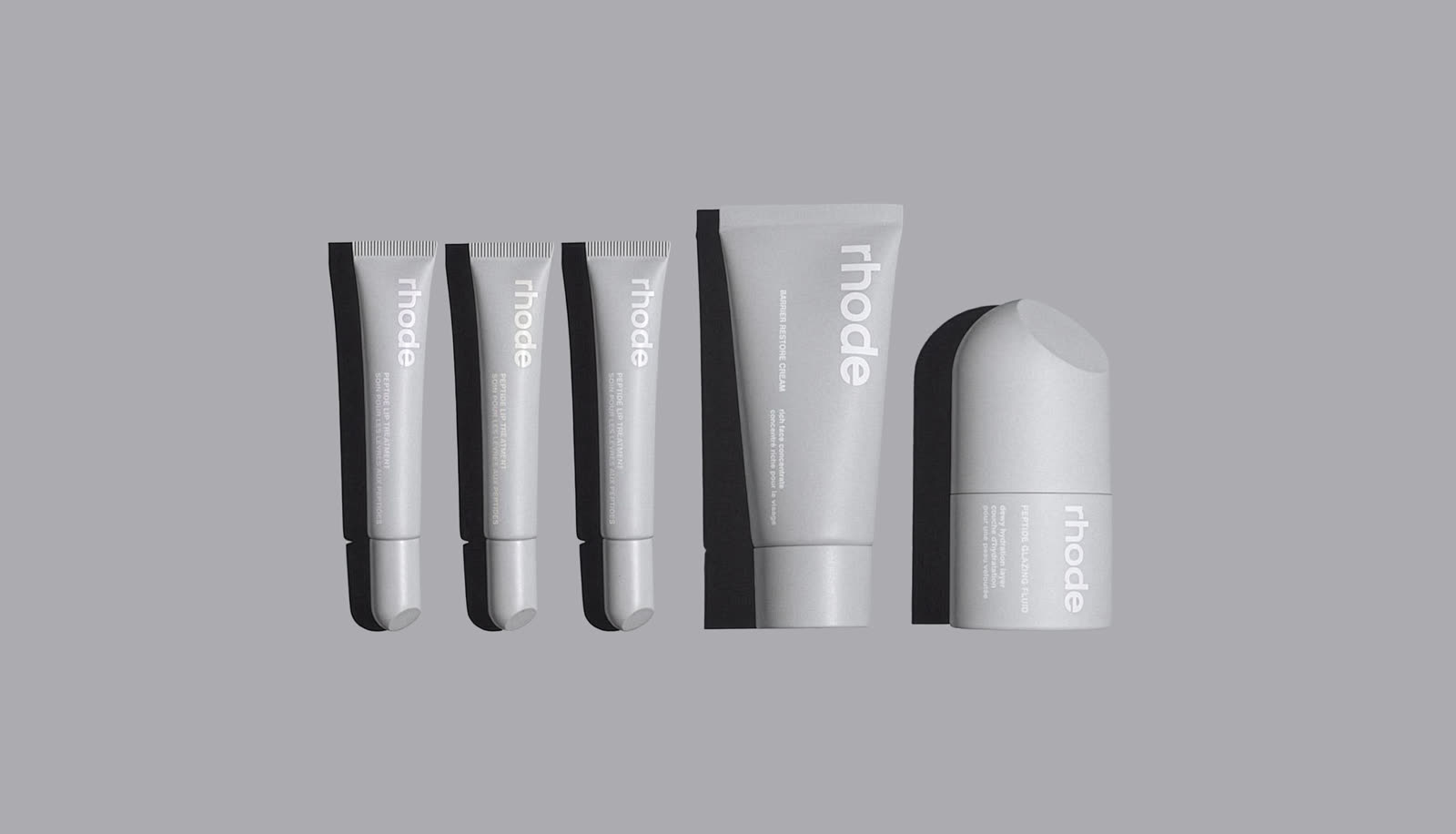
Flagship’s beauty credentials include work on Rhode, Hailey Bieber’s skincare brand. The studio describes a contribution to positioning, messaging, identity and packaging direction. It places Bieber at the center of a broader creative group and lists Chandelier, Eli Russell Linnetz, Adrian Martin and Stevie Dance among the project collaborators.
That division of labor matters. The interesting story is a specialist helping refine a founder’s vision within a larger team. In this account, brand development includes adding depth to an existing idea, aligning the way it is described and helping determine how the core range should appear. It is work that can be consequential without being solitary.
For a founder considering a studio, the case offers a sensible buying question: which decisions need outside expertise, and which already have an owner? A productive engagement can begin with a strong point of view. The outside team’s job may be to make that point of view more precise, more consistent and easier for other people to use.
Sometimes the product needs a better explanation
The Vertigo brief makes the communication problem unusually concrete. The music app brought listeners using Spotify and Apple Music into synchronized listening sessions. Flagship’s account says the company struggled to explain that proposition succinctly. The studio organized the identity around listening together, using repeated graphic forms to suggest rhythm and a more conversational voice to invite participation.
That is an instructive sequence. Start with the behavior that makes the product useful. Give that behavior a place in the language and the visual system. Then carry it into the website, interface and supporting materials. The design has a job beyond looking energetic: it should help someone understand what to do next.
Pearpop presented another version of the problem. A platform connecting creators and brands needed to express its value to people with very different levels of fame. Flagship’s positioning emphasized creative independence under the phrase “Grow Your Own Way.” The work included strategy, identity, messaging, merchandise and guidelines, making the same proposition usable across different encounters with the platform.
The common thread is usefulness under pressure. A prospective user is unlikely to study the strategy document. They encounter a screen, a headline or a recommendation from someone else. If the brand requires a long explanation before the product sounds appealing, the design team still has work to do.
Editorial interpretation of the studio’s project descriptions.
Three audiences, one bottle
STAIT required more than a fresh visual treatment. Flagship was asked to bring together two supplement brands, one aimed at men and the other at women. Its research identified three audience segments, then used those differences to develop messaging within a single identity. The assignment reached from naming and packaging to digital design and implementation.
That is a useful distinction for businesses consolidating a range. One brand does not require one undifferentiated sales pitch. A younger customer and an older customer can encounter the same product with different expectations. Flagship’s account describes explaining benefits to each audience while maintaining a common proposition. The research changed the organizing idea: the studio emphasized people seeking consistency and continuing improvement.
The transferable discipline is to separate what must remain consistent from what needs to adapt. A visual system can hold the business together while product language addresses different motivations. Flatten those motivations into a single vague promise and the supposed simplification can make the offer harder to understand.
A record label with room to move
Anotherland gave Flagship a different constraint: a record label committed to artistic freedom needed an identity that could accommodate difference. The studio used the possibilities of twelve musical notes as its creative starting point and developed a flexible visual language. Its portfolio shows that language moving through editorial layouts and music-related formats.
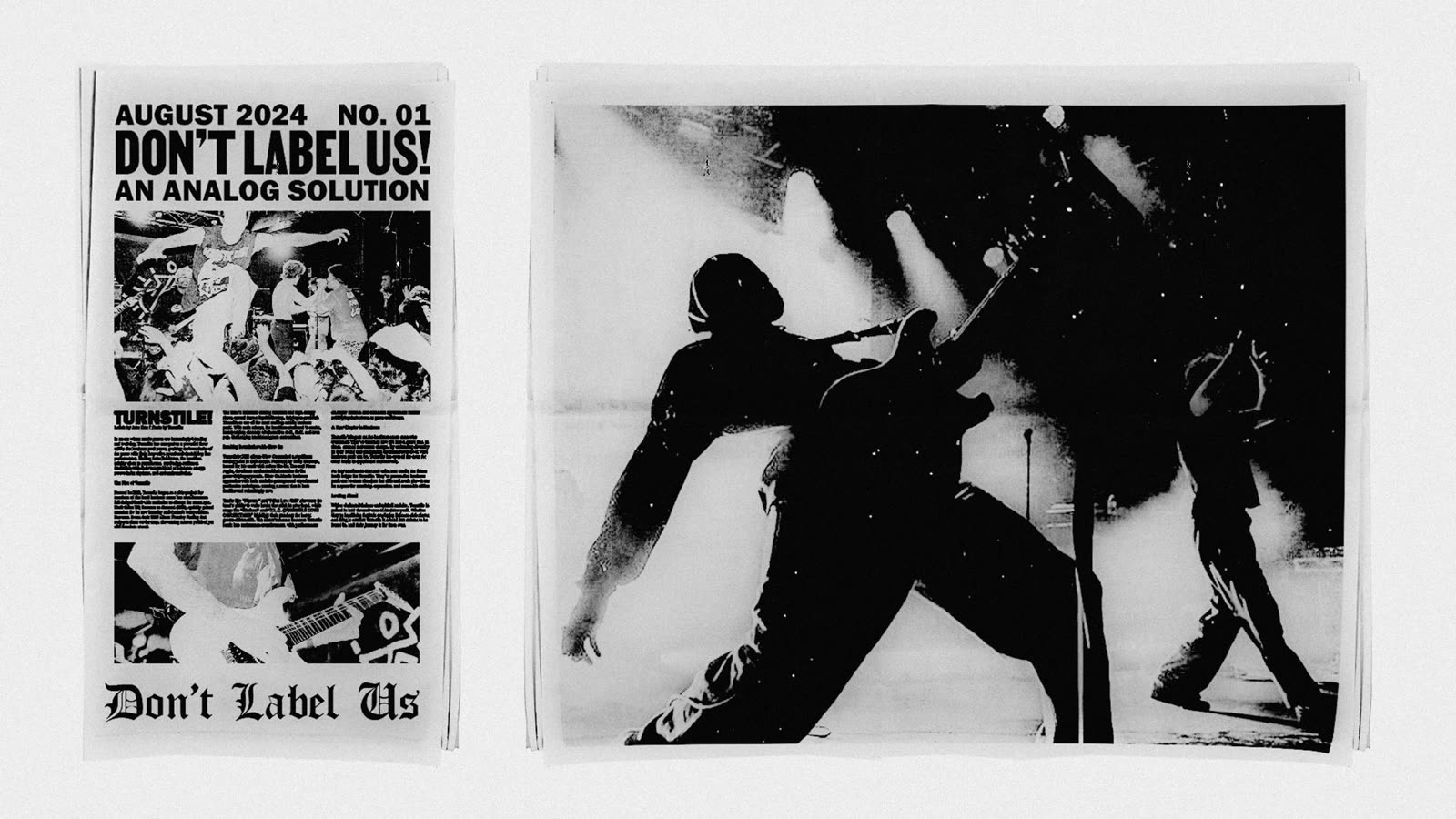
The client’s ambition was not merely to obtain a recognizable badge. It needed a recognizable world that could contain different artists. That changes how an identity should be judged. Consistency remains useful, but excessive uniformity can erase the very distinction the client is selling. In this case, variation is part of the argument.
“They didn’t just understand our vision, they pushed it further.”
David Bagheri, Anotherland CEO, in Flagship’s case study
The sales number needs its context
Billabong’s work gives the portfolio a more explicitly campaign-driven dimension. For its collaboration with The Salty Blonde, Halley Elefante, Flagship developed a campaign drawing on her personality and the surf company’s heritage. The studio reports that the collection represented 71 percent of total on-site sales on launch day. That describes sales share for a particular moment; it does not mean overall sales rose by 71 percent.
Share of launch-day on-site sales attributed to Billabong x The Salty Blonde, as reported by Flagship.
A separate Billabong project, “Know the Feeling,” centered on women surfers and their cultures for the Spring 2020 women’s collection. Flagship says its role as lead digital agency helped increase YouTube engagement by 200 percent, and reports a SIMA Campaign of the Year award. These are the studio’s reported campaign outcomes. They give a prospective client something more specific to discuss than a gallery of attractive images.
The useful habit is to choose the measure before celebrating it. Attention, sales share and incremental revenue answer different questions. A campaign meant to introduce a collection may need a different evaluation from a website intended to turn an unfamiliar product into a comprehensible purchase.
Buy the decision-making, then the deliverables
Flagship sits in the market for commissioned creative services: strategy, design and execution delivered for clients. Its current contact page invites both startups and larger companies. The breadth of the portfolio suggests a fit for businesses navigating a launch, a consolidation, a repositioning or a campaign that needs a coherent identity across several formats.
The alternatives depend on the assignment. A company may choose another independent studio, an integrated advertising agency or its own design team. Flagship’s particular argument is visible in the connection between its strategic questions and its finished work. Buyers can assess that connection by asking how an audience finding became a message, and how that message shaped the object or experience eventually delivered.
There are conditions attached. This kind of engagement requires the client to make decisions about audience, positioning and priorities. If the real problem is unreliable fulfillment or a product people do not want, a visual refresh cannot do the operational work. If the assignment is a narrowly specified production task, extensive strategic exploration may add little value. The scope should follow the problem.
A reader can borrow the method without hiring the studio: write down the customer’s uncertainty, decide what they should understand instead, and test the proposed answer in the place they will encounter it. On a shelf. In a feed. On the first screen of an app. Flagship’s most persuasive projects make that connection visible. The attractive part is there, but it has something to do.
Open the studio door
Flagship website · Project portfolio · LinkedIn · Instagram · Dribbble
The London expansion story · Creative director Patrick Macomber’s work