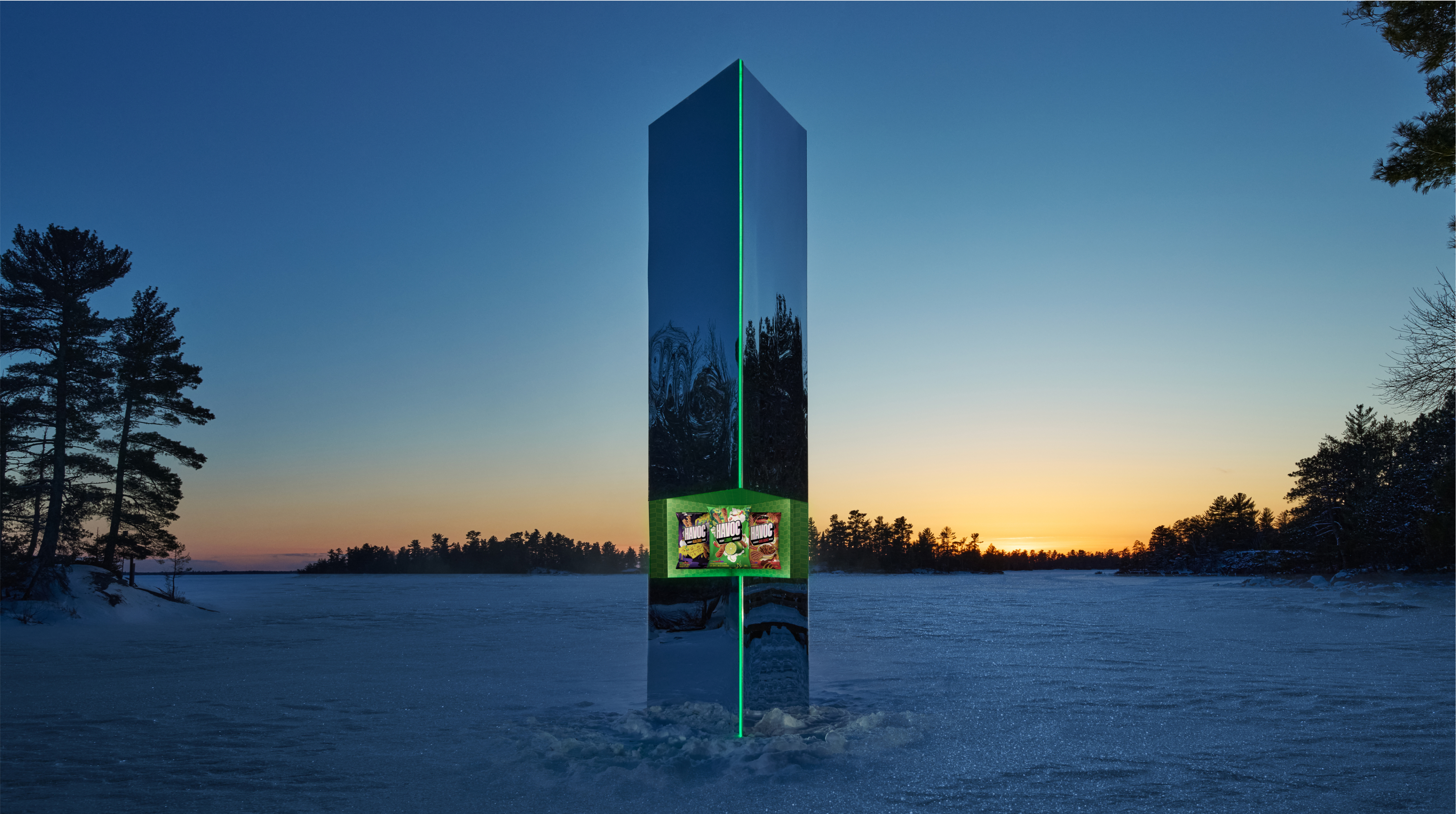
On February 29, 2024, a 15-foot monolith appeared on Nowhere Island, Ontario. There was smoke. There was green light. Eventually, there were chips. HAVOC, a new PepsiCo Foods Canada snack brand, had arrived with the sort of entrance usually reserved for visiting extraterrestrials. The setting supplied the joke: something was happening in Nowhere.
Vocabulary lists the brand development and launch campaign among its assignments. It is an unusually convenient introduction to the agency. Here is a business that can work on the identity of a snack and follow the idea out into the cold, where it becomes a structure people might photograph. A brand has acquired a place, a date and something to do.
First, give people something to notice
The launch tied its strangeness to Leap Day. HAVOC’s premise involved unexpected combinations of texture and flavour, with varieties including Fiery Lime and Bulgogi Blaze. The monolith gave that premise a physical expression. By the time the mystery opened, the product was also arriving at Canadian retailers.
That last detail matters. A spectacle creates a question; distribution lets someone answer it with a purchase. The announced launch prices were C$2.19 for smaller bags and C$4.29 for larger ones. Those were product prices, not the cost of producing the campaign. The encounter went from remote island to ordinary snack aisle.
PepsiCo’s marketing leadership credited a group of partners, including Vocabulary, OMD Canada, Edelman Canada and Passionfruit. The sensible way to read the work is as a collaboration. An agency can hold an idea together while other specialists help it reach the world. That arrangement is central to Vocabulary’s own account of how it was built.
The senior people stay in the picture
In his founding announcement, Lars Hansson described starting Vocabulary with Peter Baston and Amy Power, former R/GA colleagues. He proposed a core team supported by a network of experts, able to expand for the assignment. The offer stretched from an initial, usable brand identity to product development and strategic advice.
That is a recognizable business problem for an agency to solve. Staffing for every possible assignment means carrying expertise that some projects will never need. Assembling everyone from scratch creates a different problem: somebody has to make the pieces agree. A continuing core and a wider network offer one possible compromise.
“Our small, senior teams are embedded in every project.”
Vocabulary / its current team page
The current website identifies Baston as founder and creative director, and Liz Delost as managing director. The roster includes design, motion, editing, account leadership and technology. Its named people work across cities extending beyond the agency’s Los Angeles, New York and Toronto offices, including Portland and Montevideo.
The commercial offer is commissioned creative work for organizations. A marketing team can bring a positioning problem, a launch or an identity that needs to function across several formats. Vocabulary’s specialties include naming, writing, visual systems, websites and campaigns. The buyer is purchasing a team’s judgment and execution, with the scope of the assignment determining what gets made.
A tortilla chip gets table service
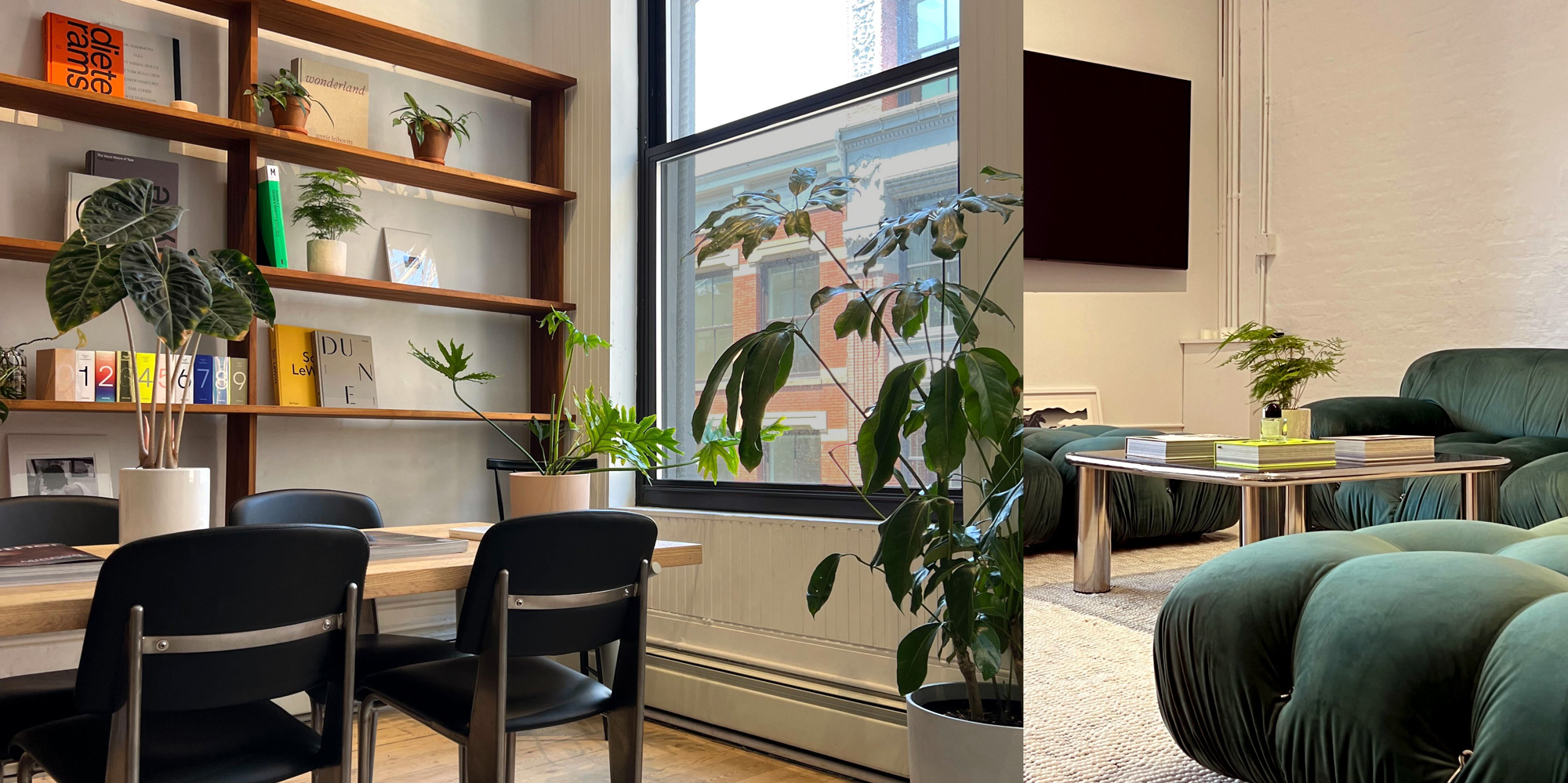
Consider a smaller object than a monolith: a napkin. For the Tostitos Tasting Window, Vocabulary worked with partners on an activation inspired by Florence’s wine windows. In Toronto and Vancouver, visitors could approach a window, ring a bell and receive a free three-bite flight devised by chef Susur Lee. A familiar supermarket product became the occasion for a tiny dining ritual.
Homefield, which supplied campaign materials, describes requests for wooden menus, signage, plates, napkins and staff kits. Vocabulary wanted the people serving the food to look right for the experience. The clothes were part of the brief. So were the objects someone held while eating.
In Homefield’s account, visitors ate all 54,000 bites available. The partner also reports that the campaign helped provide more than 151,000 meals through Second Harvest. These are reported results for the collaborative campaign. They describe participation and a charitable outcome; they should not be mistaken for a measurement of subsequent chip sales.
bites served, according to production partner Homefield.
A campaign participation figure, not a sales figure.The useful observation is how many decisions sit inside a seemingly simple encounter. Someone rings a bell. Someone else appears. There is a plate, a menu, a way to dress and a flavour to remember. Consistency emerges from those choices agreeing with one another. A beautiful campaign image can introduce the occasion, but the person at the window has to make it feel true.
An editorial reading of the experience, not a measured conversion funnel.
One Oscar can hold seven points of view
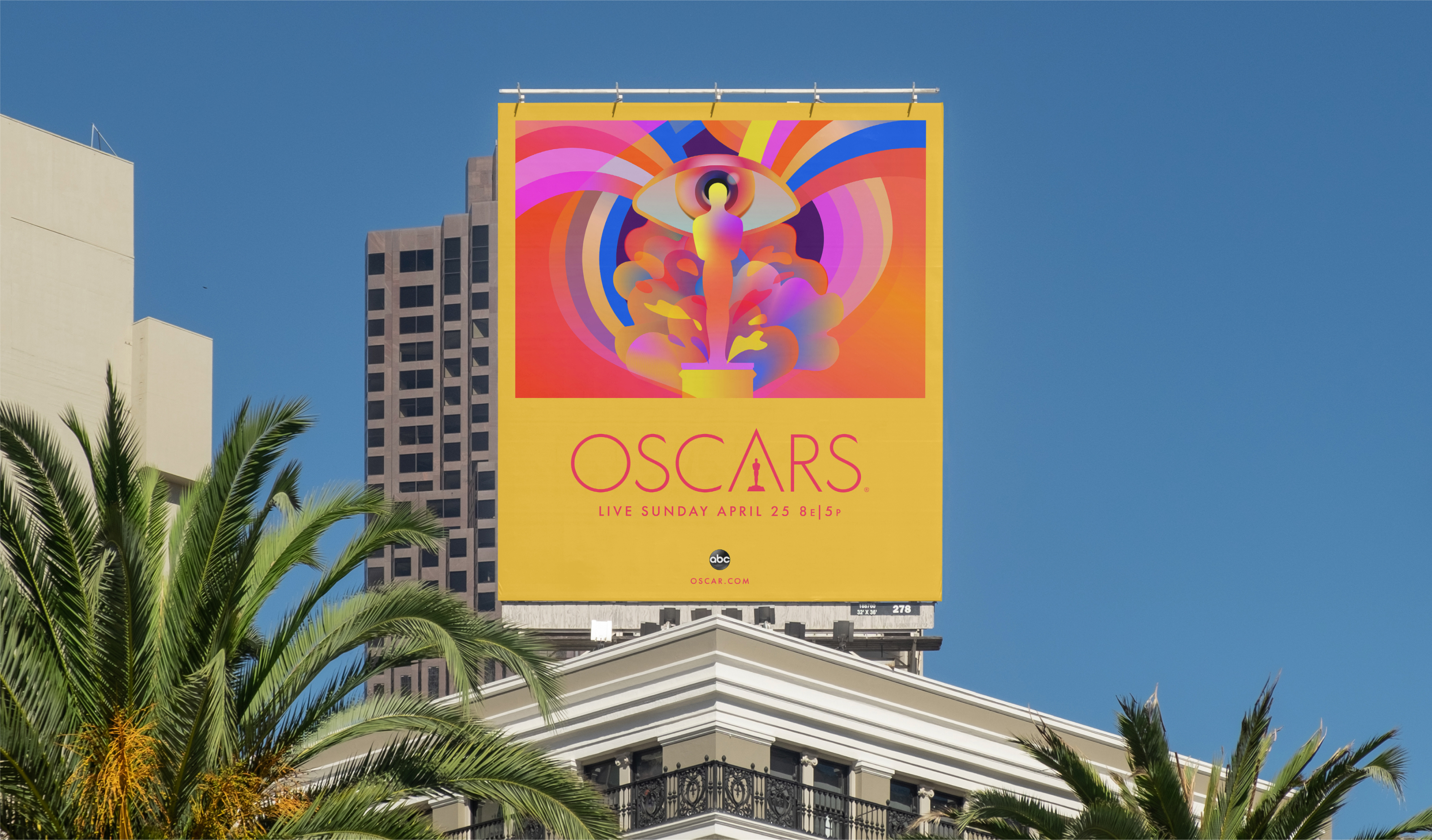
The Academy assignment presents almost the opposite starting point. A new snack needs an introduction. The Oscar statuette already comes loaded with associations. For the 93rd Oscars campaign, the Academy invited seven international artists to make their own interpretations, responding to the question, “What do movies mean to you?”
The artists included Temi Coker, Petra Eriksson, Karan Singh and Victoria Villasana. Their media ranged from illustration and painting to photography, motion and textile art. The shared form gave their differences something to gather around. Vocabulary includes the campaign in its portfolio, alongside the following year’s Oscars work.
The lesson is useful for anyone guarding an established identity. Decide which part must remain recognizable, then be explicit about where contributors have freedom. A rigid brief can waste the very talent it commissions. A completely open brief can produce a collection with nothing holding it together.
Vocabulary’s Academy work also includes a design system and a digital guidelines website. That assignment addresses a quieter question: how does the next person know what to do? Its Spotify Podcasters work, meanwhile, connects brand development with a campaign. Across these projects, the studio occupies the space between defining an identity and putting it into circulation.
The idea has to survive the handoff
That positioning places Vocabulary among independent brand studios and agencies combining design with campaign delivery. An in-house creative team with specialist suppliers is another way for a buyer to tackle similar work. Vocabulary’s stated distinction is the involvement of senior makers, coupled with an ability to cover several connected parts of an assignment.
A useful buying question follows: where is the difficult handoff in your project? Between strategy and design? Between packaging and promotion? Between an identity document and the website that must use it? Choose the team around that difficulty. For a single production task with an established brief, a narrower specialist may be sufficient.
The studio’s recent work for Paulie’s offers a different sort of translation. DIELINE featured the cider identity in January 2026. Cream, dark contrasting colours and script lettering give a new product a familiar, old-school appearance. The visual treatment invites recognition without requiring the customer to learn an entirely new set of signals.
Vocabulary also sponsors the strategic design category in RGD’s 2026 Student Awards. The category asks entrants to connect business objectives with people’s needs and explain the reasoning behind their creative decisions. It is a telling subject for an agency to put its name beside.
For readers, the most portable practice is to write the intended encounter before commissioning the assets. Describe what someone notices, what they do next and what makes that action worthwhile. Then check every piece against that sequence. It requires a decision maker who can keep the pieces connected and a production team able to deliver them. The monolith is optional. Having the chips ready is rather harder to dispense with.
Keep looking
Explore the work, meet the team and follow the next assignment.