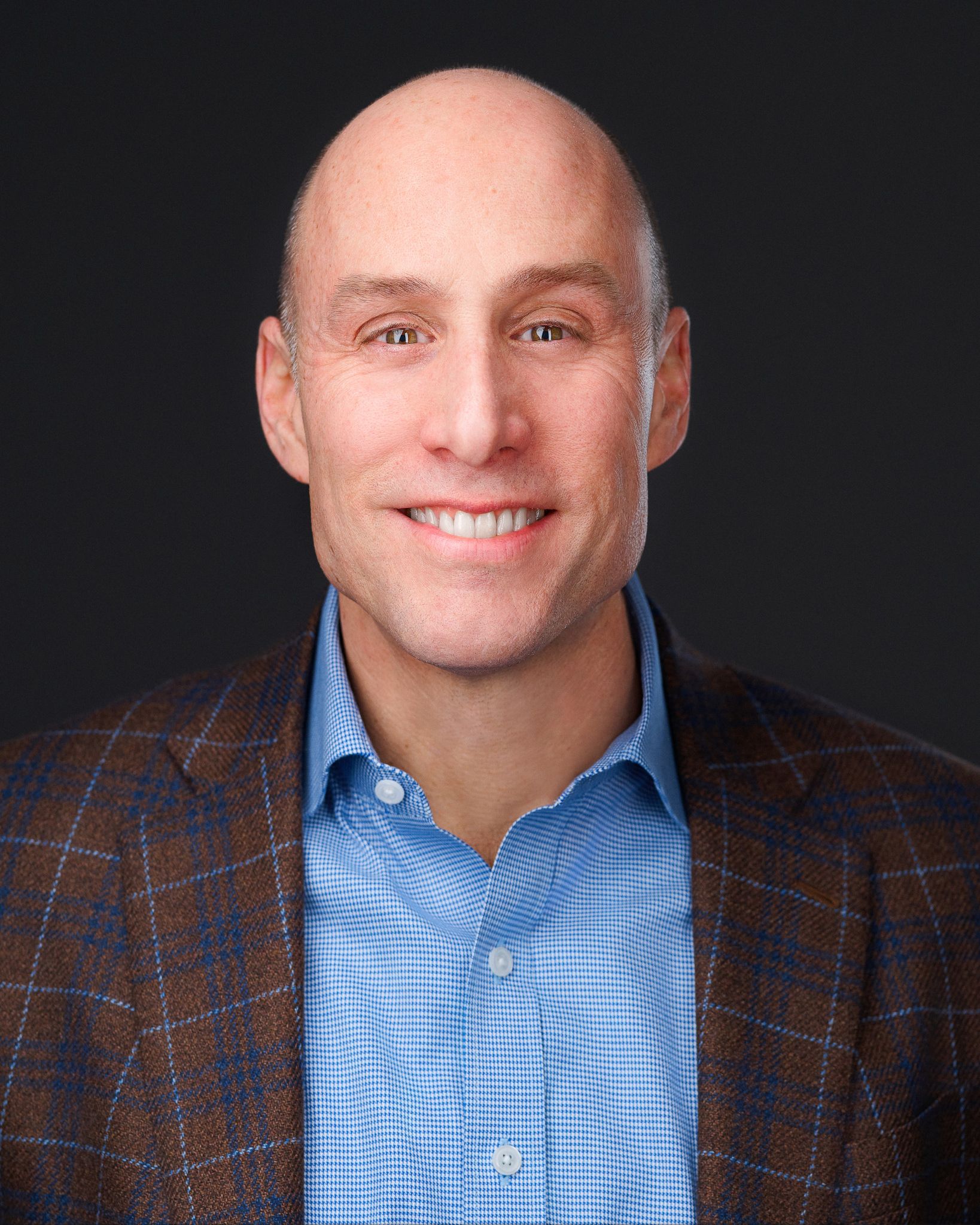
The Revenue Architect
Who Became a CEO
Bill Schuh showed up at his first sales job with a history degree from Princeton and a stint at a tech investment bank behind him. It was not the obvious path. Most SaaS executives of his generation came up through engineering or MBAs. Schuh came up through Hambrecht & Quist, one of Silicon Valley's most storied underwriters, watching IPOs happen from the outside before he spent three decades building the companies that live through them.
He landed at Callidus Software in the early 2000s, a company whose entire purpose was helping sales teams sell better. He stayed seven years, eventually running the EMEA business - the kind of role that forces you to learn how enterprise deals close when the culture, the currency, and the time zone are all wrong. By the time he left, he knew how revenue machines work when they're running and when they're not.
What came next was the unexpected detour. Schuh joined Sunrun, a solar energy company, as Chief Sales Officer. Most enterprise SaaS executives would never have made that jump - solar is hardware, logistics, installers on rooftops, consumer credit decisions. Schuh spent seven years there, scaling the company's sales engine to roughly $500 million in annual run rate before helping take it public. It was a masterclass in selling something people hadn't planned on buying.
Medallia pulled him back into enterprise software. As EVP of Global Industry Sales, he spent four years building out vertical go-to-market motions - taking the customer experience platform into specific industries where it could win the biggest deals. Medallia's IPO followed. That was the second time Schuh had helped carry a company across that finish line.
Anaplan was where the playbook fully crystallized. Joining as Chief Revenue Officer in 2021, he inherited a business at $450 million in ARR and helped drive it past the $1 billion mark. More than the number, he built what the company called a "Rule of 55" operation - a benchmark in SaaS that measures growth efficiency by combining revenue growth rate and operating margin. Getting there requires building the right structure, not just adding headcount. It was Schuh's work, at scale, in full.
When Firstup called in 2025, the opportunity was different from anything he'd done before. Firstup is not a CRM, not a planning tool, not a customer experience platform. Its subject is the workforce itself - specifically, the hundreds of millions of employees at large organizations who never sit at a desk, never open a corporate email, and rarely feel like communication from the company is meant for them. The frontline worker. The warehouse associate. The nurse who covers three floors on a night shift.
Schuh has described this as a mission-critical challenge: organizations spend enormous energy on customer communication and almost none on reaching their own people with the same sophistication. Firstup's pitch is that this is not a soft HR problem but a hard business one. Disengaged employees drive worse outcomes. Informed employees make better decisions. Personalized communication, delivered on the channel where each worker actually lives - their phone, a digital kiosk, a shared tablet - changes the business result.
He succeeded Nicole Alvino, Firstup's founder, who moved to Chairwoman of the Board. That handoff - founder to operator - is one of the most delicate moments in any company's life. Schuh has been explicit about building on Alvino's work rather than replacing it. His focus in early days was customer proximity: spending time with organizations to understand how their workforce communication challenges actually show up in their P&L, and ensuring Firstup is the platform that solves it.
The company he inherited has deep roots in the enterprise. Firstup's platform integrates with Workday, SAP SuccessFactors, Salesforce, Slack, and Office365. It uses AI-powered decisioning to determine what each employee should receive and when. It supports digital signage, mobile apps, intranet experiences, and email campaigns - all from a single orchestration layer. The term "workforce orchestration fabric" shows up repeatedly in Firstup's messaging; Schuh has leaned into it as both a technical description and a strategic vision.
Shortly after taking the helm, Schuh expanded the executive team to accelerate global growth and deepen customer impact. The company's Q4 2025 platform release delivered deeper personalization and engagement capabilities - moves consistent with a CEO focused on building product momentum while building revenue structure around it.
The history degree might seem like a footnote. But people who study history learn to read long arcs - which companies are compounding, which ones are contracting, which moments are inflections and which are noise. Schuh has been reading those arcs professionally since 1997. At Firstup, he's betting the next inflection belongs to the employee experience category, and specifically to the company with the most sophisticated way to reach the people running the actual business.
"When organizations connect with and engage their entire workforce, especially frontline employees who are often overlooked, it transforms business performance and people's lives."
- Bill Schuh, CEO of FirstupThe size of the problem is not small. Most organizations have a large proportion of their workforce that never touches a laptop - Firstup calls them the deskless workforce. Manufacturing, healthcare, retail, logistics, hospitality: these sectors employ hundreds of millions of people globally who are simultaneously the face of the company to customers and the least connected to what the company is actually trying to do. Schuh sees that gap as the product opportunity.
His vision for Firstup is to transform workforce communication from a cost center into a competitive advantage. The companies that figure out how to reach every employee with the right message at the right moment - whether that's a safety update, a product launch brief, a recognition moment, or a strategy shift - will outperform those that don't. That's the bet, and it's one Schuh has structured entire revenue organizations around before.
"At Firstup, we're reimagining how organizations connect with their people to drive business outcomes. When every employee is informed, engaged, and aligned, communication acts as a powerful catalyst for business performance and growth."
- Bill Schuh, CEO of Firstup