The first Chief Product Officer Onfleet ever hired - and she came for the last mile, not the resume.
Onfleet builds the software that dispatches drivers, plots routes, and pings you the moment your order is three minutes away. In October 2023 the company did something it had never done in its history: it hired a Chief Product Officer. The job went to Andra Munteanu.
Her mandate is deceptively simple and genuinely hard. Take the product management and design teams, point them at a market moving faster than most people notice, and keep the roadmap ahead of what retailers will demand next. Last-mile delivery is the part of commerce everyone experiences and almost nobody thinks about - until a driver is late, a route is wrong, or a text never arrives.
Munteanu's read on it is that logistics is not a trucking problem. It is an information problem. The package is physical, but the trust is digital: the real-time visibility, the accurate ETA, the proof that the thing actually arrived. Get the information layer right and the boxes take care of themselves.
What makes the hire interesting is where she was not before. She did not spend a decade in freight or fleets. She arrived from payments, credit data, background checks and supplier intelligence - and bet that great product judgment travels.
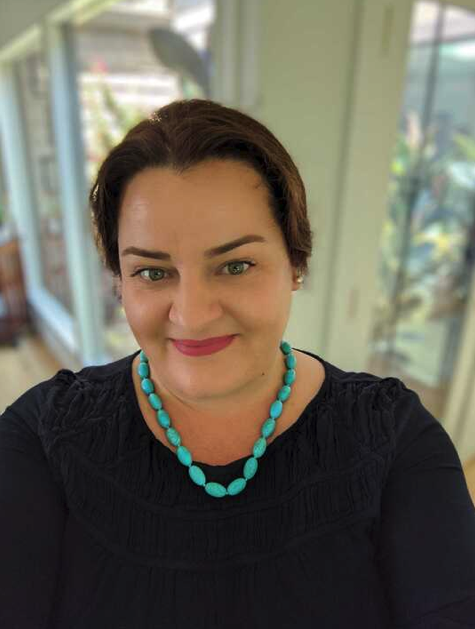
I've admired how Onfleet has created such a seamless, reliable software platform with incredible real-time capabilities. I see immense opportunity to reimagine enterprise intelligence, logistics and supply chain technology to build a more sustainable future.
Before logistics, Munteanu built research, engineering, product and design organizations in some of the hardest corners of enterprise software. Each one taught the same lesson from a different angle: invisible systems earn trust one interaction at a time.
The plumbing of global money movement, where a fraction of a second and a fraction of a percent decide whether a transaction feels effortless or broken.
Data at planetary scale, and the responsibility that comes with turning raw records into decisions people actually live with.
Background checks that let the gig economy hire at speed - product work where getting it wrong has real human cost.
As VP of R&D, product engineering and design, she helped procurement teams make data-informed calls about fragile supply chains.
Her graduate focus at Chicago Booth was Mergers & Acquisitions - a finance lens quietly steering a product career.
She crossed four industries - payments, credit, background checks and supplier intelligence - before ever touching a delivery route.
Through Pipeline Angels she writes checks aimed specifically at founders underrepresented in venture capital.
Munteanu describes her own work as "putting global retailers in the driver's seat by powering superb last mile experiences." It is a neat pun for a company built on fleets and drivers, but it points at something real. The last mile is where a brand either keeps its promise or quietly loses a customer.
She frames delivery software less as a cost center and more as a lever - for customer trust, for operational sanity, and, in her words, for "a more sustainable future." Fewer wrong turns and idle miles are not just cheaper. They are greener.
Her stated ambition reaches past any single company: "enabling people around the world to join economic growth." Last-mile logistics is one of the few industries where software directly creates work for drivers, couriers and small operators. Build the tools well and you do not just move packages - you widen the door for the people moving them. That is a rare thing to hear from a product executive, and it reads as sincere rather than staged.
Her career has a through-line: she keeps taking on roles that fuse research, engineering, product and design under one roof - three functions that usually fight over the same territory. At Onfleet she owns both product management and design, which is exactly the kind of mandate that lets a roadmap actually cohere.
Onfleet CEO Khaled Naim put the hire this way: her "B2B product development skills and exceptional track record will allow us to broaden our product's capabilities and continue delivering world-class logistics solutions to customers around the world."
The phrase to sit with is "broaden our product's capabilities." A platform that started as clean, focused dispatch software is being asked to stretch across pharmacy, grocery, retail and enterprise fleets without losing the simplicity that made it worth adopting. Broadening and coherence usually pull against each other. Reconciling them is the entire job - and the reason the role exists at all.
Onfleet is described as one of the fastest-growing last-mile delivery management platforms - a San Francisco company whose software touches pharmacy runs, grocery drops, courier fleets and enterprise logistics alike. Growth at that pace tends to fracture a product. New verticals pull the roadmap in a dozen directions at once.
That is the moment a company reaches for a single owner of product and design. Not to add features faster, but to decide which ones matter and make the whole thing feel like one coherent tool instead of a drawer of them. Munteanu's arrival as the first person to hold that title is a signal about where Onfleet thinks the next phase of the fight will be won: not on the road, but in the software.
Her framing of "enterprise intelligence" is telling. A dispatch board is table stakes. The harder prize is turning the exhaust of every delivery - every route, every ETA, every proof of arrival - into intelligence a retailer can act on. That is the difference between software that runs your fleet and software that makes your fleet smarter.
There is a reason her background reads like a tour of trust-critical systems. Payments, credit, background checks and supplier data all share a quality with last-mile delivery: the customer only notices the product when it fails. The job is to make the machinery invisible and the outcome inevitable. That is a design discipline as much as an engineering one - which may be exactly why she insists on owning both.
And the sustainability thread is not decoration. Route optimization, fewer failed deliveries and tighter dispatch are, at their core, ways to burn fewer miles. Munteanu talks about a "more sustainable future" as an outcome of good product, not a slogan bolted onto it.