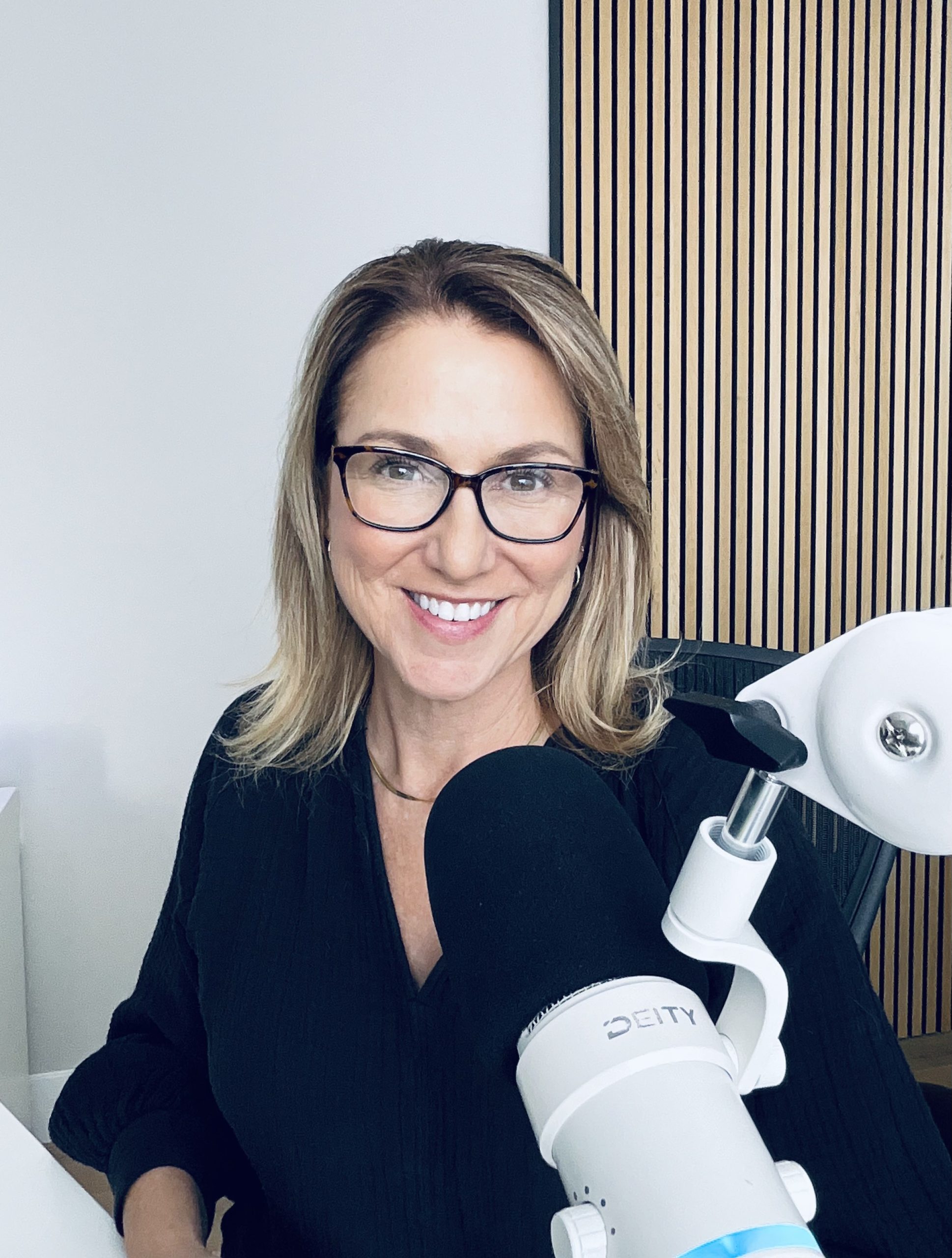
The Operator Who Became the Playbook
Most executives climb the ladder. Shelley Perry kept rewriting it - from engineering to product to venture capital to the boardroom, leaving a framework behind at every stop.
The first thing to know about Shelley Perry is that she started in accounting. Not software. Not product. Accounting. A BS from Binghamton University's School of Management, followed by a hard pivot into computer science at the University of Denver. That combination - the discipline of numbers and the logic of systems - runs through everything she has built since.
The second thing to know is where she landed first: TicketMaster, as VP of Engineering, and eventually as CTO of TicketMaster BV. This was before the streaming wars, before the cloud, before SaaS was a vocabulary word in most boardrooms. She was shipping software at enterprise scale when enterprise software still meant servers in a room you could walk into.
From there, the pattern repeats with a logic that's obvious in hindsight but required courage at each turn. Hewlett-Packard as CTO of Industry SaaS Solutions. NTT as Chief Development Officer and then Chief Product Officer, working across the massive NTT / Dimension Data portfolio. By the time she joined Insight Partners as Operating Partner in 2016, she had more operational depth than most investors would ever accumulate across an entire career.
"With a one-way highway focus, you can move a massive company."
- Shelley Perry, on organizational alignmentAt Insight Partners, Perry did what operators do when they move into venture: she systematized what she knew. She built the firm's Product Center of Excellence and launched the CPO Accelerator program, an initiative to recruit, develop, and place first-time Chief Product Officers across Insight's portfolio. The gap was real. Companies hitting the scale-up inflection point - past product-market fit, not yet at operational maturity - kept stumbling in the same way: they had great engineers, capable founders, reasonable sales teams, and almost no one qualified to run product at the executive level.
She spent four years at Insight making that problem smaller. Then she decided to go deeper on it herself.
A Framework Built in the Fire
In January 2020, Perry founded ScaleLogix Ventures - a boutique advisory group built around one specific problem: SaaS companies that have found their market but not yet found their ceiling. She calls the gap the "messy middle," and her analogy is precise enough to be uncomfortable.
Adolescence. Companies, like teenagers, sometimes rush through the development phase because adulthood looks more impressive. They skip the systems, the process-building, the deliberate culture work. They prioritize revenue velocity over organizational health. And then, exactly when scale should compound their advantages, it compounds their problems instead.
Perry's prescription is not inspirational. It's clinical. Establish a scorecard. Define the five critical objectives for every C-suite hire across the first 24 to 36 months. Monitor metrics continuously. Make trade-offs intentionally, at the executive level, not by default at the functional level. The framework is not complicated. Most companies simply never do it.
"You need to make that change, but you need to make it at the right pace. If you don't move toward leverage fast enough, your EBITDA and cost base will go up."
- Shelley PerryThe same year she founded ScaleLogix, she took on the Executive Chair role at Airbrake, an error-monitoring platform in the Elsewhere Partners portfolio. By February 2021 - approximately one year later - Airbrake was acquired by LogicMonitor. Perry had shepherded the exit under her watch.
She also founded Path to CPO, a crowdsourced collective for CPO training. The premise: there is a genuine shortage of qualified product executives, and nobody was building a structured on-ramp for first-time chiefs. Path to CPO is her attempt to change that, community-first.
Why Product Leadership Changes Everything
Perry has a thesis she's been refining for years, and it's gaining traction as the SaaS market gets more competitive. The argument goes like this: the companies winning at scale are not necessarily the ones with the best engineering or the highest NPS. They're the ones with a Chief Product Officer who can function as a change agent - someone who doesn't just manage a roadmap but unifies engineering, sales, marketing, and customer success around a coherent product vision.
Her extension of the thesis is bolder: she believes the future of competitive SaaS belongs to companies that combine the CPO and CTO under a single roof - the Chief Product and Technology Officer. Not two voices debating the roadmap. One voice building it. The logic is that climbing complexity and evolving customer expectations make functional friction between product and engineering increasingly costly.
"Qualified Chief Product Officers offer so much more than good product management - they are respected change agents that unify and push the company and its customers to the next level of growth."
- Shelley PerryShe has written and spoken extensively on this, from the SaaStock stage to podcasts at Chargebee, Product Led Alliance, and the Flow Framework. The audiences are always the same: founders mid-scale, investors who just closed a Series B, and product leaders who sense they're one bad hire away from missing their growth window. Perry gives them a map.
Networking as Generosity
There is a detail Perry shares in interviews that tends to surprise people: she's an introvert. Not "quirky-but-secretly-loves-cocktail-parties" introvert. Genuinely uncomfortable with the transactional machinery of professional networking.
The shift happened when she reframed the model. Networking as obligation is exhausting. Networking as generosity - as the practice of connecting people, sharing knowledge, returning calls from strangers who might become colleagues - is sustainable because it's driven by a different energy. She didn't stop being an introvert. She changed what she was doing with the introversion.
It's a small story. But it's the kind of detail that explains why someone with her profile ends up on four boards instead of one, and why founders keep calling her back when they hit the next inflection point.