The first useful thing to know about Yulduck Sung is that he once owned about 150 pairs of shoes. The second is that he started his working life writing mobile games. Somewhere between the closet and the code editor sits Genuio, the Seoul company he founded to sell Italian-made shoes directly to Korean customers. It is an improbable résumé until you notice Sung’s recurring obsession: take apart a system, find the friction, and keep revising until the awkward bits disappear.
Long before he was negotiating with Italian factories, Sung was a 2003 entrant at Pohang University of Science and Technology, better known as POSTECH. He studied Industrial and Management Engineering and pursued computer science alongside it. In a candid 2011 student interview, he joked that covering industrial engineering, management, and computing might mean he did none of them properly. The joke carried the cheerful punctuation of the early web. The substance was serious. He was the only developer assigned in his internship cohort, had studied computer security in POSTECH’s Unix security club, and had already spent more than two years building mobile games during alternative military service.
He also admitted that he preferred going deep on one thing. The fantasy was to shut himself in a room and program like a proper geek, though he confessed he had not practiced that ideal very faithfully since high school. His hobbies then were movies, books, and snowboarding. His philosophy was more revealing: he was unsure that one fixed life goal would ever suit him. He wanted to choose a shorter goal, complete it, choose another, and enjoy the sequence.
“I want to enjoy setting a short-term goal, achieving it, and then setting and achieving another.”Yulduck Sung, 2011
01 / ApprenticeshipLearning where the margin lives
The next goals moved him away from a programmer’s room. Career materials place him at GAMEVIL as a game programmer, then in strategic planning for E-Land Group’s British operation and its Italian footwear business. In Italy, where he lived for roughly three to three-and-a-half years, he worked close to the unromantic machinery of luxury: production cost, labor, factory processes, sourcing, and the rehabilitation of a European shoe brand. He learned Italian. He saw that the aura attached to a finished shoe rests on a long chain of people and decisions, many of them invisible to the buyer.
Only after returning to Korea did the shoes themselves announce their quality. Comparing them with what he could readily buy at home, Sung realized how accustomed he had become to the Italian pairs. “If you experience something good once, it is hard to go back down again,” he later said. For most collectors this would justify another purchase. Sung made the stranger calculation: if comfortable, well-made shoes were difficult to find at the right price, perhaps making a brand would be easier.
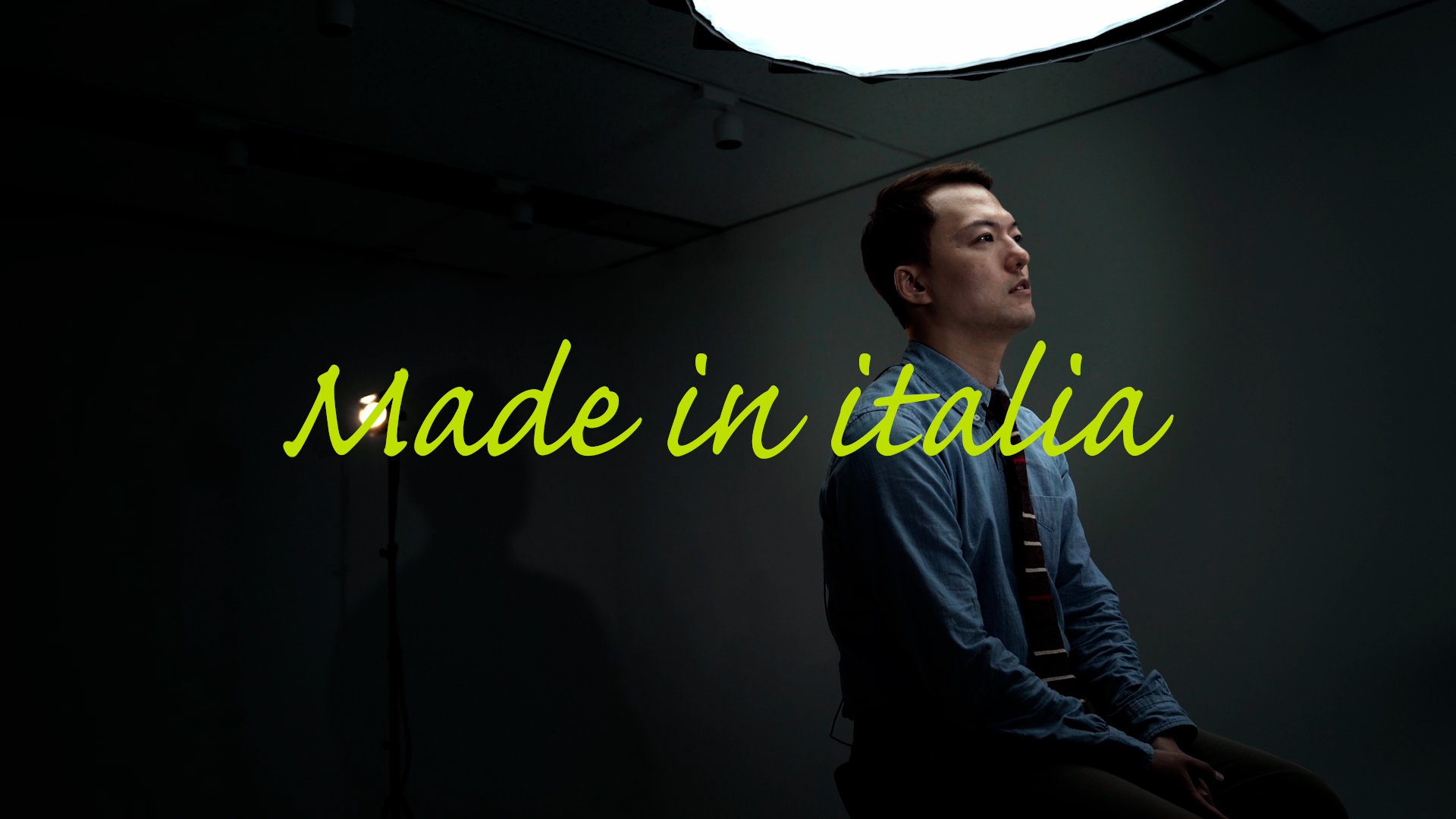
It was not his first attempt at company-building. Sung had led Laundry Hero, an on-demand laundry pickup and delivery service, and later spoke plainly about an earlier startup failure. That experience left a residue of fear. Genuio would be another wager, but this time he brought factory knowledge, ecommerce experience, and a collector’s intolerance for an uncomfortable shoe.
02 / The searchA useful question after no
In 2016, after leaving E-Land, Sung went back to Italy and began asking factories to produce for an unknown Korean label. His opening volumes were small. The factories declined. He traveled, asked again, and received another no. This continued for nearly six months.
His method of persistence was practical rather than theatrical. When an owner refused, Sung asked whether someone nearby might at least meet him. Factory owners and workers in the same district tended to know one another; rejection could still yield a name. The introductions eventually led to a factory that had expanded and needed orders beyond its existing luxury work. Capacity met tenacity, and Genuio had somewhere to begin.
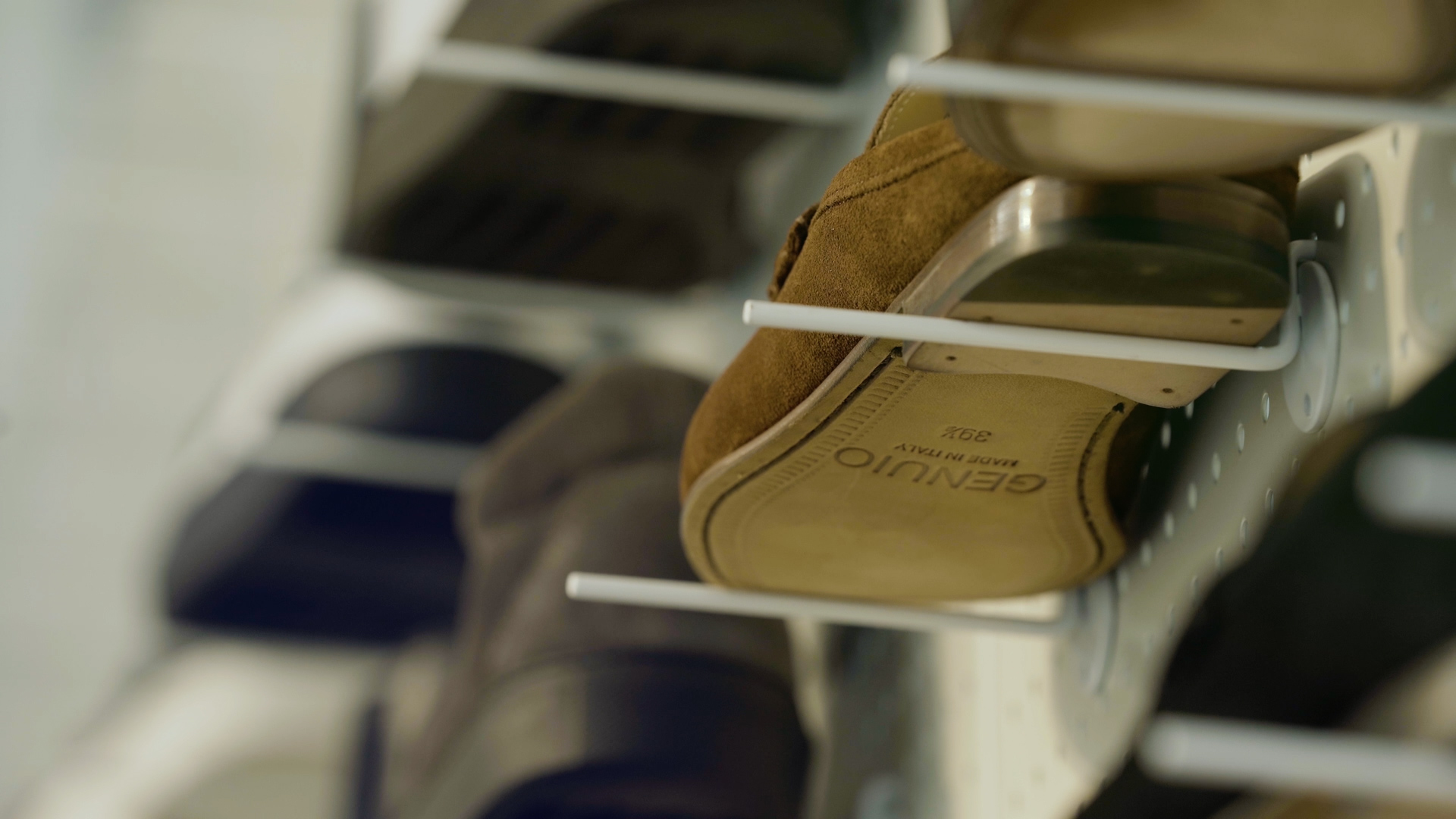
The company opened in February 2017 as a one-person business with its own online shop. Its proposition was a supply-chain argument made tangible: work directly with Italian makers, remove layers of distribution, and offer the resulting shoe at a lower price than traditional luxury channels. “Direct to Customer” became both a commercial model and a bit of editorial honesty. Genuio did not pretend the factory was scenery. The factory was the point.
The code-writing habits followed him. The first Genuio shoes used European standards. Customer comments then began to reshape the product: the thickness and softness of the leather, the geometry of the last, the heel counter, the toe cap, and the range of sizes. Sung described the Perfetto white sneaker as the accumulation of those changes, an Italian-made object tuned around what Korean wearers found comfortable. Tradition supplied the craft; feedback supplied the patch notes.
03 / The launch loopMake them want the next scroll
Crowdfunding gave Sung a venue suited to this unusual arrangement. Italian production could require customers to wait about three months. Ordinary ecommerce trains people to resent delay; crowdfunding gathers people who understand that production may begin after the order. Genuio’s first Wadiz footwear campaign raised about ₩240 million. The second, centered on the refined white sneaker, raised about ₩1.84 billion.
Two campaigns, one steeper curve
Reported Wadiz totals • bars scaled to the second campaign
The larger number attracts attention, but the editing behind it says more about Sung. Genuio’s team reportedly revised the campaign story around 100 times. At first they wrote to provoke an immediate purchase. The result felt commercial and familiar. Their better question was quieter: what would make someone read to the bottom? The first two screens no longer had to close the sale. They had to earn the third.
“Make the reader want to finish the story, rather than simply want to buy in the first two scrolls.”Sung’s crowdfunding principle
That is good copy advice, but it is also the Genuio operating system in miniature. Do not demand the final commitment too early. Give people enough evidence to continue. Test a page before buying mass inventory. Hold try-on events so customers can discuss sizing with one another. Use questions from the room to improve the next run. A story, a shoe, and a supply chain all become sequences of smaller permissions.
In-person fittings mattered because footwear is stubbornly physical. During a trial event at the Seongsu “Space Wadiz” venue, supporters who had worn the sneakers helped online buyers choose sizes. Sung said the team also used feedback from the event to find improvements. The room became a temporary user-research lab, except the prototype had laces and the bug reports concerned toes.
04 / After the spikeBuilding beyond the white sneaker
Genuio’s growth did not stop at a campaign total. In 2019, the brand entered Shinsegae’s Man on the Boon select shop. By March 2022, Sung wrote that the Perfetto had appeared in ten colors and the wider catalog had grown to roughly 500 products. Company materials described a small team trying to compress the conventional fashion calendar: shorter design-to-launch cycles, data-informed merchandising, and a broader line spanning men’s and women’s footwear.
The catalog carries the tension at the heart of the business. Italian footwear draws much of its charm from continuity: practiced hands, specialized districts, techniques that predate the landing page. Ecommerce rewards speed, measurement, and constant change. Sung’s work has been to keep both clocks on the wall. One cannot hurry every stitch. One can hurry the learning around it.
His technical interests did not vanish into leather. The public GitHub account he has long used under the handle “yulduck” shows ecommerce and modern web-development projects among its repositories. The student who studied Unix security and imagined a life of absorbed programming still appears in the founder who sees a storefront as something editable. The object may be analog. The company around it is software-shaped.
Sung has since been publicly listed as the representative of Locotique, an ecommerce company incorporated in 2023 and associated with the design retailer Loqoqo. Genuio’s live storefront continues to name him as representative. These facts suggest an operator still working at the meeting point of product curation and online retail, though his public commentary remains more abundant around Genuio’s formative years than its recent ones.
05 / The founder’s lastA career shaped one revision at a time
Shoemakers build around a last, the foot-shaped form that determines a shoe’s architecture. Sung’s career has a last of its own: systems thinking. Mobile games taught him to build and debug. Industrial engineering gave him a language for process. E-Land showed him the factory behind luxury. Failure taught him to test before committing too much. Collecting shoes gave him taste, which is merely opinion until it becomes a specification someone else can manufacture.
There is comedy in a programmer deciding the solution to a shoe habit is to negotiate with Italian artisans. There is also discipline. Sung did not romanticize his way past minimum orders. He searched until capacity appeared. He did not assume European fit was universal. He listened until the product changed. He did not treat the campaign page as finished because the sentences were grammatical. He edited until the story carried the reader.
In 2019 he offered a large aspiration: he wanted everyone in South Korea to have a pair of Genuio shoes. It is a founder’s kind of sentence, audacious in scale and concrete in unit. Yet the older statement from 2011 may fit him better. Pick the next goal. Accomplish it. Pick another. A factory, a last, a page, a pair. Grand arcs are sometimes only short goals that kept their appointment.