The first thing to understand about Thursday Boot Company is that its founders were shopping. Columbia Business School’s account describes two students who liked good boots, disliked paying $400 or more, and bought cheaper pairs instead. By winter’s end, those boots had worn out. Nolan Walsh and Connor Wilson had encountered a familiar indignity: the affordable purchase that turns out to be expensive.
The company they founded in 2014 now sells boots, sneakers, shoes, jackets and accessories. But the organising idea remains wonderfully ordinary. Make footwear someone can wear to work and afterwards, without demanding either a luxury budget or a costume change.
- The proposition: everyday leather footwear between disposable fashion and costly heritage boots.
- The anchor: a men’s Captain priced at $199, with Goodyear welt construction.
- The lesson: the price depends on how the company makes and sells the boot.
A stranger’s boots, then twenty samples
On a Nicaragua surf trip, the pair spotted someone wearing the silhouette they wanted. The trail led to Pastores, Guatemala, where they made about 20 samples. An Etsy test attracted enough interest to suggest this might be a business. A stranger’s footwear had become market research.
Scaling required a different arrangement. Walsh says the small Guatemala workshops lacked the volume infrastructure and quality-control processes they needed. The founders found partners in León, Mexico, and secured roughly $250,000 worth of boots with $40,000 up front. Their Kickstarter production budget was about $2,500. Those were the costs of getting started, rather than a tidy calculation of what a finished company would require.

The campaign ran from October 1 to November 3, 2014. It drew 1,203 backers and $276,611 in pledges against a $30,000 goal. Crowdfunding gave them a visible demand signal. It also gave them people to disappoint if the product failed to arrive as promised.
9.2× the goal · 1,203 backers · pledges, not profit
The economics hiding under the leather
The men’s Terracotta Captain currently costs $199. It combines a full-grain leather upper, glove-leather lining, cork-bed midsole, cushioning and a studded rubber outsole. The Goodyear welt allows the sole to be replaced. A worn tread need not mean retirement for the whole boot.
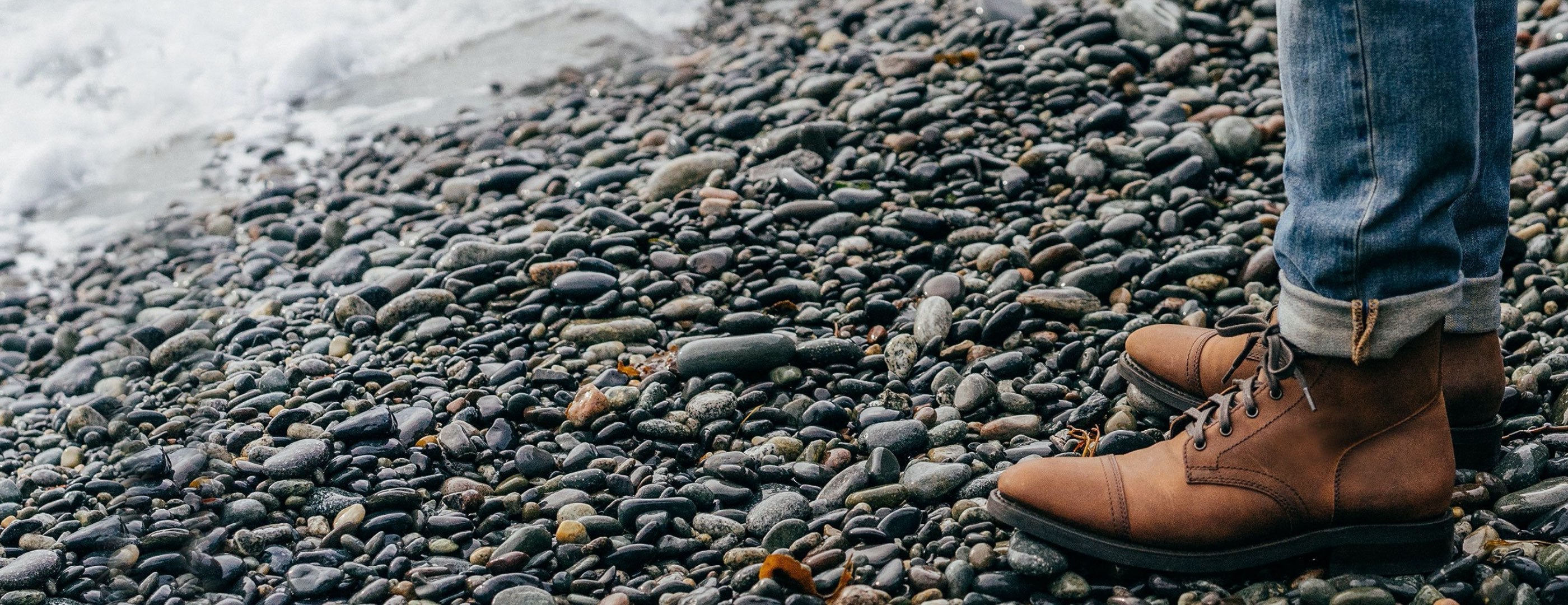
Thursday attributes its pricing to a lean operation, lower markups and responsive production. Its product page describes small batches made during 50 of the year’s 52 weeks. The argument is that faster inventory turnover and less excess stock reduce the cost that customers must absorb. The familiar seasonal clearance rack becomes an expense to avoid.
That explains the company’s resistance to holiday sales. For a customer, the useful promise is a price that does not require waiting for a promotional calendar. For another business, the copyable idea is to examine inventory before cutting materials. A markdown can begin months earlier, with an order that was too large.
Thursday’s place in the market is therefore fairly precise: an accessible entry into leather boots with repairable construction and restrained styling. Alternatives such as Red Wing, Wolverine and Grant Stone invite different comparisons of shape, materials and origin. A similar silhouette alone cannot settle which boot suits a particular foot or wardrobe.
The wrong boot in the right box
In a 2019 Stitchdown interview, Wilson recalled a particularly unglamorous early failure: a box marked black Captain, size eight, containing a natural Captain, size twelve. The company had sold the proposition. Fulfillment had lost the plot. “We had dumb stuff happening,” he said.
His examples of subsequent improvements are more revealing than a polished success story. Eyelet washers addressed the competing problems of secure hardware and scratched boot tongues. Changes to toe reinforcement responded to pinching. Customer complaints became instructions for the next iteration. The expertise was acquired through specific problems, rather than conferred by the founders’ business-school credentials.
“We had dumb stuff happening.”Connor Wilson, recalling early deliveries in 2019
Walsh told Heddels that he personally read negative customer comments every month. He also credited Horween and Vibram with advice and introductions. Thursday’s technical learning involved suppliers, employees and unhappy wearers. A complaint, handled properly, could tell the company something its launch video could not.
Closer to the factory, closer to the foot
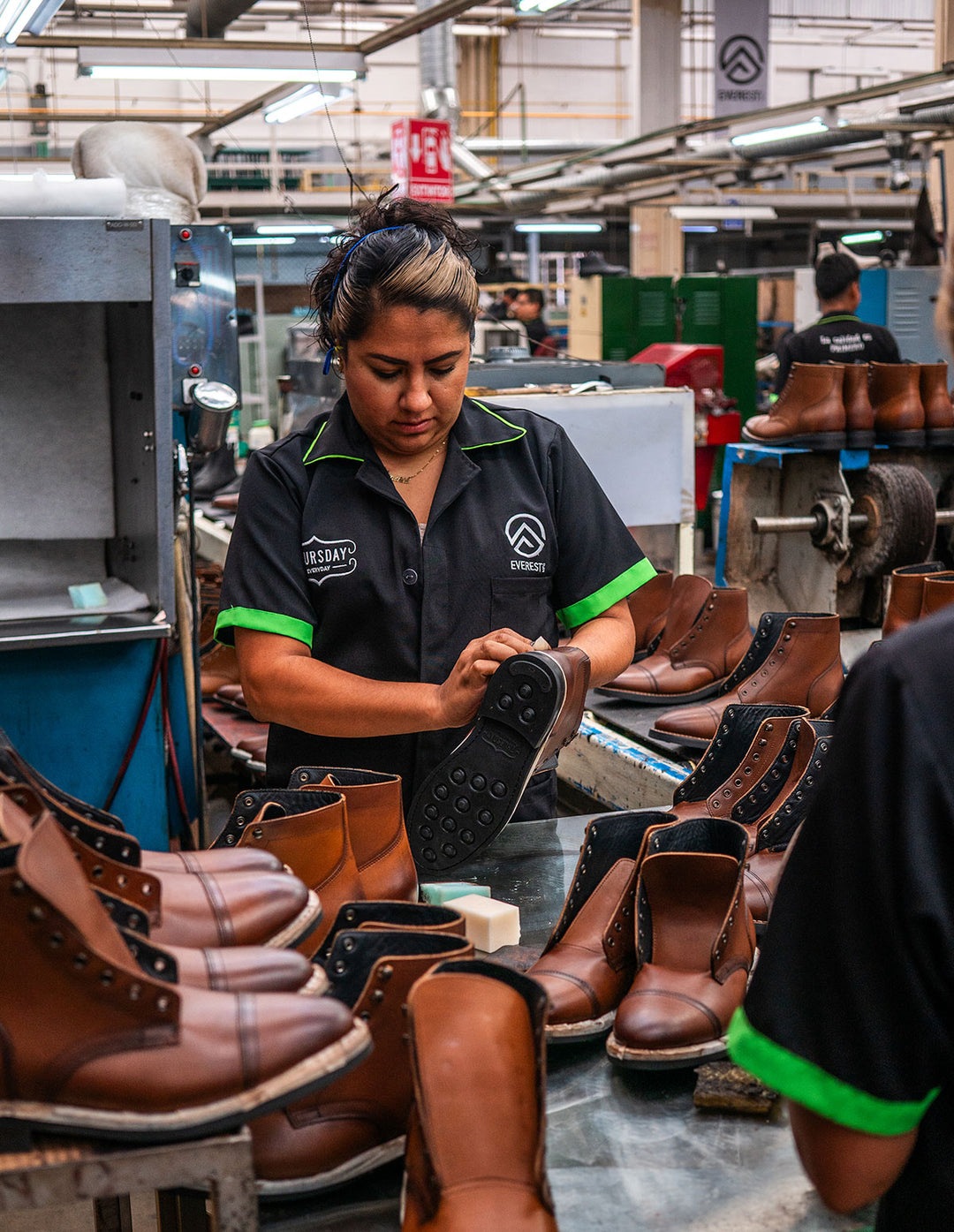
A Series A led by Blue Scorpion Investments was announced in November 2017; its terms were undisclosed. Today, Thursday describes investment in its own manufacturing facility, and its store directory lists five locations, from New York to San Francisco. The online brand has acquired places where customers can feel the leather and try the fit.
Its published values emphasise ethical supplier relationships and improving environmental and social impact. These are company commitments, rather than proof that leather footwear has no environmental cost. The Trove-powered ReBoots marketplace adds a practical option: customers can sell pre-owned Thursday products and buy used pairs.
Buy the boot your day actually needs
The intended customer wants one pair to handle several ordinary situations. Thursday’s name makes the brief explicit: a working day with a weekend already in view. Sneakers, women’s boots, dress shoes and jackets extend that wardrobe logic. The appeal is reducing the daily negotiation between looking presentable and feeling dressed for real life.
Choose by model, however. The company says its men’s boots and dress shoes are resoleable; women’s styles vary, and sneakers are not easily resoled. Water resistance also has limits. Thursday advises against standing in puddles. A useful everyday boot can still be the wrong purchase for prolonged wet conditions.
For a first purchase, the Terracotta Captain page recommends going half a size below your sneaker size and offers standard and wide options. Try the boots indoors before committing. A versatile design is only useful when it fits; buying the handsome pair that stays in its box rather defeats the point.
Repairability changes the purchase calculation, but it does not erase future spending. A replacement sole is another paid job. The sensible comparison is how often you expect to wear the boots, whether you will maintain the leather through regular use, and whether keeping the upper matters enough to justify that eventual repair.
The business lesson has limits too. Small batches require dependable production, and selling directly still leaves fitting and service work to do. The founders’ early supplier arrangement was a relationship to earn, not a financing trick anyone can repeat. Their most portable habit is simpler: make a small test, study the failures, then change the product people actually wear.