Alex Frias has a line that does more work than most executive biographies: he makes shoe contact before eye contact. It is a joke with the sole exposed. Shoes are products, certainly, but they are also tiny public declarations. They reveal how someone wants to enter a room before conversation takes over. At Steve Madden, where Frias leads marketing across a portfolio that includes Steve Madden, Dolce Vita and Betsey Johnson, noticing that first signal is part of the work.
His career has been a long exercise in noticing. Before fashion, there was urban marketing at Atlantic Records, radio, and live entertainment. Then came Track Marketing Group, the experiential agency he co-founded in 2010. The company built programs for brands including PepsiCo, Apple Music, Uber, Twitter, New Balance, HGTV and Heineken. A live event is an unforgiving classroom. People cannot be ordered to care, and applause refuses to appear in a dashboard before it happens. The audience either joins the moment or wanders toward the bar.
That education traveled with him into TIDAL, FILA, Wayfair and, in May 2024, Steve Madden. The products changed from music to sneakers to sofas and back to shoes. The central question stayed intact: how can a brand enter culture in a way that feels useful, recognizable and alive?
A student, on purpose
Frias calls himself a “student of culture.” The noun is revealing. Students are expected to arrive without all the answers. They watch, compare, revise, and occasionally discover that last semester’s brilliant insight has expired. For a marketer in fashion, where cycles accelerate and every feed is a runway with comments enabled, that posture has practical value.
His version of listening is broad: fashion, entertainment, social media, street style and consumer behavior. Yet he draws a firm line between awareness and obedience. A team can notice everything without reacting to everything. The useful signals are the ones with some staying power and a credible connection to the brand. The rest can pass by without an emergency meeting.
This is judgment disguised as restraint. Trend-chasing often produces a strange corporate pantomime: a brand borrows the outfit of the moment, uses the vocabulary three weeks late, and wonders why everyone looks embarrassed. Frias prefers the point where a cultural movement and brand relevance intersect. Timeliness matters, but belonging matters more.
The bridges between categories
Frias grew up professionally in New York, graduated from St. John’s University with a communications degree in 2002, and spent his early years where media, nightlife and entertainment overlapped. Track Marketing Group blended physical experiences with social conversation before “phygital” became a word anyone was required to pretend to enjoy. Its work taught him that a campaign is not merely a message placed in front of people. It can be a setting where they meet one another.
Track Marketing Group
Co-founder and president, turning live experiences into social participation.
TIDAL and FILA
In-house leadership across music, digital culture, footwear and partnerships.
Wayfair
Integrated marketing across campaigns, social, creators, partnerships and physical retail.
Steve Madden
Marketing leadership for a fast-moving portfolio of fashion brands.
At TIDAL, culture traveled through artists and fans. At FILA, a century-old sportswear name had to connect heritage with current style. At Wayfair, identity moved indoors. Frias led content and campaign planning, social media, influencer and affiliate marketing, brand partnerships, and physical retail marketing. In a 2022 discussion about the consumer journey, he asked how a company could show up contextually in a way that mattered to shoppers. His conclusion was blunt: the bar was higher, and the experience should be frictionless.
The category changes make his career more coherent, not less. Music, rooms and footwear are all materials people use to compose a self. A playlist can announce a mood. A couch can signal what kind of life happens around it. A shoe hits the pavement and makes the message mobile.
A brand with a rearview mirror
Steve Madden presents a particularly entertaining puzzle. Its 1990s history is not a reference acquired from a mood board. The company helped shape the chunky, playful footwear language now circulating again. Its old Big Head Girl imagery can trigger recognition in someone who wore the shoes the first time, while a younger customer meets the aesthetic as fresh material in a social feed.
Frias’s approach is to keep nostalgia in motion. The brand can revisit familiar silhouettes and pop-cultural codes without sealing them behind glass. Current creators, current styling and current occasions carry the history forward. Heritage supplies credibility; reinvention supplies oxygen. The balance is delicate because affection for the past can quickly become a demand that nothing change.
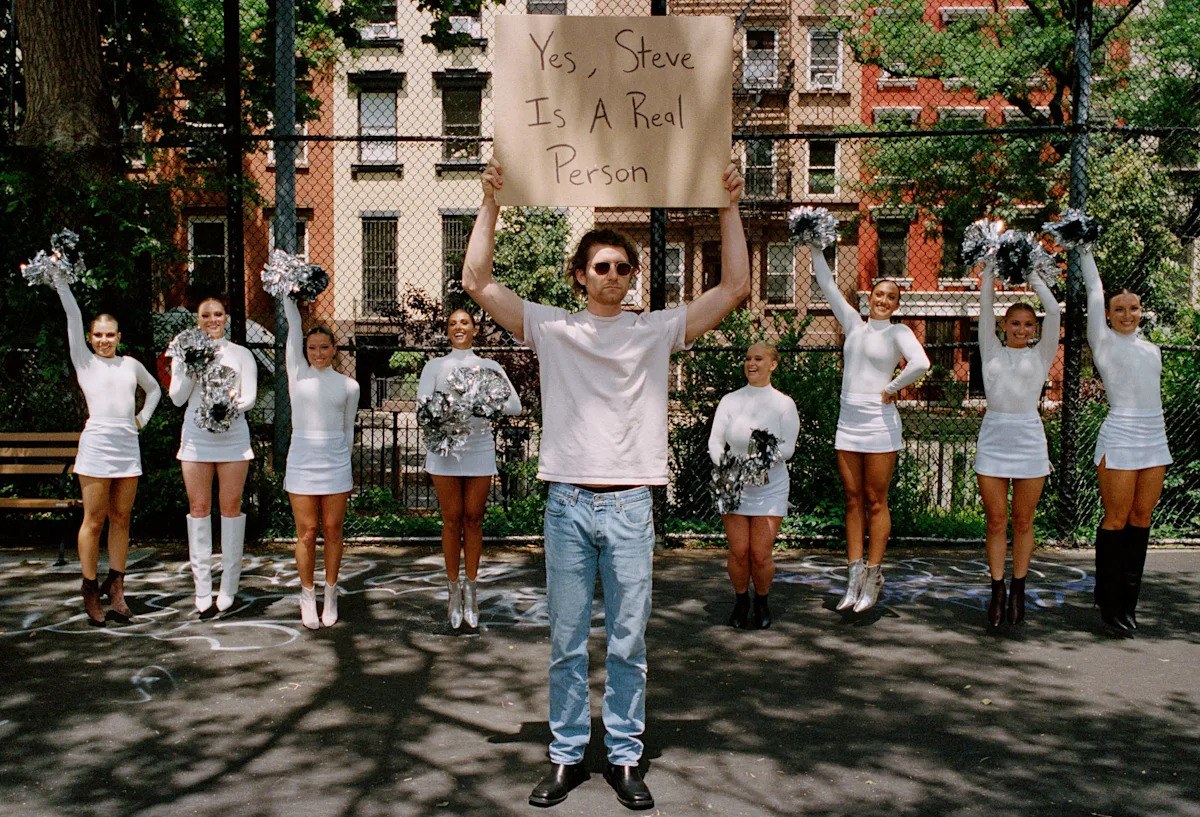
“Never Miss a Beat,” the platform introduced for Fall 2024, drew on New York’s spontaneous theater. Its 2025 continuation, “Never Miss a Summer,” celebrated the glorious in-between: platform sandals, sneakers, bags, music, late nights, a 6 a.m. walk home, even a full-glam dash to the bodega. Frias confessed to having done the latter. The detail lands because it is ridiculous, specific and completely legible to anyone who has treated a corner store as an emergency annex to the evening.
That sentence is the cleanest explanation of his work. Products are tangible. Purpose lives in the customer’s use of them. A campaign succeeds when it gives people more language for themselves, whether the sentence involves a silver boot, a low sneaker or a heel that has absolutely no intention of slipping into the background.
The operator inside the observer
Cultural fluency sounds soft until a portfolio, a calendar and a commercial target arrive. Frias’s path from agency founder to in-house executive added operational weight to his instincts. At Wayfair, he managed functions across the full customer journey. At Steve Madden, he oversees what he calls full-stack marketing across several brands, each with its own audience and voice. The assignment requires taste, but it also requires a system that can turn a useful observation into product storytelling, creator work, media, retail and measurement.
Teaching sharpens the filter
Between 2019 and 2021, Frias was also a lead instructor at BrainStation. The role sits neatly beside his habit of writing about brand strategy, cultural marketing and digital behavior. Explaining a practice forces its hidden assumptions into daylight. A marketer may know instinctively why one partnership feels natural and another feels stapled on, but a student deserves more than instinct presented as magic. The choice needs a vocabulary, a sequence and a test.
Judging applies the same pressure from the other side of the desk. As a member of the 2025 Young Lions Marketers jury, Frias helped assess ideas developed against a real brief in 24 hours. That compressed format strips away the comfort of endless revision. A team has to decide what matters, make the strategy visible, and give the idea enough life to travel. It resembles the broader rhythm of cultural marketing, where timing is part of quality and a late perfect answer can be less useful than a timely, true one.
The useful tension is between framework and surprise. A framework lets a large organization repeat good decisions across teams and brands. Surprise gives an audience a reason to look up. Frias’s record contains both: the operational breadth of Wayfair’s integrated group and the street-corner humor of a campaign insisting that, yes, Steve is a real person. One protects consistency. The other protects delight.
His 2026 operator-in-residence appointment at Bullish extends that exchange into early-stage consumer companies. Founders gain access to someone working close to current shoppers; an established-brand operator gets a window into businesses still making their first consequential choices. The bridge is useful in both directions. Startups need systems sooner than they expect. Large brands need reminders that a surprising idea can begin before a committee learns how to sand it smooth.
Recognition has followed that combination. The Lead included him in its 2024 Direct 60, a list focused on executives advancing digital and consumer-centered strategies. In 2025, he served on the jury for the Cannes Young Lions Marketers competition, evaluating work produced under a 24-hour deadline. He also joined Advertising Week’s advisory board. In 2026, venture and marketing firm Bullish named him to its first operator-in-residence cohort, placing his current consumer perspective alongside early-stage brand building.
There is also a pleasing consistency in the personal footnotes. Frias is a native New Yorker, a committed Mets fan, and a sneaker enthusiast whose published biography volunteers his shoe size. Baseball loyalty of that kind is useful training for brand life: hope, disappointment, history and another season arrive as a bundle.
His career suggests that relevance behaves similarly. It cannot be banked once and admired forever. Every campaign asks for another reading of the room. Every new audience brings its own references. The point of view must remain visible even as the expression changes.
So the shoe-contact line returns, now less like a gag than a method. Look down. Notice what people chose. Ask what they are trying to say. Then decide whether the brand has a credible way to join them. Culture keeps walking. Frias’s job is to recognize the direction without pretending he can order the street to turn.