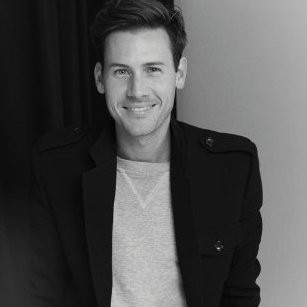
The Economics Major Who Learned to Sell Effortless
There is a certain kind of person who reads a university prospectus, circles "Banking, Corporate, Finance and Securities Law," and thinks: yes, this is where the excitement is. Liam McKessar was, for a while, that person. He took a Bachelor of Economics at the University of Sydney and, by the logic of the sensible, went to work as an account executive at Macquarie Group. It is the sort of beginning that usually ends in a corner office full of spreadsheets and a quiet, dignified boredom.
It did not end that way. Somewhere between the balance sheets and the bond desks, McKessar developed a second appetite, one that spreadsheets could not satisfy. He wanted to know not just what people bought, but why they wanted it in the first place. Fashion, as it happens, is the industry that has turned that question into an art form. So he changed lanes, which in fashion is considered brave and in banking is considered a breakdown.
He started where most fashion careers quietly begin: online editorial. There were early stints touching the websites and content of Harper's Bazaar, Vogue Australia and CR Fashion Book, the holy trinity of glossy ambition. It was an education in taste, in headlines, in the particular alchemy by which a photograph of a coat becomes a thing you did not know you needed until Tuesday. He learned the editorial half of the business first, which is unusual. Most marketers learn the numbers and then try, later and awkwardly, to acquire taste. McKessar arrived with the taste and already had the numbers.
Five Years at Vogue, and the Making of a Marketer
The proper apprenticeship came at Vogue. He entered as an Integrated Marketing Associate, which is a job title that sounds like furniture assembly, and climbed, over roughly five years, to Associate Director of Brand Marketing. Along the way he did the things that teach a person how brands actually persuade: partnerships, events, the integrated campaigns where editorial and commerce are supposed to hold hands and usually just glare at each other. He was, by all accounts, good at getting them to cooperate.
Vogue is a useful place to learn because it sits at the exact intersection McKessar seems built for. It is a magazine that must be beautiful and a business that must be profitable, and the tension between those two facts is the entire game of fashion marketing. He left understanding both sides, which is rarer than it should be.
Heritage, Then Cult
From Vogue he went to Diane von Furstenberg as Director of Marketing and Communications, which is roughly like being handed the keys to a museum that also has to hit quarterly targets. DVF is heritage, wrap dresses and a founder whose name is a verb in certain zip codes. Marketing a legacy house is a delicate business: too much reverence and you are a mausoleum, too little and you have insulted a legend. McKessar had to keep the reverence and add the relevance, and by the accounts of his own social posts, he found the year exhilarating rather than exhausting.
Then came LoveShackFancy, where he served as Senior Director of Marketing and Communications and led global marketing strategy alongside the brand's founder. If DVF is heritage, LoveShackFancy is fandom, all prairie ruffles and romantic maximalism and a customer base that does not so much shop the brand as belong to it. Building for a cult is a different discipline entirely. You are not persuading strangers; you are feeding devotees. McKessar, who had spent years studying why people want things, now got to study what happens when they want them a little too much, in the best possible way.
A Detour Through Hospitality
In 2023 he did something a little unexpected and moved to Four Seasons Hotels and Resorts as Senior Director of Marketing - Retail. On paper, a hotel group is a strange stop for a fashion marketer. In practice it was the most logical thing he could have done. Luxury hospitality is the purest laboratory for the one idea McKessar keeps returning to: experience. A hotel cannot hide behind a beautiful campaign. If the greeting is cold or the room is wrong, the marketing is a lie, and the guest knows it within ninety seconds. Four Seasons taught him, at industrial scale, that a brand is only as good as the moment a real human being actually feels it.
This is the thread that runs through everything. Ask McKessar what makes retail good and he does not describe a campaign. He describes a fitting room. Being acknowledged when you walk in. Being offered a room to try things on. Being brought the next size without having to flag someone down and perform the small humiliation of asking. It is an unglamorous answer from a man who has worked at glamorous places, and it is exactly why the glamorous places keep hiring him.
The ANINE BING Job
Which brings us to the present, and to a small geographic joke. McKessar is an Australian, based in New York, now running global marketing for ANINE BING, a brand headquartered in Los Angeles and built on an aesthetic most people would describe as Scandinavian. If you can hold all of those facts in your head at once, congratulations, you understand modern fashion, which long ago stopped believing in geography.
ANINE BING is a genuinely interesting assignment. It is a founder-led label with a clear point of view - elevated basics, a leather-jacket-and-cashmere sort of cool, roughly 250 employees and a global retail footprint. It has raised venture funding and carries the ambitions that come with it. What it needs from a CMO is precisely the combination McKessar spent two decades assembling: the editorial instinct to keep the brand feeling like a magazine, and the commercial discipline to make sure the magazine sells the coat.
His stated project is refreshingly free of buzzword fog. He wants to build the thing everyone else keeps putting on slides. Tie the storytelling to the inventory. Tie the inventory to the service. Tie the service to the customer who walks in, is seen, is helped, and comes back. It sounds obvious. It is, by his own diagnosis, almost never actually done.
The Man in the Fitting Room
What is likable about McKessar, at least at a distance, is that he seems allergic to the fashion industry's favorite trick, which is to say something grand and mean nothing by it. He talks about greetings and size runs. He talks about pickup and delivery and inventory that knows where it is. He treats the fitting room as a marketing channel, which it is, and which almost nobody bothers to defend.
There is a version of this career that reads as a straight line of ever-shinier logos: Vogue, DVF, LoveShackFancy, Four Seasons, ANINE BING. But the more honest read is that he has been asking the same small, stubborn question the whole way up. Not "how do we look important," but "how does this actually feel to the person on the other end." He learned it in a magazine, refined it in a hotel, and now gets to build it into a growing global brand.
Not bad for someone who once circled securities law and meant it.