In June 2015, Matthew Scanlan drove into the Gobi Desert with $2.5 million in borrowed money packed into shopping bags. He was going to buy cashmere. He had not yet mastered the rather consequential business of turning it into sweaters. Fashion usually begins with a sketch. This venture began with a cash withdrawal.
- The offer: cashmere staples, with the Original sweater advertised at $98.
- The mechanism: buy fibers directly from Mongolian herders and shorten the chain.
- The tension: accessible prices, expensive growth and sustainability claims that require evidence.
Thirty-two bags, one very expensive idea
NAADAM’s origin has the ingredients of an improbable holiday: college friends Scanlan and Diederik Rijsemus, a remote herding community, and hospitality that left them wanting to give something back. The company dates its founding to 2013. The developed clothing brand launched in 2015, with designer Hadas Saar joining the founding team. Someone, eventually, had to care about the clothes.
The first instinct was charitable. In a June 2026 interview, Scanlan described raising money for veterinary care, then realizing that assistance left a pricing problem intact. Herders produced the valuable fiber, but traders captured value farther along the chain. Buying directly offered a recurring commercial relationship instead of relying solely on donations.
Good intentions supplied no manufacturing expertise. Early crowdfunding orders left the founders scrambling to make and dispatch sweaters from Scanlan’s apartment. The later raw-fiber purchase raised the stakes: a high-interest $2.5 million loan, secured with a second mortgage, had a twelve-month repayment window. The cost was both money and an education acquired on a deadline.
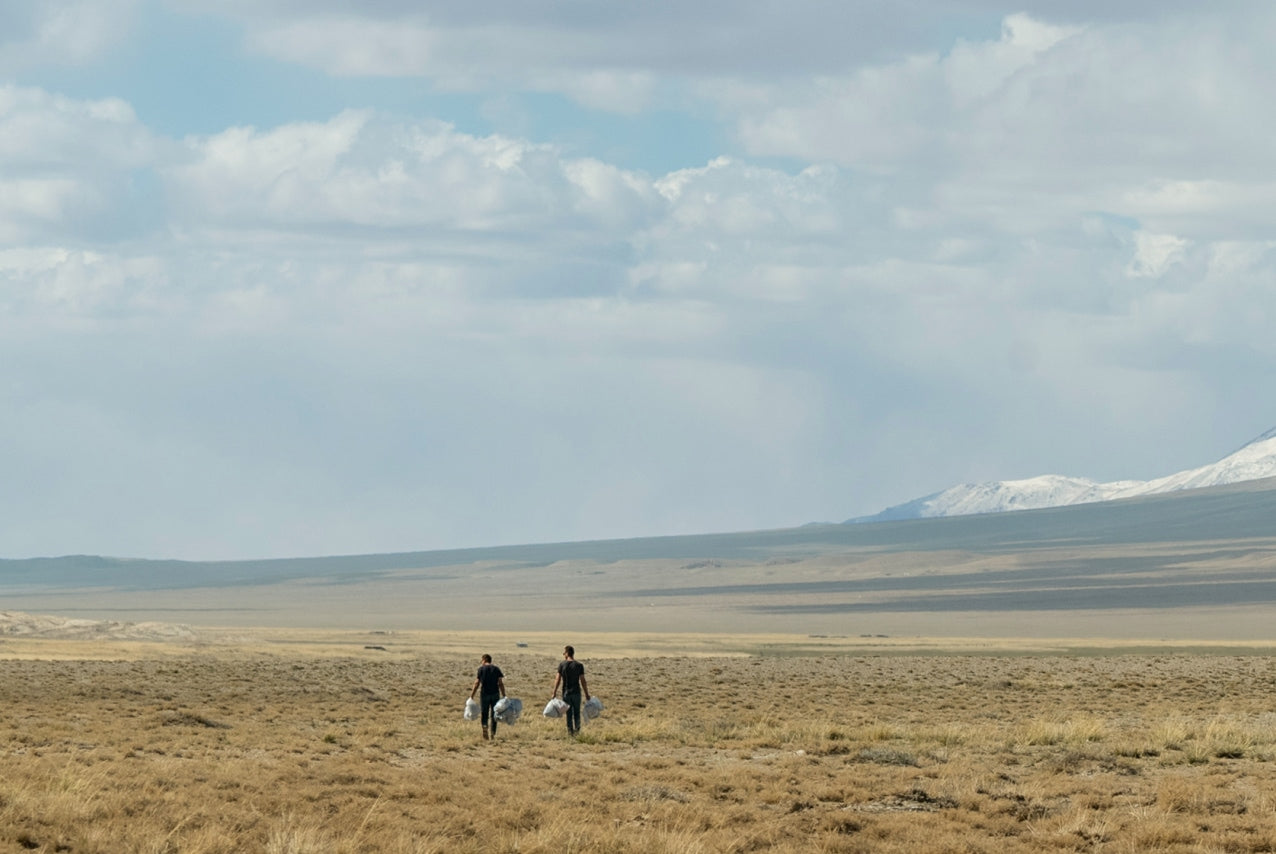
“We had no idea how to process it”
Matthew Scanlan, recalling the first purchase in a June 2026 interview
A price tag does the explaining
The sourcing argument was simple enough: remove trading layers, leave more money with the herder, and retain room to charge the shopper less. The customer still needed a reason to care. In a 2022 interview, Scanlan said the proposition became clear when NAADAM released its $75 cashmere sweater. A complicated relationship became a comprehensible object.
Today the website calls that entry product the $98 Original. The number matters because it gives the promise a boundary. “Accessible luxury” can mean practically anything; a sweater priced below $100 is an offer a shopper can examine. It also reminds us that a memorable launch price is not a permanent law of economics.
Fewer trading layers. The manufacturing work still has to happen.
That is the interesting distinction in NAADAM’s expertise. The advantage it claims starts before a garment reaches a studio: supplier relationships, fiber selection and sourcing economics. Design and merchandising make those decisions wearable. Without the sweater, the supply-chain thesis would remain a worthy conversation with nowhere to put your arms.
Softness, with a choice of weights
NAADAM sells to people who want cashmere for ordinary life: a work sweater, a cardigan, a gift, something comfortable for a journey. Its catalog extends into hoodies, tees, pants and dresses. Collections labeled Signature, Luxe, Lightweight and Super Fine give shoppers a vocabulary for different constructions. Organic cotton broadens the wardrobe beyond cashmere.
Its position sits between inexpensive essentials and luxury-house knitwear. Quince and Everlane are alternatives for shoppers comparing approachable basics; Loro Piana and Brunello Cucinelli occupy the luxury end of the conversation. These are different propositions, rather than interchangeable sweaters. Weight, composition, fit and care instructions deserve as much attention as the name inside the neck.
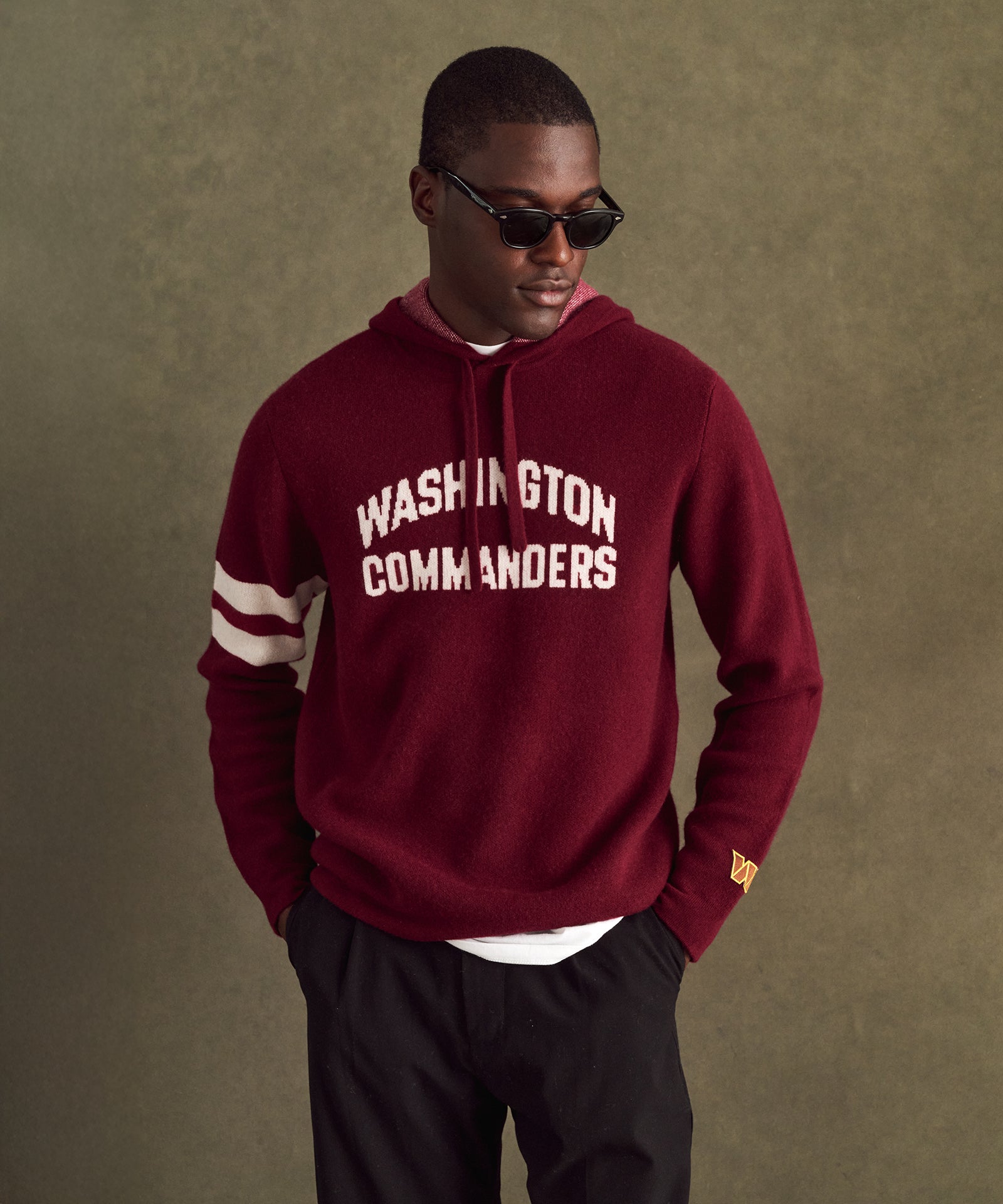
Collaborations add reasons to buy beyond replacing a crewneck. October 2025 brought NFL-licensed cashmere and a fourteen-piece Olivia Culpo capsule. The current NFL Luxe hoodie is listed at $348. Culpo’s collection includes a cashmere jumpsuit and a slit turtleneck dress. A company associated with an entry-price sweater also sells considerably more expensive ways to feel comfortable.
The internet got expensive
NAADAM is often described as direct-to-consumer, but its distribution has never fit neatly inside a browser. It has sold through wholesale and QVC, opened stores, and worked with retail operator Leap. A $16 million Series A announced in July 2018 helped finance expansion. A shopper can understand softness faster by touching a sleeve than by reading another adjective.
In November 2024, Scanlan said direct e-commerce still supplied 80% of revenue. The same interview described a Kohl’s diffusion collection with prices starting at $79, using lighter-weight cashmere to meet that price. Different construction made a different retail offer possible. Reach required a product decision, not simply another place to display the same stock.
The time Scanlan said NAADAM took to shift from growth toward profitability, in a February 2025 interview.
The financing climate forced another adjustment. In that 2025 account, Scanlan linked harder fundraising around 2021 to rising digital advertising costs. His emphasis moved toward profitability and borrowing against assets such as inventory or receivables. Cashmere tied up in stock cannot pay interest until the business produces cash. A charming origin story does not alter that arithmetic.
A good story still needs a receipt
The company says its cashmere is hand-combed and identifies itself as a Sustainable Fibre Alliance member. Its sustainability page emphasizes longevity, responsible sourcing and herder livelihoods. Those statements describe its commitments. Evaluating results requires disclosure beyond the fact that a fiber is natural or a founder knows its producers.

Eco-Stylist withdrew its certification in 2025, citing reduced transparency, including missing impact reporting and insufficient labor and environmental disclosures. Its assessment used revised criteria and is an evaluator’s judgment, rather than a regulatory finding. Still, it is a meaningful challenge to a brand whose founding story asks shoppers to trust the route their clothes have taken.
The useful lesson for another business is to connect a supplier problem to a customer benefit people can test. Then keep publishing evidence. Direct sourcing needs capital, logistics, processing expertise and trusted relationships; removing intermediaries transfers their work. For shoppers, the practical version is quieter: choose a useful garment, read its care label, and keep it in service. NAADAM even sells the comb.