In 2012, Adam Lippes bought back his name. For a designer, this is a peculiar shopping expedition. The asset is personal; the transaction is commercial. Two years earlier, Kellwood had acquired his label, ADAM. Now he wanted his intellectual property returned, and with it the freedom to decide what kind of clothes deserved to carry that name.
- A corporate acquisition gave way to a buyback and a designer relaunch.
- The product: women’s ready-to-wear with fine fabrics, tailoring, and ease.
- The business: online sales, boutiques, wholesale, and a close ear to clients.
There is a familiar version of this story in which independence makes everything better. Lippes’s experience is more instructive because it contains an unglamorous detail: late deliveries. In his account of the separation, the machinery behind the clothes had become as troublesome as the choices being made about them. A beautiful garment has surprisingly little commercial value while it is still somewhere else.
01 / The trouble with getting bigger
Lippes came to fashion through psychology at Cornell, then work at Ralph Lauren and Oscar de la Renta. He joined de la Renta in 1996 and became creative director. His own business began in 2004 with luxurious basics. T-shirts attracted Oprah’s attention; the company developed into the contemporary label ADAM. It was a plausible progression: begin with something accessible, then give customers more things to buy.
Kellwood’s 2010 acquisition promised operational support. By 2012, Lippes was describing a difficult integration, shipments arriving late, and a mismatch between a New York designer and a St. Louis brand marketer. The departure of Kellwood chief Michael Kramer further strained the relationship. These were specific disagreements about production and authority, with consequences for the product reaching the shop floor.
In a later interview with Untouchable, Lippes explained that he had been making clothes he did not feel proud of. Synthetic materials and the direction of contemporary production conflicted with his ambition to make pieces women would keep. He spent roughly a year and a half working toward the buyback. The reset brought a designer collection for Fall 2013, aimed at a different part of the market.
02 / Clothes for a crowded calendar
Today, Adam Lippes sells women’s dresses, knitwear, tops, tailoring, outerwear, and other ready-to-wear, alongside handbags and shoes. American sportswear, here, means a wardrobe of useful separates and adaptable pieces. The practical problem is recognisable: looking dressed without spending the day feeling trapped inside the outfit. The solution lives in fabric, proportion, and fit.
In a 2015 interview, Lippes described a woman who works, has a family, and wants refinement and comfort together. He also described sourcing fabrics from France and Italy, sewing in New York, and having embroidery done in India. That account makes the expertise concrete: the business combines a designer’s eye with specialist textile and garment work across borders.
“Comfort doesn’t have to be sloppy.”Adam Lippes, speaking to ELLE Canada in 2017
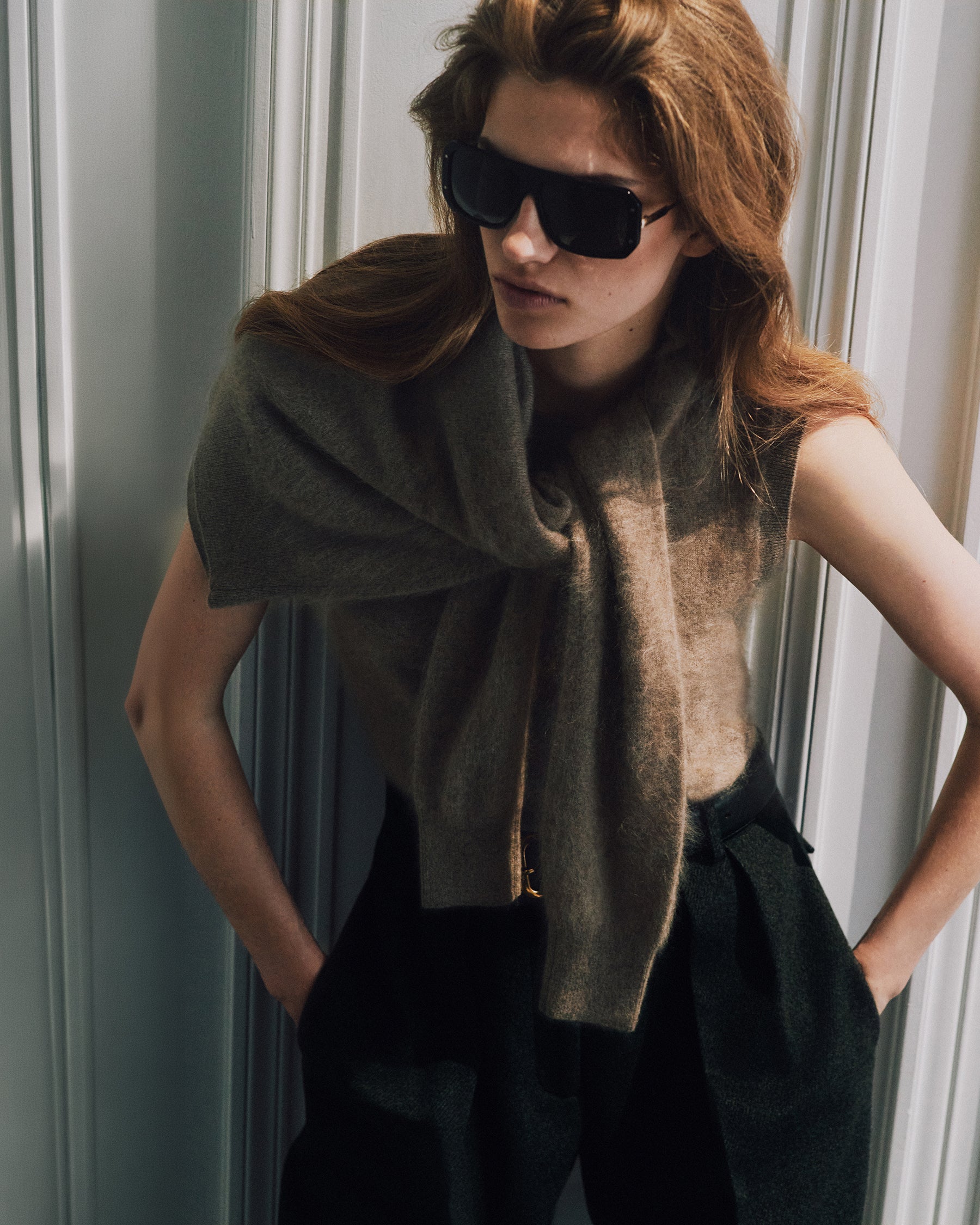
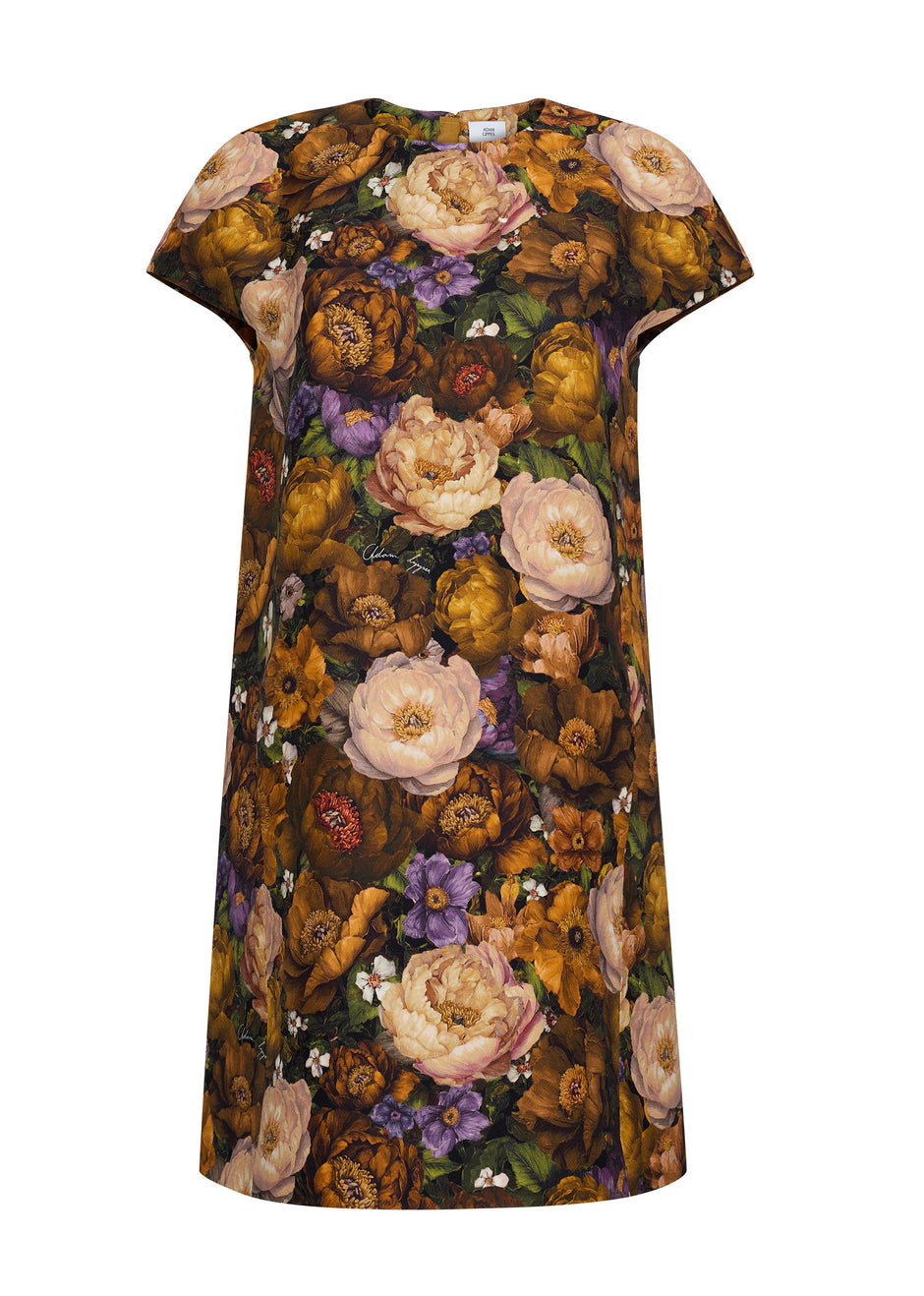
This puts the label in the designer wardrobe market, where customers might also consider The Row, Gabriela Hearst, or Brunello Cucinelli. Those are alternatives for a buyer’s attention, rather than interchangeable products. Lippes’s distinguishing taste is often decorative. Art, architecture, and interiors feed the work. A floral dress can belong to the same wardrobe as restrained tailoring; good taste need not spend its whole life wearing beige.
03 / The sitting room gets dressed
The Scalamandré collaboration makes that connection unusually literal. Its Le Tigre pattern, introduced in the 1960s, moves from the world of decorative textiles into a Margaux coat and Rei skirt. The fabric is dense silk velvet. At the time of writing, the official store lists the coat at $6,990 and the skirt at $2,990. This is a luxury purchase with a visible material proposition.
Home has been a commercial category, too. A 2021 tableware collaboration with OKA was followed in 2024 by furniture, lighting, and office accessories. An antique botanical fabric fragment found in a French market helped inspire the later collection. The route from found object to finished product is useful to understand: Lippes’s aesthetic can travel because it begins with colour, texture, and surroundings.
04 / A customer within earshot
The company earns revenue through its website, boutiques, and wholesale partners. Forbes reported 100 retail doors in 20 countries in 2017, a historical measure of international distribution. The current U.S. boutique directory lists New York, Houston, and Palm Beach. In May 2026, the Japanese company announced its first permanent Japanese store at Osaka Takashimaya, scheduled to open that month.
Personal contact does more than decorate the shopping experience. Vogue’s Fall 2026 review described the appointment-only Fifth Avenue space bringing Lippes closer to clients. Requests for flowers helped bring florals back into the collection. The useful business inference is straightforward: customer feedback matters more when it reaches someone who can alter the next product.
Buyers can book in-store or remote styling appointments. Eligible purchases from the website or boutiques receive free alterations within six months. Fit is part of the service proposition. For someone considering expensive ready-to-wear, measurements, a conversation with an advisor, and an alteration appointment are practical tools for getting more use from the purchase.
05 / What survives the second act
Lippes has also worked at other scales. His 2015 Target capsule took buffalo plaid into apparel and home goods. In January 2025, the company supplied Melania Trump’s inauguration coat, skirt, and blouse, which it described as hand-sewn in New York. Neither episode replaces the everyday business of convincing a customer that a garment earns its place.
The transferable lesson is to define the product standards before choosing the machinery that will expand them. That requires customers who value those standards enough to pay designer prices, and service that remains attentive as distribution grows. For Lippes, reclaiming the name made room for a sharper decision about what to put beneath the label. The next test happens in the fitting room.