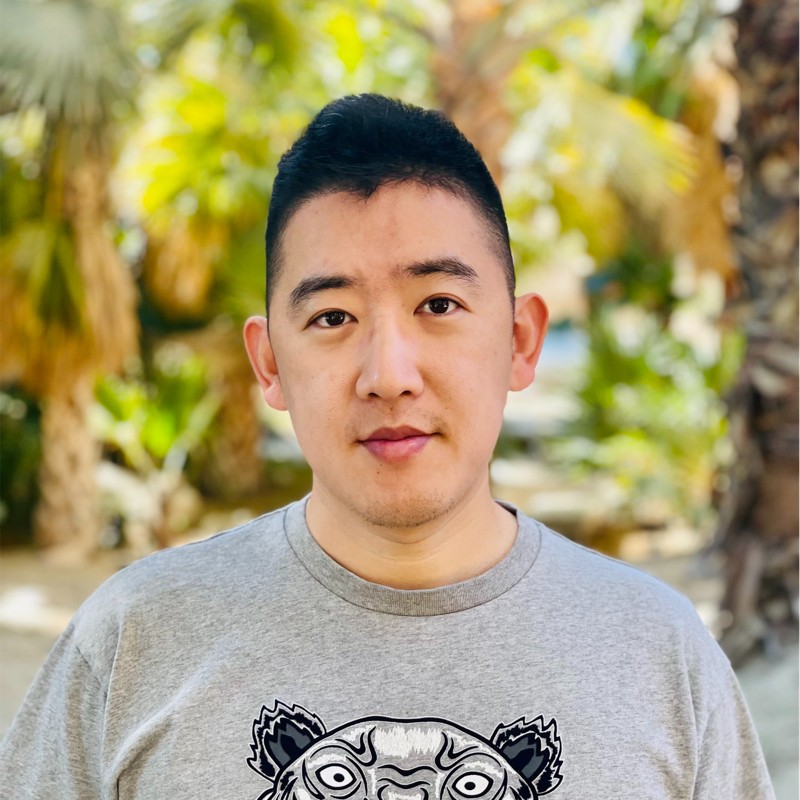
The Engineer Who Wants to Give Every Brand a Hollywood Studio
Picture a startup that crossed $9 million in annual recurring revenue before most of its peers had finished debating product-market fit. Now picture the three engineers behind it - none of them with a marketing background, none of them with prior ad-agency experience - doing it in 18 months. That's Creatify AI. And at the center of it is Yinan Na: Stanford computer scientist, former Facebook ads engineer, former Snap content moderation lead, and now CEO of what Jeffrey Katzenberg has publicly bet on as the future of video advertising.
Na goes by Steven in most professional settings - a small detail that somehow fits the character: technically specific, optimized for communication, not given to unnecessary ceremony. His LinkedIn posts read like engineering change logs: crisp, numbered, no adjective wasted. His company's pitch is equally direct. "Video is the most valuable format in digital advertising, but it's still the hardest to produce at scale." One sentence. One problem. One company built to solve it.
18 months
& teams
29 languages
onboarded
From Tsinghua to the Feed Algorithm
Na's education story is the kind that makes Silicon Valley talent scouts quietly nod. Tsinghua University in Beijing - one of China's most competitive engineering programs - for his undergraduate degree in Automation. Then Stanford for a Master's in Computer Science. The combination is unusual: automation systems thinking layered onto machine learning and distributed engineering. It's essentially a blueprint for someone who would one day build a system that automates creative work at scale.
At Facebook, he ended up on the Newsfeed Ads ranking team and worked on Instant Articles - two of the platform's most architecturally complex surfaces. Ads ranking is not glamorous work. It's a problem of signals: millions of user behaviors, auction dynamics, and relevance scores all converging in milliseconds to decide what you see next. The insight Na would later carry into Creatify is buried in that work: great content, when paired with the right algorithmic intelligence, finds its audience. The creative and the data aren't separate. They're the same problem.
Snap came next. Na led the Content Moderation Engineering team - a role that put him at the intersection of at-scale AI inference, real-time content classification, and product integrity across Spotlight, Discover, and Map. It's work that requires deep fluency in AI pipelines, not just research papers. By the time he left, Na had spent a decade building systems where the cost of a wrong output was measured not in debugging sessions but in user harm or lost revenue.
"The entirety of making and testing video ads could be reinvented and automated using one smart, creative human and an orchestration of LLMs, video generation, and video understanding."- Yinan Na, Co-Founder & CEO, Creatify AI
Three Engineers Walk Into an Ad Problem
The founding team Na assembled for Creatify is not incidental to its velocity. Chief Research Scientist Ledell Wu came from Meta's Fundamental AI Research lab (FAIR), where she led PyTorch-BigGraph and StarSpace - work so influential it earned the ICML 2023 Test-of-Time Award. CTO Xin Zhou was an Engineering Manager for Meta's Reels Recommendation, a system that scales ML inference across billions of daily interactions. These are not people who theorize about AI. They build the infrastructure that makes large-scale AI actually work.
The origin story is honest about its motivations. Na had spent years watching brands struggle with video advertising not because they lacked ideas, but because they lacked production capacity. Every good idea hit the same wall: video is expensive, slow, and hard to iterate on. As someone who built e-commerce products on the side, he wanted a tool like Creatify and couldn't find it. So he built it.
What Kindred Ventures later noted was that the team wasn't "waiting for models to get better." They built infrastructure. Fine-tuned models for specific ad use cases. Layered proprietary video understanding on top of third-party foundation models. Then wrapped it all in an agent interface that non-technical creative teams could actually use. That architectural discipline - applying FAIR-grade research rigor to a practical SaaS problem - is what separates Creatify from dozens of competitors who built wrappers.
Creatify AI at a Glance
- WndrCo - co-led by Jeffrey Katzenberg (board member)
- Kindred Ventures - co-led by Steve Jang
- Comcast Ventures - participated in Series A
- NFDG, Millennium New Horizons, Creator Ventures, Leadout Capital - early investors
AdMax and the Full-Stack Ad Agent
The product that launched alongside Creatify's Series A - AdMax - is the clearest expression of Na's thesis. Not a video editor. Not a template generator. An AI agent that handles the entire advertising lifecycle: competitor monitoring, creative inspiration, production across UGC and product showcase formats, A/B testing optimized for Meta and TikTok, and performance analytics that feed back into the next round of creative. He describes it without false modesty: "Creatify acts like a 24/7 creative strategist, content producer, and media optimizer - rolled into one."
The scale indicators are notable. Creatify now runs more than 750 lifelike AI avatars and supports 29 languages - a technical footprint that makes localized global campaigns feasible for companies that previously couldn't afford the translation and production overhead. Clients include Alibaba.com, Comcast, Binance, NewsBreak, and Zumper. These aren't early-adopter experimenters. They're enterprises running campaigns at real volume, which means Creatify's infrastructure is being tested at the kind of scale that most AI startups never reach in their first two years.
There's also a distribution move worth noting: Creatify now runs inside Anthropic's Claude. Users working in Claude can type a creative brief, and video ads come out the other side. It's a quiet but strategically significant integration - it positions Creatify as infrastructure, not just an application. If your ad creation tool is embedded in the most popular enterprise AI assistant, you're not competing for attention. You're part of the workflow.
"It's about harnessing AI to democratize creativity and empower entrepreneurs everywhere to scale their storytelling and grow their businesses."- Yinan Na, on Creatify's mission
The Katzenberg Factor
When Jeffrey Katzenberg - DreamWorks co-founder, former Disney chairman, Hollywood producer whose career spans decades of visual storytelling - puts his name behind an AI video company and takes a board seat, it generates a particular kind of signal. Not just financial validation, but aesthetic alignment. Katzenberg's bet is that democratizing video production is the next chapter of the story he's been part of for decades. His public statement is the one that reframes the entire Creatify narrative: "When production takes minutes instead of weeks, more people get to tell their stories."
Na's version of the same idea is more engineer than poet: the Shopify of video ads. Shopify didn't make better products than retailers could have made themselves. It removed the infrastructure barrier so that anyone could build a store. Creatify is the same bet applied to video production. The barrier isn't ideas - it's always been production, iteration speed, and testing capacity. Remove those barriers and you don't just help existing advertisers. You expand the universe of who can advertise at all.
"Video is the most valuable format in digital advertising, but it's still the hardest to produce at scale."
"Creatify acts like a 24/7 creative strategist, content producer, and media optimizer - rolled into one."
"AI to democratize creativity and empower entrepreneurs everywhere to scale their storytelling."
"The entirety of making and testing video ads could be reinvented and automated using one smart, creative human."