Before Todd Khozein became an executive who talked about the value of relationships, he was a flamenco dancer and pianist. He spent years in the music industry. It is a pleasing detail to discover about somebody whose working vocabulary now includes economic systems and capital: somewhere behind the conference badge is a person familiar with an altogether different kind of timing.
Today, the Portland-based co-founder and CEO of SecondMuse spends his time bringing entrepreneurs, institutions, and investors into working relationships. His subject is the economy, but his attention keeps landing on the people inside it. Who knows whom? Who can ask for help? Who has a useful idea and no route to the person who could fund it?
These sound like small questions beside the grandeur of an economic forecast. They are also questions a founder must answer before the forecast becomes remotely interesting.
A childhood across three worlds
Khozein was born in Iran. His Bahá’í family fled persecution during the 1979 revolution and found refuge in Ecuador. Later came a move to the United States. With an American mother, an Iranian father, and an upbringing in Latin America, he describes himself as tricultural.
The experience gave the question of participation a personal weight. Belonging, opportunity, and exclusion were things his family had encountered across borders. In his subsequent work, he would keep asking how people could contribute to systems whose rules had already been written.
His early business experience included a cashew-farming cooperative in Honduras and an equity firm concerned with more collaborative economies. That is quite a distance between a crop and a capital structure. The recurring interest was how the parts worked together, and whether the arrangement served the people who depended on it.
When NASA opened the door
SecondMuse gave that interest an organizational home. Khozein co-founded the company in 2008. Among its early areas of work was a form of gathering whose name now sounds ordinary: the hackathon.
Random Hacks of Kindness, launched in 2009, brought together technology companies, NASA, the World Bank, and SecondMuse around practical problems. SecondMuse went on to manage its global community. The premise was appealingly direct. People with technical skills wanted to help. People dealing with difficult problems needed those skills. Somebody had to arrange a useful introduction.
NASA’s International Space Apps Challenge carried the approach into open data. Its first event took place in 2012. SecondMuse helped create a way for people around the world to use the agency’s data to develop prototypes together over a 48-hour sprint.
Opening an archive is one decision. Giving strangers a reason, a problem, and a structure for using it is a whole other piece of work. Khozein’s career has repeatedly occupied that gap.
What happens on Monday?
In 2014, Khozein and six collaborators published an account of what they had learned from mass collaboration. Their examples included a team in Athens designing a greenhouse for the Martian environment and an Austin project using local data to coordinate food donations.
Mars and lunch make unlikely neighbors. Together, they show the range of problems people will attempt when an institution gives them permission to participate.
The authors also described the less photogenic work: preparing challenges, building partnerships, following up on promising ideas, and deciding what a reasonable return on the effort should look like. A weekend can produce a prototype. Turning it into something useful takes sustained attention.
They argued that community ownership matters, too. Participants who help shape an undertaking acquire a stake in its future. For Khozein, the person outside the institution was becoming part of its capacity to act. The guest had acquired a key.
The invoice had the wrong clock
SecondMuse had to learn a related lesson about its own business. Early work often arrived through short consulting contracts, while building communities required years. Khozein has described the eventual shift to multiyear contracts as a change that helped accelerate growth.
It is an unusually useful founder admission. The company could believe in long relationships and still sell its work on a timetable that frustrated them. Getting the contract to match the promise was part of making the idea viable. Even an enterprise devoted to cooperation has to get the paperwork right.
“Even geniuses among us have blind spots.”
Todd Khozein
The missing person in the business plan
Khozein uses the term relational wealth for the value created by human connections. In his view, an entrepreneur’s capacity to respond to a problem depends partly on the range of people they can turn to. A network with different kinds of expertise creates more routes through trouble.
SecondMuse’s approach puts emerging entrepreneurs in contact with institutions that have resources, alongside other participants in the surrounding economy. The relationship itself becomes part of what the program is trying to build. An introduction can matter long after the event that produced it has disappeared from everybody’s calendar.
There is a useful restraint in his observation about blind spots. It gives an accomplished person in the room a reason to listen. Being accomplished does not confer the experience of somebody whose life has unfolded elsewhere. A wider circle can supply information that no amount of confidence will produce on its own.
problem
Four thousand organizations, ten invitations
The Food System Vision Prize offered another setting for this approach. SecondMuse worked with the Rockefeller Foundation and OpenIDEO on an invitation to imagine the future of food. It drew 1,300 responses from teams representing more than 4,000 organizations. Ten winning teams were offered an accelerator with support and connections to advance their plans.
One was the Sicangu Lakota-led 7Gen Food System team in South Dakota, working toward a locally sourced agricultural system operated by the tribe. The example gives a specific shape to the language of participation: a community developing its own plans for the resources and enterprises around it. An international program had to make room for a very particular place.
A climate venture needs more than applause
His work with climate entrepreneurs makes the practical stakes clear. An invention that reduces emissions still has to be manufactured, financed, and sold. The existence of a public benefit does not arrange a production line.
In a 2024 essay, Khozein described how a $15 million NYSERDA grant helped SecondMuse support more than 65 companies and help entrepreneurs raise $493 million in venture financing. He presented the example as a case for combining public support, resources, and connections around entrepreneurs trying to scale production.
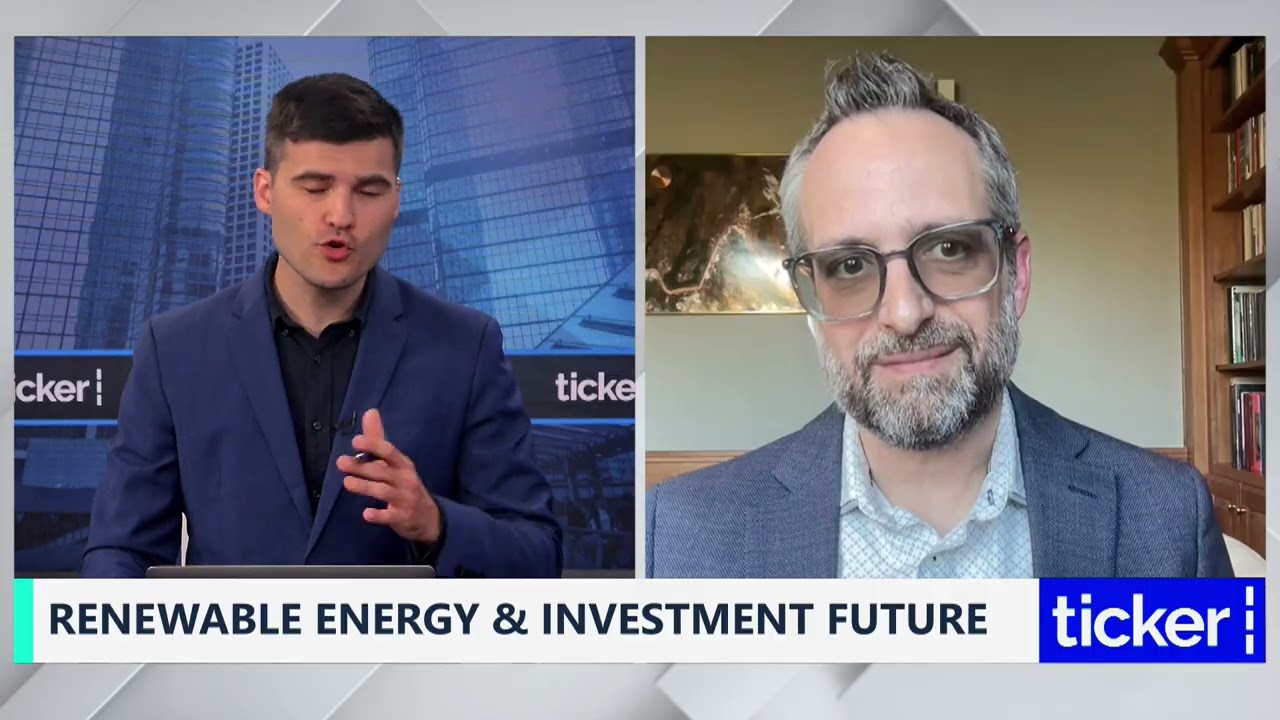
By March 2025, his public discussion of renewable energy was emphasizing the business case: improving grid performance, extending battery life, or making power-plant operations more efficient. A buyer has a budget as well as convictions. The commercial argument has to survive a conversation with both.
Different money keeps different hours
In his discussion of blended capital, Khozein gets down to the financial mechanics. A venture investor, a foundation, and a lender may support the same enterprise while expecting different things from their money. Arranging those interests can give a business options that a single funding source cannot.
His advice includes matching the money to the expense. Research support comes with a purpose; predictable activities may suit debt. A guarantee or a grant can help a project attract other finance by absorbing some of its risk.
This is detailed work, involving financial models, reporting obligations, and lawyers who understand the arrangement. The word “community” can sound pleasantly undemanding. In this setting it comes with spreadsheets and repayment terms.
His larger point remains consistent: the relationships around a company affect what that company can do. A founder choosing finance is also choosing expectations, time horizons, and obligations. Those choices shape how much room an idea gets to become a business.
Funding raised during and after participation in SecondMuse programs. These are company-wide figures, rather than Khozein’s personal investments.
The country he left, the question he kept
In May 2026, Khozein published The Wealth of a Nation, a white paper applying his thinking to Iran’s future economy. His argument gives trust, women’s economic participation, minority inclusion, and connections with the diaspora a central place in reconstruction.
He treats exclusion as a loss of economic capacity, alongside the effects of sanctions and other structural problems. The proposal asks what an economy might become if people currently denied opportunity could participate more fully. These are his prescriptions for a future Iran, carrying the ambitions and uncertainties of a proposal.
In August, he discussed the subject with David Bank on the Agents of Impact podcast. Decades after his family’s departure, the country of his birth had become an explicit subject of the work he had been doing elsewhere.
Leave room for another chair
There is also a smaller, more convivial expression of his interests: Tea with Todd, a conversation series with people in his network. He has described the pleasure of hearing how others think, accompanied by his favorite Persian tea. Guests include Alando Simpson of Portland’s COR Disposal & Recycling and Roy Steiner of the Rockefeller Foundation.
The format fits somebody who has spent years asking what becomes possible when people get to know one another. An executive can speak about collaboration from a stage; a host has to let somebody else finish the sentence.
Asked for a message he would share widely, Khozein offered a small assignment: “Build a relationship with somebody fundamentally different from you.” It is modest enough to put in a diary. The invitation can be acted on without waiting for a new institution or a grant. There is a place to begin, and somebody else gets to help decide what happens next.
Keep the conversation going
- SecondMuse · Todd’s biography
- LinkedIn · Todd Khozein
- Substack · The Wealth of a Nation
- The origin-story conversation
- Music, early ventures, and his outlook
- Lessons in Mass Collaboration
- The history of SecondMuse’s hackathons
- The community approach
- Relational wealth and climate solutions
- Supporting sustainable entrepreneurs
- The blended-capital conversation
- Agents of Impact · Listen to the Iran conversation
- YouTube · Renewable energy interview
- YouTube · Tea with Todd: Roy Steiner