Five people came to an early event celebrating female founders in Cambridge. Xann Schwinn helped build the network behind it. Five is an awkward number for anyone hoping to photograph a movement. It is, however, a perfectly workable number for a conversation. Schwinn’s career has given her plenty of practice at getting people to participate.
She is now co-founder, director and CEO of Cambridge Female Founders Network, or CFFN. Before the founder dinners and investor introductions, there were choirs. Before the business programmes, there was an interest in what happens when people make something together. The route between those activities runs through music, technology, mentoring and the considerable administrative business of organising a room.
The early gathering belongs in this story because it keeps the scale human. A network eventually acquires programmes, partners and job titles. At the beginning, somebody still has to invite people. Somebody has to turn up. And somebody has to decide that a small attendance is a reason to keep working.
People at an early event celebrating female founders. A beginning, without the flattering camera angle.
A five-century-old introduction
Schwinn began studying voice at eight. Her education took her to Berklee College of Music and then the University of Cambridge, where she studied choral music. She founded Crepusculum at Berklee and Concanenda in the UK. Sixteenth-century polyphony became one of her particular interests: music in which distinct voices have to find their relationship to one another.
There is a temptation to turn every choir into a management parable. The singers might reasonably prefer to finish the piece first. Still, the practical requirements are suggestive. People need a way into the work. They need to listen. A director has to attend to the whole group while hearing the individual parts.
For a period in Cambridge, she was also assistant conductor with King’s Junior Voices. The children’s choir was open to local pupils without an audition or a fee. That arrangement gave participation a concrete form. A child did not have to demonstrate polished musical credentials before being allowed to begin. The organisation made a place for learning through doing.
That interest in participation became a business concern. At The Choral Hub, Schwinn worked on opening access to vocal music through digital tools. Her description of her work for Cambridge Judge’s Ignite Founders’ Challenge puts choral music alongside experiential design. She wanted audiences to encounter music differently, and treated the listening experience itself as something that could be redesigned.
One of her business relationships began in territory that would defeat a conventional networking questionnaire. Schwinn and her Biiah co-founder Suzi bonded over sixteenth-century choral music. In their 2022 accelerator introduction, the shared enthusiasm came before the explanation of the venture. A fairly specialised musical interest had supplied a very practical introduction.
Biiah joined the Minnesota Twins Accelerator by Techstars that year. Schwinn’s account of the team’s ambitions included learning alongside other entrepreneurs and developing the business with outside support. She would later help organise that kind of access for other founders in Cambridge. The experience of seeking useful people was already part of her own working life.
A CEO with a rehearsal in her past
The career includes founding ventures, directing music and producing events. Its continuity is easier to see in the activities than in the titles. Building a singing product means thinking about the person taking part. Producing an event means thinking about the experience from arrival onwards. Supporting a founder means finding out what that particular person needs next.
At Abbey Road’s 2023 Equalise event, Schwinn joined the Women Do Tech panel alongside other women working in music technology. The setting suited a career that had moved between creative work and running companies. Asked about her route, she described following her interests when familiar music-industry jobs did not appeal. There had been room to make a role fit.
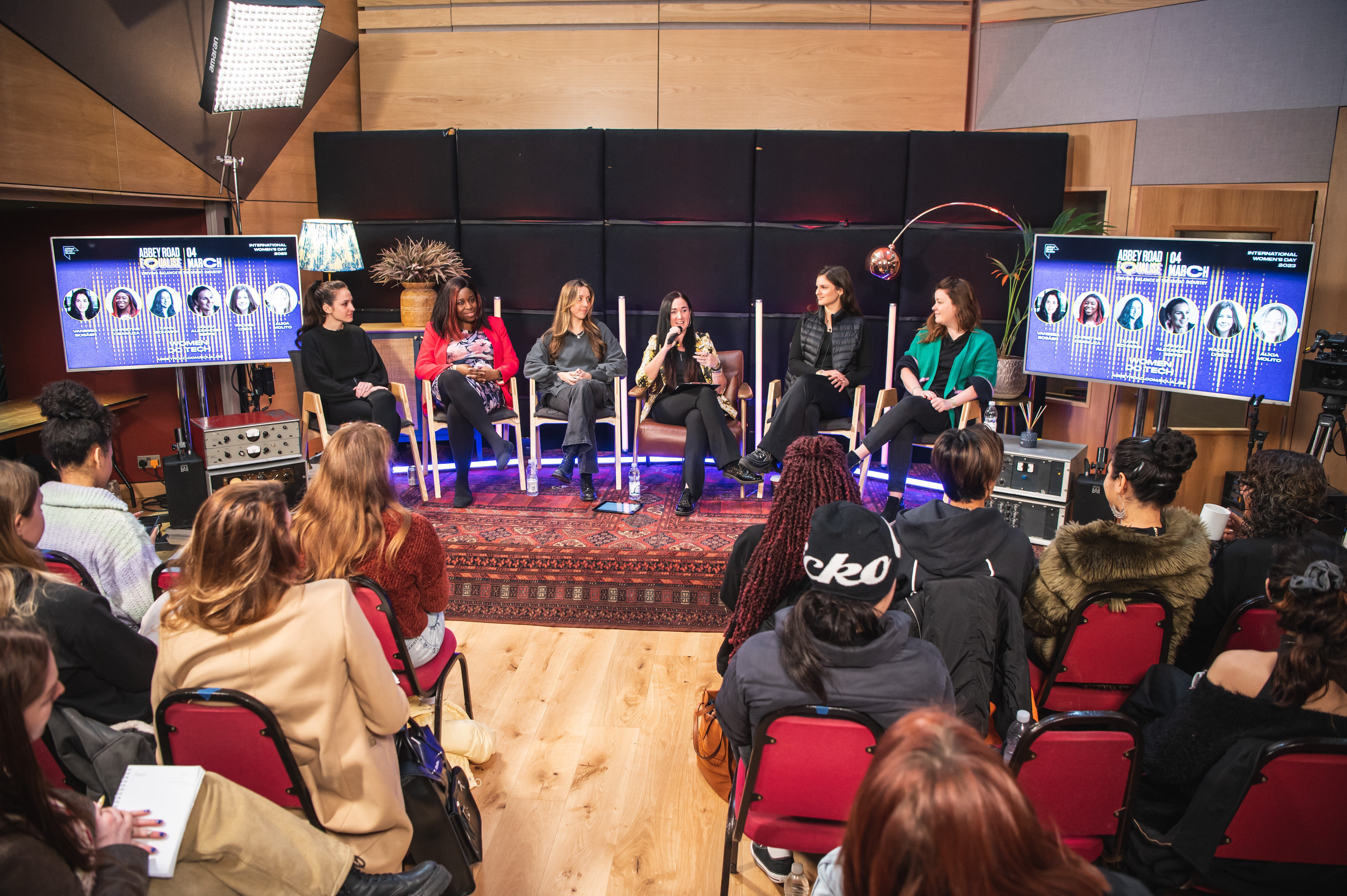
Her advice there allowed for the untidiness of building something. A first attempt could change. An early version did not have to become a permanent monument to its creator’s judgement. It was a useful attitude for anyone moving between disciplines, where the first explanation of an idea is unlikely to be the last.
“No one will remember your first prototype after 10 iterations.”
Xann Schwinn · Abbey Road Equalise, 2023
There is also a quieter account of her leadership in the people she has worked with. A former colleague, Jordi Albanell, describes joining her company with little startup experience and receiving trust, introductions and regular time together. Olivia Partington describes a mentor who listens and helps people trust their own judgement. Those recollections locate support in ordinary, repeatable actions: making time, finding help, paying attention.
Supper, with something to do afterwards
In summer 2024, Schwinn and five other founders began CFFN. The group included Maya Gavin, Clarisse Beurrier, Kellyann Ripnar, Shazia Hyatt and Lluna Gallego Segrelles. They were building their own companies as well. Schwinn’s thanks to them in January 2025 acknowledged the extra work involved in making gatherings happen around those existing commitments.
The network started as a WhatsApp group. By May 2025, it connected more than 150 women-led startups, with members exchanging funding leads, investor contacts and information about laboratory space. The requests were specific. A founder looking for room to work or someone to approach for funding had an immediate reason to speak to another member.
That specificity matters to Schwinn’s role. Cambridge can put founders, researchers, investors and institutions close together without ensuring they know one another. Her work sits in the practical space between being nearby and being able to ask for help. A contact becomes useful when someone understands the problem well enough to make the introduction count.
The dinners give that work a sociable setting. An early-2025 gathering brought fifteen women founders together to exchange experiences. A January dinner supported by Conception X assembled women working around deep tech and doctoral research. Schwinn welcomed the chance for sustained conversations with people who knew their subjects. The pleasure of the evening was part of its purpose.
A supper club offers a modest advantage over the familiar conference encounter: there is time to finish a thought. Someone can explain the awkward part of a business without competing with the next speaker’s microphone. The usefulness of that format depends on the people around the table. Schwinn and her co-founders have made selecting and assembling those people part of their work.
Another CFFN invitation, co-hosted by Schwinn and founder Liv Edge, was for a lunch for founder mothers. It allowed two hours between arrival and departure, with the school pickup explicitly in mind. The detail is revealing because a useful event has to fit into someone’s actual day. The choice of hour can determine who gets to attend as surely as the guest list does.
That attention to format makes the network’s different gatherings worth distinguishing. A small dinner allows a long conversation. A lunchtime meeting makes another group’s participation possible. A focused working session gives people something specific to tackle. The work includes choosing which kind of room a particular question needs.
The work after the introduction
CFFN’s programme now gives those relationships further places to go. Its Raise Lab covers the preparation around seeking investment, including strategy, investor decisions and the documents a founder takes into a meeting. The pilot in November 2025 brought together 40 founders over two weeks. A second cohort followed in February 2026, using three intensive days.
These details put a firmer shape around the CEO title. Someone has to coordinate the practitioners, the founders and the format. A founder with a financial model to revise needs more than a pleasant recollection of the last event. The programme gives people a setting in which to work on the material and meet others facing similar decisions.
- 01StrategyTiming, milestones
and the investor pipeline - 02Investor psychologyDecisions, negotiation
and reading the room - 03MaterialsThe deck, financial model
and one-page introduction
Three areas of preparation in CFFN’s published programme.
The Commercial Lab extends the work into cash flow, hiring, sales and marketing. Its format includes peer groups, introductions to people who can help and sessions led by practitioners. For Schwinn, the network’s development has made the work of connection more structured. A gathering can now be followed by a place to address the business question that surfaced there.
Her public description of the task can be blunt. Discussing the network on Cambridge Tech Podcast, she put helping female founders at the centre of the conversation. The programmes make that position concrete: people, preparation and access. There are useful things to organise before the next founder sits down across from an investor.
Who makes the room work?
Schwinn’s work extends beyond CFFN. At i³ investing, she is listed as UK ambassador and production lead, with responsibility for its unconference. Logistics sit alongside community in that role. It is a reminder that a gathering’s atmosphere rests on practical work someone must do: arranging the event so the participants can concentrate on one another.
Her 2026 speaking calendar also listed appearances in different rooms. In January, an Estonian Doctoral School fireside chat in Tartu named her as a speaker for researchers. Trinity Hall listed her for a March roundtable about scaling companies in Cambridge. An April Climate Challenge talk invited her to discuss female entrepreneurship, including that early event with five attendees.
Meanwhile, she continues to run Singforce, which brings workplace choirs to organisations. Music remains an active part of the career. The founder dinners have not erased the singing. Both require people to make time, accept an invitation and join an activity whose value depends partly on everyone else taking part.
As of October 2026, CFFN is advertising a November Raise Lab cohort. There is another set of founders to prepare for, another programme to organise. Schwinn’s story keeps returning to this scale of work: enough people to make a conversation possible, enough care to make it useful, and a reason for them to come back.