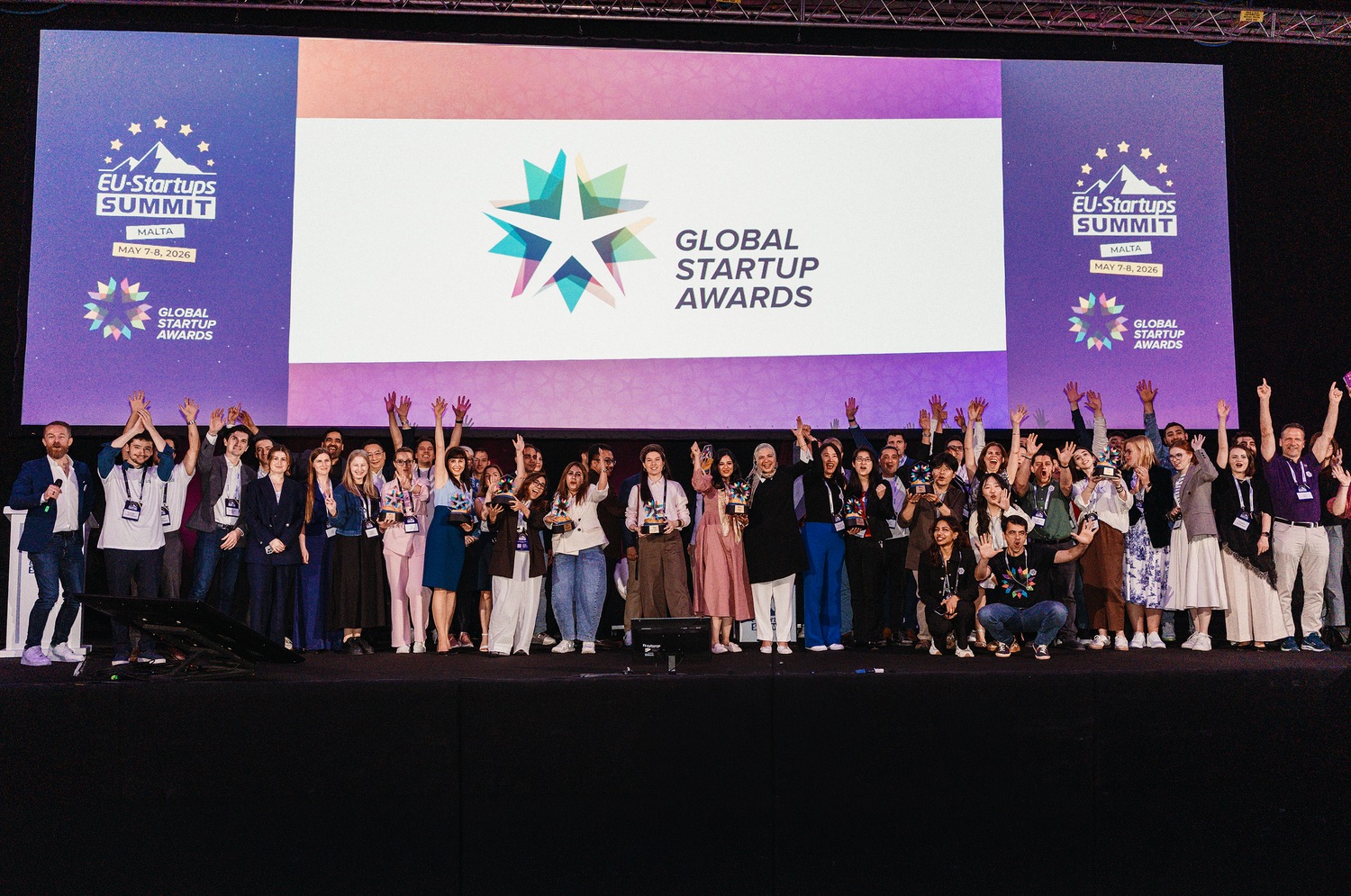
In May 2026, at the EU-Startups Summit in Malta, the people on the Global Startup Awards stage represented the end of an enormous sorting exercise. There had been 71,671 nominations. Then 181 global finalists from 65 countries. Finally, 13 winners. The photograph shows trophies and raised hands. The more interesting question is what happened before anybody reached the stage: how did a company in one local startup scene become visible to people in another?
- Local partners help discover companies that international networks might overlook.
- GSA packages the competition infrastructure for regional operators.
- Edition 12 brings startup applicants before investor juries.
A Nordic introduction, borrowed from Eurovision
Global Startup Awards began in Denmark in 2012 as the Nordic Startup Awards. Its original problem was surprisingly ordinary: startup communities in neighbouring countries did not know enough about one another. The regional partner guide cites Eurovision as an inspiration. Give each place its own route into a shared occasion, and people have a reason to look across the border.
In 2015, co-founders Kim Balle and Peter Kovacs brought regional competitions under a common global brand. Expansion depended on people who already understood their own markets. Copenhagen supplied a structure; regional partners supplied relationships. That division matters. A local organiser is better placed to know which promising founder has been building quietly, well outside the usual conference circuit.
The applause arrived before the money worked
Public enthusiasm did not immediately produce a sound business. In a 2023 interview with the Danish podcast publication Iværksætterhistorier, Balle recalled calling suppliers after the first year to explain that their invoices could not be paid in full. Attention had arrived. Enough cash had not.
The later partner package shows how much work surrounds an awards show. A regional licensee receives branding, a website, competition software, budget and sponsorship templates, marketing materials, training and support. The published requirements include an annual fee paid against milestones and at least one project manager available throughout the year. An evening onstage rests on months of administration.
GSA’s business therefore serves several audiences. Founders want recognition and connections. Regional organisers and innovation agencies want a workable programme. Sponsors want exposure to a relevant community. Investors want companies worth investigating. The company’s expertise lies in making those interests meet through a repeatable process.
Competition stage totals reported by GSA. Nominations are not a count of unique startup applicants.
A useful signal still needs a follow-up
Consider Andrej Kiska of Credo Ventures, a regional winner in 2016. In a testimonial published by GSA, he said recognition helped his efforts to open a Silicon Valley office. It made investors pay more attention. That is a precise description of what an award can do: make the next conversation easier to obtain.
“it helped me to stand out from the crowd in the eyes of U.S. investors”
Andrej Kiska / Credo Ventures / GSA testimonial
GSA lists Pleo, UiPath, Oura and Grab among its alumni. Those names establish that recognisable companies have passed through the network. They do not establish that recognition caused their success. A founder should treat the badge as an introduction and arrive with something more substantial: evidence of demand, a credible team and a clear request.
The network also has a social life. In October 2022, Porsche and GSA brought selected alumni to Istanbul for networking and driving at Intercity Istanbul Park. The partnership also supported the Diversity Role Model of the Year category. The racetrack is an amusing detail, but the underlying mechanism is practical: give former participants a reason to meet again.
Now the investor sits on the jury
Edition 12 changes the proposition. GSA’s July 2026 announcement describes a startup-only competition and a global jury made entirely of investors. The live portal separates recognition for ecosystem supporters from the startup competition and organises entrants across nine regions. Technology-specific categories include AI-first businesses, deeptech, fintech, maritime technology and agritech.
The organisation explains the change through the increasing specialisation of startups and the technologies attracting investment. Its current process uses AI-assisted analysis with human oversight. Applicants provide a short form, pitch deck and one-pager; GSA assigns the region and suitable category. Founders are being asked to make their companies legible to evaluators who understand investment decisions.
- 01Apply
- 02Join community
- 03Get reviewed
- 04Hear the result
The current FAQ also makes participation useful beyond the result. Every applicant joins the community and receives a Welcome Offer of free or discounted partner tools and services. Non-winners keep that access. Specific offers change between editions. This is a design decision worth copying: give people something useful even when they never collect a trophy.
The introduction becomes concrete
At the Malta finale, IT Park Uzbekistan was a global partner and co-hosted an invitation-only breakfast for selected founders, investors and ecosystem leaders. Toronto Business Development Centre presented the healthtech award to Kardi AI, one of its own alumni. These are identifiable connections between institutions and companies, rather than an abstract promise that everybody will network.
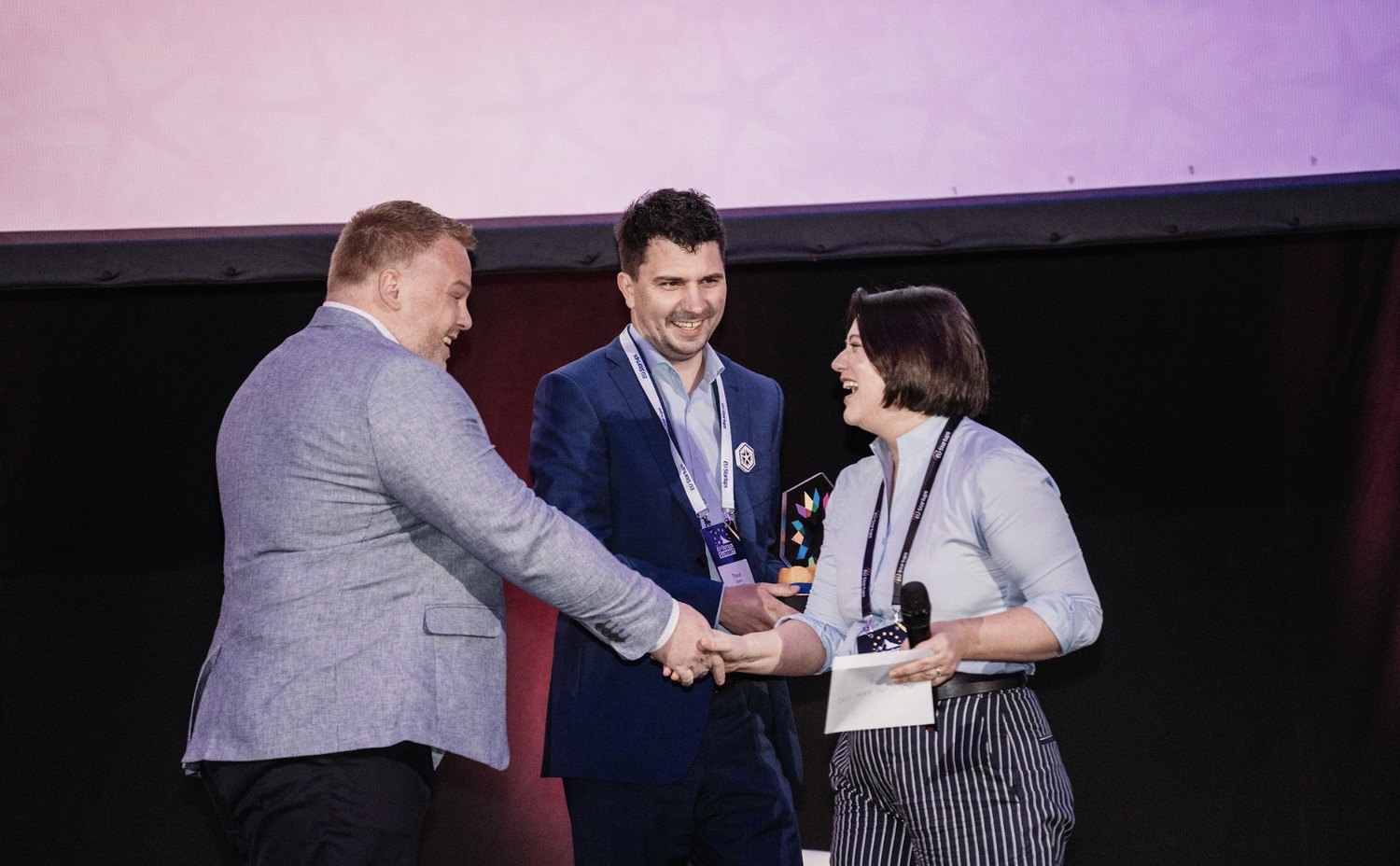
MeOut Group, an investor behind GSA and the owner of EU-Startups, helped bring the two platforms together. GSA has announced a return to Copenhagen for its 2027 finale. The location changes; the commercial question remains whether the people brought into the room have reasons to keep talking afterward.
Bring a company. Bring a reason to meet.
For a founder, the sensible use is targeted: apply through the current portal, understand the relevant category and prepare for specific introductions. Published GSA guidance describes competition participation as free. That does not make travel or every event free. For a regional organiser, the commitment includes staff time, a licence fee and local execution.
Other routes to investor attention include Slush 100, accelerator demo days and direct outreach. GSA fits founders who can benefit from international recognition and a distributed community. It will be less useful when the immediate need is guaranteed capital or customers. The transferable lesson is modest: trust local knowledge, standardise the repetitive work and make participation worthwhile. The trophy gives everyone a date to put in the diary.
Follow the connections
Visit GSA · Apply for Edition 12 · Applicant FAQ
LinkedIn · Instagram · Facebook · Central European awards on X
Read Kim Balle’s network-building interview · Hear the founder’s story (Danish)
Watch: Kim Balle at the Africa finale · Watch: the 2021 grand finale · GSA on YouTube
The Malta finale recap · What changed for Edition 12 · The regional partner package · The Porsche alumni gathering · Explore Slush 100