A city can be full of startups and still feel closed to someone trying to start one. There are investors somewhere, a promising coworking space down another street, and people who know which introductions matter. Arrive without those people in your phone and the place becomes a puzzle. Startup Guide has made a publishing business out of arranging the pieces.
Its answer is pleasingly physical: a book. The Copenhagen company packages local startup scenes into guides filled with founders, workspaces, programs and advice. It also publishes online, runs events and offers consulting. The connecting idea is that entrepreneurship happens in places, among people. A worldwide ambition still needs an address for the first meeting.
That gives Startup Guide an unusual place in business media. Its subject is the startup community; its product helps readers enter that community. For cities and organizations, the same work offers a way to show outsiders what is happening on their doorstep.
The app worked. The customers didn’t buy.
Before the books, Sissel Hansen tried a restaurant-ordering app. In a 2016 interview, she recalled software that worked and diners who liked it, but restaurants that would not buy. She eventually abandoned the venture. It is a sharp little lesson in the distance between making something function and making it a business.
Hansen moved to Berlin in 2012. Her search for useful business information became the raw material for a guide. After investors rejected the idea, she bootstrapped it. The first Berlin edition appeared in 2014 and sold out in under 48 hours, according to the company’s account.
The initial run was 300 copies, followed by another 3,000, the 2016 interview reported. Later, in Aarhus, Hansen brought in Thomas Nymark Horsted, her mentor at Kaospilot, as project manager and cofounder. Another city offered a practical test: could the idea travel?

A €30 introduction to the neighborhood
Open a guide and the intended reader becomes clear. This is useful territory for someone exploring a new city, considering where to build a company or trying to understand the local support system. Startup Guide Singapore, for example, spans 235 pages of founders, coworking spaces, investors, educational programs and other participants. The city gets described through the people who make business happen.
The newer Startup Guide Europe widens the view. Its shop lists a 336-page paperback bundled with a PDF for €30, with delivery charges calculated at checkout. The contents range from city essentials and interviews to funding opportunities and urban impact solutions. The first edition’s publication date is November 2025. The price is a useful, concrete answer to what a reader pays; it tells us nothing about the publisher’s production margin.
A smaller product serves a slightly different trip. The Explorer Series, introduced in 2023, combines business and leisure recommendations from local founders. Its pocket format suits startup talent and digital nomads who want to discover a place beyond a meeting room. The underlying editorial bet is that where people work and where they spend the rest of the day belong in the same conversation.
The locals help choose the cast
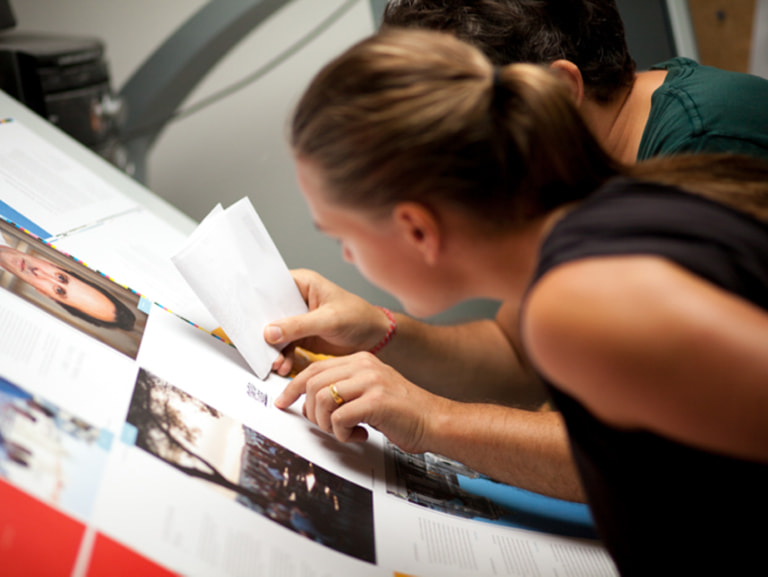
The interesting machinery sits behind the finished pages. Startup Guide works with a partner established in the local startup community. That partner helps gather nominations for businesses, founders, spaces, programs, investors and schools. A local advisory board votes on the final selection. Journalists, photographers, editors and designers then turn those choices into a publication.
This gives the guides something a generic business manual cannot offer: situated judgment. A founder’s account of building in one city can reveal the practical texture that broad advice misses. The publisher brings a recognizable format; the local network supplies names and context.
- 01Find a local partner
- 02Ask the community
- 03Let the board select
- 04Interview, photograph, edit
- 05Put the city on paper
The arrangement also tells readers how to interpret the result. This is a curated view shaped by the people participating in the process. It cannot establish that every worthwhile startup has been included. A guide can be an excellent place to begin asking questions, while a reader should still check whether a program is open, a space is operating or an investor’s interests have changed.
The people in the book become a business
Book sales are one part of the commercial picture. Startup Guide also offers partnerships to organizations that want to tell their city’s story, attract talent or introduce local innovation to a broader audience. Its menu includes books, booklets, digital ecosystem content, research and conferences. The individual reader and the institutional partner approach the same material with different needs.
Connect, its consultancy, makes the second audience explicit: governments, corporations and academia. It offers learning journeys, strategic reports and workshops. The logic is straightforward. Once a publisher has researched a place and built relationships there, those relationships may also help an organization plan a visit, find relevant businesses or understand a particular market.
A published KIABI testimonial provides a concrete example. The French retailer describes five days visiting Scandinavian innovation hubs, meeting startups and joining workshops. It says the experience prompted an entrepreneurship lab. Another customer, Agorize, describes help finding European startups in the Internet of Things, cleantech and smart grids for innovation challenges. These are customer accounts, with the benefits described by the customers themselves.
The financial record deserves its own scale. Dealroom lists angel rounds of €250,000 in February 2018 and €200,000 in November 2019. Those reported investments are financing, separate from sales or the cost of creating a guide. A €30 book and a commissioned institutional project are different commercial propositions, even when both draw on the same reporting and relationships.
Paper was part of the company culture
Startup Guide’s affection for physical things went beyond printing. It opened stores in Berlin, Lisbon and Copenhagen between 2017 and 2020; the spaces also served as offices until 2021. The Berlin shop began with Kickstarter as a partner. Customers could encounter products made by startups, and the team could meet people who walked through the door.
That instinct extended to a distributed workforce. In a 2018 interview, Hansen described how easily remote communication could go wrong without facial expressions or body language. She considered team gatherings worth their expense and said moving conversations from email to open Slack channels helped. The details belong to that period, but they explain the operating challenge of a publisher whose work crosses cities.
There was even a miniature version of the philosophy in Hansen’s business cards. She told MOO that she could choose between backs showing the team, the books or the logo, depending on the conversation. A team picture could break the ice. For a company selling introductions, the introduction itself received some design attention.
Distribution helped the books travel, too. Hansen credited Gestalten with supporting international expansion and said Startup Guide published 11 books in 2019. The useful achievement here is the repeated production work: finding partners, commissioning interviews, assembling photographs and getting another city into print.
Then the question became: what are we building?
Startup Guide dates its focus on impact solutions to 2019. Hansen made the editorial change explicit in a February 2020 manifesto. Helping people establish companies was no longer a sufficient purpose on its own; the publisher wanted to consider the positive and negative effects those companies produced.
“Though helping entrepreneurs start their businesses has been the goal of our guidebooks since our inception, this is no longer enough.”
Sissel Hansen · February 2020
That is a meaningful change in the assignment. A profile organized around funding and expansion asks one set of questions. A profile concerned with environmental or social consequences needs to ask what the company improves, for whom, and at what cost. Startup Guide describes its Impact Index initiative as a data and storytelling platform intended to assess and showcase impactful startups and connect them with investors and partners.
The broader European project places those ambitions alongside geography. Its digital edition includes familiar capitals as well as places such as Graz, Kiel and Linz. The selection encourages a reader to look beyond a handful of habitual startup destinations. It also gives smaller ecosystems a place in a shared European account.
The next announced gathering brings those themes into a room. Startup Guide Summit is scheduled for November 9, 2026, at Casa do Impacto in Lisbon, cohosted with ACT | The App Association. Its fourth edition asks whether Europe can build essential systems ethically and remain competitive. The advertised program includes working sessions and a competition for ten startups, each with a five-minute pitch. As of September 10, this remains an upcoming event.
Read the book. Make the appointment.
The practical way to use Startup Guide is to turn browsing into a short list of conversations. Choose a place. Identify a workspace, a relevant program and someone whose experience resembles the problem you face. Check the current details, then approach them with a specific question. A directory entry becomes useful when it changes what happens next.
For someone building a business, the early publishing story offers another copyable move: start with a sharply bounded information problem. Hansen’s first test concerned one city and a small print run. Expansion followed evidence that readers wanted the product. The transferable lesson is the sequence of research, a usable object and a transaction.
There are conditions attached. A founder seeking breaking funding news will need current reporting. Someone screening investments will need deeper company evidence. An institutional client needs a clear brief for what a visit or research project should achieve. Startup Guide’s particular strength is orientation: helping people notice the organizations, places and possibilities around them. The next move belongs to the reader.
Keep exploring
Watch / conversations and community
▶ Sissel Hansen: navigating startup ecosystems Startup Grind interview · 2022▶ Startup Guide Summit 2025 The company’s event video