Six minutes is an awkward amount of time to explain a business. Long enough to reveal a problem. Too short to bury it under a magnificent slide deck. At Startup Huddle, a program run by Global Entrepreneurship Network, that is the founder’s allowance. Then comes twenty minutes of questions and feedback. The arithmetic tells you something about the organization: the people listening get more time than the person presenting.
- Founders can find free local feedback through Startup Huddle.
- Competitions and partner-backed grants offer separate routes to support.
- Policymakers get a library of 500 case studies to examine before inventing another program.
A room with a useful question
Huddles meet weekly or monthly, on a consistent day and in a consistent place. A founder brings a current challenge. Entrepreneurs, mentors and other community members help think it through. The format gives an ordinary business difficulty a public appointment. You have somewhere to take the thing you have been unsuccessfully solving alone.
GEN says the program operates in more than 60 cities and supports more than 1,000 founders annually. Local organizers run the meetings, with national licensees and corporate partners helping sustain the network. Previous presenters can return as audience members. Someone who needed help becomes someone capable of giving it.
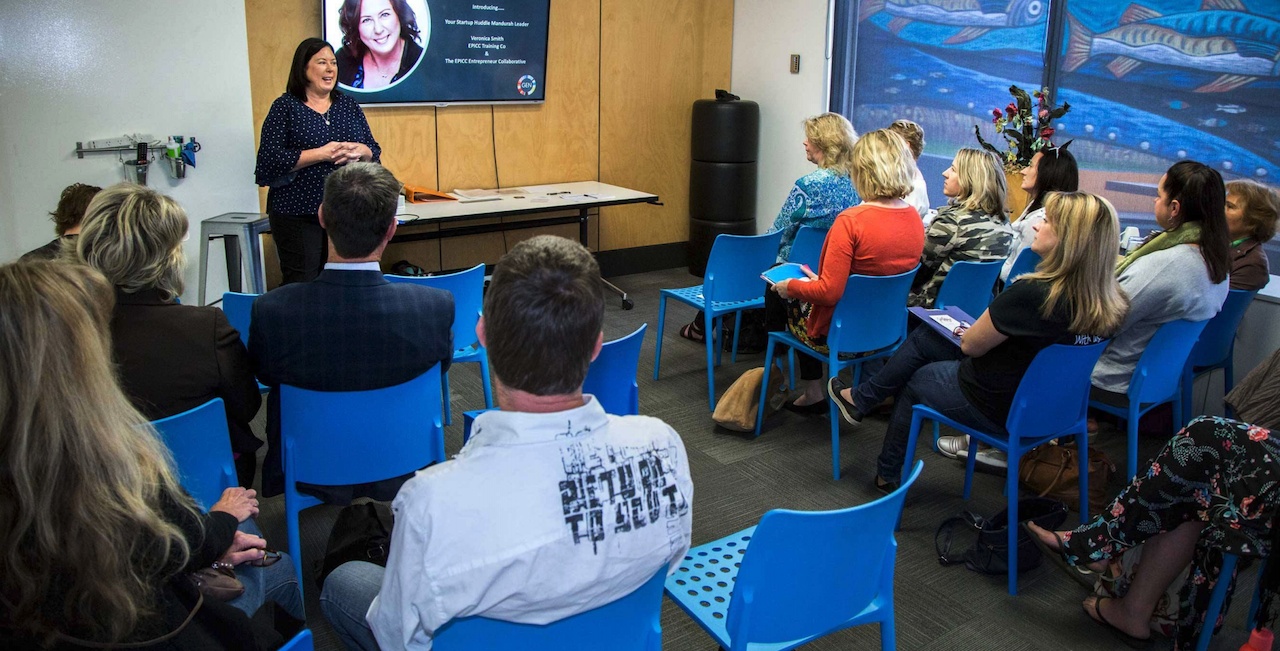
The practical attraction is permission to be unfinished. A pitch competition rewards a persuasive account of what could happen. A Huddle can accommodate the untidy account of what is happening now. Both have their place in GEN. They ask different things of the founder.
The week that kept going
The network grew out of Global Entrepreneurship Week, launched in 2008. Founder and president Jonathan Ortmans assembled a coalition of people supporting entrepreneurship across national boundaries. An annual campaign offered a shared occasion for communities to organize themselves around business creation.
GEN subsequently developed work across founder support, capital, policy and ecosystem building. Today it describes operations in 200 countries. Its website reports annual support for 2.24 million entrepreneurs. Those are measures of reach, with a broad meaning of support; they do not establish how many businesses survived or how much income changed.
“Entrepreneurs are in many ways the new diplomats”Jonathan Ortmans, January 2026
There is a practical reason for such breadth. The aspiring founder, the angel investor and the official writing business regulations encounter different parts of the same problem. A useful introduction can connect them. GEN’s expertise lies in organizing those exchanges across places and professions, then giving participants programs through which to act.
Follow the money, carefully
GEN is a U.S. nonprofit. Its 2023 tax filing recorded $17.8 million in revenue and $15.4 million in expenses. Contributions supplied 99.8% of revenue. This is an organization financed overwhelmingly by people and institutions supporting its work. The accounts give a concrete sense of operating scale.
Organizational totals. Figures rounded.
The beneficiaries are a wider group than the technology founders who usually dominate startup coverage. In February 2026, GEN and The Knot Worldwide announced a WeddingPro program offering $500,000 in combined financial grants, advertising support and mentorship. A wedding photographer’s need for flexible capital belongs in this conversation too.
That program required U.S. applicants to have traded for at least six months, generate active revenue and obtain at least half their business from weddings. Its application window closed in March. The specificity matters: a global mission still produces programs with boundaries. Joining the network does not make every opportunity available to you.
The Entrepreneurship World Cup provides another route. Launched in 2019, it combines competition with founder support and exposure to investors. For someone seeking visibility and a competitive funding opportunity, that is a different proposition from a recurring neighborhood feedback session.
A smaller example makes the grant work tangible. Toast’s Changemakers program selected 15 U.S. restaurants addressing food insecurity for $150,000 in awards. More than 800 businesses applied, with GEN and Hello Alice collaborating in the review. Here, entrepreneurship support reaches businesses already doing something useful in their neighborhoods, with a defined purpose for the money.
A government can borrow the homework
GEN Atlas addresses a quieter problem: policymakers designing something that another country has already tried. In February 2026, the searchable library reached 500 case studies drawn from 100 countries. Entry number 500 examined Albania’s efforts to connect its diaspora’s capital, knowledge and relationships with domestic entrepreneurs.
The entries organize policy objectives, mechanisms, costs, development, measurable impact and lessons. A four-level evidence system distinguishes participation counts from stronger assessments of outcomes and economic effects. A busy official can inspect the machinery behind an attractive idea before recommending it at home.
This is also where copying requires restraint. A policy’s usefulness depends on the institutions, budget and rules surrounding it. A case study supplies questions to ask. The local team still has to answer them. The same applies to the network’s headline participation figures: attendance is easier to count than a lasting change in someone’s prospects.
Start smaller than the map
GEN sits between several familiar alternatives. An accelerator can provide concentrated help to a selected cohort. A chamber can offer local business relationships. A research organization can advise government. GEN connects these kinds of work through an international network, leaving participants to choose the program that fits their immediate task.
For a founder, the sensible first move is modest: find a nearby Huddle and bring one specific challenge. For an organizer, borrow the discipline of a recurring time and place. For a policymaker, read the cost and evidence before borrowing the idea. Each starts with a question small enough to answer.
The same discipline applies to institutions joining the network. GEN’s published partnership guidance asks for at least three years for nonfinancial ecosystem partnerships. The time horizon is revealing. Relationships need enough repetition for people to learn what another organization can actually deliver. An introduction opens a conversation; the next few meetings determine whether anybody benefits from it.
The arrangement depends on people returning, listening honestly and having useful experience to share. A room assembled only for photographs will accomplish little. But give a founder six minutes, reserve twenty for the neighbors, and there is at least a clear job for everyone present.
Find your way in
GEN website · Find a Huddle · World Cup · Explore Atlas · Entrepreneurship Week · News