The app worked. A diner could order food and pay at the table, using a phone. Sissel Hansen had helped build something functional, which ought to have been the encouraging part. Then came the awkward detail: restaurants did not want to buy it. The business ended, leaving her with a particularly expensive question about whom she should have spoken to before she began.
That question travelled with her from Copenhagen to Berlin in 2012. The German capital offered the sort of atmosphere that makes starting something seem almost compulsory. Hansen liked its openness and its do-it-yourself spirit. But enthusiasm did little to explain the bureaucracy, supply a network or tell a newcomer whose advice deserved a hearing. A city could be full of entrepreneurs and still be difficult to enter.
She started collecting information. Useful contacts, local knowledge, answers to the questions people already established in a place can forget anyone needs to ask. Eventually, those notes became a book. Startup Guide launched in 2014. Today the company reports guidebooks covering more than 60 cities and regions. Its founder’s occupation has changed considerably; the newcomer at the centre of her work remains recognisable.
The customer missing from the table
Hansen had been making things long before she became a publisher. She started her first company at seventeen. Her early projects included a local music stage, helping a friend build a bar, mobile applications and consultancy. She describes a disposition towards learning through action. A formal plan for becoming an entrepreneur would presumably have had trouble keeping up.
The restaurant app made the limits of action rather plain. Working software could not compensate for failing to understand everyone involved in the transaction. The restaurant had its own reasons to participate, or decline. Hansen’s later business would spend a great deal of time asking people about their circumstances. There is a practical connection between the enterprise she lost and the one she kept.
Berlin presented a second education. Familiarity with Denmark offered no automatic mastery of Germany’s language, administration or business culture. She could see people with experience all around her. Getting that experience into a form another person could use became the task. A guidebook, she thought, could do for starting a business what a travel guide did for arriving in a city.
“I never really played by the rules.”
Sissel Hansen
Three hundred copies of a way in
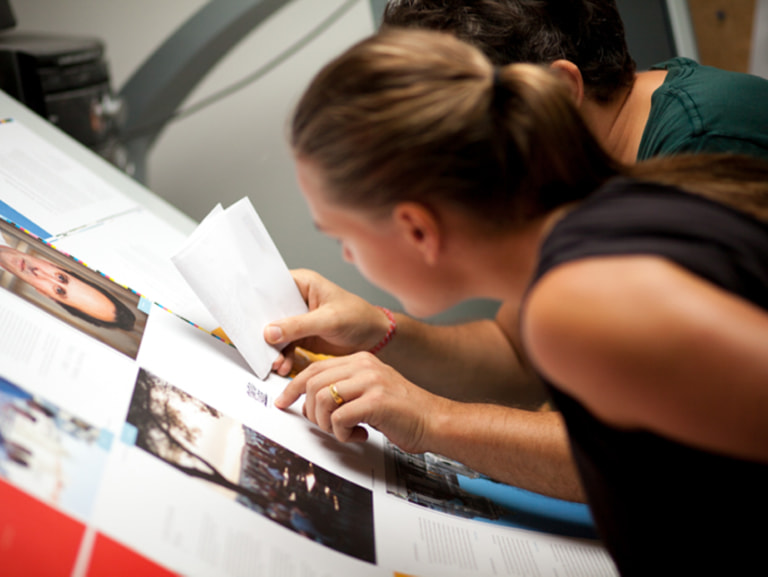
A printed book about startups was a proposition with a certain comic timing. The subject suggested new technology; the proposed delivery system had been around for centuries. Investors were unconvinced. Hansen bootstrapped the project instead. The first Berlin run consisted of 300 copies, followed by another 3,000. Startup Guide says the initial edition sold out in less than 48 hours.
The number matters because it keeps the beginning in proportion. Three hundred readers could test whether the idea was useful. There was no requirement for a first book to prove everything about an international publishing company. It needed to give someone a way into Berlin. The larger business could wait until people actually wanted the smaller thing.
A further 3,000 followed.
Small enough to try. Useful enough to reprint.
Aarhus supplied the next test. Hansen went there to study at Kaospilot and found a busy entrepreneurial community with room for better communication between its participants. She met Thomas Nymark Horsted, her mentor, who became project manager and cofounder as they produced the Aarhus guide. A book that worked in Berlin now had to make sense in a smaller Danish city.
There was an appealing discipline in that move. The company could carry a format from place to place; it still had to discover what belonged inside it. Hansen studied at Kaospilot for a year in 2015 before leaving to develop Startup Guide full-time. Her education and her business briefly shared an address, then the business became the full-time assignment.
A world map drawn by the neighbours
Expansion required a way to find the right people without personally moving into every city. Startup Guide developed a process around local partners. Communities nominate founders, companies, workspaces, programmes and other resources. A local advisory board helps choose the final selection. Journalists and photographers gather the material; the publishing team edits and designs it.
The arrangement gives local knowledge a job. Someone already working in a city can explain which organisations matter and which introductions are useful. A visitor may see a lively district; a resident can explain how it operates. The resulting book is also a record of people who might otherwise remain scattered across separate professional circles.
- 01Local partner
- 02Community nominations
- 03Local advisory board
- 04Interviews + design
- 05A guide to the city
By 2019, Startup Guide was publishing in Africa and Asia, including Cape Town, Johannesburg and Singapore. That year it produced eleven books. Hansen was also seeing different reasons for starting companies. Locally pressing problems could shape a business from its first decision, rather than arrive later as an additional statement of purpose.
Cape Town left a particular impression. Seeing the city’s water shortage brought home the importance of entrepreneurs who understood a problem from daily life. Connecting those founders with investors, partners and customers elsewhere gave international expansion a more specific purpose. A global network could carry attention towards work rooted in a very particular place.
“There are still a lot of cities to cover and stories to tell.”
Sissel Hansen
A shop is a useful excuse to meet
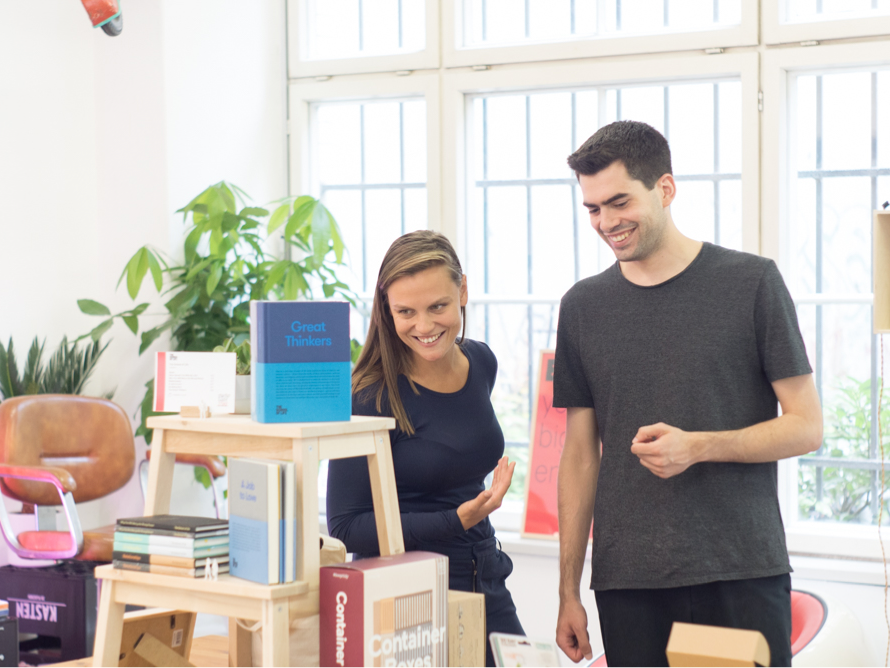
The books also acquired physical company. Startup Guide opened a Berlin store in August 2017 with Kickstarter as a partner. Lisbon and Copenhagen followed within the company’s 2017-2020 period of shop openings. The stores sold startup products and books, and doubled as offices until 2021. Working among the things you publish is one way to keep the subject close.
For Hansen, the attraction went beyond retail. A person could walk in, discover a product and have a conversation. The book offered names to approach; the shop offered somewhere an encounter might happen. Publishing and meeting people were two parts of the same practical ambition. Even a business devoted to helping people begin online could appreciate the usefulness of a door.
When Startup Guide brought its content online in 2018, it reversed the sequence expected of a startup. Hansen explained the move the following year: work on an earlier digital platform had helped the team recognise the value of founder stories and educational content. The website could explore new formats and reach people beyond the books.
Her explanation contained a revealing memory of earlier part-time work: watching the clock and wondering when the shift would finish. She wanted more people to enjoy their work and to change something through it. Beneath the machinery of publishing sat a wish for a more satisfying working day. The aspiration is modest enough to understand, and difficult enough to occupy a career.
Her experience of leading a distributed team carried a related lesson. Digital communication could leave people misreading one another. She valued getting colleagues together in person, despite the expense. Asked in 2018 what made her proud, she emphasised the team and creating somewhere people wanted to work. The company helping strangers make connections had to attend to its own.
The question after “start something”
In February 2020, Hansen put a change of emphasis into Startup Guide’s sustainability manifesto. Encouraging people to start companies was no longer sufficient by itself. Businesses needed to examine their positive and negative effects. The publishing company, too, had a role in shaping what readers understood a worthwhile business to be.
That argument gave her growing international work a sharper editorial purpose. A story about a company could ask what it changed, who benefited and what its growth required. Startup Guide had already produced an impact-focused regional book on Switzerland. The ambition was to make the consequences of entrepreneurship part of the starting conversation.
- 2012
- Copenhagen to Berlin
- 2014
- The first Berlin guide
- 2020
- A manifesto on business impact
- 2026
- Entrepreneurship education and a Lisbon gathering
Her work now extends into organisations concerned with learning and change. She has co-founded Kaospilot+Berlin, Impact the Future and Future Club. At Impact the Future, a collaboration between Startup Guide and Culture Works, her remit includes programmes and partnerships. The work brings her back to a familiar activity: putting people with different knowledge into useful contact.
In 2026, her public posts promoted a free five-day Regenerative Immersion Summer Camp in Copenhagen for aspiring founders aged eighteen to twenty-nine. The programme was scheduled for August, supported by Startup Guide and Tuborgfondet. Its subjects included purpose, finance, ownership and business models. The questions had moved well beyond how to register a company.
There is another gathering ahead. Startup Guide’s fourth Lisbon summit is scheduled for 9 November 2026 at Casa do Impacto. Its programme asks whether Europe can build the systems it depends on while remaining ethical and competitive. Debate and working sessions put different approaches in the same room. The guidebook publisher has become a convener of arguments about what should happen next.
Hansen’s story begins with a founder discovering how much she had failed to ask. It continues through books, shops, education and gatherings organised around the value of asking other people. A reader opening one of her guides is doing something she knows well: arriving somewhere with an idea, looking around, and trying to find a sensible place to begin.