At L’Oréal, the head of Alisée de Tonnac’s division asked a question that ought to have been easy. Who wanted to be working there in ten years? Hands went up around her. Hers stayed down. She had assembled the qualifications, secured the recognizable employer, and arrived at a future she could already see. Now she had to admit she did not particularly want it.
There was nothing wrong with having learned the business. She would carry some of its processes into her own company. But a polished CV had begun to seem an inadequate reason to spend a life in a particular room. The young marketing professional in Milan was discovering a fairly expensive flaw in her career plan: success could arrive before conviction.
Today, de Tonnac is co-founder and co-CEO of Seedstars, the Swiss organization working with entrepreneurs in emerging and frontier markets. Its activities span investment, business development programs and support for fund managers. The distance between those two jobs is considerable. The question connecting them is disarmingly ordinary. Whose work would she actually like to do?
A good student, with a restless map
De Tonnac was born in France in 1988. Her childhood included Singapore and California, followed by studies in Switzerland and Italy. International life preceded international business. Geography was something she had lived inside long before it became a slide in an investment presentation.
At HEC Lausanne, she completed her undergraduate studies in 2008. A master’s in International Management at Bocconi followed in 2010. She also worked with the Italian team at travel company Voyage Privé. Her early experience crossed the boundary she would later spend years thinking about: the established company on one side, the young venture still working out its rules on the other.
There were other forms of participation. She belonged to Harvard Model Congress Europe and received its Award of Excellence. Her university biography records humanitarian work in Brazil and Cambodia. These are useful details in a life too easily reduced to a tidy before-and-after photograph: luxury marketing, then entrepreneurship. The interest in organizations, travel and collective effort was already there.
She has been candid about her diligence as a student. That quality did not disappear when she left corporate employment. Entrepreneurship simply gave it less predictable assignments. A good mark tells you whether you have understood someone else’s question. A young company can spend quite a while discovering what the question should have been.
Twenty destinations and an unfinished business
The first Seedstars World competition took shape around a practical idea: go and meet founders in markets that received too little attention. De Tonnac’s co-founders included Pierre-Alain Masson, Michael Weber and Benjamin Benaïm. In March 2013, the international journey began. The team borrowed money and bought tickets to twenty countries.
A competition gave those journeys a purpose and a timetable. Entrepreneurs could pitch locally; the network could bring founders into contact with investors, mentors and one another. For the organizers, it was a way to build relationships in places where they could hardly assume they were already known. A plane ticket is a persuasive declaration of interest. It still leaves the work of earning trust.
De Tonnac later called the first competition the “Start-up Olympics.” The comparison catches its traveling, international character, although business has an inconvenient habit of continuing after the medals. A founder still needs customers the following Monday. The enduring challenge for Seedstars would be to turn an event into help that lasted beyond the stage.
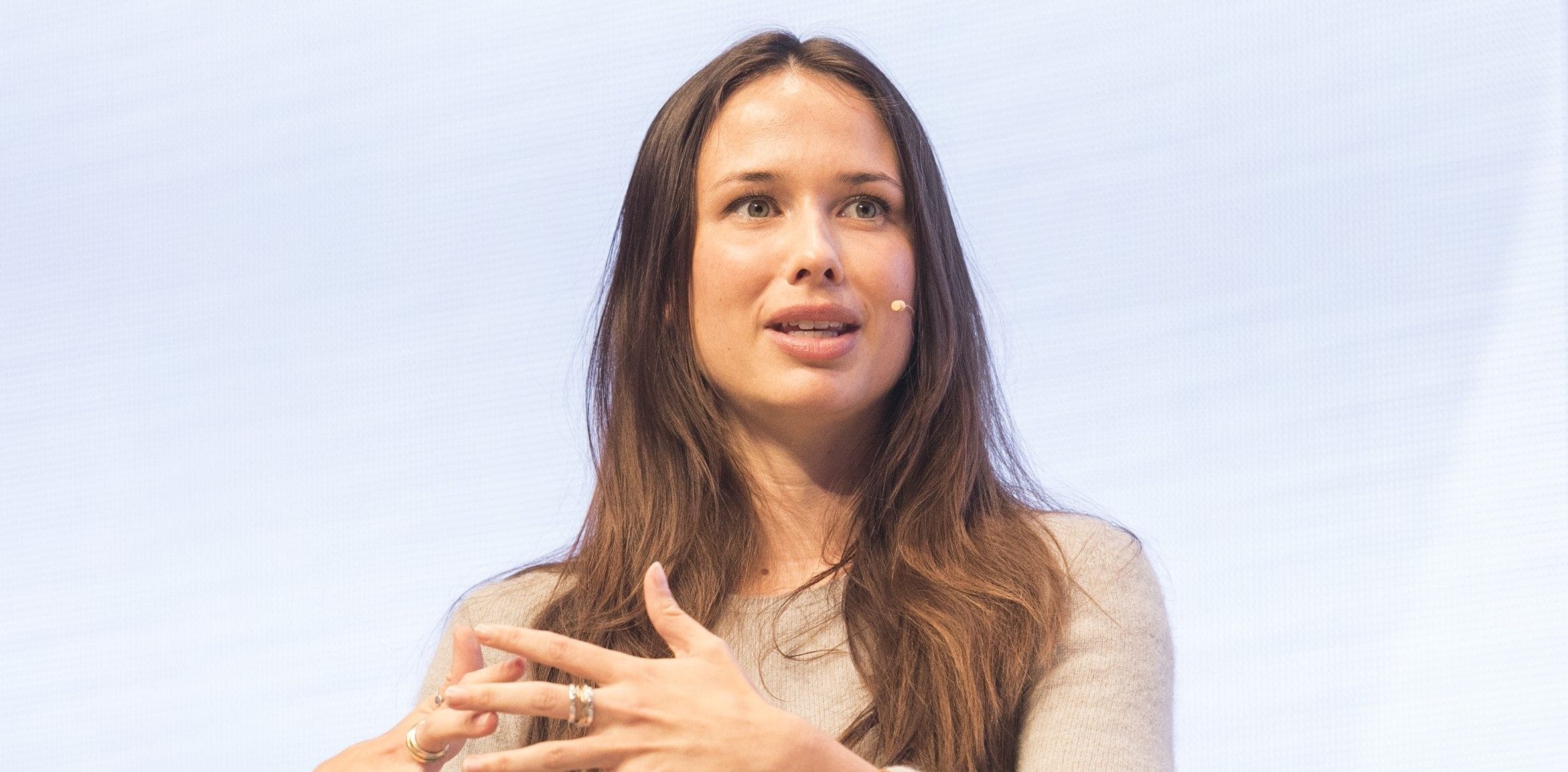
The map had opinions of its own
Travel complicated her assumptions. Rwanda left a particular impression: the country’s history, its landscape, its clean capital and the possibility she saw in its entrepreneurial community. She acknowledged arriving in countries with preconceived ideas and finding those ideas overturned. That admission matters in a business built around evaluating other people’s potential.
By March 2016, the operation had a fifteen-person team. Fifty-four startups from fifty-four countries were due in Lausanne for the third Seedstars Summit. The week included mentoring, work on business models and presentations, and introductions to potential customers and investors. The map was becoming a working set of relationships.
Asked to single out a startup, she had difficulty choosing: she had two hundred in mind with whom she remained in regular contact. The revealing number here is less the size of an audience than the number of continuing conversations. The founder of a network spends much of her time remembering that the network consists of people.
“My corporate experience was great for understanding what I don’t want.”
Alisée de Tonnac · Swisspreneur, 2017
Talent deserves a more interesting address book
In her 2015 TEDxLausanne talk, de Tonnac asked her audience to reconsider where innovation happens. Malaysia, Ghana and Chile belonged in the conversation alongside Switzerland. The talk’s title, Talents are everywhere, expressed the premise behind the travel: a familiar address should not be mistaken for a complete inventory of ability.
At the time, the ambition was to extend the competition to fifty cities during 2015. It was a specific, operational expression of a larger belief. If promising founders were dispersed, finding them would require a dispersed search. Waiting for everyone to arrive in the same established startup center would select for people able to make that journey.
Her 2020 TEDxArchivorum appearance returned to the development of startup ecosystems and their connection to stakeholders elsewhere. That word, ecosystem, can become pleasantly vague. Here its usefulness is concrete: businesses need other businesses, people who understand them, and routes to money and advice. A pitch competition could bring those parties together; the next task was keeping them connected.
- 2013First Seedstars World competition tour
- 201654 country representatives expected at the third summit
- 2023Seedstars marks its tenth anniversary
- 2025Bocconi names de Tonnac Emerging Leader Alumna
After the applause, the work
The organization eventually developed activities that reached beyond competition. Entrepreneurial education, startup investment, coding academies and backing for fund managers became part of its work. At its tenth anniversary in 2023, Seedstars marked a milestone of $100 million in impact funds catalyzed in emerging markets.
That description deserves care. Funds catalyzed are a measure of organizational activity, rather than a founder’s personal fortune. Nor does the existence of capital establish that every business will succeed. What the milestone illustrates is a change in the work: a venture that began by gathering founders was also helping build the structures that could finance them.
In 2024, de Tonnac described leadership grounded in diversity and transparency, with nearly one hundred collaborators. She wanted different backgrounds, skills and ideas inside the organization. Joining other company boards had broadened her own view as well. The traveler was still encountering unfamiliar perspectives, now sometimes around a board table rather than in an airport.

The company she keeps
De Tonnac’s connections extend into Swiss institutional life. Loyco announced her appointment to its board in June 2019, pointing to her experience of growing businesses and observing different business models. She, in turn, was drawn to its values and governance. It was a meeting of interests around how a company should operate.
Her public biographies also record work with the School of Management in Fribourg and Switzerland’s innovation council. A 2026 speaker biography lists board roles at Proton and the Assura Foundation, and describes her innovation council service in the past tense. These roles place her experience in settings where decisions involve oversight, continuity and responsibility to other people.
The same 2026 biography describes Seedstars as supporting founders with capital, knowledge, networks and practical tools. The combination is revealing. Money appears alongside less photogenic necessities. A useful introduction rarely gets a ceremonial cheque of its own, yet a business can depend on it. De Tonnac’s work has made room for both.
Learning to leave a few tabs closed
In a March 2026 conversation on Process Advantage, de Tonnac discussed the transition from carrying operational work herself to leading more strategically. She also spoke about the durable relationships around her. The people she relies on, she said, are few and have remained much the same for twenty years.
For someone associated with a worldwide network, that is a pleasingly small inner circle. She was equally direct about digital tools: Slack and Notion had helped the organization, while her personal instinct was increasingly to remove distracting apps. Access to information does not automatically make every additional hour of it useful. Even an international network has room for a closed browser tab.
She also qualified the organization’s presence in more than ninety countries: they were not all active at the same time. It is a small qualification with editorial value. A country count looks settled when printed in large type. Running an organization across markets is a more changeable affair.
The ten-year question returns
In September 2025, Bocconi announced de Tonnac as its Emerging Leader Alumna, a new distinction recognizing graduates who had already made an international mark early in their careers. The university scheduled the presentation for its October Homecoming. Fifteen years after her master’s, her route away from a conventional career had become a reason to invite her back.
“The sooner you accept uncertainty, the sooner you grow,” she said in the announcement. The words fit a career whose defining decision involved admitting that a secure-looking future did not fit. They also leave room for learning. Uncertainty is easier to praise at an awards ceremony than to manage when the next decision needs making.
On November 12, 2026, she is scheduled to join a Lausanne discussion about company culture alongside Loyco’s Christophe Barman and Qoqa’s Pascal Meyer. It is an apt subject for someone who once declined, silently, to imagine another decade in a particular workplace. Years later, the question remains worth asking. What kind of company makes people want to raise their hands?
Continue the conversation
Talks, interviews and places to follow her work.