Yotam Tzuker wanted something more from student life than calculus homework. In Be’er Sheva, he heard about people from the city’s technology park who were planning a small startup meetup. He joined them. Looking back more than a decade later, he would identify that decision as a turning point in his working life. The original proposition was modest enough: bring some people together. The consequences took considerably longer to reveal themselves.
A meetup has an advantage over a mission statement. Somebody has to turn up. A few dozen people did, and the gathering became part of what grew into Tech7. Tzuker went on to serve as its CEO and chairman. His career would eventually take him into global recruitment and the video hiring company Team Me, but the early question remained useful: how do you help people reach one another when the usual routes are inadequate?
There is a temptation to tell a founder’s life backwards, making every student activity look like an early rehearsal for a business plan. Tzuker’s path is more interesting when its individual problems remain visible. Students needed connections. A city needed places to meet. His brother needed a way to tell prospective employers apart. Each problem had people in it before it had a product.
01The city needed somewhere to meet
Tech7’s early organizing group came together in the summer of 2014. Alongside Tzuker were Etai Coles, Aviv Avital and Dan Inbar. The lack they were addressing was specific: too few local lectures, hackathons, events and meetups. Be’er Sheva already had institutions with technical knowledge and resources. The work was to make those institutions easier for aspiring entrepreneurs to approach.
That distinction matters. A university and a technology park can occupy neighboring land while belonging to separate social worlds. A student can walk past a company without knowing anyone inside it. Tech7 gave those worlds occasions to overlap. Its guests included Waze co-founder Uri Levine and Wix president Nir Zohar. The appeal of such encounters is easy to understand: a distant career suddenly has a person attached to it.
Tzuker had already organized around student interests. At Ben-Gurion University of the Negev, where he earned a BSc in industrial engineering, he founded and presided over Forum 20-80 for industrial engineering and management students. Community building was becoming a recurring part of his work, alongside his own education. His early professional biography also records his involvement in planning Siliconegev and helping organize more than a hundred entrepreneurship and technology events.
By March 2016, he was describing another practical experiment: Starter Class, an entrepreneurship program designed for students and open to others. More than 200 people applied; 20 were selected. He wrote about the year between conceiving the program and its first session. Behind the tidy intake numbers was a less glamorous unit of entrepreneurial effort: a year spent making an idea ready for other people to use.
02Taking Be’er Sheva with him
In 2017, Tzuker represented Tech7 and the Be’er Sheva region in Innovation Generation, a program developed in partnership with Harvard and MIT. Its participants included emerging leaders from Egypt, Israel and Turkey. The setting widened, but his stated purpose stayed regional: make connections that could create opportunities for entrepreneurs, technology workers and students back home.
His recollection includes lunch with former New Mexico governor Bill Richardson and sessions with people from Harvard and MIT. He also connected the experience to an earlier visit to Montreal. These were opportunities to compare approaches and exchange knowledge with people outside Israel. For someone building a local community, travel could serve a fairly concrete function: finding out what other communities had already tried.
A year later, he went to Vietnam and spoke at Techfest in Da Nang. He saw a parallel with Be’er Sheva: a city outside the country’s dominant business center being given a chance to host the wider technology community. He argued that Israel should learn from that decision. The question was where opportunity gathered, and whether the geography could be changed deliberately.
His interest extended beyond Israel’s immediate neighborhood. In 2019, he was scheduled to speak in Chapecó, Brazil, about innovation ecosystems and business expansion outside major centers. The subjects fit the work he had been doing in the Negev. A place can have capable people and still need help getting their work into view. Invitations, events and introductions were tools he knew how to use.
03A career path without the correct password
In May 2020, Tzuker wrote about recruiting a community manager for Tech7 Juniors, its teenage community. One candidate, Judith, lacked the technical background he had initially imagined for the job. What impressed him was her motivation to close the gap. The encounter became the starting point for advice to people hoping to enter technology without the conventional credentials.
His recommendations were practical: get involved early, develop English, give an interviewer something distinctive to ask about, and find a knowledgeable friend who can explain unfamiliar terminology. He used a television reference and finished with a small pun: “tech it easy.” It is unusually merciful career advice. The newcomer is allowed to ask what the acronyms mean.
The same attention to context appears in his later work at CQ Global, where he led business development for a search firm helping Israeli companies recruit internationally. In February 2021, he wrote about the complications that begin when a company hires in an unfamiliar country: compensation, culture, interviewing practices and the relationship between headquarters and overseas teams.
His argument placed recruitment inside the company’s broader plans. Where did it want to operate? Why that market? What kind of person would succeed there? The questions make hiring sound less like collecting impressive résumés and more like understanding a particular situation. They also explain why a community organizer might find the subject absorbing. Both jobs depend on knowing who needs to meet whom, and why.
tech it easyYotam Tzuker’s advice to newcomers, 2020
04His brother’s job search supplied the problem
Team Me began with a frustration close to home. Tzuker was helping his brother navigate a job search. His brother could see offers and descriptions, yet struggled to understand the differences between the companies, their cultures and the work itself. The available information left a consequential decision oddly blurry.
Tzuker and Maayan Blech founded Team Me in 2022. Blech brought a background in directing and visual storytelling; Tzuker brought experience in entrepreneurship and recruitment. Their hiring feed let candidates explore employee accounts, office tours and explanations of products. The intended experience borrowed the familiarity of scrolling through short videos, applied to a decision that lasts rather longer than a scroll.
At a 2022 interview, Tzuker described the objective as “changing the way candidates experience the company before they apply.” That timing was the point. A candidate could get a sense of future colleagues before submitting an application. A hiring page could show the people behind its vocabulary. The product addressed the information gap his brother had encountered, with employers supplying a more visible account of working life.
The company secured a $450,000 pre-seed investment in July 2023, with Fusion VC and angel investors participating. By early 2024, Payoneer and HiBob were among the customers it named. Those details belong to that stage of the business. They show an idea moving beyond a family conversation into the ordinary demands of a young company: developing the product, serving customers and deciding where to expand.
05A seat on the other side of the conversation
In May 2024, Tzuker sat down with HiBob co-founder and CEO Ronni Zehavi for a mentoring conversation. The pairing put a recruitment startup founder beside someone who had already built a company in the wider HR market. Their discussion addressed fundraising, the scale of a potential business and the difficult conditions facing a small team.
Tzuker said three months of reserve service had made his absence significant for a startup with only two and a half people. That is a very different measure of a founder’s work from an event attendance figure. In a tiny business, one person’s availability can alter what the whole organization is able to do.
Zehavi’s advice asked him to distinguish between a company with room to grow and an idea that might work as a feature within another product. It was a useful question for a founder working in a changing market. An appealing solution still needs customers, a sufficiently substantial problem and a reason to exist as a business.
Tzuker also kept organizing professional gatherings. A March 2025 event at Google for Startups Campus brought together Team Me, Fusion and other participants to discuss company leadership and HR strategy. His own company had given him a new subject around which to assemble people. The habit of convening survived the move from regional entrepreneurship into recruitment.
06Letting the organization carry on
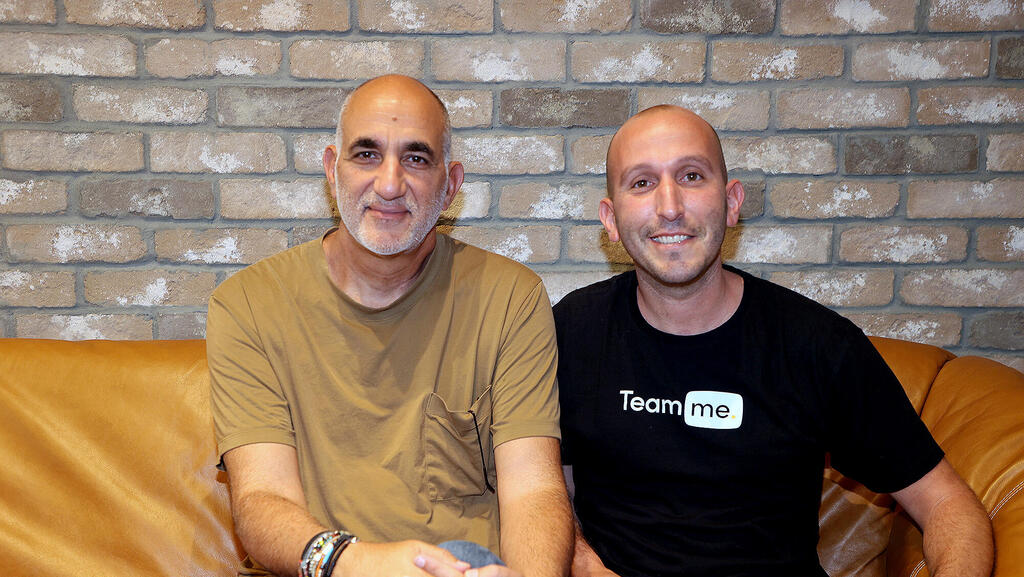
In October 2025, Tzuker announced that Yoram Sadan would succeed him as Tech7 chairman. He said he would continue as an active director. His account returned to the student who had joined a small meetup, and to the lessons of recruiting support, finding resources and building an organization from its beginnings.
The handover offers a revealing definition of achievement. He described the satisfaction of seeing something he helped establish continue to grow and change. The organization had acquired a life that could accommodate a different chairman. For a career so concerned with making connections, that continuity is a more fitting endpoint to the Tech7 chairmanship than a solitary victory lap.
- 2014Bring people togetherThe early Tech7 organizing group
- 2022Show the people insideTeam Me is founded
- 2025Make room for continuityThe Tech7 chair handover
07The next introduction
By the time of this profile’s October 2026 review, Tzuker’s public professional profile listed a stealth AI startup. He had also named a new recruitment company, BFF, in a post about an upcoming public presentation. His recent writing asks what happens to hiring when applications become easier to generate and people become harder to distinguish on paper.
The direction is consistent with his earlier work: technology can help people find one another, while personal knowledge still matters in deciding whom to trust. A student meetup, a hiring feed and an AI recruitment venture involve different tools and different businesses. Tzuker keeps coming back to the moment just before a useful connection is made. Someone is nearby, or somewhere in the pile. How do you get them into the conversation?