Fifty hours sounded manageable. Srulik Dvorsky was approaching his first-year engineering finals when his former army commander called with a task at a startup. Would he come and help? The assignment became a nine-year chapter at BrainsGate. Some invitations have a rather elastic definition of temporary.
By the time he announced his departure from the vice presidency of R&D and Operations in April 2015, he had accumulated enough experience to write down nine lessons. The student who had agreed to a bounded piece of work had become someone responsible for how other people worked together.
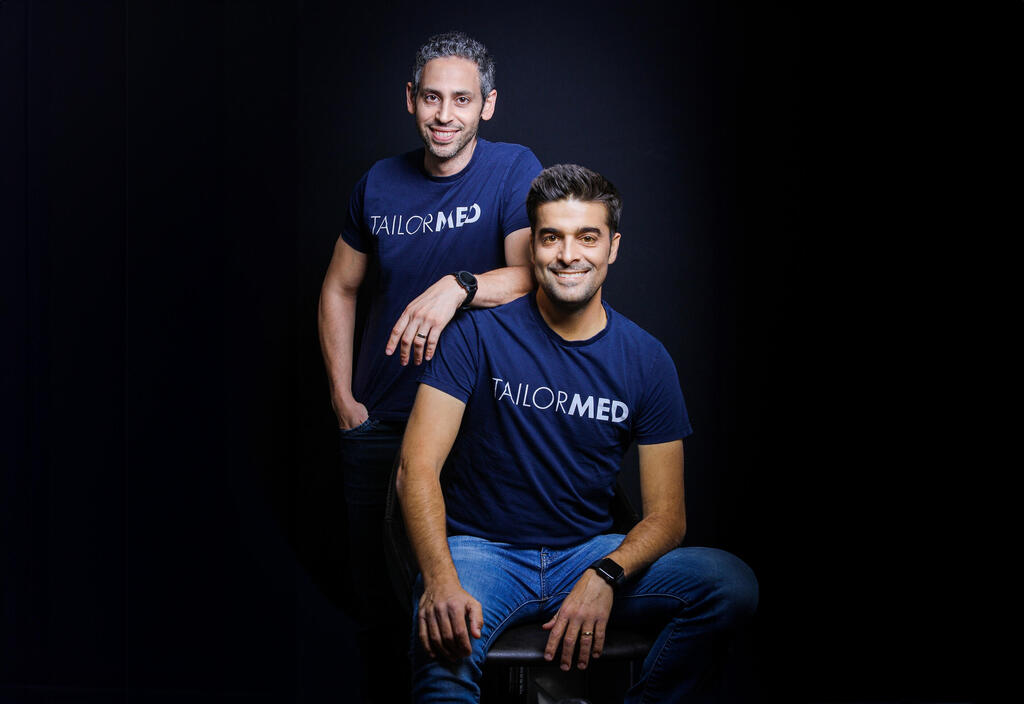
Today, Israel (Srulik) Dvorsky is co-founder and CEO of TailorMed, based in New York. His career has passed through technical work, management, company building, and a move across the Atlantic. It has also involved a recurring willingness to begin with something small enough to try, then pay attention to what happens.
The saxophone takes a different exit
There was another possible career. Growing up in Israel, Dvorsky came close to pursuing the saxophone professionally. He chose electrical engineering instead. A biography can make that turn look inevitable by placing the eventual job title at the top. The musical possibility is a welcome interruption to the neatness.
His qualifications came from two institutions: a B.Sc. in Electrical Engineering from Tel Aviv University and an MBA from IDC, now Reichman University. The combination gave him formal training in both technical and managerial questions. His working life supplied the occasions to discover how much those questions overlap.
There is no need to turn the saxophone into an explanation for every later decision. A considered musical career is interesting on its own. It gives the reader a glimpse of someone whose options were wider than the office biography suggests. The engineer and executive had once contemplated a different audience.
A question about the company you keep
In November 2014, before TailorMed occupied his working life, Dvorsky published a short essay prompted by two Simon Sinek talks. He noticed how often people described jobs through their tasks and titles. He was interested in the purpose of the organization and in the people sharing the journey.
The essay’s title was an economical statement of his concern: “Start with why, don’t forget with whom.” The second half deserves its place. A cause can sound excellent in a presentation. Living with the colleagues, decisions, and obligations attached to it is a much longer engagement.
His interest was specific: leaders who help people feel safe, and work that gives technical ability a purpose he believes in. Read alongside his later role as a founder, the essay shows these questions already on his mind. They were part of how he assessed a job before they became questions he had to answer for a company.
“Start with why, don’t forget with whom.”
Srulik Dvorsky · essay title, 2014
The customer arrives before the grand theory
One early TailorMed customer supplied an education in weather. Dvorsky recalled a December 2017 go-live in northern Michigan, during a snowstorm. Coming from Israel, he had underestimated the practicalities of driving there. The lesson involved allowing enough distance to stop before an intersection. A launch plan can overlook an astonishing amount of road.
His account of early product development is similarly concerned with getting out into the world. He has described advice to meet users early, bring a minimum viable product, and learn through the first pilot. The initial version needed to provide enough value for someone to start working with it.
That makes the customer part of the education. Once people are using software during actual work, their actions can expose assumptions that survived every internal discussion. The question becomes concrete: what happened when someone tried to use it? There is less room to hide behind an elegant explanation.
A reader with an interest in mistakes
Dvorsky’s reading recommendations provide another route into his thinking. In November 2015, he recommended Ben Horowitz’s The Hard Thing About Hard Things. What appealed to him included the author’s willingness to describe failures and learn from them. A management book that admits to trouble has at least acknowledged the reader’s working week.
He also pointed readers toward Horowitz’s writing about good and bad product managers. Dvorsky explicitly said he had never held that role, while arguing that the advice applied to other positions, particularly in R&D. He was reading across the boundary of his own title.
That is a useful detail in a career increasingly concerned with coordination. As responsibilities broaden, the work of adjacent functions becomes harder to treat as somebody else’s concern. Training, communication, and judgment travel across departments. A recommendation about product management can be a way of thinking about engineering management too.
In a later interview with David Williams, Exponential Organizations appeared on his reading list. The interests had widened toward organizational growth. The progression is familiar to anyone whose responsibilities have expanded: the technical question stays, and more people acquire a stake in the answer.
The company gets bigger; the questions change
TailorMed’s November 2021 acquisition of Vivor brought company building into a different register. Buying another business adds decisions about people, products, and the way two organizations will work together. The announcement described an intention to accelerate development and expand market reach. That is a substantial assignment for a founder’s calendar.
A transaction also changes what proximity means. A CEO cannot personally inhabit every customer conversation or implementation. The habits that worked with a small team have to be carried through colleagues. Hiring and operating routines take on greater weight when the distance between a decision and its execution grows.
Technology Fast 500
2020–2023
The 2024 Deloitte Technology Fast 500 put numbers around TailorMed’s expansion: No. 58, with revenue growth of 2,408% over 2020–2023. A growth ranking compresses several years into a line of type. Behind that line sit the recurring obligations of delivering a product and maintaining an organization.
Revenue growth is a company measure. It does not reveal an individual’s wealth, and it cannot describe every part of a business. Here it provides a dated marker: Dvorsky was leading an organization whose commercial scale had changed considerably. The early pilot belonged to a different-sized enterprise.
In November 2024, TailorMed announced $40 million in equity and debt financing. Windham Capital Partners led the round, with participants including Samsung Next and Citi Impact Fund. Poalim Tech led the $12.5 million debt component. The distinction matters: the headline total brought together different forms of capital.
A larger table, with more experience around it
In May 2025, GoodRx co-founder and chairman Trevor Bezdek joined TailorMed’s board. The company described his role in terms of strategic guidance and market expertise. For Dvorsky, it added another experienced company builder to the group involved in the business’s next decisions.
A board appointment is easy to reduce to a prominent name. Its practical value depends on the questions that person can help the organization answer. Growth creates choices about sequence, investment, and where management should spend its attention. Experience becomes useful when it meets a particular decision.
Later that year, Dvorsky discussed strategy on Strategy Unscripted. The conversation covered proving value through pilots, maintaining close customer engagement, applying AI in company functions, and planning for future opportunities while protecting the core business. The vocabulary had expanded; the emphasis on learning through contact remained recognizable.
There is a tension in that agenda that many growing businesses would recognize. The next opportunity asks for time and resources; existing customers have already earned a claim on both. Keeping those obligations visible is part of the job. A strategy becomes consequential when it determines what the team will do this week.
New York, with a life attached
In an August 2025 conversation, Dvorsky said he was based in New York and had moved there with his wife and two young children almost three years earlier. He was originally from Israel. The move put a family transition alongside the work of running a company across borders.
Those details restore some proportion to the founder’s itinerary. Relocation belongs to the people moving as well as to the business. His description was matter-of-fact, including a remark about how quickly the years had passed. The company’s progress and the household’s adjustment were sharing the same calendar.
In an earlier reflection written while returning from a work trip to the United States, Dvorsky used the flight to think about his team. He described the difficulty of pausing amid ongoing work to appreciate what colleagues had accomplished together. Distance had briefly supplied a chance to look back.
It is a fitting place to leave him: taking stock of the people involved, with more work ahead. The assignment once measured in 50 hours had led to responsibilities that could no longer fit so neatly in a diary. The habit of noticing who was doing the work had remained worth keeping.