The first thing to fail was not medicine. It was the handoff after the prescription. A patient could have insurance, a physician, and a treatment plan, yet still stall at a copay large enough to rearrange a household budget. Somewhere else, a drugmaker, charity, or government program might have money set aside to help. Between the two sat the usual American healthcare obstacle course: scattered portals, changing eligibility rules, duplicate data entry, faxed forms, unanswered status calls, and a clock that kept running.
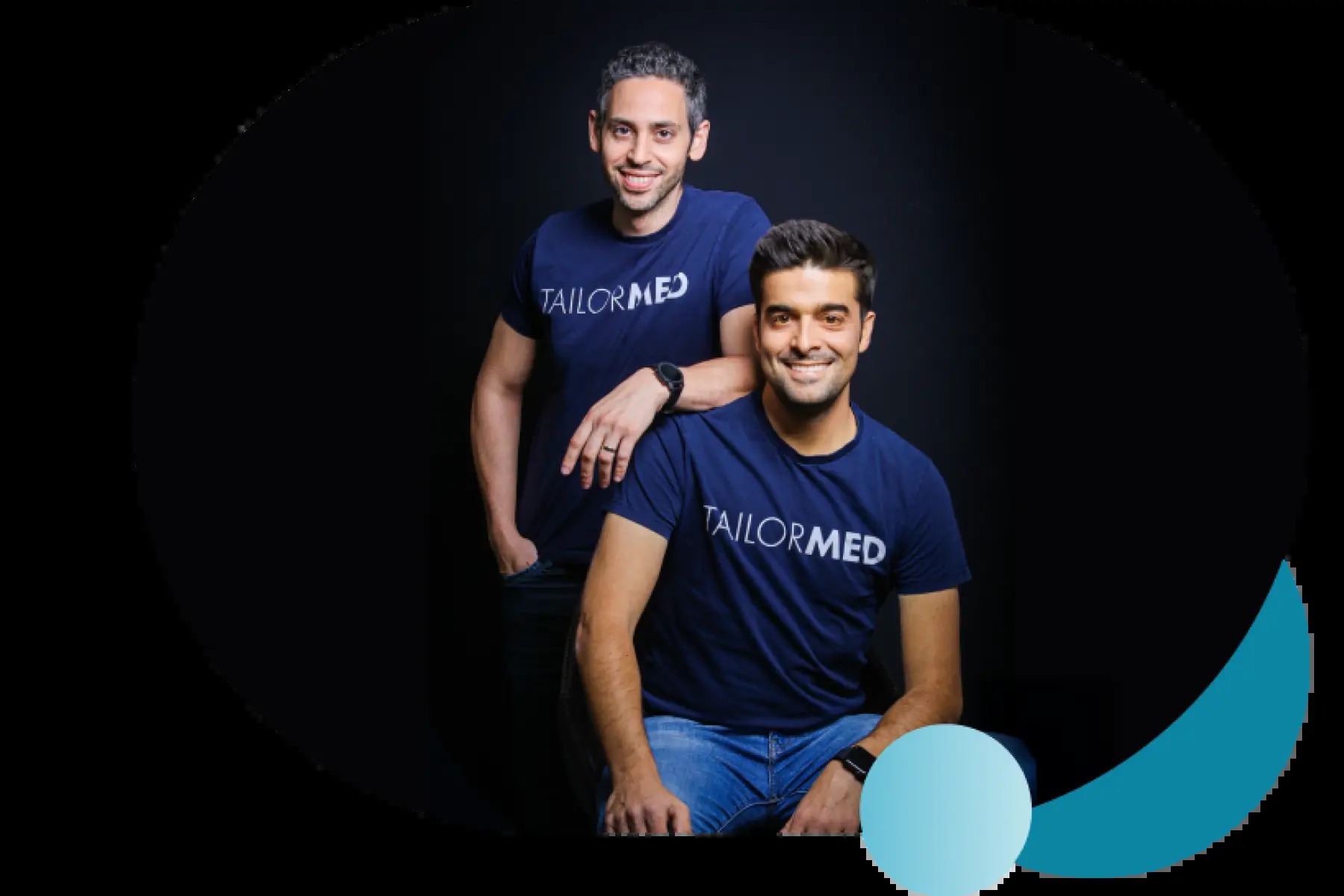
TailorMed built its business in that gap. Founded in 2018 by Israel “Srulik” Dvorsky and Noa Inbar, the New York company sells software and navigation services that help care teams identify financially vulnerable patients, match them with assistance, enroll them, manage free- and replacement-drug programs, submit claims, renew support, and measure the result. The company says its network now reaches more than 75 million patients across at least 945 hospitals, 4,700 clinics, and 3,100 pharmacies. Since 2020, it says, the platform has secured more than $7.4 billion in financial assistance.
Those figures are the company's, not an audited public ledger. Still, they illuminate the shape of the opportunity. TailorMed did not need to invent a new financial product. It needed to make thousands of existing products behave like a system.
That work requires an odd combination of expertise. The team has to understand revenue cycle, pharmacy operations, manufacturer programs, benefits, data integration, and the small human panic that arrives when treatment and money collide. TailorMed operates from New York and Tel Aviv, and its public culture language leans on ownership and patient purpose. The more revealing clue is the product itself: it assumes the software will meet exceptions, so the company also employs people trained to navigate them.
The database was never enough
A list of copay cards and charitable foundations sounds useful until a navigator is preparing 400 appointments a day. The job is not merely knowing a program exists. Someone must estimate a patient's out-of-pocket exposure, check coverage, spot an eligible program before its funding closes, gather consent and documents, complete enrollment, track approval, order medication, pursue a claim, and return next year for renewal. Volume turns a directory into clerical triage.
TailorMed's Core product treats the process as a lifecycle. It can verify benefits, project out-of-pocket costs, match a patient against assistance rules, pre-populate applications, build worklists, manage internal hardship funds, and give managers a view of team performance. Its Express Enroll connections digitize enrollment for dozens of manufacturer programs. The pitch is less “discover money” than “make sure the money survives contact with the workflow.”
This is where TailorMed differs from a broad patient-billing platform or a static savings search. Its core user is often a financial navigator, pharmacy technician, care coordinator, or revenue-cycle specialist. Its arena includes foundation grants, manufacturer copay aid, patient-assistance programs, free drugs, government plans, and internal hospital funds. Competitors such as Atlas Health and Annexus Health attack similar terrain; RxLightning focuses heavily on specialty-medication onboarding. The stubborn alternative is still the spreadsheet stitched to a collection of portals.
A month to earn its keep
Enterprise healthcare software is usually sold with nouns such as transformation and interoperability. TailorMed's best argument is a number: 28 days. Highlands Oncology Group, an Arkansas practice with four financial navigators handling more than 400 appointments a day, reported that the platform paid for itself within a month. In 2023, the customer said it increased the number of patients assisted by 35 percent, claimed $1.3 million in copay assistance, and saved each employee three hours a day on visit-schedule preparation.
“The spike in revenue generated led to TailorMed paying for itself within a month.”Jeff Hunnicutt, CEO, Highlands Oncology Group
That result explains who pays and why. TailorMed's customer is generally an organization, not the patient. Health systems, specialty clinics, infusion providers, pharmacies, and life sciences companies buy software subscriptions or a tech-enabled service. Contract prices are private. The economic equation, however, is visible: fewer labor hours, more assistance captured, less uncompensated care, quicker therapy starts, and more prescriptions that make it through the pharmacy.
The capital cost of building the broader company is easier to see. TailorMed announced a $25 million financing in 2021, led initially by Providence Ventures and joined by strategic investors including health systems, Citi's impact fund, and the American Cancer Society's BrightEdge. That same year, it acquired Vivor, a rival whose pharmacy relationships and Express Enroll capability widened the network. In 2024, TailorMed raised another $40 million in combined equity and debt, led by Windham Capital Partners on the investment side and Poalim-tech on the debt facility.

From finding money to keeping people on medicine
The 2024 round marked a change in scope. Affordability had been TailorMed's wedge, but management argued that the same network could attack access and adherence across the medication journey. The product family now makes that ambition explicit. Core serves care teams. Complete pairs the software with human navigators. Amplify carries manufacturer programs into provider and pharmacy workflows. Alliance connects complementary partner products. Connect, unveiled in 2025, lets patients find and self-enroll in support from any device while keeping their care teams connected.
What changed their mind about going directly to patients? According to Dvorsky, years of work with providers, pharmacies, and partners made patient autonomy feel like the “next frontier.” Select partners had already used the experience with thousands of patients. The move is not a consumer pivot in the usual startup sense. The enterprise network remains the distribution system; Connect closes the last mile.
The strategy can be seen in TailorMed's partnerships. KabaFusion, a home-infusion provider serving patients in more than 46 states, renewed and expanded its relationship in 2025. Manufacturer collaborations put enrollment closer to the therapies they support. An August 2026 partnership with RxSense brought manufacturer and foundation assistance for more than 2,200 brand-name medications into digital prescription-savings marketplaces. Each deal adds another place where a patient can be detected before cost turns into abandonment.
04 / The stealWhat another founder can copy
Start where pain has a receipt
TailorMed chose a workflow where missed work becomes bad debt, lost revenue, delayed therapy, or visible staff hours.
Sell execution, not discovery
A searchable list is easy to copy. Owning enrollment, claims, renewals, funds, and reporting makes the product harder to remove.
Let services expose the product gaps
Human navigators handle exceptions and staffing shortages while showing the software team what should be automated next.
Expand along the same journey
Core, Complete, Connect, Amplify, and Alliance widen the surface without abandoning the original medication workflow.
There is a clean alignment beneath the model. The patient wants a lower bill and fewer delays. The provider wants payment and continuity of care. The pharmacy wants the prescription filled instead of abandoned. The manufacturer wants its support program used by eligible patients. TailorMed gets paid for coordinating the transaction. Businesses become sturdier when the end user's relief and the buyer's return arrive in the same envelope.
05 / The limitsWhere the machine jams
The playbook is not magic. It depends on timely clinical, insurance, and demographic data; reliable integrations; current program rules; patient consent; and a team that owns the work. A brilliant matching algorithm cannot repair a missing diagnosis code or an expired foundation fund. Automation also has a ceiling when eligibility turns on unusual household circumstances, an appeal, or a conversation a patient does not want to have with a screen.
Scale matters, too. A large oncology program with hundreds of daily appointments can justify implementation because one captured claim changes the arithmetic. A small practice with low specialty-drug volume may find that a lighter tool or outsourced navigator is enough. And as TailorMed stretches from affordability into the whole medication journey, it encounters larger incumbents, more integration points, and the familiar platform risk: a product suite can become a collection of promises before it becomes one experience.
Yet the original observation remains hard to dismiss. Healthcare already contains an extraordinary amount of help. Its failure is often logistical: the right patient, program, data, form, and deadline do not meet. TailorMed made that coordination into software, wrapped services around the difficult edges, and used the resulting network to reach for a larger role. The paperwork was never a side problem. It was the market hiding in the filing cabinet.