A doctor writes a prescription. In a reasonable world, the patient gets the medicine. In the American specialty pharmacy, a third character often enters the room: the insurer's prior authorization rule. Someone must locate a diagnosis in the record, find the relevant lab result, match both to the insurer's criteria, assemble the request, and wait. If the request is denied, someone must do much of it again. The disease, meanwhile, has no interest in office procedure.
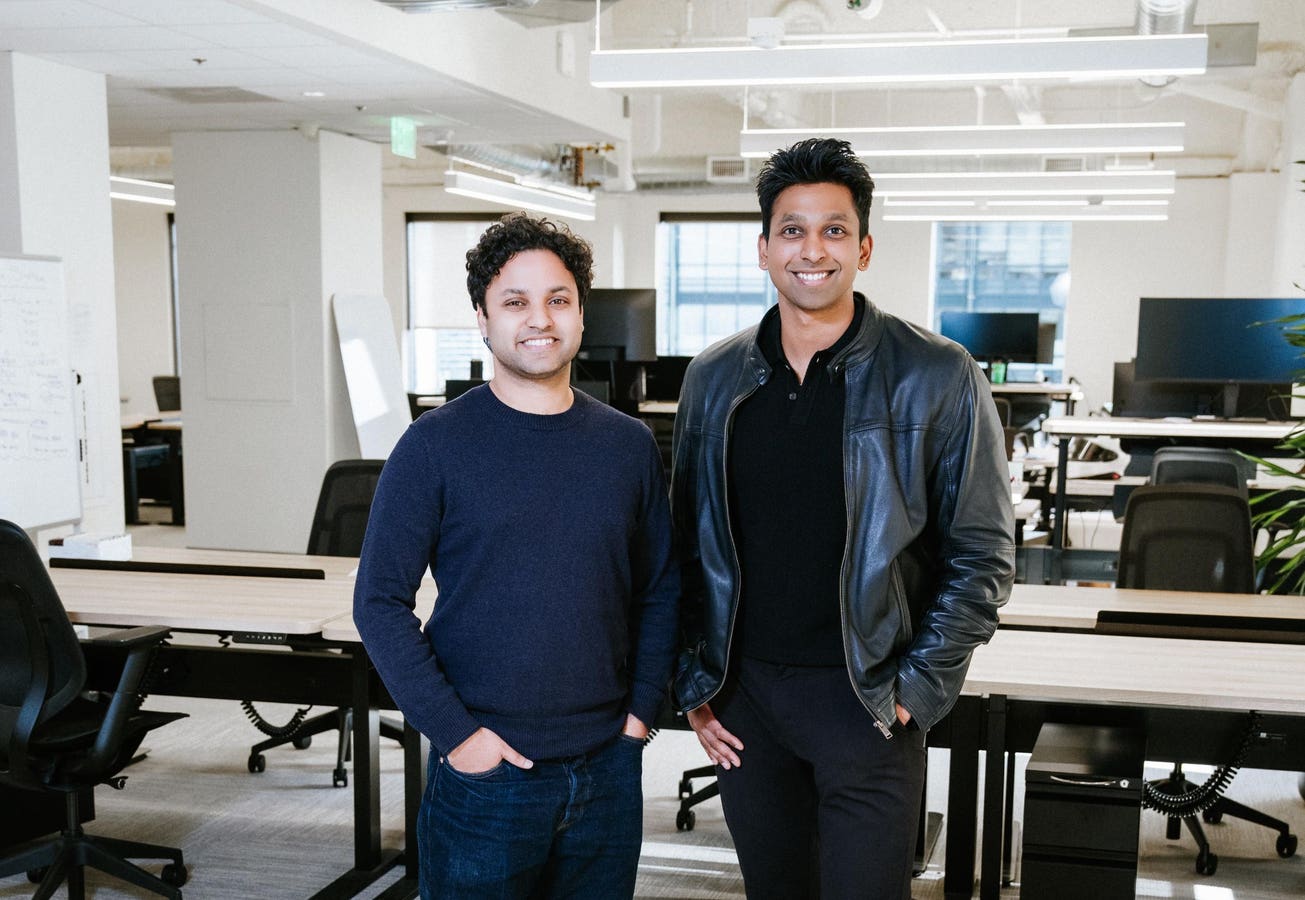
Latent is a San Francisco company founded in 2022 by Sriram Somasundaram and Rishabh Jain. It chose that work as its opening. The company built clinical AI software that reads patient records and payer policies, retrieves evidence, and helps pharmacy teams prepare an authorization. It now describes a larger enterprise pharmacy platform that can also help identify eligible patients, handle appeals, audit prescription capture and support people after treatment begins. The name is Latent; the subject is the decidedly visible labor between decision and medicine.
- Latent sells clinical AI software to US health systems and their pharmacy teams.
- It began with prior authorization, then expanded to appeals, infusion and wider pharmacy operations.
- Named customers report faster review and greater capacity with existing staff.
- The company raised an $80 million Series A in March 2026.
A queue is a business model waiting to happen
Prior authorization is an odd place to find a technology company. It has no glamour and very little affection. But it has something startups prize: a clear, repeated, costly task. A pharmacist or technician must establish that a prescribed therapy meets a payer's conditions. The evidence is often in the electronic health record, only scattered across notes, laboratory results and previous treatments. The rule is somewhere else. The form is somewhere else again.
Latent's software joins those pieces. Its platform says it reads the chart, claims, payer policies and drug labels, then prepares the next step: route a benefit, fill a form, submit an authorization or draft an appeal with citations. It works with major EHR systems including Epic and Cerner. A pharmacist remains involved when a decision needs clinical judgment, and the company says each output can be traced back to the chart. That last point matters. A fluent paragraph is cheap; an auditable claim about a patient is expensive.

The initial customer was the health system, not the person filling the prescription. That choice follows the evidence. Hospitals and their specialty pharmacies hold the medical record, employ the teams doing the administrative work, and bear the consequences when an approval stalls. Forbes reported more than $20 million in annualized revenue in March 2026; the company does not publish contract prices. This is enterprise software bought by organizations that need integration, security review and measurable operational results.
The minutes that moved
At Ochsner Health, the first job was prior authorization review. In a published customer study, Ochsner reported a four-to-five-minute total review time and 39% more authorizations completed per pharmacist each month. More than 20,000 specialty patients across its clinics were affected in 2024, according to that study. The partnership then extended to appeals and infusion workflows. It is a sensible sequence: the denied request is the next piece of work waiting behind the approved one.
Ochsner's pharmacist group later reviewed 91 appeals. Drafting an appeal manually had taken 30.6 minutes on average; with Latent it took 7.2. That is time recovered from a task that still requires professional review. MetroHealth reported a 45.1% increase in authorization submission capacity without additional headcount within 12 months of deployment, plus review time falling from roughly 25 minutes to five. St. Luke's Health System reported that average turnaround fell from seven days to three. These are customer-reported results from different workflows and periods, so they should be read as examples, not a universal performance guarantee.
There is an instructive limit in these numbers. Faster drafting is not the same as an insurer approving more requests, and a shorter review is not automatically a shorter path to treatment. Latent's strongest case is therefore built from several measures: time per task, team capacity, denial rates, and the patient's progress through the process. A hospital considering the product can copy that measurement habit before it copies any software purchase.
“Anything I do with AI, I’m not looking to replace FTEs. I’m looking to replace the openings we’ve had for three months that we cannot find.”
Ryan Mezinger / MetroHealth chief pharmacy officer, quoted by LatentFour verbs for one prescription
The company's broader pitch now has four parts: Identify, Access, Capture and Engage. Identify means finding patients who qualify for care. Access covers prior authorization, clinical review, appeals and payer contact. Capture means keeping eligible prescriptions within the health system's pharmacy while checking compliance and benefit routing. Engage means follow-up once a patient is on therapy, with a pharmacist stepping in when a concern needs expertise.
This expansion reveals the company's bet. A stand-alone form tool can speed up an authorization. A system that understands the chart and the payer rule might follow the same patient into an appeal, an infusion appointment, a financial assistance program or a call about staying on treatment. Ochsner and Latent say they co-developed infusion workflows. MetroHealth says its work widened from authorizations toward a medication access and affordability team. Latent is trying to turn a narrow administrative win into a durable place in the pharmacy stack.
The economic interest is plain too. When a hospital's pharmacy fills an eligible specialty prescription, it can retain revenue while continuing patient support. Latent's materials discuss prescription capture and compliance beside patient access. Those goals can align, but they need to be examined separately: speed for the patient, defensible claims for the system, and sound clinical choices for both. The product is most persuasive when a customer can measure each one.
What the new money is for
In March 2026, Latent announced an $80 million Series A co-led by Spark Capital and Transformation Capital, with Conviction, McKesson Ventures, General Catalyst and Y Combinator participating. Forbes reported a valuation of about $600 million, citing a person familiar with the deal. Latent said the funds would widen its health system footprint, connect more of the hospitals, payers, pharmacies and patients in the workflow, and invest in reliability and trust.
The scale claims are moving quickly. At the time of the round, Latent said it worked with more than 45 leading health systems and helped more than two million patients annually. Its current site says more than 60 health systems and over five million medication journeys each year. A medication journey is the company's own unit; it should not be casually substituted for a count of distinct people. Its named customer list includes Ochsner, MetroHealth, St. Luke's, Yale New Haven, Mount Sinai, UCSF and Henry Ford. That is enough deployment to make the next question sharper: can the same benefits hold across different records, payer rules and staffing arrangements?
What can another operator take from this? Start where the pain is frequent and measurable. Put the needed evidence beside the decision instead of asking a worker to hunt for it. Keep a human accountable where clinical judgment begins. Measure the before and after in minutes and days, then widen only when the next task uses the same evidence. Latent's route from an authorization queue to a pharmacy platform is a tidy business story because the work itself supplied the map.
The prescription was written at the beginning. The interesting question was always what happened next.
Keep reading
- Latent website and LinkedIn
- Platform overview and Series A announcement
- Ochsner, MetroHealth and St. Luke's customer stories
- Forbes interview with the founders