The useful thing about a boat is that it refuses to pretend the system is simple. Wind pushes one way, current another, and a small choice at the helm travels through the whole vessel. Long before Mel van Londen became a healthcare software founder, he worked as a sailing captain in Maryland. He held a U.S. Coast Guard 50-ton master captain's license. It is tempting to treat this as decorative biography, a salty detail for the first paragraph. But van Londen's later career keeps returning to the same practical obsession: how complicated systems move, where they stall, and what happens when one handoff is just slightly wrong.
At the University of Maryland, he pursued two bachelor's degrees at once, one in business management and another in neurobiology and physiology. The combination sounds like someone declining to choose between the organism and the organization. He also worked around care delivery, including an emergency-department throughput analyst role and a technical-assistant job in a family practice. The public record does not offer a cinematic conversion scene. It offers something more persuasive: a young builder repeatedly standing close to the place where information, operations, and care collide.
A recurring problem in different clothes
In March 2014, van Londen's team won the grand prize at the MIT Healthcare Hackathon with Dyml.io. The project aimed to make medication reconciliation available to patients on their phones. Four months later, another team he joined won the Small Biz Dev Hackathon with Escollate, a comparative-analytics and community-discussion product for small businesses. The subjects differed. The instinct did not: collect scattered information, structure it, and return it in a form that someone can use.
2008-13
2014-16
2016-17
2017-22
2022-now
His next apprenticeship was IDEO, where van Londen worked as a designer and developer. IDEO's particular contribution to the business vocabulary is the insistence that useful products begin with people, not with the glory of the technology. Van Londen brought code into that practice. A contemporary IDEO description called him the New York studio's “wildcard developer,” the colleague who recommended tools for building mobile apps and testing APIs. The title is revealing. He was neither presented as a pure engineer nor kept in a designer's lane.
After IDEO came Shyp, the venture-backed delivery startup, where he worked as a full-stack engineer. Then, in late 2017, he joined Canvas Medical. Canvas was building infrastructure for care delivery, the kind of product where a neat interface is only the visible corner of a much larger operational machine. Van Londen eventually became VP of Product and wrote publicly about how to decide what such a platform should become.
“Products have a fractal-like complexity.”Mel van Londen, writing at Canvas Medical
A fractal is an excellent image for enterprise software. Zoom into a problem and more problems appear, each with a family resemblance to the first. A prior authorization looks like a form until it becomes an eligibility check, a hunt through the clinical record, a choice among payer-specific questions, a submission, a status chase, and perhaps an appeal. Every tidy box on a process diagram conceals a cupboard full of smaller boxes.
The company inside the handoff
Van Londen and Benjamin Easton founded Develop Health in 2022. Easton became CTO; van Londen became CEO. Their chosen territory was the administrative middle between a clinician's decision and access to a medication. Develop Health verifies insurance coverage, prepares and submits prior-authorization material, follows the payer's response, and returns structured status information to the provider's system.
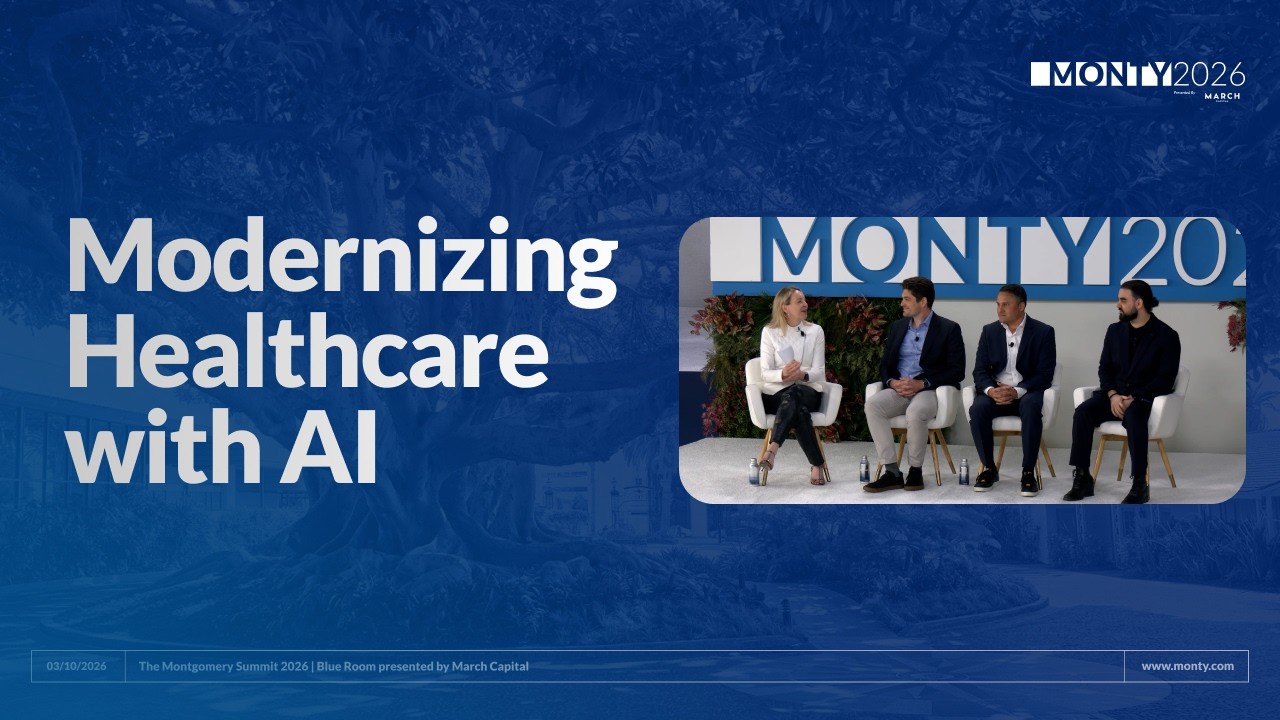
The idea is less about producing another place to click than removing clicks from places where people already work. On a 2026 Montgomery Summit panel, van Londen described the design philosophy as “fully subtractive.” The phrase is useful beyond healthcare. Enterprise software often arrives with homework: another login, another dashboard, another training session about the dashboard. Subtractive software earns its keep by making part of the old routine disappear.
workflow
handoffs
manual work
That restraint is difficult. Benefits verification and prior authorization span providers, payers, pharmacy-benefit managers, electronic records, and rules that differ by plan. Develop Health says it uses more than a dozen purpose-built language-model pipelines, each handling a defined part of that chain. The architecture suggests a mature view of AI: a collection of workers assigned to narrow responsibilities, not a single oracle asked to improvise the whole office.
The business gained financial room in August 2025, when Develop Health announced a $14.3 million Series A led by Wing Venture Capital, with Afore Capital, J Ventures, and South Park Commons participating. The company said the round brought total funding to $17.6 million and would support more integrations with electronic health records and pharmacy-benefit systems. Financing is not proof that a workflow has been solved. It is proof that the company has been given more runway to keep working on it.
The quiet advantage of mixed training
Founders are often flattened into a single type. The technical founder builds. The design founder empathizes. The operator executes. Van Londen's résumé is interesting because it has resisted the sorting hat. His public GitHub account contains dozens of repositories. His PyPI profile is attached to a collection of GraphQL-related packages. His Canvas essays discuss prioritization and collaboration. His IDEO years put human-centered design beside software development. At Develop Health, those modes have to coexist.
The engineer asks whether the integration works reliably. The designer asks whether a care team can live with it. The product operator asks which part to build first. The CEO asks whether the improvement is legible to a buyer with a crowded budget and a low tolerance for disruption. In a 2024 interview, van Londen emphasized that vendors need to simplify adoption and make the return clear. It is an unromantic point, therefore a valuable one. A product can be technically clever and still lose to the meeting required to approve it.
When selling software into an overloaded operation, count the steps removed before celebrating the features added. Adoption is partly a design problem and partly a subtraction problem.
His approach to product development also favors conversation over private certainty. At Canvas, van Londen announced a public product-collaboration portal and argued that transparency and customer feedback belonged inside product strategy. The point was not to outsource conviction to a suggestion box. It was to hold a clear market view alongside the evidence supplied by developers and care teams. In his phrasing, product strategy became the harness for complexity.
That posture offers a second practical lesson for founders. Openness is useful when it sharpens a decision, not when it delays one. A public roadmap can reveal which customer requests are isolated preferences and which point to missing infrastructure. It can also expose the cost of a choice: building one workflow means another waits. Van Londen's writing treated those trade-offs as material to be discussed, not stage machinery to be hidden. In markets crowded with confident promises, the willingness to show how priorities are formed can become part of the product relationship itself.
There are glimpses of that systems temperament outside work. In 2023, van Londen spoke at a Menlo Park City Council meeting in support of a bike-lane proposal. More recently, he described taking the Develop Health team to Thornewood Open Space Preserve for an offsite among redwoods, a creek, and a trail. Neither fact deserves grand interpretation. Together, they make the person behind the process diagrams a little easier to see: civic, outdoors, and apparently willing to make colleagues earn the view.
Keep asking why
In 2026, van Londen wrote that his children had reached the age when “why?” becomes the most common word in the house. He used their question to examine the waiting built into healthcare's administrative middle. Why should a person wait while systems reconcile an intent that has already been expressed? Why should trained staff spend an evening chasing a form? Why should new technology add another layer of procedure?
The questions are plain, which is their strength. The career behind them is not plain at all: captain, double major, hackathon winner, designer, engineer, product executive, founder. Yet each chapter added a way of looking at the same class of problem. Navigation taught attention to connected forces. Biology taught systems. Business taught incentives. IDEO taught observation. Shyp taught operations in motion. Canvas taught clinical infrastructure. Develop Health is where those lessons have been lashed together and pushed into the water.
“We are building the bridge between clinical intent and payer approval.”Mel van Londen
A bridge is less glamorous than either shore. It matters because people need to cross. Van Londen's bet is that AI can occupy this middle ground quietly, handling the repetitive negotiation between software systems while clinicians keep their attention on decisions that require judgment. At the Montgomery Summit, his view of the future was augmentation rather than replacement. The machine takes the administrative watch; the human keeps the helm.