The unglamorous war
There is a drug. It costs roughly seventy thousand dollars a year. The patient qualifies. The doctor agrees. And then nothing happens - for weeks - because a form sits in a queue.
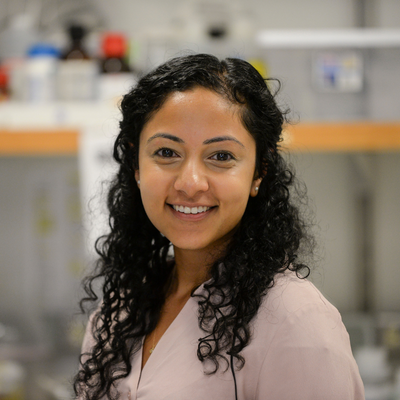
Eesha Sharma builds the thing that makes the form move. Her company, Lamar Health, points artificial intelligence at the least romantic corner of medicine: the prior authorizations, document reviews and insurance back-and-forth that stand between a patient and a specialty medication. Specialty pharmacies, infusion clinics and hospitals are the customers. The villain is paperwork. The stakes are measured in the days a person spends without treatment.
It is a strange place for a geneticist to end up. Sharma did not arrive here from an MBA spreadsheet. She arrived from a lab bench. A PhD in molecular genetics from the University of Toronto, then a postdoctoral fellowship at Stanford working on antisense oligonucleotides - the precise, gene-targeting molecules that represent some of the most advanced medicine being built today. She had contributed to AI work touching the optimization of the Pfizer COVID-19 vaccine and to modeling the energy of DNA hybridization. By every academic measure, she was on the inside track to a research career.
She walked away from it. Not because the science bored her - it clearly still doesn't - but because she had watched, up close, what happens after the science is done. The molecule can be brilliant and the patient can still wait. That gap is where Lamar Health lives.
The why came first
Sharma's why is not abstract. A member of her own family lived through the diagnostic odyssey that haunts rare and genetic disease - years of the wrong medications, real side effects, and the slow trial-and-error of ruling things out. "It took many years of slow trial and error to figure out which medications were not necessary," she has said. That sentence carries a lot of weight. It is the difference between a market opportunity and a personal grievance.
She talks with her sister every day. That ongoing conversation - part family, part motivation - is part of what keeps the company pointed in the right direction. When the work gets bureaucratic, which automating prior authorizations inevitably does, the why is a person, not a slide.
There is a tidy irony in the company's own description of itself. When Lamar Health went through Y Combinator's W21 batch, the blunt one-line summary of the business was, essentially, that it takes care of the shitty paperwork for expensive drugs. No euphemism, no jargon. For a founder with a doctorate and a publication record, choosing to be the person who handles the boring forms is its own kind of confidence. The hard problems are not always the prestigious ones.
What Lamar actually does
Specialty medications - the high-cost, high-complexity drugs for serious and rare conditions - sit on top of some of the worst data plumbing in American healthcare. The workflows around them were "built around poor data standards," as the company puts it, which is a polite way of describing fax machines, copy-paste, and humans re-keying the same patient information across incompatible systems. Every manual step is a chance for an error and a delay.
Lamar Health automates that chain: direct EHR connectivity, document and clinical review, patient eligibility verification, and prior-authorization management. The promise is simple to state and hard to deliver - cut the errors, cut the staff hours, and get patients on therapy fast. The team Sharma assembled to do it is unusual for a paperwork-automation startup: PhDs in genetics, medical geneticists, genetic counselors, and natural-language-processing specialists. People who understand both the biology of the drug and the grammar of the form.
In 2025, the approach got a public proof point: Lamar Health partnered with Uptiv Health to bring its AI automation to infusion care, the in-clinic delivery of exactly the kind of complex, expensive medications Sharma set out to unblock. It is the same thesis, applied where the needle meets the arm.
From sequencing to scaling
It is worth lingering on how far Sharma travelled to get here. She enrolled at the University of Toronto in 2008 for a Bachelor of Science in molecular biology, finished in 2012, and stayed for a doctorate in molecular genetics, earned in 2019. Her toolkit was deep next-generation sequencing, high-throughput assays, and genomics data visualization - she even guest-lectured on the last of those. Then came Stanford, and three years inside the kind of frontier research that makes headlines.
The leap from there to a startup is not as wide as it looks. Both jobs are about turning enormous, messy datasets into a decision a human can act on. In the lab, that decision might be which variant matters. At Lamar Health, it is whether this patient, on this plan, qualifies for this drug today. Sharma simply changed which dataset she was wrangling - and chose the one where the answer changes someone's week.
Her ambitions still reach back toward the bench. She has spoken about wanting, eventually, to develop rare-disease therapeutics using antisense oligonucleotides - the very molecules she studied at Stanford. The paperwork company and the drug-development dream are two ends of the same conviction: that the distance between a sick person and the right medicine is too long, and that it can be shortened from both directions at once.