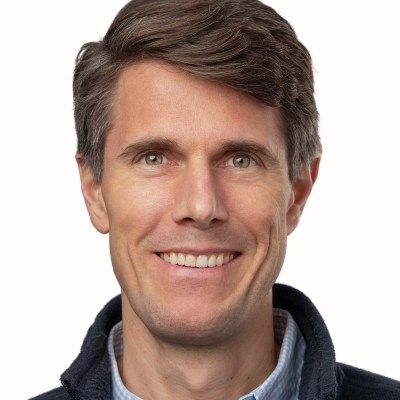
The Story
The founder who decided the scariest part of healthcare was the bill
Walk into Cedar's world and the pitch is unglamorous on purpose. Florian Otto does not talk about curing disease or building the next diagnostic breakthrough. He talks about the piece of paper that arrives weeks after a hospital visit, written in codes, with no clear instruction on how to pay it. That document, in his telling, is where American healthcare quietly loses the trust of the people it just treated.
Cedar, the New York company Otto co-founded in 2016 and still leads as CEO, exists to fix that document and everything around it. It sits between hospitals and patients, reworking the billing and payment experience so that what a person owes - and why - is legible, personalized, and payable without a phone tree. The company works with health systems across the United States and has raised more than $400M in venture capital, reaching a reported $3.2 billion valuation at its 2021 Series D. But Otto tends to circle back to the smaller unit of measure: whether a single patient could look at their bill and understand it.
How can we bring the consumer experience that people expect from Amazon, Netflix, or Expedia to the healthcare world?
- Florian Otto, on Cedar's founding question
The bill that started it
The origin story is specific. Otto's fiancee fainted and went to an emergency room. A month later a bill arrived - coded, opaque, with no obvious way to pay. Otto, a trained doctor who had spent years around the healthcare system, could not easily make sense of it either. That gap between the sophistication of modern medicine and the crudeness of its paperwork became the itch he could not stop scratching. He chose the name Cedar partly for its associations with healing and calm, and partly because it was short and easy to market.
What makes the choice interesting is that Otto did not arrive at billing from finance. He arrived from medicine, then from consumer software, and decided the two worlds should not be as far apart as they are. His recurring provocation to hospital executives is a comparison they rarely enjoy hearing.
Why should companies like Nordstrom, Nike, and Best Buy have a better ability to leverage data and cater to consumers' preferences than a medical practice or health system?
- Florian Otto
Four careers, one throughline
Otto's resume reads like four different people. He earned an M.D., a D.D.S., and a Ph.D., all from the University of Freiburg in Germany, and began his business life as a strategy consultant in McKinsey & Company's healthcare practice. Then he left the safe path entirely. He founded ClubeUrbano, a daily-deals company in Brazil, which Groupon acquired. He became CEO of Groupon Brazil and grew it into one of Groupon's top three international markets - a crash course in consumer behavior, marketing, and scale in a demanding environment.
In 2012 he moved to New York and joined ZocDoc as VP of Sales, driving commercial adoption of the healthcare-scheduling platform through 2015. That role put him back inside healthcare, this time on the software side, watching how patients actually interact with the system. When he left to start Cedar the following year, the throughline finally snapped into focus: everything he had done - medicine, consulting, consumer marketplaces, health tech sales - pointed at the same neglected problem. The consumer experience of paying for care.
How he decides what to build
Colleagues describe a founder who is disciplined about focus rather than dazzled by possibility. Before Cedar takes on a new project, Otto applies a deliberately blunt filter - two questions he asks in the room: "Does this solve the problem? Is this grounded in Cedar's mission?" It is a way of keeping a well-funded company from chasing shiny objects, and it reflects a temperament shaped equally by the rigor of medical training and the pattern-matching of a consultant.
His view of risk is similarly plain. Leaving clinical medicine, moving countries, betting a career on the least glamorous corner of healthcare - none of it looks cautious. Otto reframes that. The status quo, he argues, is the dangerous option.
The bigger risk is doing nothing.
- Florian Otto
Where it's going
Cedar was not immune to the market correction that hit health tech - like many late-stage startups it trimmed staff as funding conditions tightened. But Otto's thesis has not moved. As patients shoulder a larger and more consequential share of healthcare payments, he argues, billing has to adapt to each person in real time rather than treating everyone as an identical account number. More recently that has meant leaning into artificial intelligence and real-time personalization, applying data to tailor how and when a patient is asked to pay. The framing stays consumer-first: keep care affordable for patients, keep providers financially sustainable, and stop treating the bill as an afterthought.
Otto rarely claims the problem is solved. A decade in, Cedar is less a finished product than a long argument - that the confusing medical bill is a design failure, not a law of nature, and that fixing it is worth a career. For a man who could have stayed a doctor, that argument has been reason enough.