A high street is an unusual thing to put inside an office. It suggests that people might have somewhere to go besides their desks. When Claire Cockerton helped create Plexal in London’s former Olympic press centre, the plan included precisely that: a central street, places to gather and quieter spaces to work. The founder had studied architecture. Her idea of a startup hub came with a little town planning.
By the time Plexal opened in 2017, Cockerton had already built a business in Canada, completed an MBA in London, helped establish an entrepreneurship centre in Johannesburg and become involved in the institutions gathering around British fintech. The apparently miscellaneous career makes more sense if you follow the buildings. Again and again, she has worked on what happens when people with an idea need somewhere, and someone, to help them begin.
There is a pleasingly practical streak to this work. Innovation may be the word on the invitation, but someone must arrange the introductions, devise the programme and decide where the accountant goes. Cockerton’s career has made room for those tasks. A bright idea still has to negotiate ordinary life.
The business before the business school
Before the Olympic Park, there was Toronto. Cockerton studied architecture at the University of Toronto and started a sustainable design business while she was a student. Aesthetic Earthworks became her first extended education in running a company. She grew it over seven years and sold it to a competitor in 2009, before moving to Britain.
Her explanation for the entrepreneurial impulse reaches further back, into the Canadian countryside. She remembers her mother sending her outdoors for six hours with the instruction, “Go have fun in the wilderness!” Cockerton has connected that childhood freedom with independence and imagination. It is an appealing origin for someone whose later work involves arranging environments where other people can find their way.
London offered a new course of study. At Imperial College, where she took her MBA in 2009-10, Cockerton concentrated on innovation, entrepreneurship and design. The title of her dissertation was unusually specific about its destination: The Promise of Business Incubation in South Africa: How the Branson Centre of Entrepreneurship Can Drive the Mission. It received a distinction. The problem on the page was already pointing towards work beyond the campus.
She helped establish the business model for Virgin’s Branson Centre for Entrepreneurship in Johannesburg, then worked with Guardian Media Group on its Digital First transformation. These were different organisations facing different questions. Together they put business support and institutional change into the same developing career. Cockerton was learning about the conditions around an enterprise as well as the enterprise itself.
- 2009Toronto business sold;
London MBA begins - 2014Innovate Finance
launches - 2017Plexal opens
at Here East - 2021BUILD Your Future
in Leeds
A seat at the fintech table
At Canary Wharf, that interest acquired a particularly useful address. Cockerton set the strategy and co-led the implementation of Level39, the accelerator focused on financial, retail and smart-city technologies. She also founded ENTIQ, whose work included innovation programmes and the Cognicity smart-city initiative. The location put young technology businesses close to an established financial district. Geography had a business purpose.
Innovate Finance followed. Launched in August 2014, with backing from the City of London and Canary Wharf Group, the organisation gave the developing fintech sector a collective voice. Cockerton was its founding CEO. Her responsibilities included speaking for an industry whose members were trying to change financial services while finding a workable relationship with the institutions already there.
The creation of a trade body involves a less photogenic sort of entrepreneurship: governance, membership, programming and a team. There are no shortcuts around those nouns. Cockerton’s work brought founders and established firms into shared discussions about the environment in which their businesses operated. It extended her interest in support from an individual company to a whole sector.
The geographical question soon travelled north. In a February 2015 speech, Chancellor George Osborne said he had asked Cockerton to examine fintech opportunities across Yorkshire and the case for an incubator in Leeds. The request places her in a particular moment of British technology policy, when the conversation about new businesses was also a conversation about which cities would benefit.
A little city, with professional services
Plexal gave the architect in her a larger canvas. At Here East, the redevelopment of the London 2012 press and broadcast facilities, the centre occupied 68,000 square feet. Cockerton founded it alongside clients of the real estate investment advisory firm Delancey. Its public opening came during London Tech Week in June 2017, with Mayor Sadiq Khan doing the honours.
The ambitions were visible in the layout. The central street, civic areas and private spaces borrowed from urban planning. A preview of the project described a miniature city, complete with access to lawyers, accountants, recruitment and public relations support. A founder could need all four in an unremarkable week. The design acknowledged that a business spends much of its life doing things that never appear in its product demonstration.
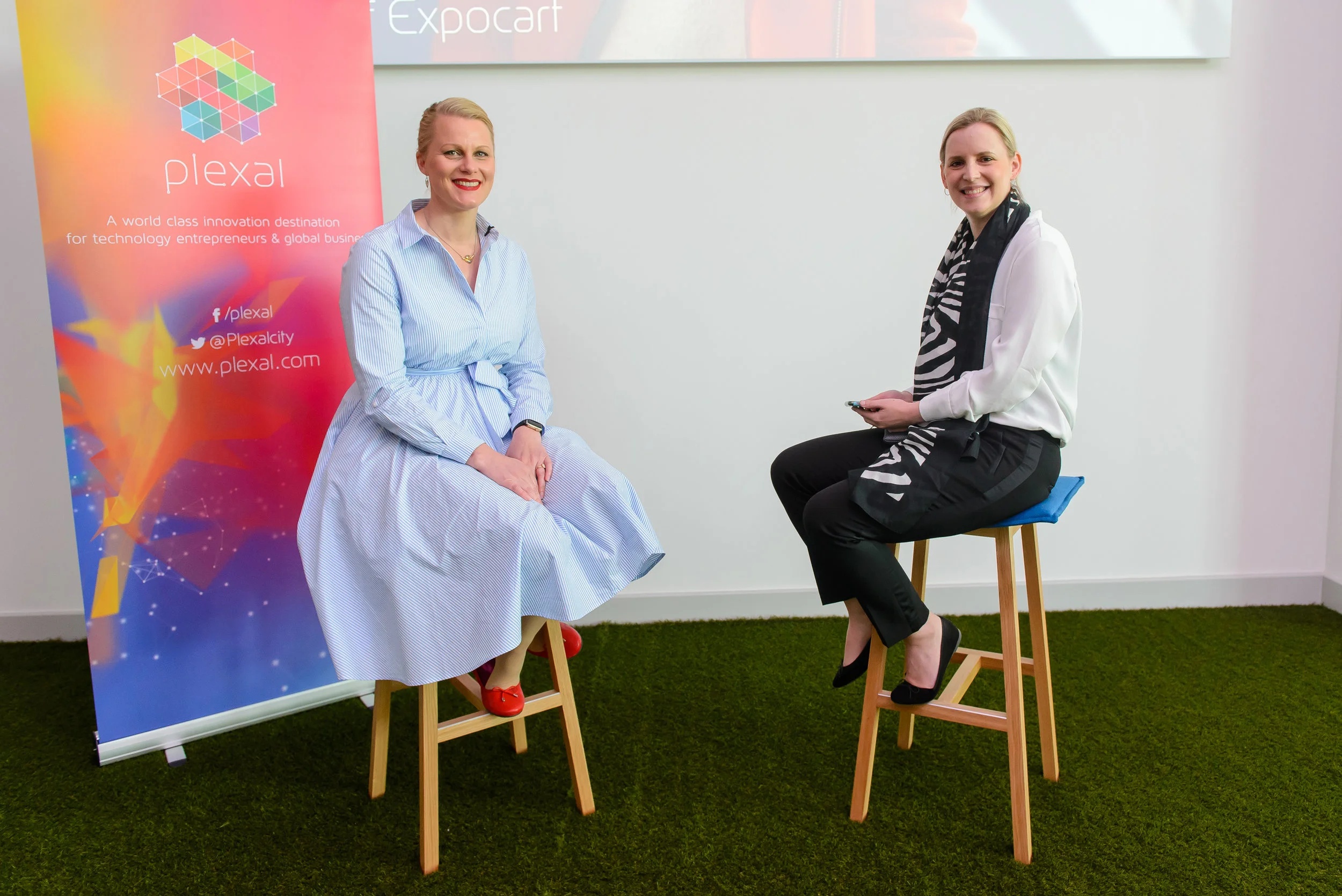
The opening specifications allowed for 800 members. Those numbers described the intended space and capacity at launch, rather than a tally of companies Cockerton had personally made successful. The distinction matters. Her job was to assemble an environment and the services around it; the businesses moving in still had their own work to do.
Ford’s announcement that it would establish a Smart Mobility Innovation Office at Here East provided a concrete example of the wider campus’s appeal. An established manufacturer wanted to work near digital businesses, researchers and potential collaborators. Plexal’s surroundings formed part of the proposition. The neighbour with a different problem could be as interesting as the neighbour working on the same one.
“where people join forces, ideas spark and new business is born”
Claire Cockerton on Plexal’s mission, 2017
The same attention appears in her reflections on leadership. Discussing ENTIQ, Cockerton has described the difficulty of growing a lean business without the resources to hire all the senior talent it needed. She has also emphasised the importance of understanding the culture a leader creates. That adds a useful complication to the polished picture of the innovation hub. Buildings have opening dates; teams develop through a succession of decisions about people, money and responsibility. The founder who can articulate a plan still has to learn how to work with others to carry it out.
Who gets through the door?
For Cockerton, the usefulness of a community also depends on who can participate. Plexiglass, launched at Plexal in 2018, offered ten women-led technology startups an eight-week programme. Workspace, mentoring, professional services and access to the Here East community were part of the offer. A pitch event brought prospective investors and large businesses into the picture.
The format put some substance behind an invitation. Founders were being offered help with the mechanics of growing a company and opportunities to meet people who might become customers or supporters. The programme treated connections as something to organise deliberately. Access was part of the work of operating the building.
Cockerton’s advice to women entrepreneurs has a lighter touch than the usual catalogue of heroic imperatives. She has urged them to “keep focused and keep going!” and suggested carrying a stock of tactics and comic responses to undermining criticism. Humour gets a job alongside persistence. It is sensible equipment for a career in which other people are rarely short of opinions.
Her thinking about workplaces extends to their assumptions. In a 2021 conversation about office design, she challenged how little was understood about women’s preferences for working, socialising and presenting. Once you begin asking who a space was designed around, the apparently neutral office becomes a collection of choices. Furniture and floor plans carry somebody’s expectations.
The next room
In July 2018, Cockerton’s departure as Plexal CEO was announced. She said she wanted to pursue ventures supporting women leaders in technology and international innovation projects. The centre had reached 65 per cent capacity, according to the announcement. She had helped bring it through its opening chapter and was turning towards another set of projects.
The work continued through Cockerton & Co. Her firm describes a practice that combines business modelling, architectural design, operational setup and programme delivery. The combination explains why a tidy occupational label is difficult. She works across the physical place, the business behind it and the activities that give people a reason to use it.
One later example operates on an altogether smaller scale than the Olympic Park. BUILD Your Future brought eleven young people, aged 16 to 22, to Nexus at the University of Leeds for five days in 2021. Cockerton and Perdie Alder produced and delivered workshop content. Participants explored design and business development around problems they wanted to tackle, including food waste and poverty.
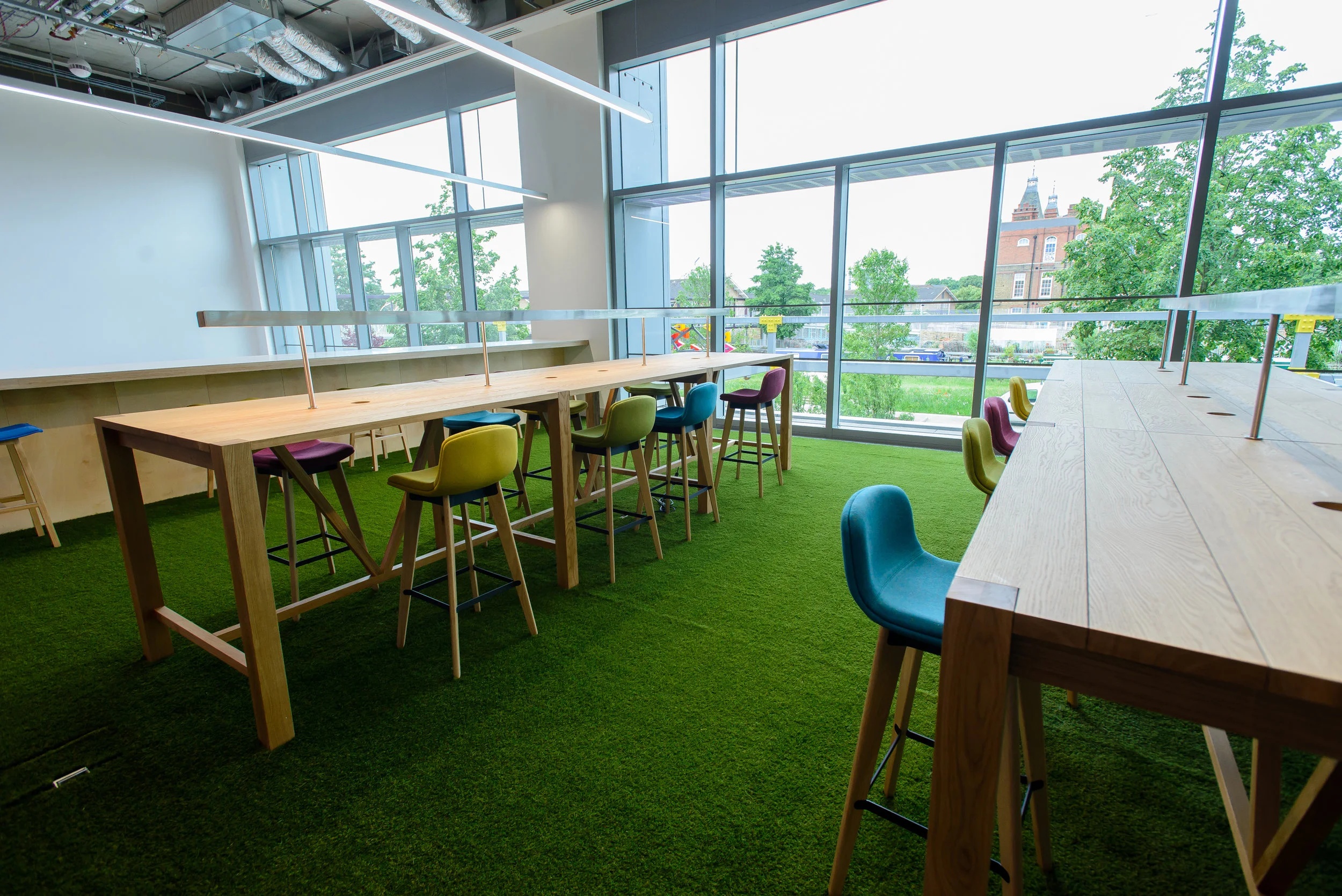
That is a useful scene to set beside the expansive startup campus. Before a young person needs an office, they may need an opportunity to test whether an idea deserves further attention. A short programme can provide a first encounter with business thinking. The room matters because of what its occupants can try there.
By 2025, Cockerton was listed as managing director of Cockerton & Co in the Ecosystem Exchange programme and on Computer Weekly’s women-in-tech longlist. The career that began with a student business had become a continuing investigation into places and participation. Her public biography still lists gardening among her interests. After the high streets, accelerators and classrooms, there remains that familiar occupation: making a place, attending to its conditions and seeing what grows.