A climate invention has reached the awkward age. It works well enough to demonstrate. Someone wants to buy it. Now the founder must find a manufacturer willing to produce it, with drawings detailed enough to quote, money enough to pay and a timetable that survives contact with a supplier. The applause has ended. The purchase order remains unsigned.
- SecondMuse connects entrepreneurs with the institutions around them.
- Its work spans climate hardware, youth mental well-being and circular economies.
- The practical lesson: improve the route to adoption alongside the invention.
This is the territory occupied by SecondMuse, a global innovation firm co-founded by Todd Khozein and Chad Badiyan. Its business includes consulting, running entrepreneur programs and designing finance. The recurring question is wonderfully inconvenient: what else has to work before this good idea can become useful?
The factory comes before the applause
Consider Scale For ClimateTech, operated with NextCorps and funded by the New York State Energy Research and Development Authority. Its subject is the journey from climate hardware prototype to production. NYSERDA describes support that includes early adopters, team growth and supply-chain relationships. These are the chores that determine whether something ships.
The program works on design for manufacturing, prototype refinement, supplier agreements and logistics. A drawing that delights an investor may leave a manufacturer with unanswered questions about tolerances, materials or cost. SecondMuse’s role here is to bring technical advice and manufacturing connections into the same process, before uncertainty becomes an expensive order.
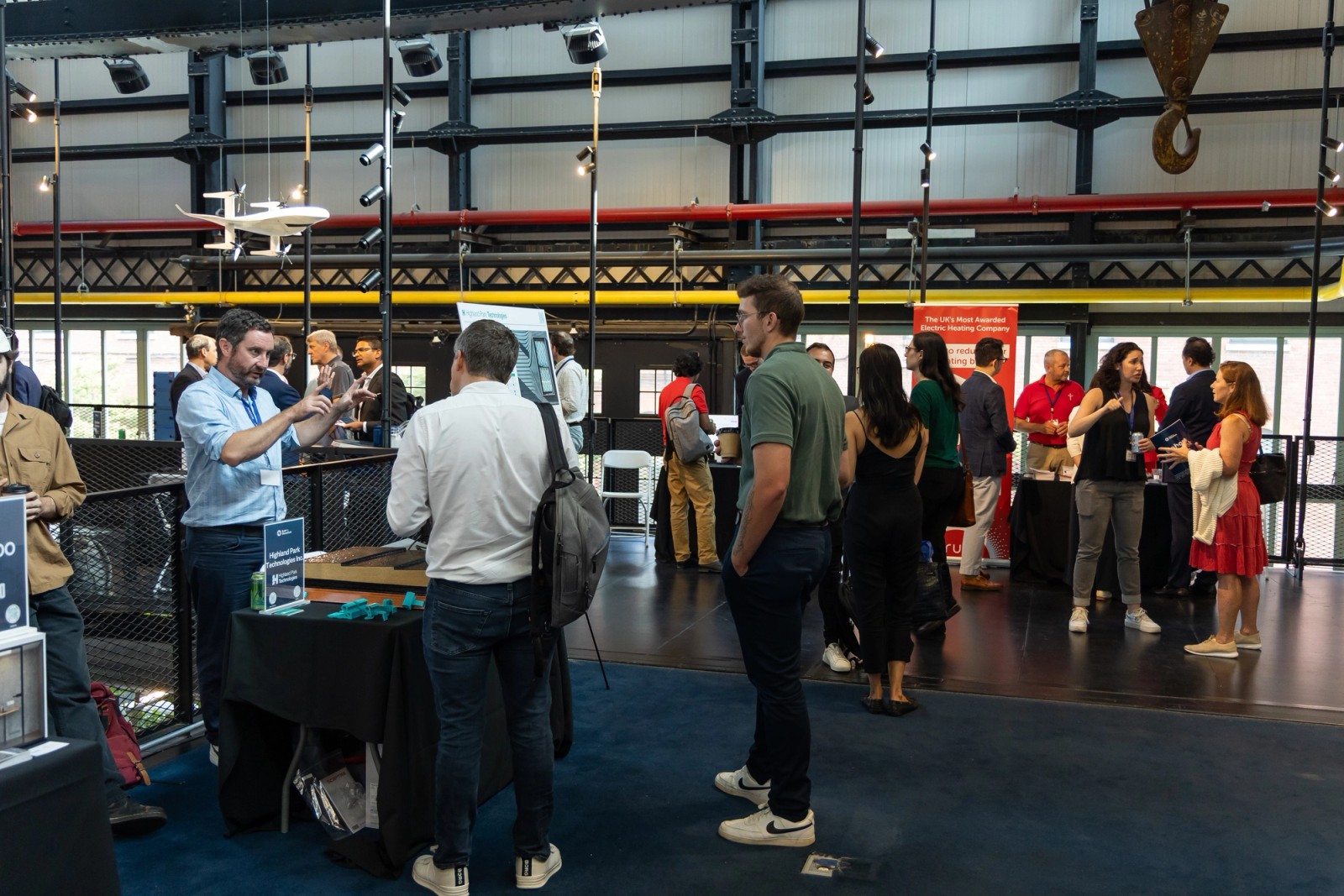
There are entry conditions. NYSERDA’s 2025 overview calls for a hardware prototype, customer commitment, manufacturing readiness and a year of funding for manufacturing activities. Participants must demonstrate a benefit to New York, although they need not manufacture there. This is practical help for a business preparing to build, rather than a place to arrive with only an attractive idea.
The cheque has a name on it
What does that assistance cost? The Scale program says founders pay no participation fee and surrender no equity. Its 2023 impact report records $12 million in NYSERDA funding awarded to SecondMuse and NextCorps. Public support pays for a shared capability that individual young companies might struggle to assemble themselves.
The same report counted 268 manufacturing agreements and 27,062 cleantech products manufactured among participants. Those measures describe work crossing into production. They do not establish that every product succeeded, or that all resulting investment can be credited to one program. They do, however, make the conversation more interesting than another photograph of founders holding oversized certificates.
SecondMuse’s own current homepage reports more than 2,400 ventures supported across activity spanning 192 countries and territories. Treat those as company-reported reach figures. A global network provides access; the hard question is whether a particular founder receives the right connection at the right moment.
The customer needs help, too
Headstream applies a related logic to youth mental well-being. Its 2024 accelerator announcement described a four-month program supported by Pivotal Ventures, with $30,000 stipends and access to a network of more than 500 potential investors and customers. Money buys time. Introductions may give that time a purpose.
The more revealing detail is on the other side of the transaction. In its July 2026 retrospective, Headstream describes work with health and education systems, including a technology navigator developed with The Jed Foundation and the Meadows Mental Health Policy Institute. Schools need help evaluating a crowded field of products. A startup cannot sell its way around a buyer who lacks a reliable way to choose.
The retrospective also recounts Backpack Healthcare nearing the end of its cash before catalytic support from Headstream and Hopelab helped it continue. This is a reported participant experience, not evidence of SecondMuse’s first failure. It identifies an immediate weakness in the surrounding market: a business serving overlooked families can run out of money before its opportunity becomes legible to investors.
“Economics is relational, not transactional.”Todd Khozein, SecondMuse
Young people belong in this machinery. SecondMuse’s Youth Co-Creation Framework makes them participants in decisions about services meant for them. Clear30, announcing its accelerator acceptance in August 2026, singled out direct youth testing and feedback as its reason for applying. The intended customer gets a voice before the product becomes too precious to change.
Plastic meets its local economics
In Thailand, the work becomes stubbornly physical again. ECCA Family Foundation describes a completed partnership running from January 2021 to March 2024: recycling academies, support for small businesses, a plastics accelerator and a challenge for alternatives to single-use packaging. The foundation portfolio included refill vending machines and seaweed-based materials.
SecondMuse Foundation’s 2024 report identifies a $1.5 million ECCA grant supporting that effort. Keep the entities straight: the foundation grant financed program work; it was not a venture round raised by SecondMuse LLC. The distinction matters whenever an impact story begins collecting impressive dollar signs.
The Thailand final report describes an early-stage funding gap, with some ventures stagnating after completing incubators. Its lesson is uncomfortable for anyone selling entrepreneurship as a curriculum: founders can learn everything offered and still lack the money needed for their next step.
Who pays to connect the pieces?
SecondMuse sells research, strategy, design and implementation to institutional clients. Its consulting page names NASA, Google, UNDP and The Rockefeller Foundation among more than 600 clients. It occupies a space shared with innovation consultancies, accelerator operators and economic-development organizations. Its stated distinction is staying through implementation while building relationships around the work.
Repeated financing gaps prompted another move. SecondMuse says it created its capital practice after observing that available financial products did not meet entrepreneurs’ needs. Since 2020, that practice has designed and deployed financial solutions. Its proposed $50 million facility with UNDP Zambia illustrates the ambition, but a designed vehicle still needs capital before it can finance anything.
The approach requires willing partners, patient funding and somebody able to act on the findings. Oregon’s 2026 climate ecosystem roadmap explicitly identifies coordination as the problem. City leaders can also use SecondMuse’s AI Economy Playbook to connect policy, investment and workforce decisions. The copyable habit is simple: before organizing another innovation contest, map who makes, buys, funds and uses the result. Then ask which relationship is missing.