The first thing SHONA teaches a founder may be how to build a three-year financial model. The more important lesson is that the model has to survive an ordinary Tuesday: salaries due, stock delayed, a distributor asking for better terms, and a promising customer paying 45 days late. From its base in Kampala, SHONA has spent more than a decade working on that unglamorous distance between an entrepreneur's ambition and a company that can reliably deliver.
The organisation calls the destination a “Good Business.” It does not mean a charity wearing a blazer. SHONA's definition begins with viability, then widens the ledger. A good company should create value for owners and customers, but also employees, suppliers, distributors, the environment, and the community around it. Seven constituencies, one set of accounts. It is a demanding brief in any market, especially for a small firm juggling thin working capital and uneven infrastructure.
Founded in 2013 by Joachim Ewechu and Ivan Mandela, SHONA sits somewhere between an accelerator, a management consultancy, a network, and an impact lender. Founders come for training, strategy, financial systems, investment preparation, and introductions. Development agencies, foundations, companies, and NGOs come to SHONA when they want a locally rooted partner to design and run an enterprise program. SHONA Capital supplies flexible debt. Sector initiatives concentrate the machinery on agroecology, circular food systems, and women-driven businesses.
Its product is the Monday after bootcamp
Plenty of accelerators can fill a room, distribute workbooks, and end with photographs. SHONA's useful distinction is what comes next. Its entrepreneur offer includes a one-to-three-year growth plan, a financial plan, systems for tracking performance, help with investment documents, and a named person who can challenge the founder as results come in. A network of more than 200 experts adds sector or functional knowledge. SHONA Circle supplies a curated peer group for leaders who need someone who understands why a good month can still feel precarious.
The menu is practical: annual planning, market research, business-model design, unit economics, budgets, forecasts, cash management, due diligence, negotiation, and external-CFO support. A founder can join a subsidised cohort, hire SHONA for direct consulting, seek financing from SHONA Capital, or enter through a sector-specific program. Partners can commission program design or use SHONA as the local implementation layer. The business model is correspondingly hybrid - service fees, partner-funded initiatives, and returns from lending.
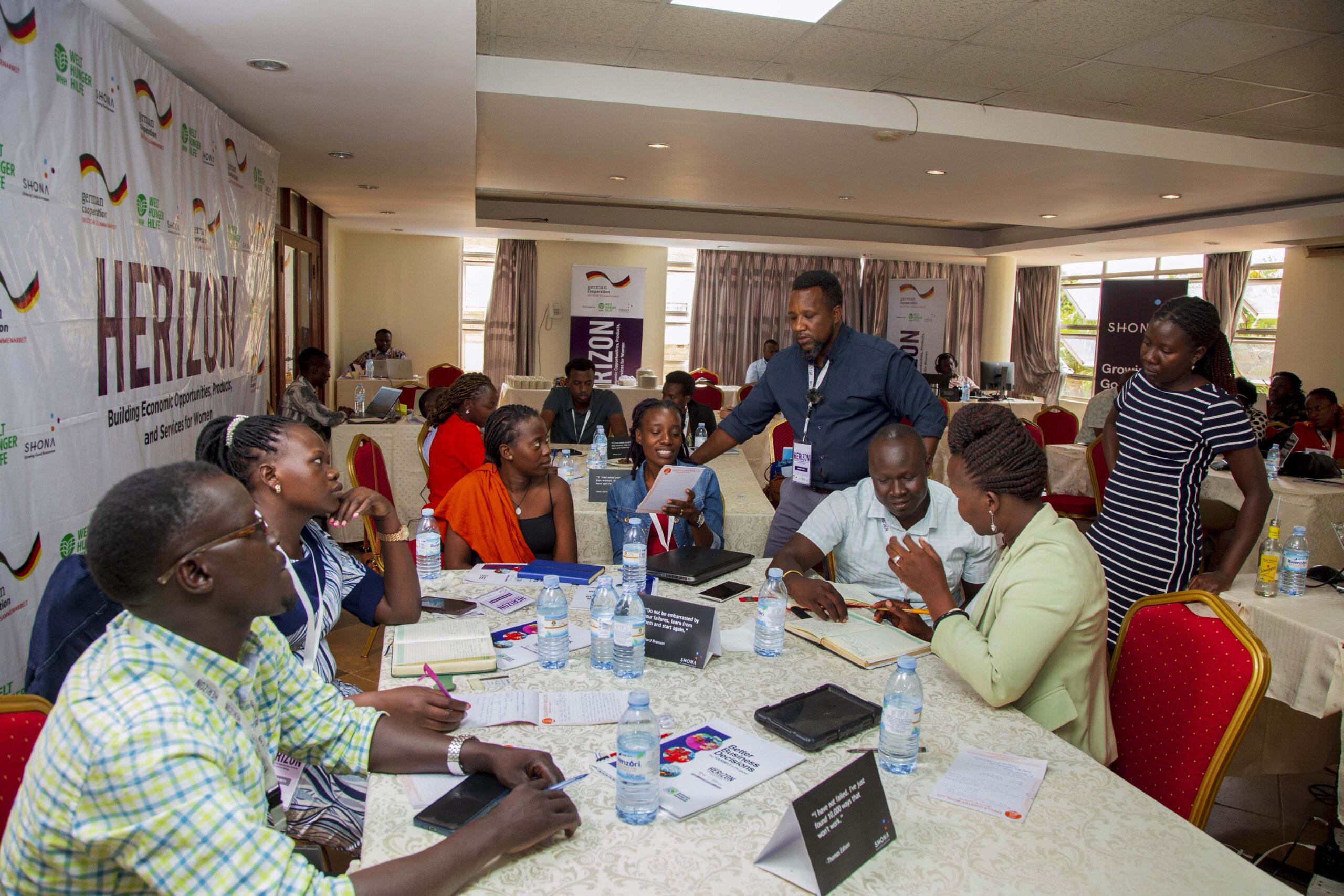
The customer is not the raw idea. SHONA's public program criteria usually ask for a registered business, evidence of traction, a small team, and enough records to diagnose. Herizon, its women-focused program with Welthungerhilfe and German government funding, set a two-year operating threshold, at least three full-time staff, minimum annual revenue, and more than 200 suppliers, users, and customers. Its definition of “women-driven” also looks beyond the cap table to management, suppliers, and customers. That is harder to game with a single female figurehead.
The first thing to fail was the funnel
A 2019 independent evaluation makes SHONA more interesting because it recorded the awkward bits. The flagship Growth Program asked entrepreneurs to pay a small upfront fee, commit to a future time-capped share of revenue and fundraising, and spend substantial time away from the business. The two residential bootcamps lasted 17 days and seven days. Participants valued the intensity and peer bonds. But SHONA struggled to fill cohorts with the right businesses. Price, the future payment, and time away all narrowed the funnel.
The evaluation also found fuzzy expectations between coaches and entrepreneurs, a need to develop whole management teams rather than only founders, and weak quantitative evidence from the 2017 and 2018 cohorts. Expansion across Uganda, Kenya, Tanzania, and Rwanda stretched a Kampala-centred organisation. The recommendation was blunt: double down on Uganda and Kenya, let the other markets grow through partnerships, sharpen recruitment, and make coaching work like a well-oiled machine.
That is the first copyable lesson. Program design is not a curriculum problem until it is a selection problem. SHONA gradually shifted away from very early, high-growth social ventures, often led by foreign founders, toward local firms with revenue, operating history, and a team. The polished application became less important than evidence that there was a real organisation capable of using the help.
Then the capital arrived in the wrong order
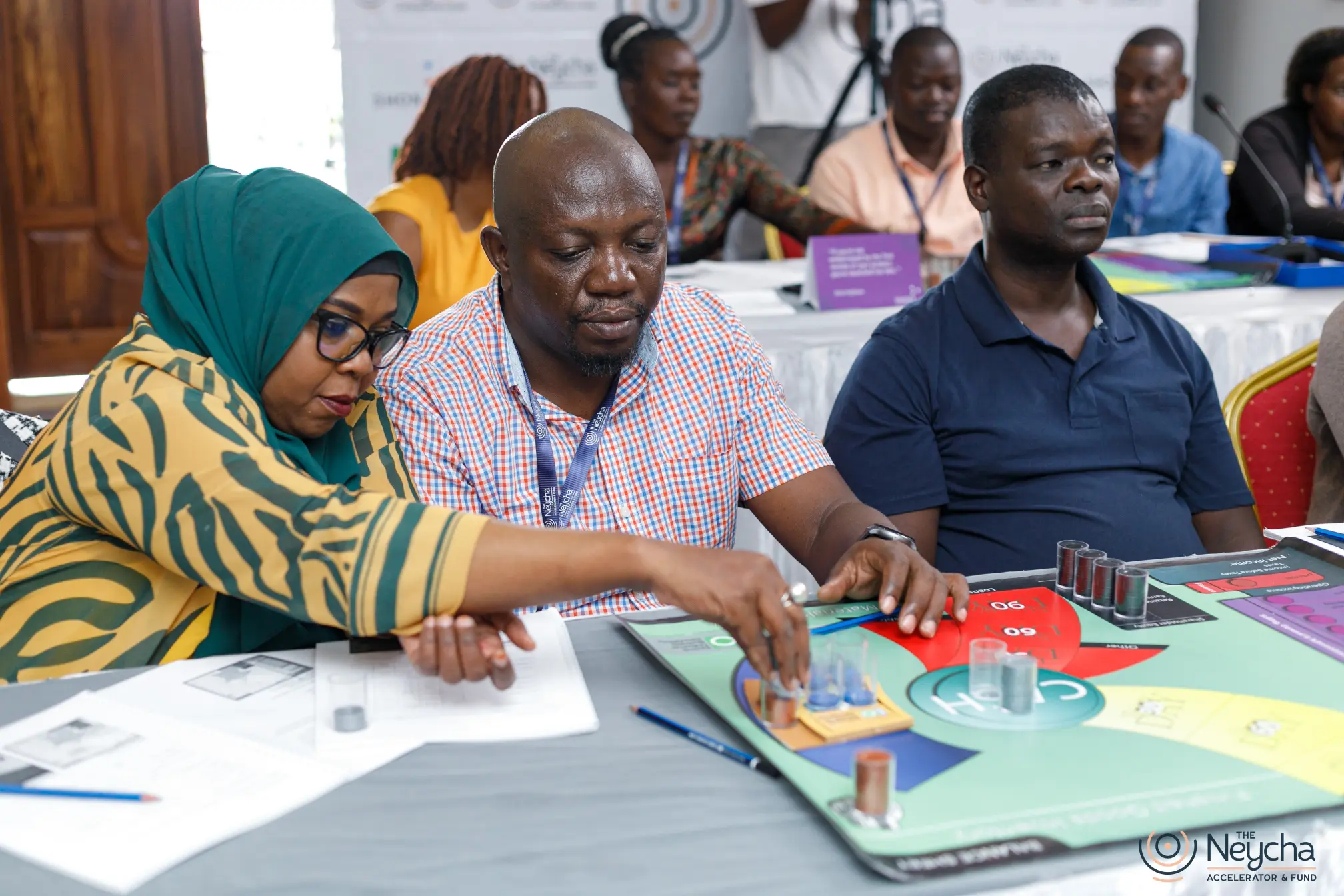
Neycha, launched with Biovision in 2023, gives the experiment a sharper edge. The accelerator supports agroecological enterprises in Uganda and Kenya - businesses across inputs, production, processing, waste, and distribution that can improve soils, biodiversity, farmer livelihoods, and food security. Conventional finance often fits them badly. Tickets may start below institutional investors' minimums; collateral demands are high; loan periods are short; and a lender accustomed to one commodity can miss the logic of a diverse, circular operation.
Neycha responds with capacity, capital, and connections. Its revolving fund offers loans typically between $10,000 and $50,000 for working capital and assets, alongside practical training, technical assistance, mentorship, peer groups, and introductions. Biovision contributes agroecology knowledge and much of the capacity-building funding. SHONA manages the accelerator, while SHONA Capital manages investments.
The first cohort exposed the next constraint. Twelve businesses sought loans. Five approvals, worth $137,000, came through; seven applications were deferred while the companies fixed technical gaps. The founders did not merely lack money. They lacked the organisational systems required to take it responsibly. SHONA and its partners had underestimated how many problems these firms were solving at once.
Deferred meant more technical work was required before a loan could proceed, not an automatic rejection.
The result changed the sequence. For cohort two, the application process became shorter, selection more hands-on, and online preparation joined business acumen to agroecological models. Most tellingly, loan appraisal could start before the accelerator. Nine of the 20 selected firms entered appraisal ahead of the full program. For seasonal businesses, timing is not a courtesy. Working capital that arrives after planting, harvest, or a purchase order can be useless capital.
Where the model travels - and where it stalls
SHONA now applies the same operating logic to different markets. Herizon plans to support 40 women-driven businesses in Uganda and Kenya. After its bootcamps, each company gets a senior analyst, peer coaching, help refining its growth plan, investor connections, and an approximately $500 budget controlled by SHONA for targeted technical expertise. The AfriFOODlinks work in Mbale places enterprise support inside a city system: biodegradable market waste becomes organic manure, vendors receive food-safety coaching, and schools build gardens and nutrition clubs.
This is where SHONA differs from a general accelerator. GrowthAfrica, E4Impact, Village Capital, O-Farms, local consultancies, impact funds, and banks can each offer pieces of the puzzle. SHONA's position is the bundle and the local continuity: business diagnosis, operating help, sector expertise, peer trust, and appropriately sized debt. Its Kampala roots matter because introductions and judgment are hard to import. Its own history suggests those advantages weaken when the work spreads too far from a physical team.
The model also has conditions. A founder must be ready to disclose records, accept unromantic feedback, and change internal habits. The company needs enough traction for planning and debt to make sense, but enough headroom for support to matter. Long programs become expensive when the founder cannot leave the shop floor. Loans cannot rescue a broken unit model. Subsidised cohorts depend on partners whose goals and timelines may shift. And a seven-stakeholder philosophy becomes mush unless it is translated into wages, supplier terms, customer retention, cash flow, ecological practice, and other measures someone reviews.
The part worth stealing
- Select for operating evidence, not presentation fluency.
- Diagnose the business before assigning a coach or curriculum.
- Turn ambition into a one-to-three-year plan with a financial model.
- Pair group energy with one accountable, continuing point of contact.
- Appraise capital early enough to meet the company's real cash cycle.
- Track whether the intervention changes the firm, not merely the founder.
A bet measured in operating businesses
SHONA says it has worked with more than 500 businesses and 2,000 entrepreneurs since 2013. An earlier foundation profile credited supported companies with raising more than $15 million, creating over 1,000 jobs, and benefiting more than 1 million people. Its capital affiliate reported in 2026 that it had financed 150 formal SMEs and disbursed $6 million, with a 95 percent recovery rate. Those figures come from different periods and entities, so they should not be poured into one triumphant total. They do show a company moving from a boutique bootcamp toward a small-business infrastructure layer.
The ambition is now larger: 1,000 SHONA Good Businesses positively benefiting 35 million people by 2030. The credible part is not the round number. It is SHONA's willingness to keep changing the plumbing - whom it recruits, where it works, when it appraises a loan, how it follows a founder, and which outcomes it can honestly count. Better pitches may attract a room. Better businesses have to keep the lights on after everyone leaves.