The fee looked sensible on paper. Finding XY would help an agribusiness become ready for investment, then collect 1% of the investment value when the business secured a second round. Advice first, payment later. For an enterprise short of cash, that ought to have been an attractive arrangement.
It struggled. The firm’s own account is wonderfully blunt: “The success fee model didn’t gain traction”. Most deals were loans, where collateral and profitability carried considerable weight. Some investors offered their own preparation programmes. NGOs supplied free technical assistance. Finding XY changed its offer to upfront fees for writing proposals and concept notes. Businesses seeking grants and softer funding responded.
- Business advice, investment facilitation and project delivery for small enterprises.
- A WAII pilot that helped supported agribusinesses raise about $1.74 million.
- A pricing experiment revised when customers resisted.
- Current work spanning green businesses, agricultural apprenticeships and rent finance.
That modest reversal is a useful introduction to Finding XY. Entrepreneurship support often arrives dressed for a conference. Here, the interesting question is more awkward: what does the business need badly enough to use, and sometimes pay for?
The distance between a farm and a financier
Founded in 2017 by Eddie Sembatya, Finding XY describes itself as an innovation centre with registered offices in Uganda and Kenya. Its work sits between entrepreneurs, financial institutions and organisations funding enterprise development. Sembatya’s background, documented by SEED, includes running businesses in agriculture, property, financial services and distribution. He has occupied both sides of the advisory table.
The firm offers three broad services: investment support, business development and project consulting. The last includes research, scoping and operational help for organisations implementing projects in Uganda. An entrepreneur might need a financial model; a development partner might need local implementation capacity. Finding XY sells expertise across that divide.
Its enterprise work includes legal documents, proposal preparation and tailored training. These are ordinary objects with extraordinary gatekeeping powers. A buyer wants a contract. A funder wants a budget. A lender wants records. The business can be busy every day and still struggle to produce the document that unlocks its next opportunity.
A million dollars, with small print
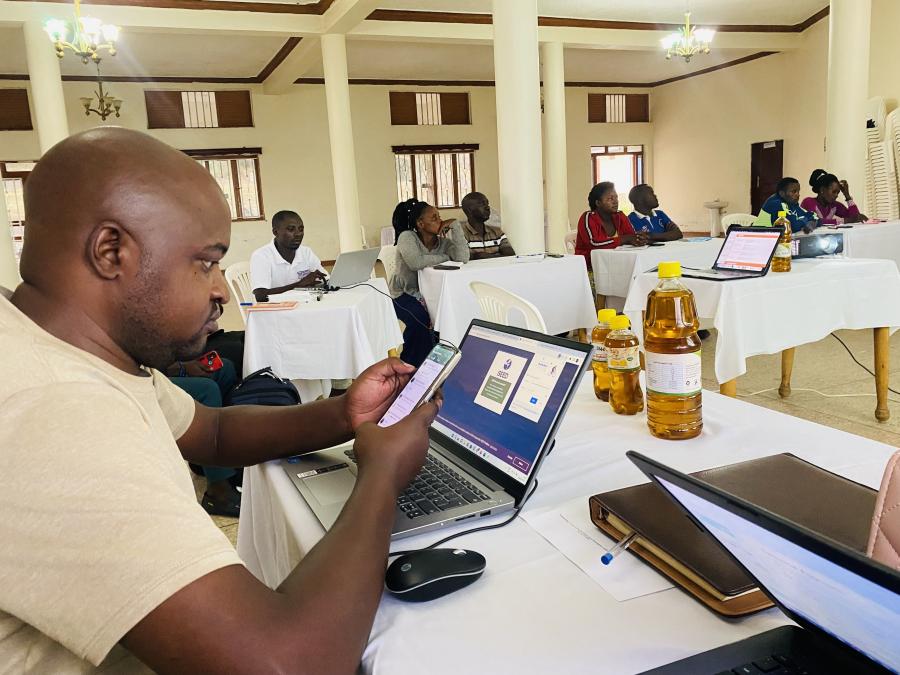
The Women in Agriculture Impact Investment Facility, or WAII, began its pilot in June 2022 under USAID’s Feed the Future Uganda Inclusive Agricultural Markets activity. It supported 28 agribusinesses with investment preparation. The company reported approximately $1.74 million raised by supported enterprises. That money went into the businesses; it should not be mistaken for a funding round in Finding XY itself.
The published eligibility criteria explain the market position. WAII asks for at least two years in operation, minimum turnover of $100,000, audited statements and a financing requirement above $50,000. Female participation can be through ownership, management or the value chain. This is a route for established enterprises, with inclusion built into selection.
Financing mobilised by supported agribusinesses
The pilot also tested interest-cost support. Eight enterprises raised $773,520 with $63,960 in risk capital used to offset interest charges. The ratio is approximately twelve dollars of financing per dollar of that support. It measures leverage within those transactions, rather than the programme’s entire cost or an investment return.
The financing mix was revealing: 72% debt, 28% convertible notes, no completed pure-equity deals. Information gaps and transaction costs obstructed equity. Lower borrowing costs helped, but they could not make collateral requirements disappear.
Yellow: debt · Teal: convertible notes · Pure equity: 0%
The useful thing hidden in the records
Consider Eloi Mixed Farm. In Finding XY’s account, founder Proscovia Nanduala had largely financed the enterprise herself. During financial modelling, a consultant graphed historical records. Higher sales repeatedly clustered in months associated with rice scarcity and stronger prices. The pattern suggested stocking rice ahead of those periods.
There was another possibility hiding in plain sight: broken rice sold cheaply to businesses that turned it into higher-value porridge. The advisory exercise helped her consider value addition alongside seasonal inventory planning. These are proposed opportunities, rather than evidence of profits already earned.
Aroza Group received a different diagnosis. Customer analysis found that 90% were low-volume retailers. Finding XY helped develop the NOURISH brand position and a more deliberate approach to customer relationships. The point was to understand who already bought the products, then decide how to retain and grow those relationships.
Before chasing a new investor, give the existing records a proper interrogation.
Who pays for the advice?
The newer technical-assistance work offers another pricing answer. From October 2025 to July 2026, an AMEA partnership tested a cost-share arrangement: agribusinesses contributed 20% in cash toward advisory services, with AMEA subsidising most of the cost. Finding XY’s 2025/26 report records twelve businesses supported.
That same report describes green-business advisory with GIZ Uganda, a 360-business programme with 120 women-led enterprises supported at the reporting stage. Alongside it, the 10X agricultural initiative with Outbox reported more than 2,000 young women trained. These are different interventions, with different measures; training attendance and investment closure should never be casually added together.
Choose the tool after the problem
Climate finance extends the approach. UGEFA, implemented with adelphi and funded by the European Union, combines business preparation with discounted bank lending. ACTIF pairs technical assistance with low-cost debt for local climate-technology companies operating for at least three years. Banks are partners here, even when their own advisory services are alternatives.
CYK Financial, part of the enterprise ecosystem, now describes Rent Credit and Rent Bonds: products addressing upfront rent and future rental-income streams. The emphasis differs from earlier working-capital microloan materials. Readers considering support should therefore start with the current programme’s actual terms.
The transferable habit is simple: establish the constraint before choosing the instrument. Seasonal stock needs planning. A funding application needs a credible budget. Rent creates a timing problem. Advice can make those needs clearer; lending still requires repayment capacity. Finding XY’s appeal lies in taking that sequence seriously, including when the first commercial idea needs revision.