John Lynn once helped test a mobile app with index cards. The venture was Curativity, the customers were publishers, and the raw material was the mountain of unsolicited manuscripts that publishing people call the slush pile. Readers swiped through paper screens. Software could wait; the question was whether the idea deserved any. For a literature graduate trying to build a company, it was a suitably bookish beginning: a technology business, briefly available in paperback.
Curativity did not become Lynn’s lasting enterprise. Helping other people build businesses did. The CELA co-founder now works alongside Frances Simowitz as co-founder and managing partner of QUAY Acceleration, designing startup programs for institutions and helping founders make the connections those programs promise. His career has carried him from the applicant’s side of the accelerator door to the business of deciding how that door should open.
That distinction matters. A founder can spend an afternoon collecting names and still leave with the same unsolved problem. Lynn’s work concerns the less glamorous particulars: which person can help, what the founder needs to ask, and how to make the encounter useful. Networking, in this account, ought to produce something besides a larger collection of people to follow up with.
A literature degree, then a different kind of reading
Lynn has described himself as a writer, speaker and business developer interested in the relationship between conversation and creativity. His education includes Washington University in St. Louis, Gettysburg College and a departure from a Babson MBA program. His chosen vocabulary is revealing. Communication, cooperation and creation take precedence over the usual inventory of startup victories. It reads like someone trying to work out what he can do with his curiosity.
His work before CELA included Techstars NYC and, by his own account, a client portfolio worth $1 million, assembled in his first ten months at an earlier employer. The number belongs to a business-development accomplishment, rather than to his personal wealth. More interesting is the continuity: before he was selling accelerator services, he was already describing relationships as something that could create economic value.
There is a useful literary habit in that description. Pay attention to the exchange, not just the cast list. A room containing a founder, an investor and a prospective customer offers three impressive nouns. The verbs determine whether anything happens. Lynn has made a career around those verbs: introduce, prepare, ask, test, return.
“What is the give I can make?”
John Lynn, on approaching a new connection
The connector who questions the introduction
His argument about access becomes more demanding when the subject turns to who gets admitted. Discussing how accelerator programs should operate, Lynn called the accelerator’s essential job “to systematize access.” He advocated a consistent application process, a broader group of decision makers and less dependence on warm introductions. Otherwise, the person who already knows someone can enjoy an advantage before anyone has examined the business.
He also discussed matching founders with mentors who share aspects of their identity, and the barriers that hide inside startup language. These are practical design choices. An institution can announce that everybody is welcome, then organize its admissions and conversations around people who already understand the customs. Lynn’s proposal asks the operator to examine the machinery as carefully as the invitation.
The tension makes him interesting. A professional connector is asking his industry to question the power of connections at the point of entry. Once founders are inside, relevant relationships are the product. Getting inside should involve a process that people can actually see. The introduction earns its keep by helping a founder work, rather than functioning as an unofficial entrance examination.
An accelerator gets an accelerator
By May 2022, Lynn was explaining his business at Startup Grind New York under the appealingly recursive premise of an accelerator for accelerators. CELA helped the people who ran programs as well as the founders who attended them. The session’s agenda covered choosing a suitable accelerator, getting more from the experience, and making the application process useful even when an applicant was not selected.
That last point is an unusually considerate use of a rejection. If a founder learns which program fits, understands what needs work or meets somebody relevant, an unsuccessful application can still leave the business better informed. The accelerator’s relationship with its surrounding community need not begin and end with a cohort announcement.
There was also the work of teaching. In 2021, Lynn and Jade Kearney were announced as Lean Startup master-class presenters for TechCrunch’s Startup Alley+ cohort. In May 2023, WEVE publicly thanked him for an enterprise-sales workshop. The subjects put his connector role in perspective. Access is easier to use when a founder has something clear to test or sell. A meeting can create an opening; preparation gives the visitor something to do with it.
Westchester puts the theory on a calendar
In 2022, CELA became the operator of Westchester County’s revamped Element 46 technology accelerator. The initial plan was concrete: up to ten startups in a ten-week program, a curated mentor network and a culminating pitch event. Here was a place to turn the argument about access into a schedule. Founders would have people to meet, work to complete and a date on which to explain what they had built.
The program’s curriculum makes the operating work visible. Customer discovery, marketing, financial projections and investor pitching sit alongside facilitated conversations between founders. Participants receive a dedicated mentor and access to professionals offering services in areas including intellectual property, accounting and marketing. The arrangement recognizes that a young business can have several problems at once, each requiring a different kind of expertise.
Its eligibility criteria are equally instructive. Applicants need a minimum viable product or usable prototype near or in user testing. A pleasing idea, alone, will not do. A mentor needs something to examine; a prospective customer needs something to react to. There is a family resemblance to those index cards, even though the program’s requirements are its own: bring a proposition that can meet the world.
Nor does the regional work stop at one program’s boundary. In autumn 2023, Hudson Valley entrepreneurship organizations met to discuss collaboration, including the competition between organizations intended to help founders. Lynn was listed as leading a committee on curriculum alignment across programs. It is a wonderfully unromantic assignment. Entrepreneurship gets the launch party; the people supporting it also need a committee.
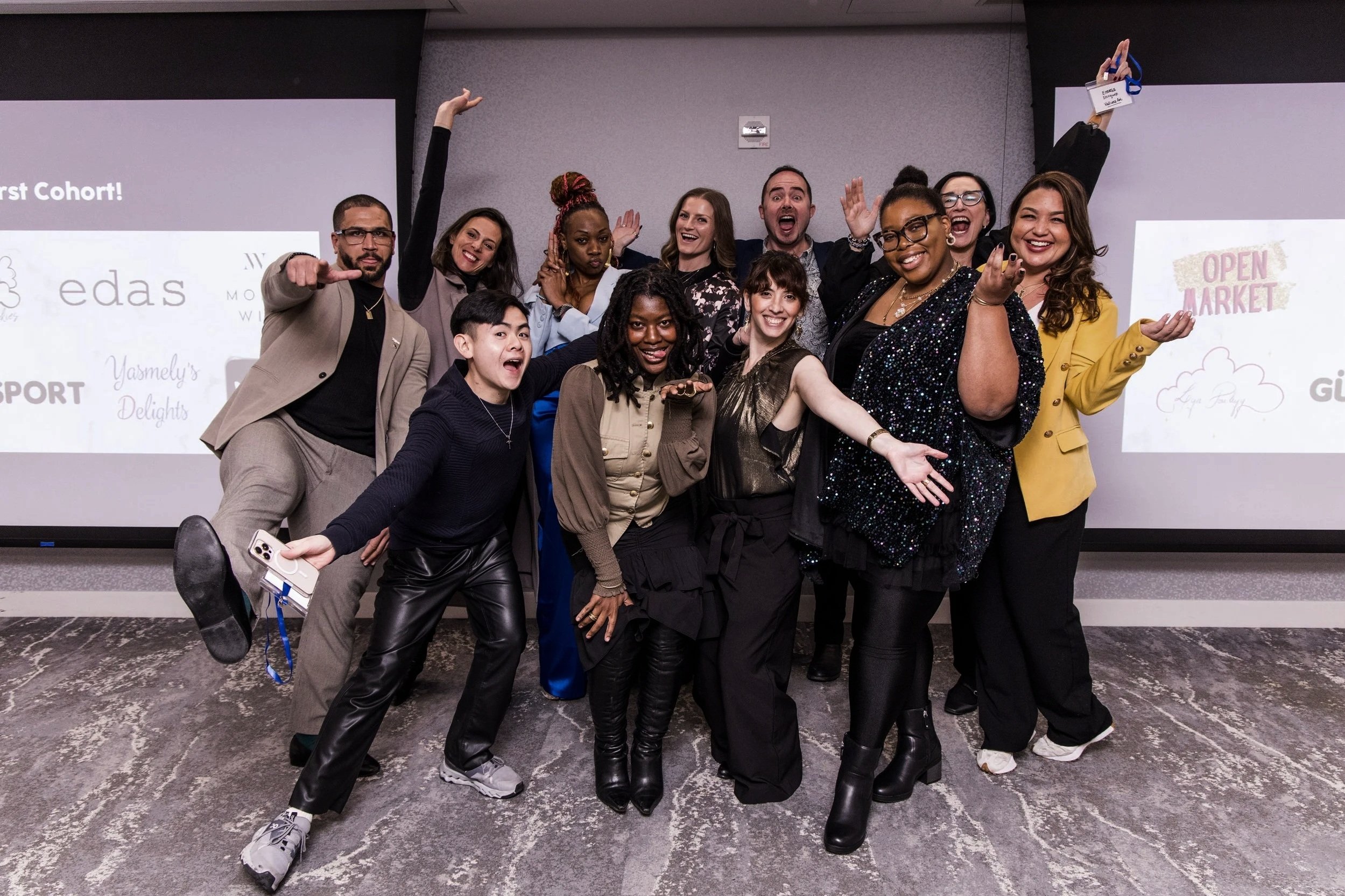
Two routes arrive at QUAY
CELA’s path eventually converged with WEVE’s. The businesses merged in December 2023 and adopted the QUAY name in 2024. Their specialties were complementary: CELA worked on programs supporting startups across the United States, while WEVE helped international founders enter the American market. Lynn and Simowitz are now identified as the combined company’s co-founders and managing partners.
For a founder entering a country, the difficulty of access takes on extra layers. The useful customer, adviser or investor may exist, but the newcomer has to locate them and understand the business context. QUAY’s account of its merger brings that international work together with domestic acceleration. The common commercial task is organizing support around the journey a particular founder is making.
The partnership also changes how to understand Lynn’s title. CELA remains central to his story, while QUAY describes the current operation. An old company name can linger in event biographies long after the business has moved on. In this case, the continuity is the work: institutions want a program; entrepreneurs want help that reaches beyond the classroom.
Lynn has also argued for New York on its own terms. In a HumAIn interview, he described a business community offering several kinds of capital, potential customers and talent, rather than a tech economy defined solely by venture funding. Read alongside the merger, that view gives the geography a purpose. An international founder needs a place to sell and recruit as well as a place to pitch. The city’s different institutions become useful when somebody can help the newcomer reach the relevant ones.
What counts after Demo Day?
By August 2025, Lynn’s public conversation with economic-development audiences was explicitly concerned with measures beyond investor returns. His discussion with Dane Carlson covered community priorities, business retention, jobs, revenue and the use of accelerators to address local problems, including retail vacancies. An accelerator serving a place has to answer questions about that place. A venture-capital scoreboard supplies only part of the answer.
In February 2026, he reported that 87 percent of startups that had passed through Element 46 during the preceding four years were still in business. He also pointed to two alumni acquisitions, Adro by Finfare and Augie Studio by JWX. The survival figure is Lynn’s reported program result. It should be read within that period and population, rather than as a forecast for the next applicant.
Lynn’s reported figure for Element 46 participants over the previous four years, February 2026.
The same spring announcement offered the program at no cost to Westchester residents, with a ten-week course and a June Demo Day. That is where an argument about opportunity becomes specific enough to assess. There is an entry requirement, a time commitment, an identifiable group of people doing the work and an occasion to see the result.
Lynn’s story keeps returning to the space between having an idea and finding someone who can help it advance. The literature student became a founder, then built a business around arranging those encounters for others. The paper prototype remains a useful image for the whole career. Put something in another person’s hands. Give them a reason to respond. Pay attention to what happens next.