For three years, Timur Ozekcin helped build a company that had yet to earn revenue. Cylera began in 2017. Its platform became revenue-producing in 2020. Between those two dates lies the part of a founder’s life that rarely makes an attractive announcement: working toward something that customers might eventually pay for, while the calendar continues to express its own opinions.
By March 2021, he was discussing a $10 million Series A and plans to double a 26-person team. The temptation is to begin his story there, with the money arriving and the hiring accelerating. But that skips the interesting question. What keeps a founder occupied before the market starts agreeing with him?
Ozekcin’s career offers several answers: engineering, patient explanation, people who know things he does not, and a willingness to build around an inconvenient problem. His company works in connected-device cybersecurity, a field where the inventory itself can be a puzzle. Before anyone can protect the equipment, somebody has to establish what is actually connected.
The engineer takes the long way round
Ozekcin grew up in Bethlehem, Pennsylvania, and attended Freedom High School. He later described enjoying the job of bringing people together to solve difficult problems. An only child, he joked about the appeal of assembling a group. The thread running through that recollection is practical: find capable people, help them work together, give them something worth doing.
Cornell supplied the engineering education. He earned his bachelor’s degree in 2014 and his master’s in 2015. Paul Bakoyiannis, who would become Cylera’s chief technology officer, was also a Cornell engineer. Their eventual company would pair Ozekcin and Bakoyiannis with a third co-founder, Sean Abraham. The founding unit was a trio, a useful correction to the solitary figure that startup storytelling often places at the center of the frame.
Engineering is a fitting starting point for this particular business. Connected equipment has a physical life, a software life and an organizational life. Something can be useful to its owner while presenting a security problem to the network around it. That creates awkward questions about how to observe it, understand its behavior and reduce risk without making the equipment unusable.
The educational route continued at Columbia, where Ozekcin studied from 2015 to 2016. During those years, his activities included an entrepreneurship program. By the following year, entrepreneurship had become a job with considerably fewer opportunities to hand in an assignment and be finished.
First, explain why the problem exists
One of Ozekcin’s early fundraising difficulties was explaining the risk to investors. Connected devices introduced problems that familiar IT tools had not resolved. Before he could make the case for his company, he had to make the case for the problem. A pitch deck, under these circumstances, also has to do a little teaching.
That distinction matters. An investor can understand the word cybersecurity and still miss why a particular customer needs a particular approach. A founder has to close the gap between a recognizable category and an unfamiliar buying decision. Ozekcin’s account of raising capital places that explanatory work close to the center of the job.
He described the financing process as driven by clients: the company’s growth needed to support what customers required. That is a more demanding sentence than it first appears. It gives expansion an external test. More employees and more territory have to improve the experience of the organizations already relying on the product.
There was room for a lighter answer, too. Asked about outdoor dining in New York, he chose Grand Banks, with its view from a boat. It is a pleasingly concrete preference from someone whose working vocabulary includes risk analysis and network behavior. Even a founder selling visibility can appreciate a view that requires no dashboard.
Ten million dollars, many more obligations
The 2021 Series A was led by Concord Health Partners and Maverick Ventures. With that round, Cylera announced $17 million in total funding. Its investor group also included Contour Venture Partners, Two Sigma Ventures, Dreamit Ventures, Great Oaks Venture Capital, Red Bear Angels and Samsung NEXT. The names make clear that this was becoming an organization with a substantial circle of backers.
Capital gave Ozekcin choices about where to put people and effort. The announced plans covered research and development, customer success, channel support, sales and marketing. Those functions are less glamorous on a page than a funding figure, but they describe the machinery required to make a young company useful at a larger scale.
A product can travel electronically. Support, relationships and responsibility require more arrangement. A new customer may need implementation help. A partner needs to understand what it is selling. Engineers need to keep improving what already exists while the commercial team asks for what comes next. A funding announcement is brief; fulfilling its promises takes longer.
“We feel this is the time to rev up.”
Timur Ozekcin, March 2021
He also took encouragement from activity elsewhere in the market, including a financing by Armis. Competition offered evidence that investors were taking connected-device security seriously. The idea that another company’s success might help explain your own opportunity is a useful glimpse of a founder thinking beyond a scoreboard.
Expansion with an address attached
In June 2021, Cylera announced a partnership with Toronto-based Wembley Partners. The arrangement paired Cylera’s monitoring and detection technology with a managed security service operating around the clock. Ozekcin’s explanation emphasized the combination: customers could obtain the technology together with the expertise needed to operate a continuing service.
That model distributes the work. A software company does not have to become every customer’s entire security department. A service provider gains another capability to bring to its clients. For the founder, making the arrangement useful means understanding where his own product ends and another organization’s contribution begins. Partnership is an operational design decision as well as a commercial one.
In November that year, the company opened a UK office at Hub8 in Cheltenham’s Brewery Quarter. The location placed it inside an existing cybersecurity community. Ozekcin framed the move around serving customers better, while the local team described proximity to customers and partners as essential to its work.
There is something refreshingly literal about this form of expansion. A new market gets an address. People need somewhere to meet, recruit and develop working relationships. The map acquires meaning through the people on it. Cheltenham also supplied a base for broader regional ambitions, connecting a New York company to a different technology community.
Madrid followed in January 2022. That office had several purposes: customer support, sales, threat research and intelligence. Cylera joined a Spanish cybersecurity ecosystem that already included companies such as Devo, CounterCraft and IriusRisk. Entering a place with existing expertise gives a growing business both company and competition.
Ozekcin again explained the decision through regional customers. The repeated emphasis is revealing in its modesty. Geographic growth can be described as conquest; his stated justification was service. A company needs to be able to answer the next question a customer asks, including when that customer is working on another continent.
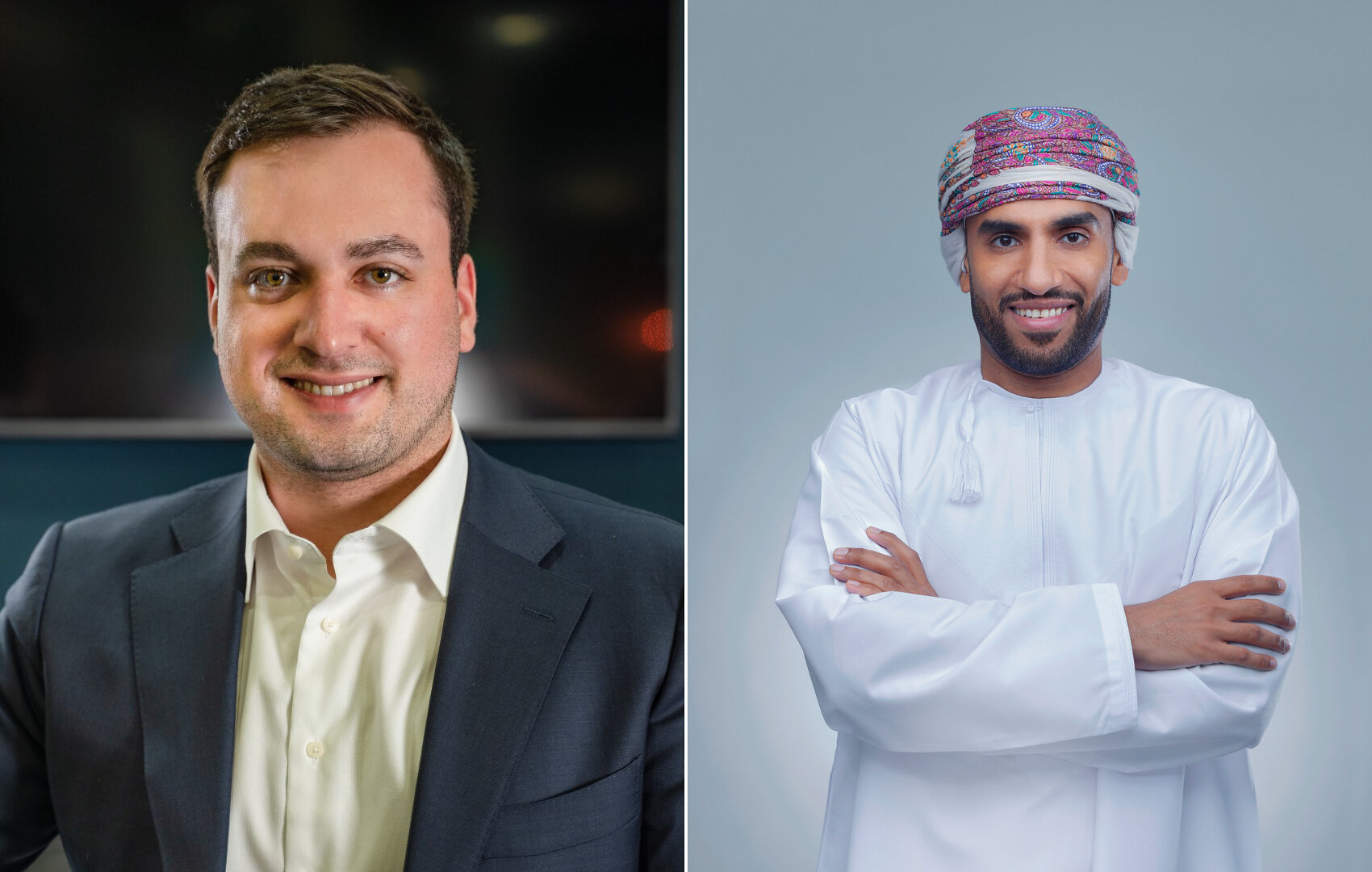
In May 2023, Cylera announced an agreement with Omantel in Oman. The telecommunications provider brought its own regional reach and technical capabilities. For Ozekcin, it was another instance of building an international business through an organization already established in its market. The partnership extended the pattern visible in Canada and Europe: add local relationships to the product.
A seat for the people asking hard questions
That same month, Cylera formed an advisory council. Its planned cadence was at least four meetings a year. The council’s remit included product development and global expansion, giving outside practitioners a recurring place in the conversation rather than a single ceremonial appearance.
Among its members was Tomás Maldonado, then identified as the NFL’s chief information security officer. His contribution connected the discussion to sports and entertainment venues, where connected devices also create security questions. It is an instructive connection for Ozekcin’s story: the settings change, while the need to understand a complicated network remains.
Bringing advisers into a business gives a founder access to experience that an internal team may not possess. It also creates an obligation to listen. An advisory meeting earns its keep when someone can question a comfortable assumption, point out an overlooked constraint or explain why an apparently simple product decision becomes difficult inside a customer’s organization.
Ozekcin had already worked with Dreamit during Cylera’s early development. Steve Barsh, who knew him through that 2017 accelerator experience, described him as reflective and attentive to advice. That assessment fits the organizational choices visible later: co-founders with different responsibilities, regional partners and a council of working technology leaders.
Leave room to notice the building
Going into 2025, Ozekcin used LinkedIn to introduce Cylera’s CyberPulse newsletter. He invited readers to suggest topics. The format was different from a funding pitch or an office opening, but explanation was still part of the work: give people useful information about cybersecurity, then keep the conversation open.
A newsletter has a smaller stage than a financing announcement. It also has a different rhythm. Readers can return, decide whether an issue was useful and ask for something else. For a company whose founder once had to explain its market to investors, that continuing exchange feels like a natural part of the job.
Asked in 2022 what advice he would give his younger self, Ozekcin returned to enjoying the process of building. New challenges would keep arriving. The earlier ones would eventually become the past. It is an observation with some experience behind it: a business can spend years moving toward the point at which everyone else begins to notice.
His story makes those years visible. The engineering degrees, the three founders, the explanations, the first revenue, the offices and the advisers all belong in the same account. Building a company involves an extraordinary quantity of ordinary work. Ozekcin’s career gives that work a face, and a reason to look more closely.